The crackle of the salmon skin as you press a knife through it — that clean, sharp separation — is the first thing I listen for. It’s not the lemon, not the butter, not even the smell of herbs hitting hot fat. That sound tells you everything went right. And honestly, for years, I couldn’t get it. My salmon would come out of the oven looking promising, but the skin would be this sad, rubbery thing you’d have to peel off and hide under a forkful of vegetables.
I started making this perfect sheet pan salmon with lemon herb butter on a Tuesday night when I had nothing left in the fridge except a wilting bunch of parsley, half a lemon, and a fillet I’d defrosted in a panic. I remember staring at the oven, thinking, “This is either going to be the best thing I eat this week or a total waste of a good piece of fish.” It turned out to be the former — and not just because I was hungry.
What got me was the ease of it. You throw everything on one tray — salmon, vegetables, butter — and the oven does the hard part. The butter melts into the herbs, the lemon slices soften and caramelize, and the salmon cooks evenly without you touching it once. It felt like cheating. But the result tasted like I’d been standing over a stove for an hour.
That first bite — the flaky center, the crispy edges, the butter pooling in the crevices — made me realize I didn’t need a complicated technique. I just needed to trust the process. And maybe a little more butter than I initially thought was reasonable.
This recipe stuck because it’s the kind of dinner that makes you feel like you have your life together, even when you definitely don’t. It’s reliable. And that crackle? I get it every single time now.
Why You’ll Love This Recipe
I’ve tested this sheet pan salmon more times than I care to admit — on busy weeknights, for lazy Sunday meal prep, and even for a low-key dinner party where I pretended I wasn’t sweating. Each time, it delivered. Here’s why this version stands out:
- Quick & Easy: From fridge to table in under 30 minutes. No marinating, no basting, no standing over a hot stove. Just prep, roast, and eat.
- Simple Ingredients: You probably have most of this already — salmon, butter, lemon, garlic, and a few fresh or dried herbs. No trips to a specialty store required.
- Perfect for Busy Weeknights: This is the dinner you make when you’re tired but still want something that feels special. It’s impressive without being demanding.
- Crowd-Pleaser: Even people who claim they “don’t love fish” have asked for seconds. The lemon herb butter does something magical — it mellows the salmon flavor into something rich and approachable.
- One-Pan Cleanup: The sheet pan does all the work. You literally toss the parchment paper (or foil) and wash one pan. That’s it.
What makes this recipe different from every other sheet pan salmon out there? It’s the butter-to-herb ratio, honestly. Most recipes are shy with the butter, treating it like a garnish. I treat it like a sauce. The butter melts and mingles with the lemon juice and herbs, creating this glossy, flavorful pool that the salmon sits in as it roasts. The fish absorbs just enough to stay moist, while the edges get that beautiful golden crust.
This isn’t just another salmon recipe — it’s the one that made me stop ordering salmon at restaurants. Because why would I, when I can make this at home in less time than it takes to get dressed and drive somewhere?
It’s the kind of meal that makes you close your eyes after the first bite. Comfort food reimagined — lighter, faster, but with the same soul-soothing satisfaction. Perfect for impressing guests without stress, or turning a simple Tuesday into something memorable.
What Ingredients You Will Need
This recipe relies on a handful of fresh, flavorful ingredients that work together to create something greater than the sum of their parts. Here’s what you’ll need and why each one matters:
For the Salmon:
- 4 salmon fillets (6 oz each), skin-on or skinless: I prefer skin-on for that crispy texture, but skinless works perfectly too. Look for fillets that are evenly thick so they cook at the same rate. Wild-caught salmon has a firmer texture, but farm-raised works beautifully here — just adjust the cooking time slightly.
- 1 tablespoon olive oil: Helps the seasoning stick and encourages browning. A light coating is all you need.
- Salt and freshly ground black pepper: Don’t skimp here. Season the salmon generously — it’s the foundation of flavor.
For the Lemon Herb Butter:
- 4 tablespoons unsalted butter, softened: The star of the show. I use unsalted so I can control the salt level. If you only have salted butter, reduce the added salt by half.
- 2 cloves garlic, minced: Fresh garlic is non-negotiable here. The jarred stuff tastes flat and won’t infuse the butter the same way.
- 1 tablespoon fresh lemon juice: Freshly squeezed only — bottled lemon juice has a bitter, metallic edge that ruins the delicate flavor.
- 1 teaspoon lemon zest: This is where the real lemon flavor lives. Don’t skip it — the zest adds brightness that juice alone can’t provide.
- 2 tablespoons fresh dill, chopped: Dill and salmon are a classic pairing for good reason. It’s light, slightly sweet, and doesn’t overpower the fish.
- 1 tablespoon fresh parsley, chopped: Adds a fresh, grassy note that balances the richness of the butter.
- 1 teaspoon fresh thyme leaves (or ½ teaspoon dried): Thyme adds an earthy, slightly floral undertone that makes the butter taste complex without effort.
For the Vegetables (Optional but Recommended):
- 1 bunch asparagus, trimmed: Asparagus roasts beautifully alongside salmon — it takes about the same time and soaks up the lemony butter juices. You can also use green beans, broccoli florets, or zucchini slices.
- 1 pint cherry tomatoes: They burst and caramelize in the oven, adding little pockets of sweetness that contrast the rich salmon. I love using mixed colors for visual appeal.
- 1 lemon, thinly sliced: These go on the pan with the vegetables and salmon. They soften and become almost candy-like — edible and delicious.
Ingredient Selection Tips:
- For the best texture, look for salmon that’s bright orange-pink with firm, moist flesh. Avoid fillets that look dull or have a strong fishy smell.
- If fresh dill isn’t available, use 1 teaspoon dried dill — but fresh really makes a difference here.
- I recommend using a good-quality European-style butter like Kerrygold for this recipe. The higher butterfat content creates a richer, creamier sauce.
Substitution Guidance:
- Use ghee or a high-quality vegan butter for a dairy-free version.
- Swap the dill for basil or tarragon if you want a different flavor profile.
- No asparagus? Try broccoli rabe, snap peas, or even thickly sliced bell peppers.
Equipment Needed
You don’t need a fancy kitchen to make this sheet pan salmon. Here’s what you’ll need:
- Sheet pan (half-sheet pan, 18×13 inches): A rimmed baking sheet is essential — it catches the butter and juices so they don’t drip onto the oven floor. I use a heavy-duty aluminum one that I’ve had for years. It’s darkened and slightly warped, but it conducts heat evenly.
- Parchment paper or aluminum foil: Lining the pan makes cleanup even easier. Parchment is my preference because nothing sticks to it, and it doesn’t react with the lemon juice.
- Small bowl: For mixing the lemon herb butter.
- Chef’s knife and cutting board: For mincing garlic, chopping herbs, and trimming vegetables.
- Microplane or zester: For getting that fine lemon zest without the bitter white pith. A box grater works in a pinch.
- Instant-read thermometer (optional but helpful): Salmon is perfectly cooked at 125°F to 130°F for medium. If you don’t have one, look for the flesh to be opaque and flake easily with a fork.
If you don’t have a sheet pan, a large cast-iron skillet works surprisingly well. The butter will sizzle and brown faster, so keep an eye on it. Also, a pair of tongs is useful for arranging the vegetables and flipping the lemon slices halfway through.
Preparation Method
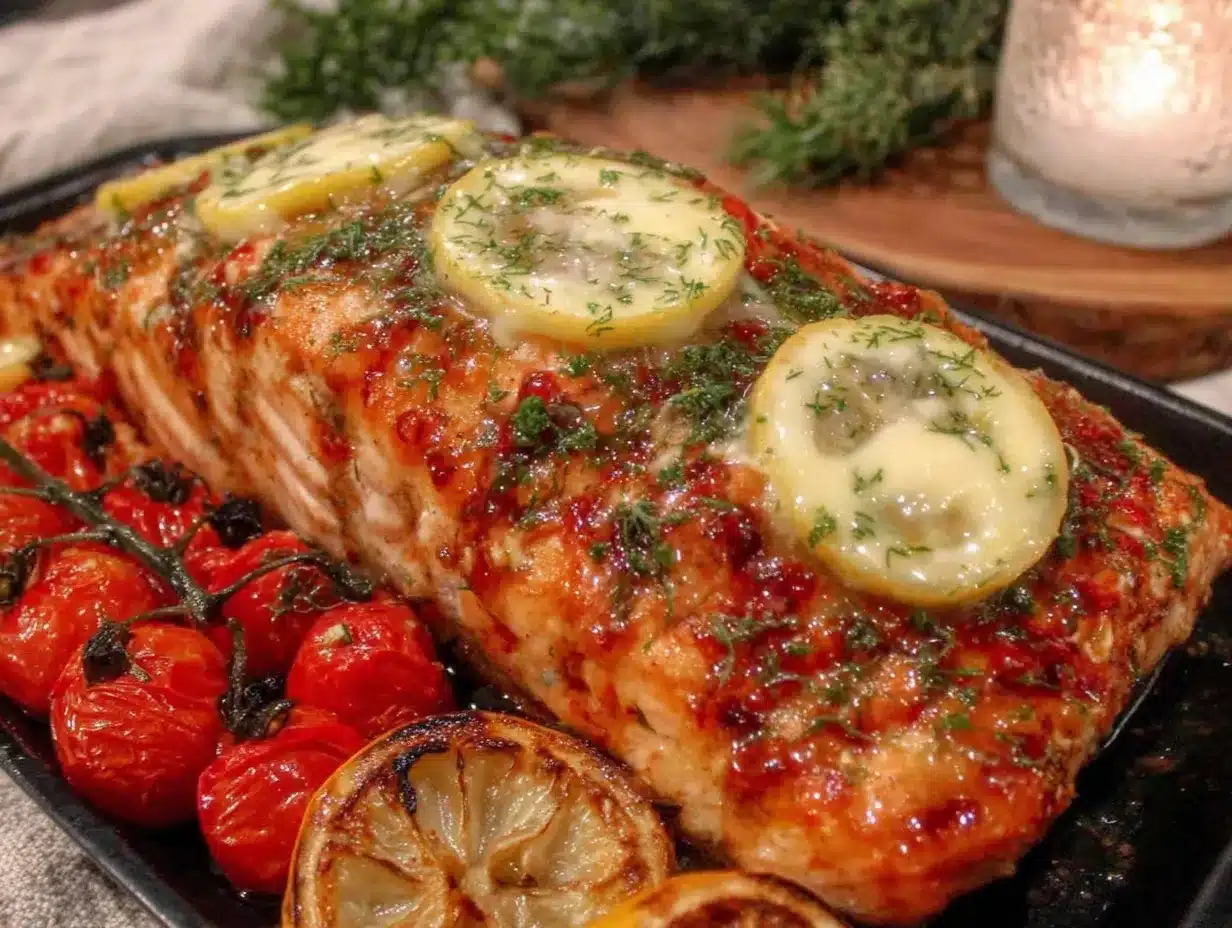
Let’s get cooking. This perfect sheet pan salmon with lemon herb butter comes together in about 25 minutes flat. Here’s how:
- Preheat your oven to 400°F (200°C). Line a sheet pan with parchment paper or foil. If using foil, lightly spray it with cooking spray to prevent sticking.
- Make the lemon herb butter. In a small bowl, combine the softened butter, minced garlic, lemon juice, lemon zest, chopped dill, parsley, and thyme. Mix until everything is evenly distributed. Season with a pinch of salt and pepper. Set aside. (Pro tip: If your butter is too cold to mix easily, microwave it for 5-second intervals until just softened — not melted.)
- Prepare the vegetables. Trim the woody ends off the asparagus and toss them on the sheet pan with the cherry tomatoes and lemon slices. Drizzle with a little olive oil and season with salt and pepper. Spread them in a single layer — crowding leads to steaming instead of roasting.
- Season the salmon. Pat the salmon fillets dry with paper towels. This is crucial — dry skin = crispy skin. Rub each fillet with olive oil and season generously with salt and pepper on both sides.
- Arrange on the pan. Place the salmon fillets skin-side down (if using skin-on) in the center of the sheet pan, nestled among the vegetables. Leave a little space between each fillet for even cooking.
- Top with the butter. Divide the lemon herb butter evenly among the fillets, placing a generous dollop on top of each one. Don’t spread it — let it melt and spread naturally as it roasts.
- Roast for 12-15 minutes. Start checking at 12 minutes. The salmon should be opaque at the edges and slightly translucent in the center (it will continue cooking from residual heat). For well-done salmon, cook for 15-17 minutes. The vegetables should be tender and lightly charred.
- Rest and serve. Remove the pan from the oven and let the salmon rest for 2-3 minutes. This allows the juices to redistribute. Spoon the buttery pan juices over the fillets before serving.
Sensory Cues:
- At 5 minutes: The butter will be fully melted and bubbling around the salmon. You should smell garlic and lemon.
- At 10 minutes: The edges of the salmon will start turning opaque. The cherry tomatoes will begin to blister.
- At 12-15 minutes: The salmon should flake easily when gently pressed with a fork. The asparagus should be tender-crisp, not mushy.
Common Issue Fix: If your salmon is cooking faster than the vegetables, remove the salmon first and let the vegetables roast for another 5 minutes. If the vegetables are done before the salmon, just take them out and keep them warm while the fish finishes.
Cooking Tips & Techniques
After making this sheet pan salmon more times than I can count, I’ve picked up a few tricks that make a real difference. Here’s what I’ve learned — sometimes the hard way:
Pat the salmon dry. This is the single most important step for crispy skin. Moisture is the enemy of browning. Use paper towels and really press them into the skin. If you have time, let the salmon sit uncovered in the fridge for 15 minutes after patting — even drier skin.
Don’t overcrowd the pan. I made this mistake the first time. I crammed four fillets and a mountain of vegetables onto one pan, and everything steamed instead of roasted. The salmon came out pale and sad. Give each fillet and each vegetable some breathing room. If you’re cooking for a crowd, use two pans.
Use room-temperature butter. Cold butter won’t spread evenly over the salmon. Take it out of the fridge 20 minutes before you start cooking. If you forget (I do, constantly), cut it into small cubes and let it sit while you prep the vegetables — it’ll soften faster.
Check for doneness early. Salmon continues cooking after you take it out of the oven. If it looks almost done at 12 minutes, pull it. Overcooked salmon is dry and mealy — a tragedy after all that effort. I use an instant-read thermometer inserted into the thickest part: 125°F for medium-rare, 130°F for medium, 135°F for well-done.
Save the pan juices. That buttery, lemony liquid pooled on the sheet pan is liquid gold. Spoon it over the salmon and vegetables before serving. If you have extra, drizzle it over rice or crusty bread. Don’t waste a drop.
Multitasking strategy: While the salmon roasts, make a quick side dish. This pairs beautifully with a simple Greek orzo pasta salad with lemon herb vinaigrette — the bright flavors complement each other perfectly.
Variations & Adaptations
This recipe is endlessly adaptable. Here are some of my favorite twists:
Spicy Lemon Herb Butter: Add ½ teaspoon red pepper flakes or a minced serrano pepper to the butter. The heat cuts through the richness beautifully. I tried this on a whim when I had leftover chili flakes on the counter — now it’s my go-to for when I want a little kick.
Mediterranean Version: Swap the dill for oregano and add ¼ cup crumbled feta cheese to the pan in the last 5 minutes of cooking. Throw in some kalamata olives alongside the cherry tomatoes. Serve with warm pita bread and a side of healthy high-protein Mediterranean chickpea bowl with homemade tzatziki for a complete meal.
Garlic-Herb Crust: Mix 2 tablespoons panko breadcrumbs with the lemon herb butter before topping the salmon. The breadcrumbs toast in the oven, creating a crunchy crust that contrasts the tender fish. This is perfect for impressing guests — it looks fancy but takes zero extra effort.
Dairy-Free Option: Use a high-quality vegan butter or ghee. I’ve tested this with Miyoko’s European-style cultured vegan butter, and it worked beautifully. The texture was slightly less rich, but the flavor was still bright and satisfying.
Different Vegetables: In summer, I swap the asparagus for zucchini and bell peppers. In fall, I use cubed butternut squash and Brussels sprouts (just give them a 10-minute head start in the oven before adding the salmon). The versatility is what makes this recipe a staple in my kitchen.
Serving & Storage Suggestions
This perfect sheet pan salmon with lemon herb butter is best served immediately, right off the pan. But here’s how to make the most of it:
Serving Temperature: Serve the salmon warm, not piping hot. Let it rest for 2-3 minutes after roasting — the carryover cooking finishes the fish, and the butter settles into a sauce-like consistency. Spoon the pan juices over everything just before bringing it to the table.
Presentation: Arrange the salmon fillets on a platter with the roasted vegetables scattered around. Garnish with fresh dill sprigs and a few extra lemon wedges. It’s simple but stunning — the kind of presentation that makes people think you fussed when you really didn’t.
Complementary Sides: This salmon pairs beautifully with:
- Fluffy rice or quinoa (to soak up the buttery sauce)
- Crusty bread for dipping
- A simple green salad with lemon vinaigrette
- Roasted potatoes (toss them on the sheet pan with the vegetables)
Storage: Store leftover salmon in an airtight container in the refrigerator for up to 3 days. The vegetables will soften, but the flavor will still be good. I don’t recommend freezing cooked salmon — the texture becomes watery and mushy upon thawing.
Reheating: The best way to reheat salmon is in a low oven (300°F) for 5-7 minutes, covered loosely with foil to prevent drying. Alternatively, flake the cold salmon over a salad or mix it into pasta for a quick lunch. The microwave works in a pinch but will make the fish rubbery — avoid it if you can.
Flavor Development: Interestingly, the lemon herb butter flavors intensify overnight. I’ve eaten this cold straight from the fridge, and it’s surprisingly delicious — the butter solidifies into a savory spread, and the lemon becomes more pronounced. Try it on crackers for an impromptu snack.
Nutritional Information & Benefits
This sheet pan salmon isn’t just delicious — it’s packed with nutrients that make you feel good about eating it.
Estimated Nutritional Values (per serving, including vegetables):
- Calories: 420-480
- Protein: 35-40g
- Fat: 28-32g (mostly healthy unsaturated fats from salmon and olive oil)
- Carbohydrates: 8-12g (from vegetables)
- Fiber: 3-4g
- Vitamin D: 80% of daily value
- Omega-3 Fatty Acids: 2-3g
Health Benefits:
- Salmon is one of the best sources of omega-3 fatty acids, which support heart health, brain function, and reduce inflammation.
- The vitamin D in salmon is crucial for bone health and immune function — especially important during winter months.
- Asparagus is rich in folate, vitamin K, and antioxidants. It’s also a natural diuretic, which helps reduce bloating.
- Garlic and herbs provide anti-inflammatory compounds without adding calories.
Dietary Considerations: This recipe is naturally gluten-free, low-carb, and keto-friendly. For a dairy-free version, use vegan butter or ghee. It’s also Whole30-compliant if you use ghee instead of butter.
Potential Allergens: Fish (salmon) and dairy (butter). If serving guests with allergies, clearly label the dish.
I personally love that this recipe feels indulgent but is actually incredibly healthy. It’s the kind of meal that satisfies your craving for something rich and buttery without derailing your wellness goals. That balance is hard to find, and this salmon delivers it every time.
Conclusion
This perfect sheet pan salmon with lemon herb butter has become my secret weapon for busy nights when I want something that feels special without the effort. It’s the recipe I turn to when I need to impress, when I need comfort, or when I just need dinner on the table with minimal fuss.
The beauty of this dish is its simplicity. A few quality ingredients, a hot oven, and a little trust in the process — that’s all it takes. The lemon herb butter does the heavy lifting, transforming ordinary salmon into something you’ll crave on repeat. And the one-pan cleanup? That’s just the cherry on top.
I’d love to hear how this turns out for you. Did you try a variation? Swap in different vegetables? Add a little heat? Drop a comment below and let me know — your adaptations might inspire someone else’s dinner tonight. And if you loved it, share it with a friend who needs an easy, impressive weeknight meal in their rotation.
Go ahead, preheat that oven. Your new favorite dinner is waiting.
Frequently Asked Questions
Can I use frozen salmon for this recipe?
Yes, but thaw it completely in the refrigerator first (overnight is best). Pat it very dry before seasoning — frozen salmon releases more moisture as it thaws, so extra drying is essential for crispy skin.
How do I know when the salmon is perfectly cooked?
The easiest way is to use an instant-read thermometer — 125°F for medium-rare, 130°F for medium. Without a thermometer, look for the flesh to be opaque and flake easily when pressed with a fork. The center should still be slightly translucent.
Can I make the lemon herb butter ahead of time?
Absolutely. You can prepare the butter up to 3 days in advance and store it in the refrigerator. Let it come to room temperature for 15-20 minutes before using so it spreads easily.
What if I don’t have fresh herbs?
Dried herbs work in a pinch — use 1 teaspoon dried dill, 1 teaspoon dried parsley, and ½ teaspoon dried thyme. The flavor won’t be as bright, but it’ll still be delicious. Add a squeeze of extra lemon juice to compensate.
Can I cook this on a grill instead of in the oven?
Yes! Prepare a foil packet with the salmon, butter, and vegetables. Grill over medium heat (350-400°F) for 12-15 minutes, or until the salmon is cooked through. The smoky flavor adds a lovely dimension.
Pin This Recipe!
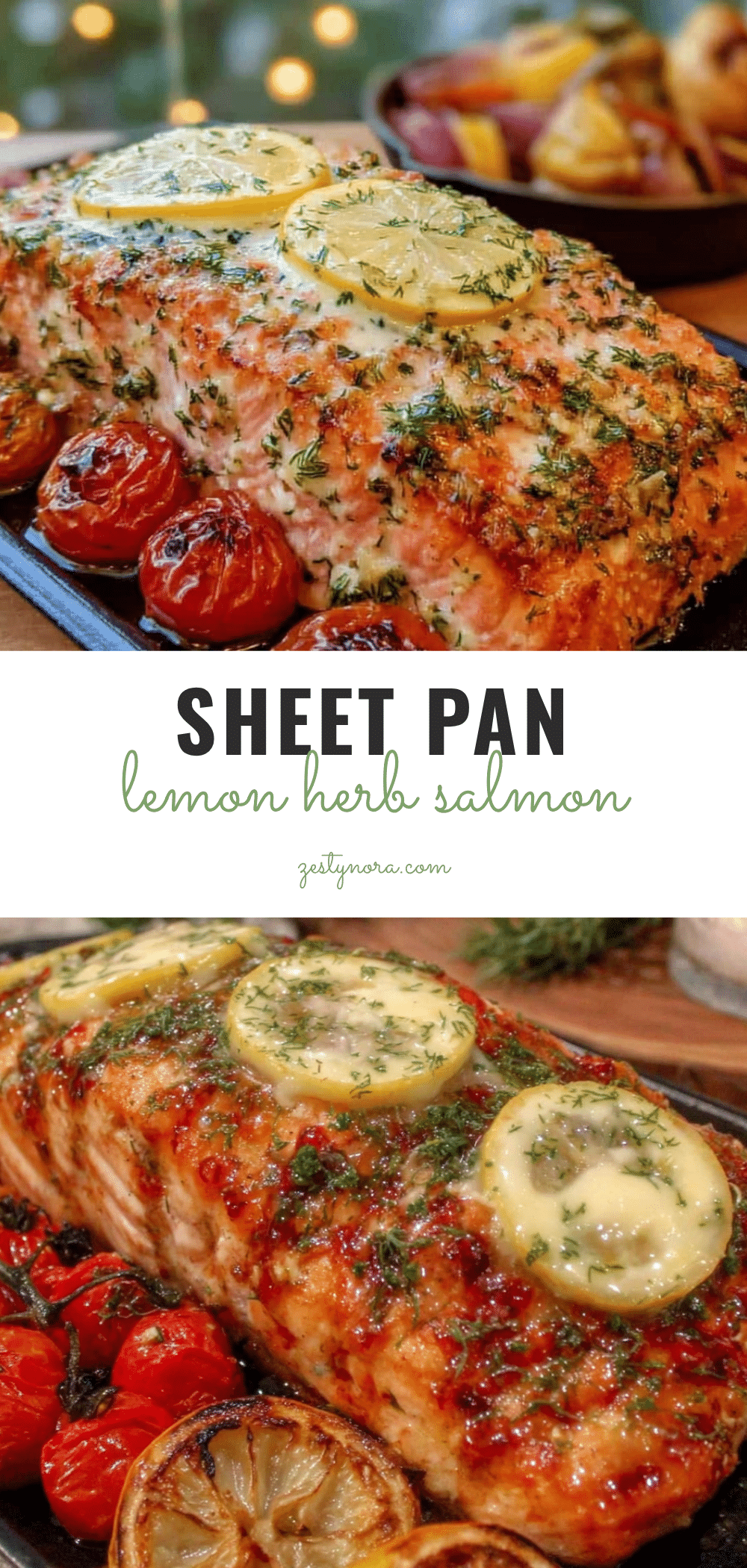
Perfect Sheet Pan Salmon with Easy Lemon Herb Butter
This easy sheet pan salmon with lemon herb butter is a quick, one-pan dinner that delivers crispy skin, flaky fish, and a rich, buttery sauce. Ready in under 30 minutes, it’s perfect for busy weeknights and impressing guests.
- Prep Time: 10 minutes
- Cook Time: 15 minutes
- Total Time: 25 minutes
- Yield: 4 servings 1x
- Category: Main Course
- Cuisine: American
Ingredients
- 4 salmon fillets (6 oz each), skin-on or skinless
- 1 tablespoon olive oil
- Salt and freshly ground black pepper
- 4 tablespoons unsalted butter, softened
- 2 cloves garlic, minced
- 1 tablespoon fresh lemon juice
- 1 teaspoon lemon zest
- 2 tablespoons fresh dill, chopped
- 1 tablespoon fresh parsley, chopped
- 1 teaspoon fresh thyme leaves (or ½ teaspoon dried)
- 1 bunch asparagus, trimmed
- 1 pint cherry tomatoes
- 1 lemon, thinly sliced
Instructions
- Preheat your oven to 400°F (200°C). Line a sheet pan with parchment paper or foil.
- Make the lemon herb butter: In a small bowl, combine the softened butter, minced garlic, lemon juice, lemon zest, chopped dill, parsley, and thyme. Mix until evenly distributed. Season with a pinch of salt and pepper. Set aside.
- Prepare the vegetables: Trim the woody ends off the asparagus and toss them on the sheet pan with the cherry tomatoes and lemon slices. Drizzle with a little olive oil and season with salt and pepper. Spread in a single layer.
- Season the salmon: Pat the salmon fillets dry with paper towels. Rub each fillet with olive oil and season generously with salt and pepper on both sides.
- Arrange on the pan: Place the salmon fillets skin-side down (if using skin-on) in the center of the sheet pan, nestled among the vegetables. Leave a little space between each fillet.
- Top with the butter: Divide the lemon herb butter evenly among the fillets, placing a generous dollop on top of each one. Do not spread it.
- Roast for 12-15 minutes. Start checking at 12 minutes. The salmon should be opaque at the edges and slightly translucent in the center. For well-done, cook 15-17 minutes. Vegetables should be tender and lightly charred.
- Rest and serve: Remove the pan from the oven and let the salmon rest for 2-3 minutes. Spoon the buttery pan juices over the fillets before serving.
Notes
Pat the salmon dry for crispy skin. Do not overcrowd the pan. Use room-temperature butter for easy spreading. Check for doneness early; salmon continues cooking after removal. Save the pan juices to spoon over the salmon and vegetables.
Nutrition
- Serving Size: 1 salmon fillet with
- Calories: 450
- Sugar: 4
- Sodium: 400
- Fat: 30
- Saturated Fat: 12
- Carbohydrates: 10
- Fiber: 4
- Protein: 38
Keywords: sheet pan salmon, lemon herb butter, easy salmon recipe, one-pan dinner, healthy salmon, quick weeknight dinner