I did not trust sauerkraut in a weeknight dinner. Honestly, I thought pairing fermented cabbage with smoked sausage sounded like a mistake until the smell hit me. My husband had been begging for something “authentic” for months, so I bought a jar of the good stuff and some decent bratwursts. He stood in the doorway with his arms crossed, looking at the ingredients like they were alien artifacts. He expected a sad, soggy, overly sour mess that would ruin our Tuesday night. I was ready to order pizza if it didn’t work out.
We threw everything into a single skillet because, let’s face it, I hate washing dishes after dinner. The onions started to caramelize in the butter while the sausages seared up. The kitchen filled with this sharp, tangy aroma that was surprisingly inviting, not the pungent smell I was bracing for. My husband took one hesitant bite, chewed slowly, and then quietly asked for seconds. That was the moment I knew. The acidity of the kraut cut through the rich fat of the meat perfectly. It wasn’t just a meal; it was a revelation.
This easy one-skillet bratwurst and sauerkraut recipe has become our go-to when we want comfort food that feels hearty but doesn’t leave us feeling sluggish. It’s not about fancy techniques or expensive ingredients. It’s about balancing flavors that complement each other. The sweetness of the onions, the snap of the cabbage, and the smokiness of the sausage come together in under thirty minutes. I used to think German cooking was only for holidays, but this simple dish changed my mind. Now, whenever I see bratwursts on sale, I know exactly what’s for dinner. It’s honest food that tastes like it took all day, even though it didn’t.
Why You’ll Love This Recipe
There is a reason this dish has stuck around in German households for generations, and it’s not just tradition. It’s the balance. You get the richness of the meat without the heaviness, thanks to the bright acidity of the cabbage. I’ve tested dozens of variations over the years, from adding beer to using different mustard types, and this version hits the sweet spot every time. It’s not just good—it is the kind that makes you close your eyes after the first bite. It’s comfort food reimagined—healthier, faster, but with the same soul-soothing satisfaction.
Here is why this one-skillet meal wins every time:
- Quick & Easy: Comes together in under 30 minutes, perfect for busy weeknights when you’re tired but still want a hot meal. You spend more time chopping onions than actually cooking.
- Simple Ingredients: No fancy grocery trips needed; you likely already have onions, butter, and spices in your kitchen. The bratwurst and sauerkraut are the stars.
- Perfect for Cold Nights: Great for chilly autumn evenings or snowy winters when you need something warm and filling.
- Crowd-Pleaser: Always gets rave reviews from kids and adults alike. Even the pickiest eaters usually enjoy the sweet and tangy combo.
- Unbelievably Delicious: The texture and flavor combo is next-level comfort food. The kraut softens and sweetens, losing its raw edge.
- Minimal Cleanup: Everything cooks in one pan. This is huge for me. I value my sanity, and washing one skillet is a small price to pay for this flavor.
What makes this recipe different from the rest is the technique. Most people just boil the brats or fry them too fast. Here, we sear them first to lock in juices, then remove them to caramelize the onions and kraut. This step ensures the cabbage doesn’t get mushy before the sausage is cooked. It’s a small detail that makes a big difference. If you’ve tried other versions that tasted bland, this method will fix that. It’s your best version of a classic dish.
What Ingredients You Will Need
This recipe uses simple, wholesome ingredients to deliver bold flavor and satisfying texture without the fuss. You don’t need a specialty store for this. The magic happens in the interaction between the fat from the sausage and the acid from the cabbage. I recommend using high-quality bratwursts because they make a significant difference in the final taste. Cheap sausages can be too salty or lack that smoky depth.
Here is what you need to gather:
- Bratwurst Sausages: 4 to 6 links. Look for natural casing if you can find it. It gives that satisfying snap when you bite into them. I prefer pork brats, but chicken or turkey work too if you want something lighter.
- Sauerkraut: 1 large jar (about 30 oz). Do not buy the shelf-stable kind in the box if you can avoid it. The refrigerated section usually has fresher, crunchier kraut. Rinse it if you find it too sour, but I usually skip that step.
- Onions: 2 large yellow onions. Slice them thinly. Yellow onions have the right balance of sugar and sharpness to caramelize well. Sweet onions like Vidalia are also good if you prefer less bite.
- Butter: 2 tablespoons. Unsalted is best so you can control the saltiness. Some people use oil, but butter adds a richness that pairs beautifully with the pork.
- Garlic: 2 cloves, minced. Fresh garlic is non-negotiable here. Powdered garlic just doesn’t have the same punch.
- Caraway Seeds: 1 teaspoon. This is the traditional spice for sauerkraut. It adds an earthy, slightly licorice-like flavor that defines the dish. If you hate caraway, you can skip it, but I don’t recommend it.
- Mustard: Whole grain or Dijon. For serving. This adds a creamy tang that cuts through the richness of the meat.
- Brown Sugar: 1 tablespoon (optional). If your kraut is very tart, a pinch of brown sugar helps balance it out. Taste before adding.
- Salt and Pepper: To taste. Remember, the bratwurst and kraut are already salty, so go easy on the extra salt.
If you want to switch things up, you can swap the onions for fennel bulbs. Fennel has a similar anise flavor to caraway and works well with pork. You can also add a splash of apple cider vinegar if you want extra tang. These small tweaks allow you to adapt the recipe to your pantry.
Equipment Needed
You really only need a few tools to pull this off. The main event is a large skillet. I use a 12-inch cast-iron skillet because it holds heat well and creates a nice crust on the sausages. If you don’t have cast iron, a heavy-bottomed stainless steel or non-stick skillet works too. Just make sure it’s big enough to hold the onions and kraut without crowding.
You will also need a sharp chef’s knife and a cutting board for slicing the onions and mincing the garlic. A wooden spoon or spatula is essential for stirring the mixture without scratching your pan. A measuring spoon for the spices is helpful, though I often eyeball it. If you want to be precise, use one. Finally, tongs are useful for flipping the sausages and removing them from the pan.
I’ve tried using smaller pans before, and the result was steamed, not seared. The size matters. Don’t skip on the quality of your skillet. A good pan lasts a lifetime and makes cooking easier. If you’re on a budget, a Lodge cast-iron skillet is a great investment. It’s durable and improves with age.
Preparation Method
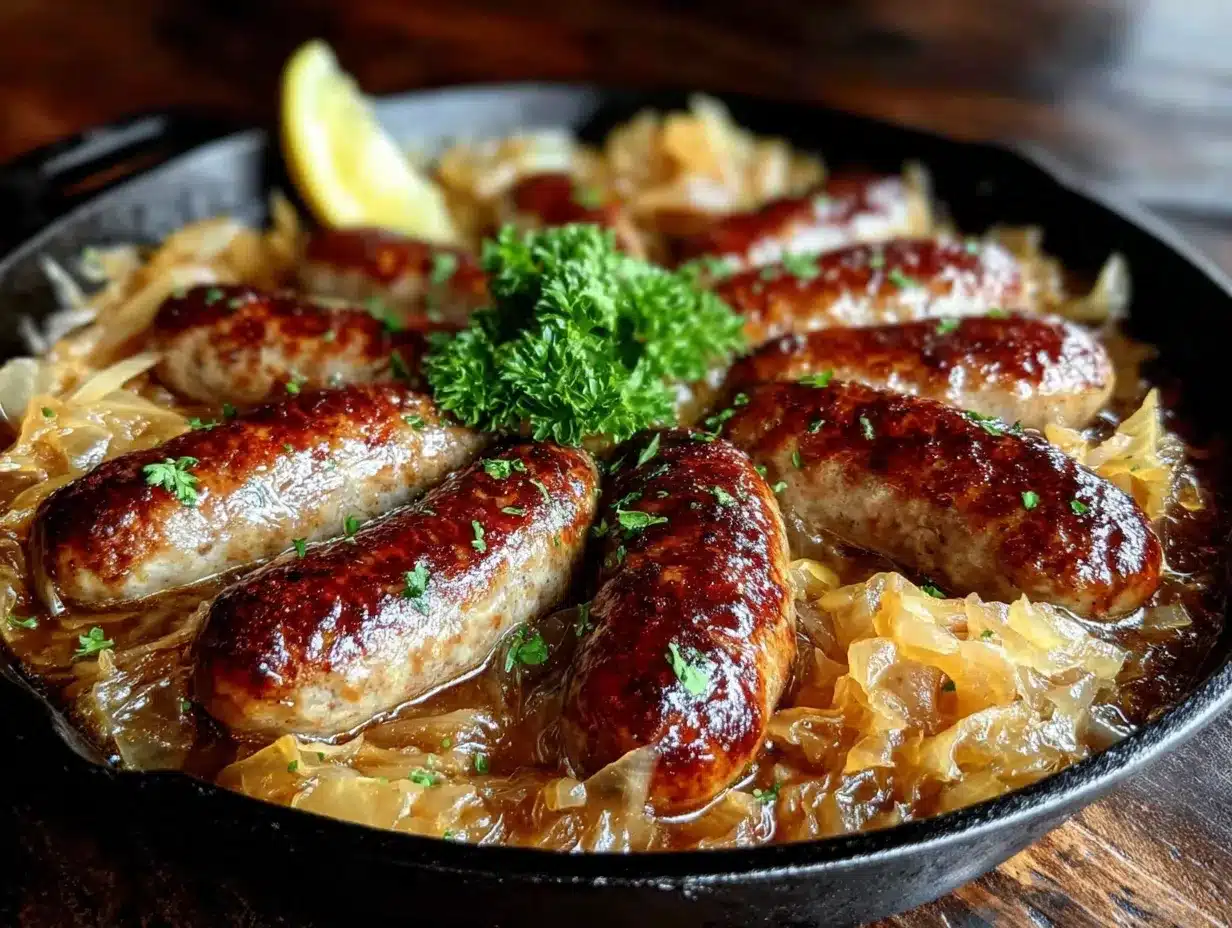
Getting this right is about timing. You don’t want to rush the caramelization of the onions, but you also don’t want to burn them. Here is how to do it step-by-step.
- Prep the Ingredients: Slice the onions thinly. Mince the garlic. Pat the bratwursts dry with paper towels. This is crucial. Moisture prevents browning. If the sausages are wet, they will steam instead of sear. Set everything aside.
- Heat the Pan: Place your large skillet over medium-high heat. Add the butter and let it melt. Wait until the butter stops foaming slightly. This means it’s hot enough to sear. If it browns too fast, the heat is too high.
- Seal the Sausages: Place the bratwursts in the hot skillet. Do not crowd them. Cook for 3-4 minutes on each side until they are nicely browned. You want a deep golden crust. This step locks in the juices. Remove the sausages to a plate and set aside. Do not skip this. It adds texture.
- Caramelize the Onions: Reduce the heat to medium. Add the sliced onions to the same pan. Use the residual fat left by the sausages. Stir occasionally and cook for about 8-10 minutes. You want them soft and golden brown. If they start sticking, add a splash of water. This builds the flavor base.
- Add Aromatics: Once the onions are soft, add the minced garlic and caraway seeds. Stir constantly for 1 minute. Garlic burns quickly, so keep an eye on it. The smell will change from raw to fragrant.
- Simmer the Kraut: Add the drained sauerkraut to the pan. Stir to combine everything. If you are using brown sugar, add it now. Reduce heat to medium-low. Cover the pan with a lid. Let it simmer for 10-15 minutes. This softens the cabbage and melds the flavors. Uncover occasionally to stir.
- Finish the Sausages: After the kraut has cooked down, make a small well in the center. Place the seared bratwursts back into the pan, nestling them into the kraut mixture. Cover again and cook for another 5-7 minutes. This ensures the sausages are heated through and have absorbed some of the kraut flavor.
- Serve: Remove from heat. Let them rest for 2 minutes. Serve hot with whole grain mustard on the side. The juices in the pan are gold—spoon them over the sausages before serving.
The total time is about 30 minutes. The hardest part is waiting for the onions to caramelize. Don’t rush it. Good things take a little time.
Cooking Tips & Techniques
I learned this the hard way. I once tried to speed up the caramelization by turning the heat to high. The onions burned on the outside and were still raw on the inside. The kraut turned bitter. Never rush the onions. Medium heat is your friend.
Another tip is to drain the sauerkraut well. If you leave too much liquid in the pan, the dish becomes soupy. You want a thick, cohesive mixture, not a stew. Use a slotted spoon or press the kraut against the side of the jar to get out excess brine.
If you want a deeper flavor, deglaze the pan with a splash of beer or apple cider after removing the sausages. This picks up all the browned bits (fond) from the bottom of the pan. It adds complexity. I usually use a light lager or a dry cider. Avoid sweet beers here; they can make the dish too cloying.
Also, prick the sausages? No. Don’t prick them. Pricking releases the juices and makes the sausage dry. You want to keep those juices inside until you bite into them. If you’re worried about them bursting, just score the casing lightly with a knife. That helps heat penetrate without losing moisture.
Timing is everything. If you put the sausages back in too early, they won’t heat through. If you wait too long, they might dry out. The 5-7 minute window after the kraut is cooked is usually perfect. Use a meat thermometer if you’re unsure. 160°F (71°C) is the target internal temperature.
Variations & Adaptations
This recipe is flexible. You can adapt it to fit your diet or taste preferences. Here are a few ideas.
- Gluten-Free: Most bratwursts are naturally gluten-free, but check the label. Some brands add fillers. Pair this with gluten-free rolls or serve over mashed potatoes instead of bread.
- Low-Carb: Skip the bread rolls entirely. Serve the sausages and kraut on a bed of cauliflower rice or zucchini noodles. The low-carb aspect works well here because the dish is naturally high in protein and fat.
- Vegetarian Option: Swap the pork brats for high-quality plant-based sausages. Brands like Beyond or Impossible work well. The cooking method remains the same. The flavors still complement the kraut.
- Spicy Kick: Add diced jalapeños or red pepper flakes to the onion mixture. This adds heat that contrasts nicely with the sweet cabbage. I like this version when I want something with a bit more punch.
- Beer-Infused: Replace half the water in the simmering step with your favorite beer. I use a German Pilsner or a Helles lager. It adds a malty depth that enhances the sausage.
I’ve tried adding apples to the mix. Sliced Granny Smith apples cook down nicely and add a fresh tartness. It’s a nice twist, especially in the fall. You can also add fennel seeds if you don’t have caraway. The base recipe is sturdy enough to handle these changes.
Serving & Storage Suggestions
Serve this dish immediately while the sausages are hot and the kraut is warm. I like to serve it on toasted brioche buns with a swipe of spicy mustard. The crunch of the bun contrasts with the soft texture of the kraut. If you’re skipping bread, a side of creamy potato salad works well. I have a great recipe for creamy crockpot German potato salad with bacon that pairs perfectly with this meal.
Leftovers store well in the refrigerator. Place them in an airtight container. They will keep for up to 4 days. The flavors actually get better the next day as the kraut absorbs more of the sausage fat. Reheat gently in a skillet over medium heat. Add a splash of water if it looks dry. Avoid the microwave, as it can make the sausages rubbery.
You can also freeze this dish. Let it cool completely before freezing. It will last for up to 3 months. Thaw in the refrigerator overnight before reheating. Note that the texture of the kraut may soften slightly after freezing, but the flavor remains strong.
For presentation, garnish with fresh parsley or dill. It adds a pop of color and freshness. This dish looks rustic and inviting, perfect for a casual dinner party. It’s easy to make in large batches, so don’t be afraid to double the recipe if you have guests.
Nutritional Information & Benefits
This meal is hearty and satisfying. Each serving provides a good balance of protein from the sausage and fiber from the cabbage. Bratwursts are high in protein, which helps keep you full. Sauerkraut is rich in probiotics, which support gut health. It’s a fermented food, so it’s good for your digestive system.
The dish is naturally low in carbohydrates if you skip the bread. It’s also dairy-free, except for the butter used in cooking. If you need to reduce fat, you can use less butter or opt for leaner chicken brats. However, the fat is part of the flavor profile, so I recommend not skimping too much.
For those watching sodium, be mindful of the bratwurst and sauerkraut, which can be salty. Rinse the kraut thoroughly and choose low-sodium sausages if needed. Overall, this is a wholesome meal that nourishes the body. It’s not a diet food, but it’s nutrient-dense and comforting.
Conclusion
This easy one-skillet bratwurst and sauerkraut recipe is a game-changer for weeknight dinners. It’s simple, flavorful, and requires minimal cleanup. I love how it brings together humble ingredients to create something extraordinary. It’s a dish that feels special but doesn’t require effort.
I encourage you to try it and customize it to your liking. Add some apples, swap the beer, or change the mustard. Make it your own. This recipe has become a staple in my kitchen, and I hope it becomes one in yours too.
If you make this, let me know how it turned out. Leave a comment below or share a photo. I love seeing your creations. Also, if you’re looking for more cozy fall meals, check out this cozy brown butter maple pecan apple crisp for dessert. It’s the perfect end to this savory meal.
Thanks for reading. Happy cooking!
Frequently Asked Questions
Can I boil the bratwursts before frying them?
Yes, you can boil them first to ensure they are cooked through, but searing them raw gives a better texture. If you boil them, pat them very dry before searing to get a good crust.
What beer goes best with this recipe?
A German Pilsner, Helles lager, or a dry cider works well. Avoid heavy stouts or sweet IPAs, as they can overpower the delicate flavors of the kraut and onions.
Is sauerkraut healthy?
Yes, sauerkraut is rich in probiotics, vitamins C and K, and fiber. It supports gut health and digestion. Just check the label to ensure it contains live cultures if you buy it pre-made.
Can I make this in a slow cooker?
Yes, but the texture will be different. You can brown the sausages first, then add everything to the slow cooker. Cook on low for 4-6 hours. The sausages may be softer, and the kraut will be very tender.
What sides go well with bratwurst and sauerkraut?
German potato salad, pretzel bites, or crusty bread are classic choices. For a lighter option, try a simple green salad with a vinaigrette. I also recommend these best german pretzel bites for a fun appetizer.
Pin This Recipe!
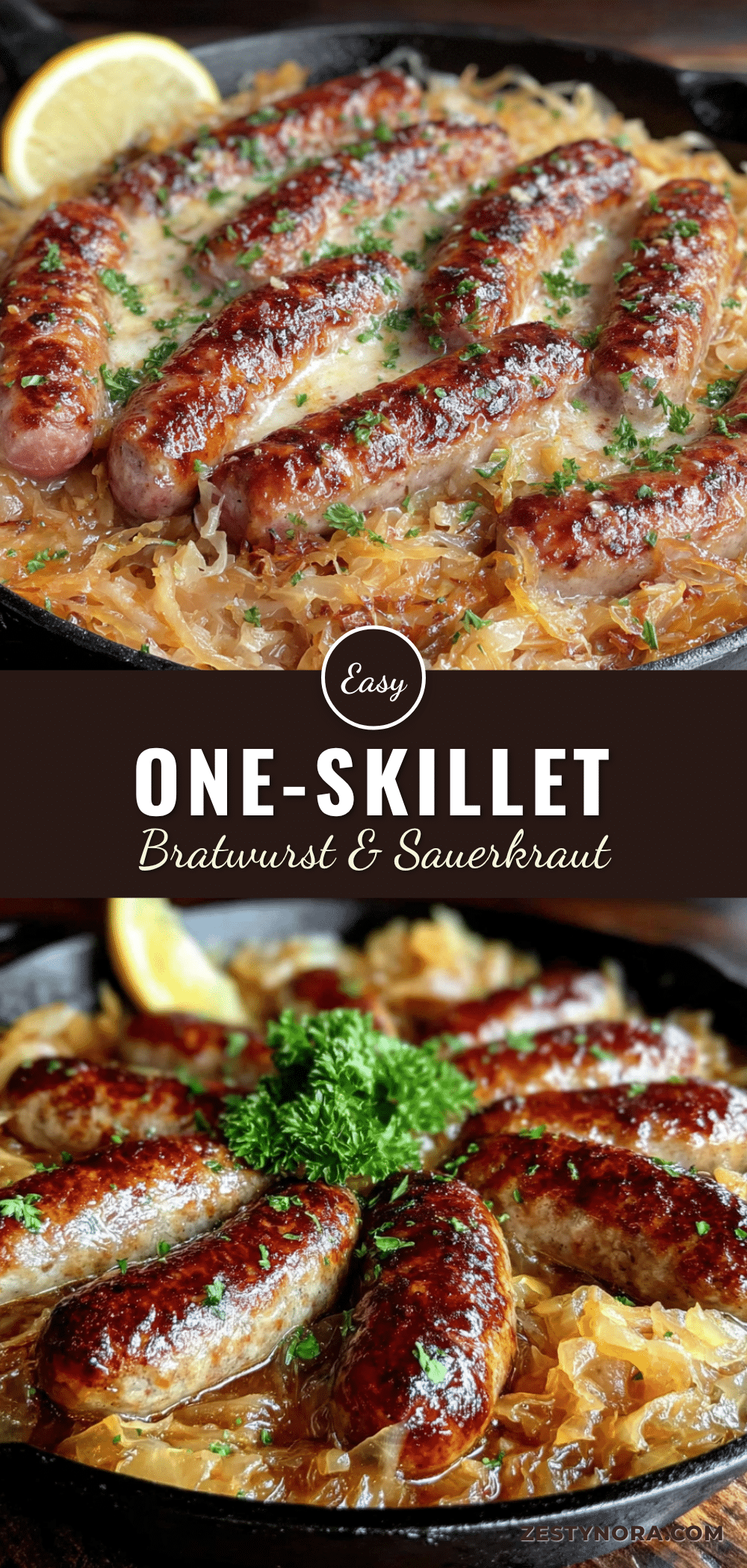
Easy One-Skillet Bratwurst and Sauerkraut

A quick and flavorful weeknight dinner featuring seared bratwursts simmered with caramelized onions and tangy sauerkraut in a single skillet for minimal cleanup.
- Prep Time: 10 minutes
- Cook Time: 20 minutes
- Total Time: 30 minutes
- Yield: 4 servings 1x
- Category: Main Course
- Cuisine: German
Ingredients
- 4 to 6 bratwurst sausages
- 1 large jar (about 30 oz) sauerkraut
- 2 large yellow onions, thinly sliced
- 2 tablespoons unsalted butter
- 2 cloves garlic, minced
- 1 teaspoon caraway seeds
- 1 tablespoon brown sugar (optional)
- Salt and pepper to taste
- Whole grain or Dijon mustard for serving
Instructions
- Slice the onions thinly, mince the garlic, and pat the bratwursts dry with paper towels.
- Heat a large skillet over medium-high heat and add the butter, letting it melt until it stops foaming.
- Place the bratwursts in the hot skillet and cook for 3-4 minutes on each side until deeply browned. Remove sausages to a plate and set aside.
- Reduce heat to medium and add the sliced onions to the same pan. Cook for 8-10 minutes until soft and golden brown, adding a splash of water if they stick.
- Add the minced garlic and caraway seeds to the onions, stirring constantly for 1 minute until fragrant.
- Add the drained sauerkraut and brown sugar (if using) to the pan. Stir to combine, reduce heat to medium-low, cover, and simmer for 10-15 minutes.
- Make a well in the kraut mixture and nestle the seared bratwursts back into the pan. Cover and cook for another 5-7 minutes until sausages are heated through.
- Remove from heat, let rest for 2 minutes, and serve hot with mustard on the side.
Notes
Pat sausages dry before searing to ensure a good crust. Drain sauerkraut well to avoid a soupy dish. Do not prick the sausages to keep juices inside. For best results, use high-quality bratwursts with natural casing.
Nutrition
- Serving Size: 1-2 sausages with sa
- Calories: 450
- Sugar: 10
- Sodium: 900
- Fat: 32
- Saturated Fat: 12
- Carbohydrates: 18
- Fiber: 6
- Protein: 22
Keywords: bratwurst, sauerkraut, one-skillet, german food, weeknight dinner, comfort food, easy recipe, cast iron skillet