Late September, and the only thing I want is figs. Not in a dramatic, craving sort of way—more like a quiet pull toward something that won’t last much longer. The farmers market had them stacked in those little green cardboard trays, split open at the top, showing off that deep magenta center. I bought three trays without thinking. Got home, set them on the counter, and just stood there for a minute. You can’t rush a fig. You have to catch it at exactly the right moment, when the skin is just starting to wrinkle and the inside is practically syrup.
This fig and goat cheese crostini with honey came together on a Tuesday afternoon when I wasn’t trying to impress anyone. I had a log of goat cheese in the fridge, a baguette going stale, and a jar of honey that crystallized because I forgot to screw the lid on tight. Honestly, that crystallized honey ended up being the best part—it melted into the warm figs and created this texture that smooth honey just can’t match. I stood at the counter eating three of them before I even thought about plating.
I’ve made this for dinner parties, for quiet lunches alone, and for that weird in-between hour when you want something that feels special but takes almost no effort. It’s the kind of recipe that makes you look like you tried hard when you really just let good ingredients do the work. And isn’t that the best kind of cooking? The kind where you trust the food more than the technique.
Why You’ll Love This Recipe
I’ve tested this fig and goat cheese crostini with honey at least a dozen times—different breads, different goat cheese brands, different ways of roasting the figs. This version is the one I keep coming back to. It’s not complicated, but every element earns its place.
- Quick & Easy : Ready in under 20 minutes, start to finish. Perfect for last-minute guests or a snack that feels like an event.
- Simple Ingredients : You need six ingredients, max. No obscure spices or specialty oils required.
- Perfect for Entertaining : This is the appetizer that disappears first at parties. I’ve watched people hover near the platter.
- Crowd-Pleaser : Even people who think they don’t like goat cheese end up reaching for seconds. It’s that balanced.
- Unbelievably Delicious : The contrast between warm, jammy figs and cold, tangy goat cheese on crispy bread? It’s the kind of bite that makes you pause.
What sets this recipe apart is the roasting method. I don’t just slice the figs and throw them on top. I roast them briefly with a drizzle of honey until they soften and release their juices. That step changes everything. The figs become almost jam-like, and that sweetness cuts right through the tangy goat cheese. Plus, the honey caramelizes on the bread edges, creating little crispy bits that are honestly the best part.
This isn’t just another appetizer. It’s the one that makes people ask for the recipe before they’ve finished chewing. It’s comfort food that feels fancy, which is my favorite kind of cooking.
Ingredients You Will Need
This recipe uses simple, high-quality ingredients to create something that tastes far more complex than it is. Most of these are pantry staples or easy to find at any grocery store.
- Fresh figs, ripe but firm (about 8-10 figs). Look for ones that give slightly when pressed but aren’t mushy. Black Mission or Brown Turkey figs both work beautifully here.
- Goat cheese log, cold (4 ounces). I prefer Chavrie or Vermont Creamery for their creamy texture. Avoid pre-crumbled goat cheese—it doesn’t spread as smoothly.
- Baguette, 1 medium. A day-old baguette works even better because it gets crispier in the oven. Look for one with a good crust and soft interior.
- Honey, 3 tablespoons. Use a good-quality local honey if you can find it. The flavor varies by region, and that’s part of the fun.
- Fresh thyme, 4-5 sprigs. This adds an earthy, slightly floral note that balances the sweetness. Don’t skip it.
- Extra-virgin olive oil, 2 tablespoons. Use one you like the taste of—it matters here since it’s not cooked away.
- Flaky sea salt, for finishing. Maldon is my go-to. The crunch makes a real difference.
- Black pepper, freshly cracked, to taste.
Substitution Notes: If fresh figs aren’t in season, you can use dried figs that have been rehydrated in warm water for 10 minutes. The texture will be chewier, but the flavor is still lovely. For a dairy-free version, use a plant-based cashew cheese spread instead of goat cheese. And if you don’t have fresh thyme, a pinch of dried thyme works in a pinch—just use half the amount.
Equipment Needed
- Baking sheet, rimmed. A half-sheet pan works perfectly.
- Parchment paper, for easy cleanup.
- Chef’s knife, sharp. Dull knives squish figs instead of slicing them cleanly.
- Cutting board.
- Small bowl, for mixing.
- Pastry brush, optional but helpful for drizzling honey evenly.
- Serving platter, for presenting the finished crostini.
If you don’t have a pastry brush, a spoon works fine for drizzling the honey. I’ve also used a clean finger in a pinch—no judgment here. The key is getting that honey onto the figs and bread without drowning them.
Preparation Method
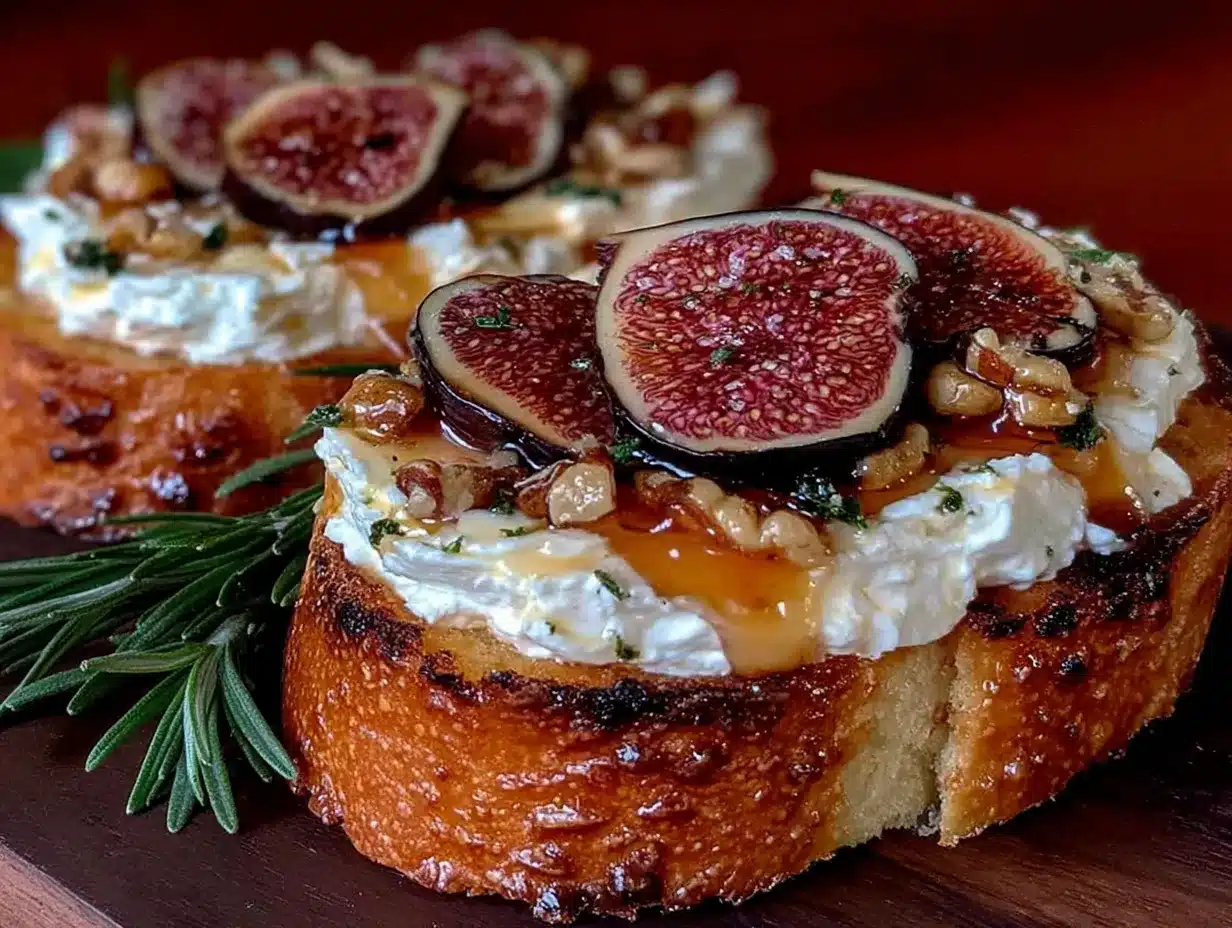
- Preheat your oven to 400°F (200°C). Line a baking sheet with parchment paper. This makes cleanup so much easier, especially if any honey drips and caramelizes onto the pan.
- Prepare the figs. Rinse the figs gently and pat them dry. Trim off the hard stem end, then slice each fig lengthwise into quarters. If your figs are small, halving them is fine. You want pieces that are about bite-sized.
- Slice the baguette. Cut the baguette into ½-inch thick slices on a slight diagonal. This gives you more surface area for toppings. You should get about 16-20 slices from one standard baguette.
- Arrange on the baking sheet. Place the baguette slices in a single layer on the prepared sheet. Drizzle or brush both sides lightly with olive oil. Don’t soak them—just a light coating so they crisp up nicely.
- Add the figs. Scatter the fig pieces over and around the bread slices. They don’t need to be perfectly arranged. A little overlap is fine—they’ll shrink slightly as they roast.
- Drizzle with honey. Warm the honey slightly if it’s crystallized (just set the jar in a bowl of hot water for a few minutes). Drizzle about 2 tablespoons of honey over the figs and bread. Reserve the remaining tablespoon for later.
- Season. Strip the leaves from 3 sprigs of fresh thyme and sprinkle them over everything. Add a pinch of flaky salt and a few cracks of black pepper.
- Roast for 10-12 minutes. The bread should be golden and crispy on the edges, and the figs should be soft and starting to release their juices. Watch closely in the last few minutes—honey can burn quickly.
- Assemble the crostini. Remove the baking sheet from the oven. Let it cool for just 1-2 minutes—you want it warm but not burning hot. Spread a generous smear of cold goat cheese onto each toasted baguette slice. Top with a few roasted fig pieces.
- Finish and serve. Drizzle the remaining tablespoon of honey over the assembled crostini. Add a few fresh thyme leaves for color and a final pinch of flaky salt. Serve immediately while the bread is still warm and crispy.
Pro tip: If you’re making these for a party, you can roast the figs and toast the bread separately, then assemble right before serving. The bread stays crispier that way. I learned this the hard way after serving soggy crostini at a dinner party—never again.
Cooking Tips & Techniques
I’ve burned more batches of crostini than I care to admit. Here’s what I’ve learned so you don’t have to repeat my mistakes.
Don’t overcrowd the baking sheet. If the bread slices are touching, they’ll steam instead of crisping. Give them space. Use two sheets if you need to, and rotate them halfway through baking.
Keep the goat cheese cold until the last minute. Warm goat cheese is a mess to spread—it just smears and sticks to everything. I keep the log in the fridge until I’m ready to assemble. Cold cheese also creates that nice temperature contrast with the warm figs.
Watch the honey. Honey burns faster than you think. If you see dark spots forming on the bread edges before the figs are done, tent the pan loosely with foil. This slows down the browning without stopping the roasting.
Toast the bread on one side only. If you flip the slices during roasting, both sides get crispy, which sounds good but actually makes the crostini too hard to bite into easily. A soft interior with a crispy bottom is the ideal texture.
Use a serrated knife for the baguette. A chef’s knife will crush the soft interior and leave you with ragged edges. A serrated bread knife gives you clean slices without squishing the bread.
I once tried making these with a gluten-free baguette, and honestly, it wasn’t great. The texture was too dense and didn’t get crispy in the same way. If you need gluten-free, look for a sturdy gluten-free sourdough instead—it holds up much better.
Variations & Adaptations
This recipe is flexible in ways that might surprise you. Here are some variations I’ve tried and loved.
Savory herb version: Skip the honey drizzle and instead top the roasted figs with a sprinkle of balsamic vinegar and fresh rosemary. The tangy goat cheese pairs beautifully with the acidity of balsamic. I made this version for a friend who doesn’t like sweet appetizers, and she ate half the batch.
Add prosciutto: Wrap each baguette slice with a thin piece of prosciutto before adding the goat cheese and figs. The salty, crispy prosciutto adds another layer of texture and flavor. This turns the crostini into a more substantial appetizer that works as a light lunch.
Nutty crunch: Toast some walnuts or pecans in a dry skillet until fragrant, then chop them roughly. Sprinkle over the finished crostini along with the honey. The crunch is a nice contrast to the soft figs and creamy cheese.
Spicy kick: Drizzle with hot honey instead of regular honey. The heat cuts through the richness and adds an unexpected pop. I found a local brand that makes habanero honey, and it’s become my secret weapon for this recipe.
Vegan adaptation: Use a cashew-based herbed cheese spread instead of goat cheese, and agave nectar instead of honey. The texture won’t be exactly the same, but the flavor profile is still delicious. I tested this for a vegan friend’s birthday party, and no one missed the dairy.
If you’re looking for another quick appetizer that uses similar flavors, you might enjoy this whipped ricotta crostini with fig and hot honey—it’s a slightly creamier take on the same idea.
Serving & Storage Suggestions
These fig and goat cheese crostini with honey are best served warm, within 10 minutes of assembling. The bread stays crispy, the cheese is cool and creamy, and the figs are still soft and jammy. Arrange them on a wooden board or a white platter for maximum visual appeal. A few extra thyme sprigs scattered around the platter make it look like you put in way more effort than you did.
What to serve alongside: These crostini pair beautifully with a simple arugula salad dressed with lemon and olive oil. The peppery greens cut through the richness. For drinks, a crisp Sauvignon Blanc or a dry rosé works wonderfully. If you’re serving these as part of a larger spread, they also go well with this grilled peach caprese salad with burrata for a complete summer appetizer menu.
Storage: These don’t store well once assembled—the bread gets soggy within 30 minutes. But you can prep the components ahead of time. Roast the figs and toast the bread separately, then store them in airtight containers at room temperature for up to 2 days. Keep the goat cheese in the fridge. Assemble just before serving.
Reheating: If you have leftover roasted figs (unlikely, but possible), reheat them in a 350°F oven for 3-4 minutes. Don’t use the microwave—it turns them into mush. The bread can be re-crisped in a 400°F oven for 2-3 minutes.
The flavors actually develop nicely over time. The honey-soaked figs become even more intense after a day in the fridge. I’ve been known to eat leftover roasted figs straight from the container with a spoon. No regrets.
Nutritional Information & Benefits
Per serving (2 crostini, approximate values):
- Calories: 220
- Fat: 9g
- Carbohydrates: 28g
- Fiber: 3g
- Protein: 7g
- Sugar: 14g
Figs are an excellent source of dietary fiber and contain significant amounts of calcium, potassium, and magnesium. They’re also packed with antioxidants, particularly phenolic compounds that help fight inflammation. Goat cheese is lower in lactose than cow’s milk cheese, making it easier to digest for some people. It also provides calcium and protein without the heavy saturated fat content of many aged cheeses.
Honey, when used in moderation, offers antibacterial properties and can help soothe sore throats. Just remember that it’s still sugar—a little goes a long way. This recipe uses just enough to enhance the natural sweetness of the figs without overwhelming them.
If you’re watching your carbohydrate intake, you can serve the fig and goat cheese mixture on cucumber rounds instead of bread. It’s a completely different texture, but the flavors still shine through.
Conclusion
This fig and goat cheese crostini with honey is the recipe I turn to when I want to feel like I’ve made something special without spending hours in the kitchen. It’s honest food—the kind that lets each ingredient speak for itself. The figs do the heavy lifting, the goat cheese provides the backbone, and the honey ties everything together in a way that feels almost accidental.
I love this recipe because it reminds me that good cooking doesn’t need to be complicated. Sometimes the best dishes come from standing at the counter with good ingredients and trusting your instincts. Whether you’re making these for a holiday party, a casual get-together, or just because you found beautiful figs at the market, I hope they bring you the same quiet joy they’ve brought me.
If you try this recipe, I’d love to hear how it turned out. Leave a comment below and let me know if you made any substitutions or additions. And if you’re looking for another way to use fresh figs, this honey and balsamic roasted fig flatbread with gorgonzola is a natural next step.
Happy cooking, and don’t forget the flaky salt.
Frequently Asked Questions
Can I use dried figs instead of fresh?
Yes, but the texture will be different. Rehydrate dried figs in warm water for 10 minutes before roasting. They’ll be chewier and more concentrated in sweetness. The result is still delicious, just not as juicy.
How do I keep the bread from getting soggy?
Toast the bread on its own first, then add the toppings just before serving. If you’re making these ahead, store the toasted bread and roasted figs separately and assemble right before serving. Also, make sure the figs aren’t sitting in excess liquid before you add them to the bread.
What’s the best goat cheese for this recipe?
A fresh, creamy goat cheese log works best. Avoid aged goat cheese or pre-crumbled varieties—they won’t spread smoothly. I recommend Vermont Creamery or Chavrie for consistent results. The cheese should be cold when you spread it.
Can I make this recipe vegan?
Absolutely. Use a cashew-based herbed cheese spread instead of goat cheese, and agave nectar or maple syrup instead of honey. The texture will be different, but the flavor profile is still lovely. I’ve tested this with Miyoko’s Creamery cheese spread and it worked well.
How do I know when figs are ripe enough to use?
Ripe figs should be soft but not mushy. They should give slightly when gently pressed, similar to a ripe peach. The skin may have a few tiny cracks, which is actually a good sign—it means the figs are full of sugar. Avoid figs that are hard, shriveled, or have any signs of mold.
Pin This Recipe!
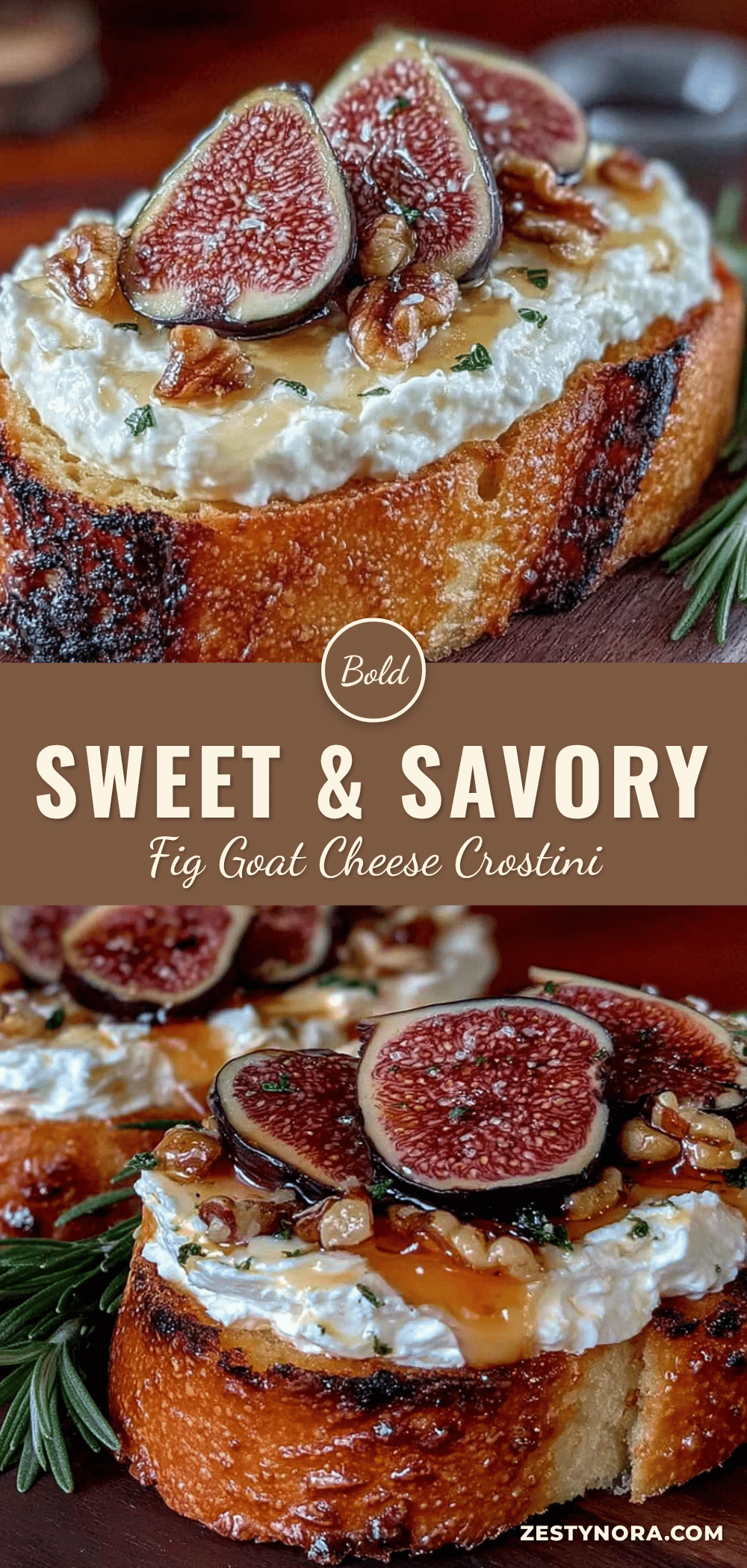
Easy Fig & Goat Cheese Crostini with Honey
A quick and easy appetizer featuring roasted figs, creamy goat cheese, and honey on crispy baguette slices. Perfect for entertaining or a special snack.
- Prep Time: 10 minutes
- Cook Time: 12 minutes
- Total Time: 22 minutes
- Yield: 8 servings 1x
- Category: Appetizer
- Cuisine: American
Ingredients
- 8–10 fresh figs, ripe but firm
- 4 ounces goat cheese log, cold
- 1 medium baguette
- 3 tablespoons honey
- 4–5 sprigs fresh thyme
- 2 tablespoons extra-virgin olive oil
- Flaky sea salt, for finishing
- Black pepper, freshly cracked, to taste
Instructions
- Preheat your oven to 400°F (200°C). Line a baking sheet with parchment paper.
- Rinse the figs gently and pat them dry. Trim off the hard stem end, then slice each fig lengthwise into quarters.
- Cut the baguette into ½-inch thick slices on a slight diagonal.
- Place the baguette slices in a single layer on the prepared sheet. Drizzle or brush both sides lightly with olive oil.
- Scatter the fig pieces over and around the bread slices.
- Warm the honey slightly if crystallized. Drizzle about 2 tablespoons of honey over the figs and bread. Reserve the remaining tablespoon for later.
- Strip the leaves from 3 sprigs of fresh thyme and sprinkle over everything. Add a pinch of flaky salt and a few cracks of black pepper.
- Roast for 10-12 minutes, until the bread is golden and crispy on the edges and the figs are soft and starting to release their juices.
- Remove from the oven and let cool for 1-2 minutes. Spread a generous smear of cold goat cheese onto each toasted baguette slice. Top with a few roasted fig pieces.
- Drizzle the remaining tablespoon of honey over the assembled crostini. Add a few fresh thyme leaves and a final pinch of flaky salt. Serve immediately.
Notes
For best results, keep the goat cheese cold until assembly. If making ahead, roast figs and toast bread separately, then assemble just before serving. Watch the honey closely as it can burn quickly.
Nutrition
- Serving Size: 2 crostini
- Calories: 220
- Sugar: 14
- Sodium: 180
- Fat: 9
- Saturated Fat: 4
- Carbohydrates: 28
- Fiber: 3
- Protein: 7
Keywords: fig, goat cheese, crostini, honey, appetizer, easy, quick, entertaining