It is 6 PM. The light outside is already fading into that bruised purple twilight that signals the real start of November. My apartment smells like old dust and damp wool because the heating system just kicked on with a dramatic shudder. I am cold. Not just chilly, but bone-deep cold.
I stand in front of the open fridge, staring at a butternut squash that looks like a strange, pale gourd from another planet. It is hard. It is heavy. It is annoying.
Most people see a vegetable and think of work. Peeling it is a battle. Cutting it is a risk to your knuckles. Roasting it takes forever. And honestly, let’s face it, soup usually ends up being a sad, watery compromise on a Tuesday night.
But not this time.
I want the kind of comfort that feels like a hug from the inside out. I want the rich, nutty sweetness of roasted squash without the effort of stirring a pot for an hour. I want it creamy without loading it up with heavy cream that sits heavy in your stomach. I want it to taste like autumn itself, bottled in a mug.
This recipe came to me because I was tired of the fuss. I didn’t want to chop a dozen carrots or find a specific spice blend that only comes in a jar at the specialty store. I just wanted simple. I wanted roasted. I wanted creamy.
So I threw the squash in the oven with a little olive oil and salt. I let it get caramelized and tender. Then I blended it with stock and a splash of cream. It took twenty minutes of actual hands-on time. The rest was just waiting.
When I took the first spoonful, the steam hit my face and I closed my eyes. It was smooth. It was warm. It was exactly what I needed. That quiet realization that sometimes the best meals are the ones that don’t try too hard.
Why You’ll Love This Recipe
Let’s be real for a second. There are a thousand butternut squash soup recipes out there. You can find them on every corner of the internet. So why this one? Why should you spend your precious evening making this instead of just ordering takeout?
It comes down to texture and depth. A lot of recipes skip the roasting step and just boil the squash. Boiled squash is fine, sure. But it lacks soul. It tastes flat. When you roast the squash first, you are concentrating the sugars. You are getting those caramelized edges that add a nutty, almost savory complexity that boiling just can’t touch. It makes a huge difference.
Here is what makes this specific version stand out from the crowd:
- Quick & Easy: Yes, you have to wait for the oven, but active prep time is under 15 minutes. This is perfect for busy weeknights when you are exhausted but still want to eat something decent.
- Simple Ingredients: You do not need to go to a fancy market. You likely already have onion, garlic, stock, and a little cream in your kitchen. It relies on pantry staples to deliver bold flavor.
- Perfect for Cozy Nights: This is the ultimate comfort food. It is great for date nights, rainy weekends, or just when you need a mental break from the world.
- Crowd-Pleaser: Kids usually love it because it is sweet and smooth. Adults love it because it feels sophisticated but is actually super simple. It always gets rave reviews.
- Unbelievably Delicious: The texture is next-level. It is velvety without being cloying. The flavor combo is pure comfort food reimagined.
This isn’t just another version. It is the best version because it balances the sweetness of the squash with a hint of sage and a touch of nutmeg. It connects emotionally because it tastes like home. It is the kind of meal that makes you feel cared for, even if you made it yourself.
What Ingredients You Will Need
This recipe uses simple, wholesome ingredients to deliver bold flavor and satisfying texture without the fuss. The magic here is in the quality of the squash and the balance of aromatics. You do not need expensive truffle oil or fancy cheeses. You just need good basics done right.
Here is what you will need to gather before you start:
- Butternut Squash: One large squash, peeled and cubed. Look for one that feels heavy for its size with a dull, tan skin. Fresh squash makes a huge difference in sweetness.
- Unsalted Butter: Two tablespoons. I recommend using high-quality European butter if you can find it, as the higher fat content adds a richer mouthfeel.
- Yellow Onion: One medium onion, diced. This forms the sweet, savory base of the soup.
- Garlic: Three cloves, minced. Do not skip the garlic. It adds the necessary punch to cut through the sweetness of the squash.
- Vegetable or Chicken Stock: Four cups. Use a low-sodium version so you can control the salt level yourself. Homemade stock is great, but a good carton works perfectly fine here.
- Heavy Cream: Half a cup. This gives it that luxurious, silky texture. You can use half-and-half for a lighter option, but heavy cream is the gold standard for this kind of soup.
- Fresh Sage Leaves: A small handful, chopped. Sage is the classic partner for squash. If you cannot find fresh sage, dried sage works too, but use half the amount.
- Ground Nutmeg: A pinch. Just a tiny pinch. It adds warmth and complexity that makes the soup taste like it came from a fancy restaurant.
- Salt and Black Pepper: To taste. Always season in layers, not just at the end.
- Olive Oil: One tablespoon for roasting the squash. Use a neutral oil if you prefer, but olive oil adds a nice fruity note.
For the best results, ensure your squash is fresh. In summer, you might not find good winter squash, but in fall and winter, pick ones with firm skins and no soft spots. If you need a substitution for the cream, coconut cream works well for a dairy-free version, though the flavor will shift slightly.
Equipment Needed
You do not need a fancy kitchen to make this soup. In fact, keeping the equipment simple is part of the appeal.
- Large Baking Sheet: You need a rimmed baking sheet to roast the squash. A half-sheet pan is ideal. Make sure it is big enough to hold the cubes in a single layer so they roast instead of steam.
- Chef’s Knife and Cutting Board: A sharp knife is essential for peeling and cubing the squash. If your knife is dull, you will struggle. Take the time to sharpen it.
- Large Pot or Dutch Oven: You need something sturdy to sauté the onions and simmer the soup. A heavy-bottomed pot distributes heat evenly and prevents burning.
- Immersion Blender or Standard Blender: An immersion blender is convenient because you can blend the soup directly in the pot. If you use a standard blender, be careful when blending hot liquids. Blend in batches and vent the lid to avoid explosions.
- Peeler: A Y-peeler works best for butternut squash. It is safer and easier than trying to carve the skin off with a knife.
I have tried using food processors, but they often leave the soup too watery or aerated. A blender gives you that smooth, restaurant-quality texture. If you do not have a blender, you can push the soup through a fine-mesh sieve, but it takes extra effort.
Preparation Method

Let’s get into the nitty-gritty. This process is straightforward, but attention to detail makes all the difference.
- Preheat and Prep: Heat your oven to 400°F (200°C). Line your baking sheet with parchment paper for easy cleanup. While the oven warms up, wash your hands thoroughly. Butternut squash juice can stain fingers orange, and you do not want to look like a pumpkin by dinner time.
- Roast the Squash: Peel the squash and remove the seeds. Cube the flesh into 1-inch pieces. Place them on the baking sheet. Drizzle with olive oil and sprinkle with salt. Toss everything with your hands until the cubes are evenly coated. Spread them out in a single layer. Do not crowd the pan. Roast for 25-30 minutes until the edges are browned and a fork slides in easily. This roasting step is non-negotiable for flavor.
- Sauté the Aromatics: While the squash roasts, melt the butter in your large pot over medium heat. Add the diced onion and a pinch of salt. Cook for 5-7 minutes until the onion is soft and translucent. Do not rush this. If you burn the onion, the soup will taste bitter. Add the minced garlic and chopped sage. Cook for another minute until fragrant. The smell should fill your kitchen.
- Combine and Simmer: Add the roasted squash and all the juices from the baking sheet into the pot with the onions. Pour in the stock. Bring the mixture to a boil, then reduce the heat to low. Cover and simmer for 10 minutes. This allows the flavors to meld together. The squash will break down further.
- Blend Until Smooth: Remove the pot from the heat. Use an immersion blender to puree the soup until completely smooth. If you use a countertop blender, blend in batches. Be careful with the hot steam. Blend until there are no lumps left. This should take about 30 seconds.
- Add Cream and Season: Stir in the heavy cream and the pinch of nutmeg. Taste the soup. This is the most important step. Add more salt or pepper if needed. If it tastes too sweet, add a splash of lemon juice to brighten it up. If it is too thin, let it simmer uncovered for a few more minutes.
- Serve: Ladle the hot soup into bowls. Top with a drizzle of cream, a sprinkle of fresh sage, or some toasted pumpkin seeds if you have them. Enjoy immediately while it is steaming hot.
Cooking Tips & Techniques
I have made this soup enough times to know where things can go wrong. Here are some tricks to ensure success every time.
The biggest mistake people make is under-roasting the squash. If you just boil it, the flavor is one-dimensional. You want those caramelized bits. That Maillard reaction is what gives the soup its depth. Do not skip the oven step.
Another tip is to toast your spices. If you are using dried sage or cumin, toast them in a dry pan for 30 seconds before adding them to the soup. It wakes up the oils and makes the flavor pop.
When blending hot soup, always start at the lowest speed on your blender. If you crank it up immediately, the heat expands the air and liquid, and you will have hot soup flying everywhere. It is messy and painful. Start slow, then increase speed gradually.
If your soup is too thick after blending, add more stock a quarter cup at a time. If it is too thin, let it simmer longer. Remember, the soup will thicken slightly as it cools because of the natural pectin in the squash.
I also recommend using a Y-peeler for the squash. It is much safer than a paring knife. If your squash is particularly hard, microwave it for two minutes before peeling. This softens the skin just enough to make it manageable.
Variations & Adaptations
This recipe is a canvas. You can change it up based on what you have or what you are in the mood for.
- Dairy-Free Option: Swap the butter for olive oil and the heavy cream for full-fat coconut milk. The coconut flavor pairs surprisingly well with the nutmeg and sage. It adds a tropical twist that is surprisingly delicious.
- Spicy Kick: Add a diced jalapeño or a teaspoon of red pepper flakes when you sauté the onions. The heat cuts through the richness and adds a nice warmth.
- Apple Cider Twist: Replace half of the stock with apple cider. This enhances the fall flavor profile and adds a natural sweetness. It pairs beautifully with the sage.
- Vegan Protein Boost: Stir in some cooked chickpeas or lentils before blending. It adds fiber and protein, making the soup more filling. You will not even taste the beans; they just add body.
- Roasted Red Pepper: Add one jarred roasted red pepper to the blender. It adds a smoky depth and a vibrant color. It changes the flavor profile entirely but keeps it creamy.
I once tried adding a cup of frozen spinach at the end. It turned the soup green, which looked odd, but the taste was actually quite good. Just be prepared for the color change.
Serving & Storage Suggestions
This soup is best served hot. I like to garnish it with a swirl of cream and a few crispy fried sage leaves. To fry the sage, drop whole leaves into hot oil for 10 seconds until they crisp up. It adds a fantastic crunch and visual appeal.
Pair this soup with crusty bread. A slice of toasted sourdough with butter is classic. Or try it with apple cinnamon bread for a sweeter twist. For a heartier meal, serve it alongside a simple green salad with a vinaigrette. The acidity of the salad cuts through the creaminess of the soup.
For storage, let the soup cool completely before transferring it to an airtight container. It will keep in the refrigerator for up to 4 days. The flavors actually get better after a day or two as they meld together.
To freeze, store in freezer-safe bags or containers. Leave some headspace for expansion. It will keep for up to 3 months. Thaw overnight in the fridge before reheating.
Reheat gently on the stove over medium-low heat. Do not boil it, or the cream might separate. Stir frequently until heated through. If the soup looks separated after reheating, whisk it vigorously to bring it back together.
Nutritional Information & Benefits
Butternut squash is a nutritional powerhouse. It is rich in vitamin A, which is great for eye health and immune function. It also provides a good amount of fiber, which aids digestion and keeps you feeling full.
One bowl of this soup contains approximately 250 calories. It is relatively low in saturated fat, especially if you use less cream. The vegetables provide antioxidants that help fight inflammation.
For those watching their sodium, using low-sodium stock and controlling the salt addition is key. This recipe can easily be made low-sodium by omitting the added salt and relying on the natural flavors of the roasted squash and herbs.
It is also naturally gluten-free, making it a safe option for those with celiac disease or gluten sensitivity. Just ensure your stock and cream are certified gluten-free if you have severe allergies.
Conclusion
This creamy roasted butternut squash soup is worth the effort because it delivers maximum comfort with minimal stress. It is simple, healthy, and incredibly flavorful. I love this recipe because it turns a humble vegetable into something special. It is a reminder that good food does not have to be complicated.
I encourage you to try it and customize it to your liking. Add your favorite herbs or spices. Make it spicy or sweet. It is your kitchen, your rules.
Please leave a comment below and let me know how it turned out. Did you add any unique twists? I love hearing about your adaptations. Share this recipe with a friend who needs some cozy comfort this week.
Enjoy every spoonful. It is going to be delicious.
Frequently Asked Questions
Can I make this soup ahead of time?
Yes, absolutely. This soup tastes even better the next day. Make it 2-3 days in advance and store it in the fridge. Reheat gently before serving.
How do I store leftovers?
Store in an airtight container in the refrigerator for up to 4 days. You can also freeze it for up to 3 months. Thaw in the fridge overnight.
Can I use canned squash?
You can, but fresh roasted squash has much better flavor. If you must use canned, drain it well and roast it quickly in the oven to improve the texture and taste.
Is this soup gluten-free?
Yes, this recipe is naturally gluten-free. Just double-check your stock and cream labels to ensure they do not contain hidden gluten additives.
What can I serve with this soup?
Serve with crusty bread, grilled cheese sandwiches, or a simple green salad. It pairs well with roasted chicken or turkey as well.
Pin This Recipe!
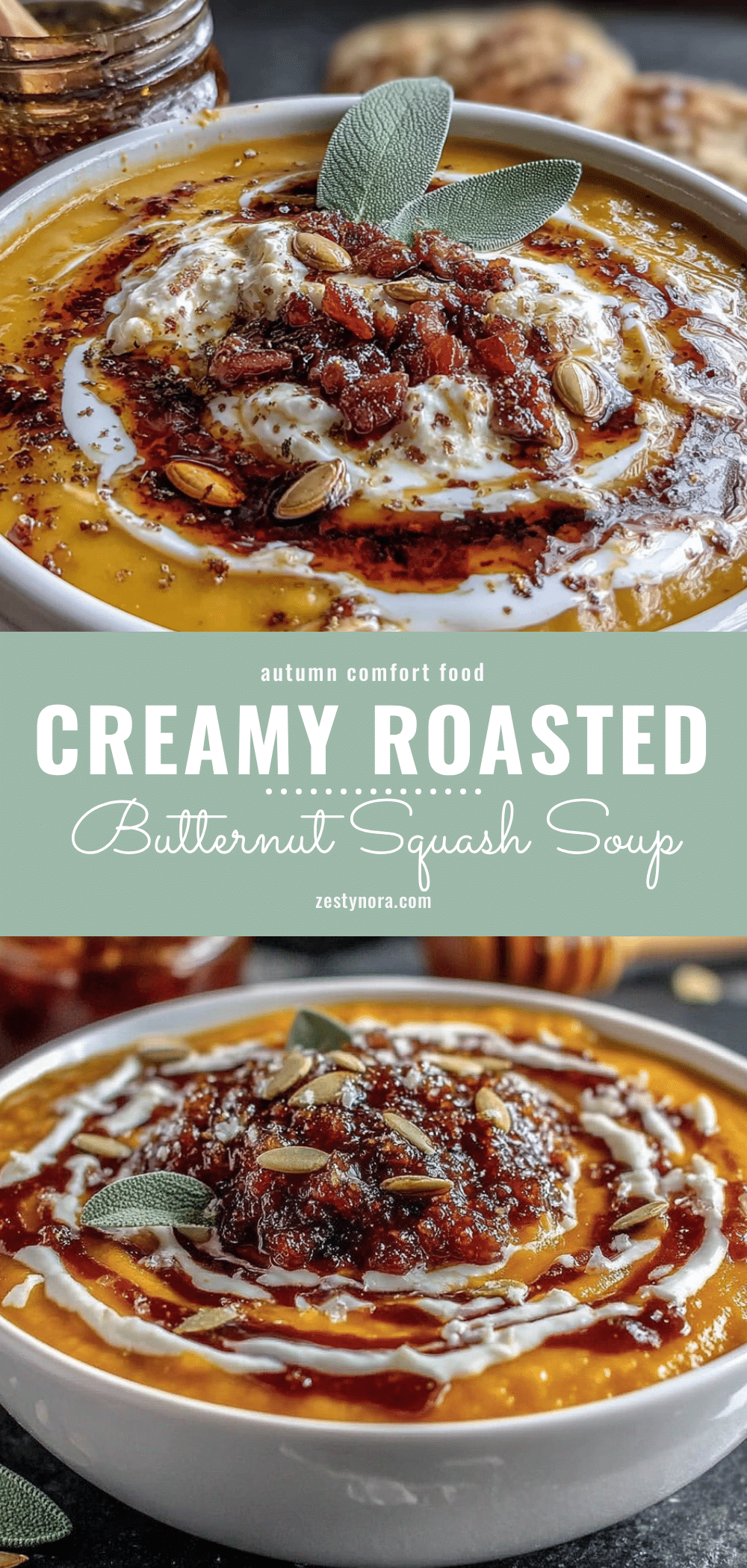
Creamy Roasted Butternut Squash Soup

A rich, velvety winter soup made by roasting butternut squash to concentrate its natural sweetness, then blending it with sautéed aromatics, stock, and cream for a comforting, easy-to-make meal.
- Prep Time: 15 minutes
- Cook Time: 45 minutes
- Total Time: 60 minutes
- Yield: 4 servings 1x
- Category: Main Course
- Cuisine: American
Ingredients
- 1 large butternut squash, peeled and cubed
- 1 tablespoon olive oil
- Salt, for roasting
- 2 tablespoons unsalted butter
- 1 medium yellow onion, diced
- 3 cloves garlic, minced
- 1 small handful fresh sage leaves, chopped
- 4 cups vegetable or chicken stock (low-sodium)
- 1/2 cup heavy cream
- 1 pinch ground nutmeg
- Salt and black pepper, to taste
Instructions
- Preheat oven to 400°F (200°C). Line a large baking sheet with parchment paper.
- Peel the squash, remove seeds, and cube the flesh into 1-inch pieces. Place on the baking sheet, drizzle with olive oil, sprinkle with salt, and toss to coat. Spread in a single layer.
- Roast the squash for 25-30 minutes until edges are browned and tender.
- While squash roasts, melt butter in a large pot over medium heat. Add diced onion and a pinch of salt; cook for 5-7 minutes until soft and translucent.
- Add minced garlic and chopped sage to the pot; cook for 1 minute until fragrant.
- Add the roasted squash and any juices from the baking sheet to the pot. Pour in the stock. Bring to a boil, then reduce heat to low, cover, and simmer for 10 minutes.
- Remove from heat and blend the soup until smooth using an immersion blender or countertop blender.
- Stir in heavy cream and nutmeg. Taste and adjust seasoning with salt and pepper. If too sweet, add a splash of lemon juice.
- Serve hot, garnished with a drizzle of cream, fresh sage, or toasted pumpkin seeds.
Notes
Roasting the squash is essential for depth of flavor; boiling results in a flat taste. If using a countertop blender, blend in batches and vent the lid to avoid steam explosions. For a dairy-free version, substitute butter with olive oil and heavy cream with full-fat coconut milk. The soup thickens as it cools; add more stock if reheating.
Nutrition
- Serving Size: 1 bowl
- Calories: 250
- Sugar: 10
- Sodium: 600
- Fat: 15
- Saturated Fat: 8
- Carbohydrates: 28
- Fiber: 6
- Protein: 4
Keywords: butternut squash soup, winter recipe, comfort food, roasted squash, creamy soup, easy dinner, gluten-free