Christmas Eve was in twelve hours and I’d completely forgotten to defrost the prime rib. The roast was sitting in my fridge like a frostbitten log, and I had maybe an hour before everyone showed up expecting the kind of dinner that takes two days of prep. My mother-in-law was bringing her famous Yorkshire puddings, my sister was making her roasted root vegetables that take an hour just to chop, and I had a frozen piece of beef and a sinking feeling in my stomach.
I’d been so busy with work that week—you know how it goes—that I’d let the planning slip. The fancy dry-brine method I’d bookmarked? Not happening. The overnight herb crust I’d dreamed about? Forget it. I stood there staring at this expensive cut of meat, feeling like I’d already failed before anyone even walked through the door.
Then I remembered a trick my old chef friend once told me about. He said the best prime rib he ever made was the one he had to rush. Something about the pressure forcing you to focus on what actually matters—good meat, high heat, and a butter situation that makes everything better. So I grabbed the garlic, softened a stick of butter, and decided to just go for it.
Honestly? That Quick Garlic Butter Prime Rib Roast with Horseradish Cream ended up being the thing everyone asked for the recipe for. My mother-in-law took a bite and actually went quiet for a second. My sister asked if I’d secretly taken a cooking class. I just shrugged and said, “Desperate times, you know?”
Maybe you’ve been there—staring down a holiday dinner with no time left and too much pressure. Let me tell you, this recipe was born from that exact panic, and it works every single time.
Why You’ll Love This Recipe
I’ve tested this method more times than I care to count, and honestly, it’s the one I keep coming back to. Not because it’s fancy, but because it actually works when you’re short on time and big on expectations. Here’s what makes it stand out:
- Quick & Easy: From fridge to table in under two hours, with only about 20 minutes of active work. The oven does the heavy lifting while you handle everything else.
- Simple Ingredients: You probably already have garlic, butter, and horseradish in your kitchen right now. No hunting down specialty stores or ordering online.
- Perfect for Holidays: Whether it’s Christmas, Easter, or a Sunday dinner that needs to feel special, this roast delivers without the stress.
- Crowd-Pleaser: I’ve served this to picky eaters, steak snobs, and people who “don’t really like beef,” and every single plate came back clean.
- Unbelievably Delicious: The garlic butter creates this crust that’s almost caramelized on the outside while the inside stays perfectly pink and tender.
What makes this different from every other prime rib recipe out there is the technique. Most recipes tell you to start low and slow, then blast it at the end. This one flips that—high heat first to lock in that gorgeous crust, then gentle heat to finish. It’s faster, it’s easier, and honestly, the texture comes out better. I learned this trick from a chef who said the best crust comes from shocking the meat with intense heat right away, and he wasn’t wrong.
This isn’t just another prime rib recipe. It’s the one that makes you close your eyes after the first bite and forget all the stress it took to get there. It’s comfort food that feels like a celebration, even when you threw it together in a panic.
What Ingredients You Will Need
This recipe uses straightforward ingredients that work together to create something genuinely special. Nothing complicated here—just good quality stuff that does its job.
For the Prime Rib Roast
- 1 (5-7 pound) bone-in prime rib roast (look for good marbling—it’s what keeps the meat tender)
- 6 tablespoons unsalted butter, softened (I prefer Kerrygold for the richness)
- 6 cloves garlic, minced (fresh only—the jarred stuff won’t give you the same punch)
- 2 teaspoons kosher salt (Diamond Crystal is my go-to for even seasoning)
- 1 teaspoon black pepper, freshly ground
- 2 teaspoons fresh rosemary, chopped (or 1 teaspoon dried if that’s what you have)
- 2 teaspoons fresh thyme leaves (strip them off the stems yourself)
- 1 tablespoon olive oil (for searing if you want extra crust)
For the Horseradish Cream
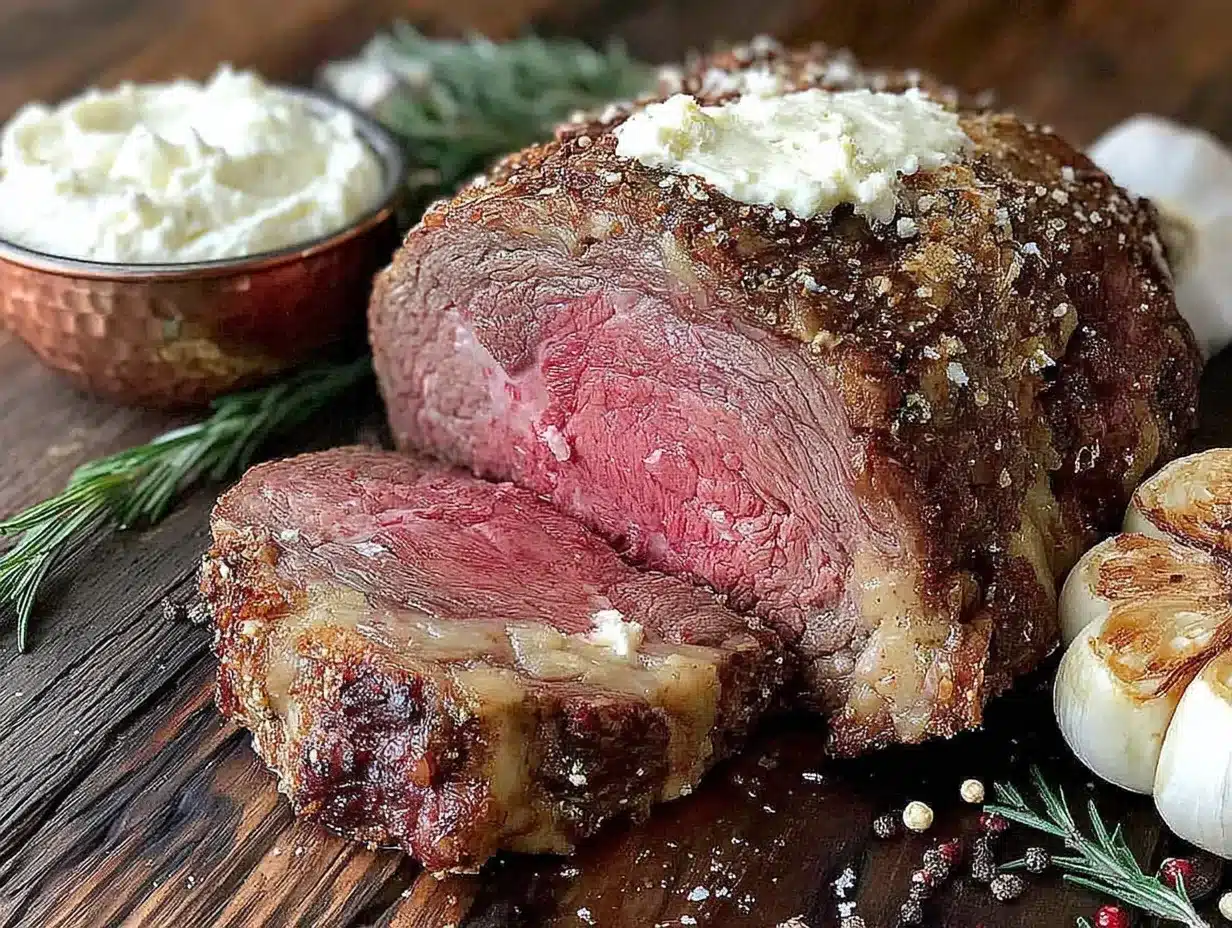
- 1 cup heavy cream (cold—it whips up better this way)
- 3 tablespoons prepared horseradish, drained (I like Boar’s Head for the right heat level)
- 1 tablespoon white wine vinegar (or lemon juice if you’re out)
- 1/2 teaspoon salt
- 1/4 teaspoon white pepper (black works too, but white keeps it pretty)
A note on the horseradish: don’t skip draining it. That extra liquid will make your cream runny, and nobody wants a watery sauce on their beautiful roast. Just press it gently against a fine-mesh strainer with the back of a spoon.
For the butter, make sure it’s truly softened—leave it out for at least an hour before you start. Cold butter won’t spread evenly over the meat, and you’ll end up with patchy spots that don’t brown right. I learned that the hard way during a test run, and the roast came out looking like a leopard.
Equipment Needed
You don’t need a professional kitchen for this, but having the right tools makes everything smoother. Here’s what you’ll want:
- Roasting pan with a rack (the rack keeps the meat elevated so it cooks evenly—if you don’t have one, ball up some foil strips to lift the roast)
- Instant-read thermometer (this is non-negotiable—guessing doneness on a prime rib is how you end up with overcooked beef)
- Chef’s knife (a sharp one—trust me on this)
- Cutting board (preferably wooden, but plastic works fine)
- Small bowl (for mixing the garlic butter)
- Medium bowl (for whipping the horseradish cream)
- Whisk or hand mixer (hand mixer is faster for the cream, but a whisk builds more arm muscle)
- Kitchen twine (optional but helpful for tying the roast if it’s uneven)
I bought a cheap roasting pan from a discount store years ago, and honestly, it still works perfectly. You don’t need the fancy enameled ones—just something sturdy that can handle high heat. The thermometer, though? Spend the extra ten bucks on a good one. It’ll save your dinner.
Preparation Method
Alright, let’s get cooking. This method is straightforward, but pay attention to the temperatures—they’re the difference between a good roast and a great one.
- Take the chill off the meat. Pull your prime rib out of the fridge about 2 hours before cooking. Leave it wrapped on the counter. This step is crucial—cold meat cooks unevenly, and you’ll end up with a raw center and overcooked edges. I know waiting is hard, but trust me here.
- Preheat your oven to 450°F (230°C). Get it nice and hot. While it’s heating, pat the roast dry with paper towels. Moisture is the enemy of a good crust, so be thorough.
- Make the garlic butter. In a small bowl, mash together the softened butter, minced garlic, rosemary, thyme, salt, and pepper. Use a fork to really work everything together until it’s uniform. The smell at this point is ridiculous—in the best way.
- Slather that butter everywhere. Rub the garlic butter all over the roast, covering every surface. Don’t be shy—use it all. The butter will melt and baste the meat as it cooks, creating that gorgeous crust. If your roast is tied, work the butter between the twine too.
- High-heat sear. Place the roast fat-side up on the rack in your roasting pan. Pop it in the 450°F oven for 20 minutes. This initial blast of heat is what creates that dark, flavorful crust. You’ll see it starting to brown and smell incredible.
- Turn down the heat. After 20 minutes, reduce the oven temperature to 325°F (165°C). Don’t open the door too long—just turn the dial and let it keep going. Continue roasting until the internal temperature hits your target:
- Rare: 120°F (49°C) — about 12-15 minutes per pound total
- Medium-rare: 130°F (54°C) — about 15-18 minutes per pound total
- Medium: 140°F (60°C) — about 18-22 minutes per pound total
I personally aim for 130°F, because it rises another 5 degrees while resting.
- Rest the roast. This is the hardest part. Once your roast hits the target temperature, pull it out and tent it loosely with foil. Let it rest for at least 20-30 minutes. I know you’re hungry, but skipping this step means all those juices end up on the cutting board instead of in your mouth.
- Make the horseradish cream while the roast rests. In a medium bowl, combine the heavy cream, drained horseradish, vinegar, salt, and white pepper. Whisk until soft peaks form—you want it thick enough to dollop, not runny. If you over-whisk, it’ll turn into butter, so stop when it looks like thick yogurt.
- Carve and serve. Remove the twine if you used it. Slice between the bones first to remove the rib section, then cut the meat into thick slices—about 1-inch thick. Serve immediately with a generous dollop of horseradish cream.
A quick note: if you see the butter pooling in the pan, don’t panic. That’s normal. You can baste the roast with it halfway through if you want extra flavor, but it’s not necessary.
Cooking Tips & Techniques
I’ve messed up this recipe more times than I’d like to admit, so let me save you the trouble with some hard-earned wisdom.
Don’t skip the rest. I once carved a roast after only 10 minutes of resting because everyone was hungry and pressuring me. The juices flooded the cutting board, and the meat came out dry and disappointing. Twenty minutes minimum. Set a timer if you have to.
Use a real thermometer. Those pop-up thermometers that come with some roasts? They’re unreliable. I’ve had them pop at 160°F—way past medium. Get an instant-read digital one. It’s the best investment you’ll make for cooking meat.
Salt ahead if you can. If you have time the night before, salt the roast and leave it uncovered in the fridge overnight. This dry-brines the meat, drawing the salt deep into the fibers. It’s not essential, but it does make a difference. I’ve done it both ways, and the overnight version is noticeably more flavorful.
Let the butter come together. When you’re mixing the garlic butter, make sure the butter is truly soft. I once tried to rush it with cold butter, and I ended up with lumpy butter bits that didn’t spread. The roast came out with patchy spots where the butter didn’t melt evenly. Room temperature butter is your friend.
Multitask strategically. While the roast is resting, that’s your window for making the horseradish cream, setting the table, and maybe even roasting some quick vegetables. Don’t try to do everything at once—the oven does most of the work here.
Variations & Adaptations
This recipe is flexible, and I’ve tried a few different versions depending on what I have on hand or who I’m cooking for.
Herb swap: Not a fan of rosemary? Use tarragon or sage instead. Both work beautifully with the garlic butter. I did a tarragon version for Easter one year, and it had this lovely anise-like note that paired perfectly with lamb.
Spicy kick: Add a teaspoon of red pepper flakes to the garlic butter for a subtle heat. My brother-in-law loves this version—he says it wakes up the flavor without overwhelming the beef.
Dairy-free option: Swap the butter for a good quality vegan butter (I like Miyoko’s) and use coconut cream for the horseradish sauce. It’s not exactly the same, but it’s surprisingly close. My lactose-intolerant friend requested this version for her birthday dinner, and nobody at the table noticed the difference.
Herb crust variation: After applying the garlic butter, roll the roast in a mixture of fresh breadcrumbs and extra herbs for a crunchy exterior. This is more work, but the texture contrast is incredible. I did this for a Christmas dinner when I had extra time, and the crunch against the tender meat was unforgettable.
Smoked version: If you have a smoker, try this recipe at 225°F (110°C) with cherry wood chips for about 3-4 hours, then sear it in a hot oven at 500°F for 5 minutes. The smoky flavor with the garlic butter is a match made in heaven.
Serving & Storage Suggestions
This roast is best served fresh, but leftovers are a gift. Here’s how to handle both.
Serving: Slice the roast thick—about 1-inch slices—and arrange them on a warm platter. Serve the horseradish cream on the side so people can add as much as they want. I like to garnish with fresh thyme sprigs and a sprinkle of flaky sea salt right before serving for that restaurant touch.
What goes with it: This roast pairs beautifully with roasted potatoes, a simple green salad with vinaigrette, or buttery Yorkshire puddings. For drinks, a bold red wine like Cabernet Sauvignon or a dark beer like a stout complements the richness perfectly.
Storage: Leftover prime rib keeps in the fridge for up to 4 days in an airtight container. The horseradish cream will last about 3 days—after that, it starts to separate. I’ve found that the flavor of the roast actually improves after a day in the fridge, as the garlic and herbs have time to meld.
Reheating: The trick to reheating prime rib without drying it out is low and slow. Place slices in a baking dish with a splash of beef broth, cover with foil, and warm in a 300°F (150°C) oven for about 10 minutes. Or, for a single serving, sear slices quickly in a hot pan with a little butter—about 30 seconds per side. Microwave is not recommended unless you enjoy eating shoe leather.
Leftover ideas: Thinly slice cold prime rib for sandwiches with horseradish cream and arugula on crusty bread. Or chop it up and toss it into a stir-fry with vegetables. I once made a prime rib hash with leftover potatoes and a fried egg on top, and it was honestly better than the original dinner.
Nutritional Information & Benefits
Prime rib is a treat, not an everyday meal, but it does have some nutritional perks worth mentioning.
| Nutrient | Per 6 oz serving (with sauce) |
|---|---|
| Calories | ~520 |
| Protein | 42g |
| Fat | 38g |
| Saturated Fat | 18g |
| Carbohydrates | 2g |
| Iron | 15% DV |
| Vitamin B12 | 90% DV |
| Zinc | 35% DV |
Beef is one of the best natural sources of vitamin B12, which supports nerve function and energy production. The iron in red meat is heme iron, which your body absorbs more easily than plant-based sources. And zinc is crucial for immune health—something we could all use more of.
The horseradish cream adds a small amount of calcium from the cream, and horseradish itself contains compounds that may have antimicrobial properties. Not that you’re eating this for health reasons, but it’s nice to know you’re getting some benefits alongside the indulgence.
This recipe is naturally gluten-free and low-carb, making it suitable for keto or paleo diets. Just skip the bread rolls on the side if you’re watching carbs.
Conclusion
This Quick Garlic Butter Prime Rib Roast with Horseradish Cream has become my go-to for any occasion that feels like it needs something special. It’s proof that you don’t need hours of prep or complicated techniques to create a meal that people will remember. Sometimes the best things come from the moments when everything’s falling apart and you just decide to make it work anyway.
I’d love to hear how yours turns out. Did you try a different herb combination? Did you serve it at a holiday dinner or a random Tuesday that needed a upgrade? Drop a comment below and let me know—I read every single one, and I’m always looking for new ideas to try. And if you made a mess of your kitchen like I usually do, don’t worry. That’s just part of the story.
Go ahead, give it a try. Your taste buds will thank you, and honestly? You deserve a dinner that feels like a celebration, even if you threw it together in a panic.
Frequently Asked Questions
Can I use a boneless prime rib for this recipe?
Absolutely. Boneless roasts cook a bit faster since there’s no bone to conduct heat, so start checking the temperature about 10 minutes earlier than you would for a bone-in roast. The flavor is still fantastic—the bone mostly adds drama to the presentation.
What if I don’t have fresh herbs?
Dried herbs work fine in a pinch. Use about one-third of the amount called for fresh, since dried herbs are more concentrated. So for 2 teaspoons fresh rosemary, use about 2/3 teaspoon dried. Just crumble them between your fingers before adding to release the oils.
How do I know when the roast is done without a thermometer?
Honestly, I don’t recommend it. But if you’re in a bind, use the touch test: press the center of the roast with your finger. Rare feels like the fleshy part of your palm below your thumb when your hand is relaxed. Medium feels like that same spot when you touch your thumb to your middle finger. Well-done feels like that spot when you make a fist. It takes practice, so don’t rely on this for a special dinner.
Can I make the horseradish cream ahead of time?
You can, but it’s best fresh. If you need to make it ahead, whip the cream to soft peaks, then fold in the other ingredients. Store it in the fridge for up to 24 hours. Give it a quick whisk before serving to bring back the texture.
What’s the best way to reheat leftover prime rib without drying it out?
The oven method I mentioned earlier works best. Place slices in a baking dish with a splash of beef broth, cover with foil, and warm at 300°F for 10 minutes. For a quicker option, sear slices in a hot pan with butter for 30 seconds per side. Avoid the microwave—it’ll turn your beautiful roast into leather.
Pin This Recipe!
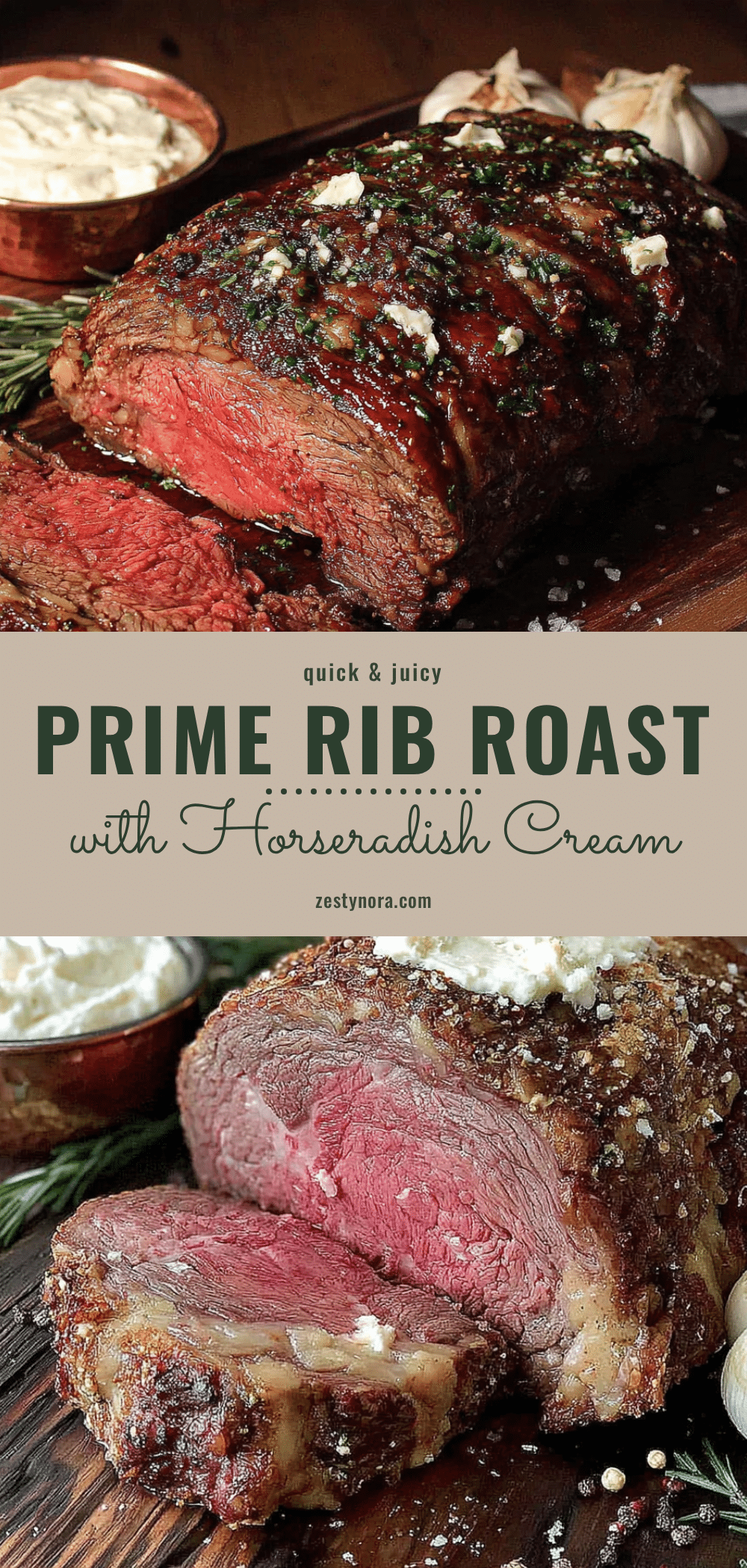
Quick Garlic Butter Prime Rib Roast with Horseradish Cream
A quick and easy prime rib recipe that goes from fridge to table in under two hours, featuring a garlic butter crust and creamy horseradish sauce. Perfect for holiday dinners when you’re short on time but want impressive results.
- Prep Time: 20 minutes
- Cook Time: 1 hour 30 minutes (for medium-rare at 5-7 lbs)
- Total Time: 1 hour 50 minutes (plus 2 hours resting meat before cooking)
- Yield: 8-10 servings 1x
- Category: Main Course
- Cuisine: American
Ingredients
- 1 (5-7 pound) bone-in prime rib roast
- 6 tablespoons unsalted butter, softened
- 6 cloves garlic, minced
- 2 teaspoons kosher salt
- 1 teaspoon black pepper, freshly ground
- 2 teaspoons fresh rosemary, chopped (or 1 teaspoon dried)
- 2 teaspoons fresh thyme leaves
- 1 tablespoon olive oil (optional, for searing)
- 1 cup heavy cream, cold
- 3 tablespoons prepared horseradish, drained
- 1 tablespoon white wine vinegar (or lemon juice)
- 1/2 teaspoon salt
- 1/4 teaspoon white pepper (or black pepper)
Instructions
- Take the chill off the meat: Pull your prime rib out of the fridge about 2 hours before cooking. Leave it wrapped on the counter.
- Preheat your oven to 450°F (230°C). Pat the roast dry with paper towels.
- Make the garlic butter: In a small bowl, mash together the softened butter, minced garlic, rosemary, thyme, salt, and pepper until uniform.
- Slather the garlic butter all over the roast, covering every surface. If tied, work the butter between the twine.
- Place the roast fat-side up on a rack in a roasting pan. Roast at 450°F for 20 minutes to create a crust.
- Reduce oven temperature to 325°F (165°C). Continue roasting until internal temperature reaches your target: Rare 120°F (49°C), Medium-rare 130°F (54°C), Medium 140°F (60°C). Total time: about 12-22 minutes per pound.
- Rest the roast: Tent loosely with foil and let rest for at least 20-30 minutes.
- While the roast rests, make the horseradish cream: In a medium bowl, combine heavy cream, drained horseradish, vinegar, salt, and white pepper. Whisk until soft peaks form.
- Remove twine if used. Slice between bones to remove rib section, then cut meat into 1-inch thick slices. Serve immediately with horseradish cream.
Notes
Don’t skip resting the meat for at least 20 minutes. Use a digital instant-read thermometer for accuracy. If you have time, salt the roast overnight in the fridge for deeper flavor. For the horseradish cream, ensure the horseradish is well-drained to prevent a runny sauce. Leftovers keep in the fridge for up to 4 days; reheat slices in a 300°F oven with a splash of beef broth.
Nutrition
- Serving Size: 6 oz with sauce
- Calories: 520
- Sugar: 1
- Sodium: 800
- Fat: 38
- Saturated Fat: 18
- Carbohydrates: 2
- Protein: 42
Keywords: prime rib, garlic butter, horseradish cream, quick prime rib, holiday roast, beef roast, Christmas dinner, Easter dinner