Honestly, I thought searing salmon to perfection was more luck than skill until a stubborn night in my kitchen changed everything. I’d always been wary of cooking salmon at home because, well, it seemed like a delicate balance that could easily tip from tender to dry or worse, fishy. And pairing it with something like a creamy charred cauliflower purée? That sounded like a fancy restaurant trick I could never pull off in my modest kitchen.
But there I was, armed with a fresh fillet and a head of cauliflower, trying to make sense of what felt like too many moving parts. The sizzling sound of the salmon hitting the hot pan was oddly satisfying, but I was still doubtful if the flavors would come together. The cauliflower, charred just enough to get that smoky edge, was whipped into a silky purée that smelled surprisingly inviting. It wasn’t instant love, more like a slow nod of approval as each bite unfolded.
What really stuck with me was how this dish managed to feel both comforting and a bit special — something that didn’t demand a culinary degree but still felt impressive on the plate. That night, I realized the perfect seared salmon with creamy charred cauliflower purée wasn’t just a recipe; it was proof that simple ingredients, handled with a bit of care, can really surprise you. It’s the kind of meal that makes you pause, savor, and quietly decide it deserves a regular spot on the dinner rotation.
Why You’ll Love This Recipe
From my countless kitchen experiments, this perfect seared salmon with creamy charred cauliflower purée recipe really stands out for a few reasons:
- Quick & Easy: You can have this ready in about 30 minutes, which is perfect for those evenings when you want something flavorful without spending hours cooking.
- Simple Ingredients: The best part? It calls for everyday staples. If you’ve got salmon and a cauliflower lying around, you’re halfway there.
- Perfect for Impressing Guests: This dish looks elegant but doesn’t require any fancy techniques—ideal for a cozy dinner party or date night.
- Crowd-Pleaser: Whether you’re cooking for family or friends, salmon’s mild flavor paired with the smoky creaminess of the cauliflower purée tends to win over even picky eaters.
- Unbelievably Delicious: The contrast between the crispy salmon skin and the smooth, charred purée is a texture and flavor combo that’s honestly hard to beat.
This isn’t just another salmon dinner. The trick lies in the char—giving the cauliflower a subtle smoky depth—and the timing, so the salmon skin crisps up beautifully while the flesh stays juicy. Plus, whipping the cauliflower into a creamy purée without cream makes it feel indulgent but lighter than you’d expect. It’s comfort food that feels fresh and modern, without any fuss.
What Ingredients You Will Need
This recipe uses simple, wholesome ingredients to deliver bold flavor and satisfying texture without the fuss. Most are pantry staples, and the fresh ones are easy to find year-round.
- Salmon Fillets: Skin-on, about 6 ounces (170g) each for the best sear and flavor. Choose wild-caught if you can for that clean taste.
- Cauliflower: One medium head, broken into florets. Fresh is best, but frozen can work if you roast it well.
- Olive Oil: Extra virgin for roasting and searing—adds a lovely fruity note.
- Butter: Unsalted, about 2 tablespoons, for finishing the salmon and adding richness to the purée.
- Garlic: 2 cloves, minced, to add a subtle aromatic depth to the purée.
- Shallots: One small shallot, finely chopped, brings sweetness and complexity.
- Heavy Cream or Milk: 1/4 cup (60ml) for creaminess—feel free to swap with unsweetened almond milk for a lighter or dairy-free option.
- Lemon: Zest and juice from half a lemon to brighten the salmon and cauliflower flavors.
- Salt and Pepper: Freshly ground, to taste—essential for seasoning.
- Fresh Herbs: Optional but recommended—chopped parsley or chives lend freshness.
Pro tip: I usually pick salmon fillets with firm, bright flesh and avoid any with a strong fishy odor. For the cauliflower, aiming for small to medium florets helps them char evenly. Also, if you want to experiment, adding a pinch of smoked paprika to the purée can bring an extra smoky layer that’s quite delightful.
Equipment Needed
- Heavy-Bottomed Skillet or Cast Iron Pan: For that perfect salmon sear and even heat distribution. I’ve found cast iron gives a better crust but a good stainless steel pan works well too.
- Baking Sheet: To roast the cauliflower florets evenly without crowding.
- Blender or Food Processor: Essential for turning the charred cauliflower into a smooth, creamy purée. A stick blender can work in a pinch.
- Sharp Chef’s Knife: For prepping the salmon and chopping aromatics.
- Spatula or Fish Turner: To flip the salmon gently without breaking the fillets.
- Measuring Cups and Spoons: For precise seasoning and cream addition.
If you’re on a budget, a simple non-stick pan can substitute the cast iron, but be mindful of heat control to avoid sticking. Keeping your knives sharp makes all the difference in prep speed and safety. Also, cleaning your blender right after use helps keep the purée silky without bits stuck around the blades.
Preparation Method
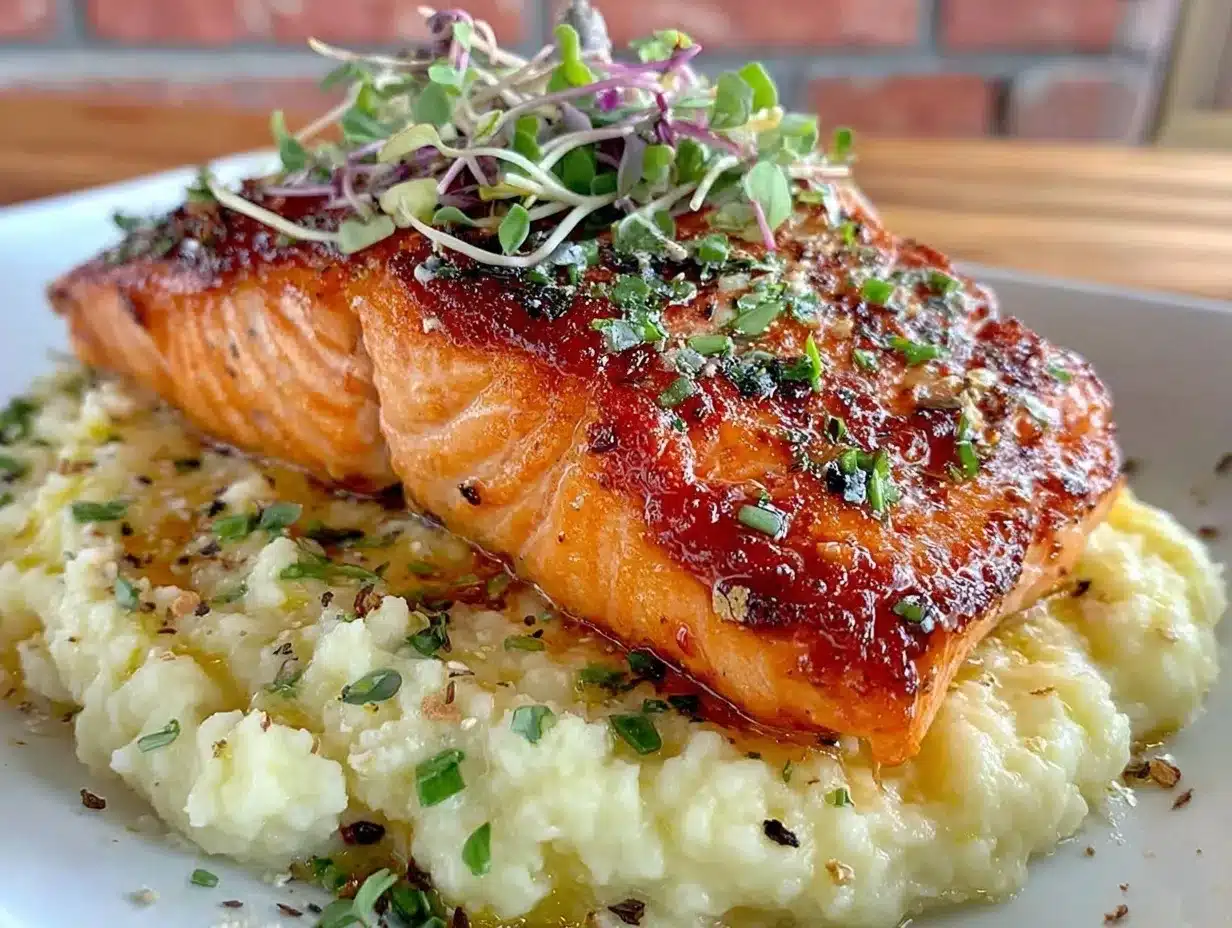
- Prep the Cauliflower: Preheat your oven to 425°F (220°C). Toss the cauliflower florets with 1 tablespoon of olive oil, salt, and pepper. Spread them evenly on a baking sheet. Roast for about 25 minutes, turning halfway through, until the edges are golden brown and a bit charred. You want that smoky flavor but avoid burning.
- Sauté Aromatics: While the cauliflower roasts, melt 1 tablespoon of butter in a small pan over medium heat. Add minced garlic and shallots, cooking gently until softened and fragrant (about 3 minutes). Be careful not to brown them too much; you want sweetness, not bitterness.
- Make the Purée: Transfer the roasted cauliflower to a blender or food processor. Add the sautéed garlic and shallots, heavy cream (or milk), lemon zest, and a pinch of salt and pepper. Blend until silky smooth, scraping down the sides as needed. Taste and adjust seasoning or add a splash more cream if you want it extra smooth.
- Prepare the Salmon: Pat the salmon fillets dry with paper towels—this step is crucial for a crispy skin. Season both sides with salt and freshly ground pepper.
- Sear the Salmon: Heat 1 tablespoon of olive oil in a heavy skillet over medium-high heat until shimmering. Place the salmon skin-side down and press lightly with a spatula for 10 seconds to prevent curling. Cook without moving for 4-5 minutes, until the skin is crisp and releases easily.
- Flip and Finish: Carefully flip the fillets and add the remaining tablespoon of butter. Spoon the melted butter over the salmon as it cooks for another 2-3 minutes, depending on thickness, until just cooked through and glossy.
- Plate and Serve: Spoon a generous dollop of the creamy charred cauliflower purée onto warm plates. Place the salmon fillet on top or alongside, and finish with a squeeze of fresh lemon juice and chopped herbs.
Timing tip: Start the cauliflower early since it takes the longest, and use that time to prep the salmon. The purée can be made just before plating to keep it fresh and warm. If your salmon seems to cook too fast, lower the heat slightly—patience pays off for that perfect sear.
Cooking Tips & Techniques
Getting that perfect sear on salmon is all about patience and prep. Don’t rush the skin side; it needs time to crisp up without flipping too soon. Pressing the fillet gently into the pan right when it hits the heat helps keep it flat and prevents curling. Also, patting the fish dry is non-negotiable—moisture is the enemy of crispness.
For the cauliflower purée, roasting until the edges are just charred adds a subtle smokiness you won’t get from steaming or boiling. I’ve learned the hard way that skipping the sautéed garlic and shallots makes the purée taste flat. Those little bursts of flavor are what bring it all together.
When blending, start with less cream and add as needed so the purée doesn’t become too thin. And don’t forget to season gradually—sometimes a pinch more salt or lemon juice makes the difference between “meh” and “wow.”
One personal fail I can share is trying to flip the salmon too early, which led to a torn skin and a sad-looking fillet. Let the fish tell you when it’s ready to flip; if it sticks, it’s not time yet.
Variations & Adaptations
- Dietary: For a dairy-free version, swap the butter for vegan margarine or olive oil, and use coconut milk instead of cream in the purée. It’s a bit tropical but delicious.
- Seasonal: In warmer months, add fresh herbs like dill or tarragon to the purée. In winter, a pinch of nutmeg can add warmth to the cauliflower.
- Flavor Boost: Try adding a teaspoon of smoked paprika or a dash of cayenne to the purée for a subtle kick.
- Cooking Method: If you don’t have a stove, you can bake the salmon at 400°F (200°C) for 10-12 minutes and broil the skin for 1-2 minutes to crisp it up.
- Personal Twist: I once swapped cauliflower with roasted parsnips and liked the slightly sweeter profile, but the charred cauliflower purée remains my favorite for that perfect balance.
Serving & Storage Suggestions
This dish is best served immediately while the salmon skin is crispy and the purée warm. Plate it with a sprinkle of fresh herbs and a lemon wedge on the side for an added zing. It pairs beautifully with a crisp green salad or simple steamed greens.
For leftovers, store the salmon and purée separately in airtight containers in the refrigerator for up to 2 days. When reheating, gently warm the purée in a saucepan or microwave until just heated through. Reheat the salmon skin-side down in a hot pan for a minute or two to bring back some crispness — microwaving salmon usually makes it rubbery, so avoid that.
Flavors tend to mellow overnight, so if you have time, letting the purée rest can deepen its taste—but the salmon is always best fresh.
Nutritional Information & Benefits
Each serving of this perfect seared salmon with creamy charred cauliflower purée offers approximately 400-450 calories, depending on portion size and cream used. Salmon is packed with omega-3 fatty acids, which support heart health and brain function. Cauliflower adds fiber and vitamin C, making this dish both nutritious and satisfying.
This meal is naturally gluten-free and can be adapted for low-carb or dairy-free diets with simple swaps. It’s a balanced option for anyone wanting a wholesome dinner that doesn’t skimp on flavor or texture.
Personally, I appreciate how this recipe fits into a wellness-focused lifestyle without feeling like a compromise—it’s nourishing and delicious, a rare combo that keeps me coming back.
Conclusion
All told, this recipe for perfect seared salmon with creamy charred cauliflower purée is one of those dishes that feels special but isn’t complicated. It’s approachable for home cooks who want to impress themselves and others without stress. The rich contrast of textures and flavors keeps it interesting, while the simple ingredients make it accessible.
Feel free to tweak the seasoning or swap out herbs to match your mood or what you have on hand. I love this recipe because it’s reliably delicious, and every time I make it, I’m reminded that great food doesn’t have to be fussy.
Go ahead, give it a try, and let me know how your own perfect seared salmon turns out. I’m always curious to hear about your twists and favorite accompaniments!
FAQs
How do I know when salmon is perfectly cooked?
The salmon is done when it flakes easily with a fork but still feels slightly firm. The flesh should be opaque with a hint of translucency in the center. Overcooking makes it dry, so timing is key.
Can I use frozen salmon for this recipe?
Yes, but make sure to thaw it fully and pat dry before cooking to get that crisp skin. Frozen salmon can release more moisture, which might affect the sear.
What if I don’t have a blender for the cauliflower purée?
A stick blender works great right in the pot or bowl. Alternatively, you can mash the cauliflower with a potato masher for a chunkier texture.
Is it okay to skip the lemon in the recipe?
Lemon brightens the flavors and cuts through the richness, but if you don’t have it, a splash of vinegar or a pinch of citrus zest can do the trick.
How can I make the salmon skin extra crispy?
Pat the skin very dry, use a hot pan with enough oil, and press the fillet down for the first 10 seconds to prevent curling. Avoid flipping too early, and don’t overcrowd the pan.
Pin This Recipe!
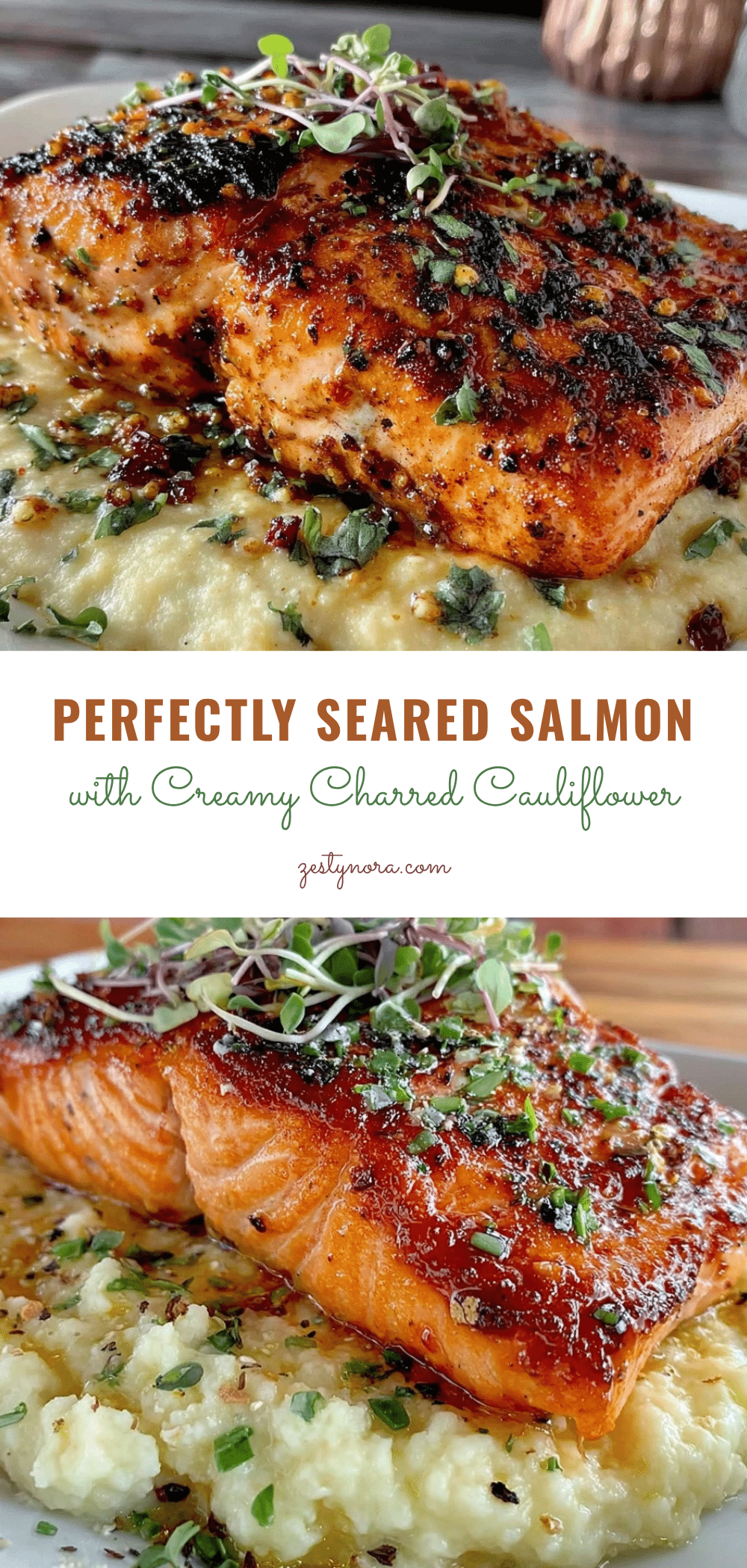
Perfect Seared Salmon Recipe with Creamy Charred Cauliflower Purée

A quick and easy recipe for perfectly seared salmon paired with a silky, smoky charred cauliflower purée. This dish is elegant yet simple, perfect for impressing guests or a cozy dinner.
- Prep Time: 10 minutes
- Cook Time: 25 minutes
- Total Time: 35 minutes
- Yield: 2 servings 1x
- Category: Main Course
- Cuisine: American
Ingredients
- 2 skin-on salmon fillets, about 6 ounces (170g) each
- 1 medium head cauliflower, broken into florets
- 3 tablespoons extra virgin olive oil, divided
- 2 tablespoons unsalted butter, divided
- 2 cloves garlic, minced
- 1 small shallot, finely chopped
- 1/4 cup (60ml) heavy cream or milk (or unsweetened almond milk for dairy-free)
- Zest and juice of half a lemon
- Salt and freshly ground black pepper, to taste
- Optional: chopped fresh parsley or chives for garnish
Instructions
- Preheat oven to 425°F (220°C). Toss cauliflower florets with 1 tablespoon olive oil, salt, and pepper. Spread evenly on a baking sheet and roast for about 25 minutes, turning halfway, until edges are golden brown and slightly charred.
- While cauliflower roasts, melt 1 tablespoon butter in a small pan over medium heat. Add minced garlic and shallots and cook gently for about 3 minutes until softened and fragrant, avoiding browning.
- Transfer roasted cauliflower to a blender or food processor. Add sautéed garlic and shallots, heavy cream (or milk), lemon zest, and a pinch of salt and pepper. Blend until smooth and silky, scraping down sides as needed. Adjust seasoning and cream for desired consistency.
- Pat salmon fillets dry with paper towels. Season both sides with salt and freshly ground pepper.
- Heat 1 tablespoon olive oil in a heavy-bottomed skillet or cast iron pan over medium-high heat until shimmering. Place salmon skin-side down and press lightly with a spatula for 10 seconds to prevent curling. Cook without moving for 4-5 minutes until skin is crisp and releases easily.
- Carefully flip salmon fillets and add remaining tablespoon of butter. Spoon melted butter over salmon as it cooks for another 2-3 minutes until just cooked through and glossy.
- To serve, spoon a generous dollop of creamy charred cauliflower purée onto warm plates. Place salmon fillet on or alongside the purée. Finish with a squeeze of fresh lemon juice and chopped herbs if desired.
Notes
Pat salmon dry before searing to ensure crispy skin. Press fillet gently into pan to prevent curling. Roast cauliflower until edges are just charred for smoky flavor. Use less cream initially when blending purée and add more as needed. For dairy-free, substitute butter with vegan margarine or olive oil and cream with coconut milk. Avoid flipping salmon too early to prevent tearing skin. Reheat leftovers gently to maintain texture.
Nutrition
- Serving Size: 1 salmon fillet with
- Calories: 425
- Sugar: 3
- Sodium: 150
- Fat: 28
- Saturated Fat: 9
- Carbohydrates: 8
- Fiber: 3
- Protein: 35
Keywords: seared salmon, charred cauliflower purée, creamy cauliflower, healthy salmon recipe, easy salmon dinner, gluten-free salmon, dairy-free option, quick dinner, elegant salmon dish