My niece looked up from the Halloween planning I was doing and asked why I couldn’t just use a regular fruit platter instead of making some complicated dessert. I started to explain why that wouldn’t work—then stopped. She had a point, honestly. I mean, here I was stressing about sugar overload and complicated recipes when the simplest answer was sitting right in front of me. A fruit tray. Just dressed up for the occasion.
The thing is, I’d been so caught up in the idea that holiday treats had to be indulgent that I forgot the best part of any gathering is having something everyone can actually enjoy. My niece, all of nine years old, looked at my elaborate Pinterest board and said, “But fruit is good, too.” Let me tell you, that hit different. I scrapped my plans and grabbed a big round platter, some yogurt, and every piece of fruit in my fridge. The result was this Light & Fresh Spider Web Fruit Tray with Yogurt Dip, and it honestly stole the show at the party.
Maybe you’ve been there—stuck between wanting to serve something festive and not wanting to undo all your healthy eating habits. This tray bridges that gap perfectly. It’s spooky enough for the kids, fresh enough for the adults, and comes together in about fifteen minutes. I keep making it because it proves you don’t need a ton of sugar to make something feel special. Sometimes the best ideas come from the people who haven’t learned to overcomplicate things yet.
Why You’ll Love This Recipe
After testing this fruit tray at three different gatherings (and watching it disappear every single time), I can tell you exactly why it works so well. Here’s what makes this Light & Fresh Spider Web Fruit Tray with Yogurt Dip a keeper:
- Quick & Easy: This comes together in under 15 minutes. No baking, no fancy equipment, no stress. Perfect for last-minute party planning or when the kids suddenly announce they need a class treat tomorrow morning.
- Simple Ingredients: You likely already have yogurt in your fridge and fruit in your bowl. The only special purchase might be some blackberries or grapes for the spider web design, but even those are easy to swap.
- Perfect for Halloween: This works for classroom parties, office potlucks, or family gatherings. It’s festive without being scary for the little ones, and parents appreciate having a healthier option among all the candy.
- Crowd-Pleaser: I’ve watched kids go back for thirds, and adults keep sneaking pieces when they think nobody’s looking. The yogurt dip is what really hooks people—it’s that good.
- Unbelievably Delicious: The combination of cold, crisp fruit with creamy, tangy yogurt dip is next-level refreshing. You’ll forget you’re eating something that’s actually good for you.
What sets this recipe apart is the yogurt dip. Most fruit dips are loaded with marshmallow fluff or cream cheese and sugar. Mine uses Greek yogurt with a touch of honey and vanilla—it’s light, protein-packed, and lets the fruit shine. I tested five different yogurt-to-honey ratios before landing on this one, and trust me, this is the sweet spot. It’s not just another fruit platter; it’s the version you’ll actually want to eat.
This recipe is comfort food reimagined—healthier, faster, but with the same soul-soothing satisfaction. Perfect for impressing guests without stress, or turning a simple snack into something memorable.
What Ingredients You Will Need
This recipe uses simple, wholesome ingredients to deliver bold flavor and satisfying texture without the fuss. Most of these are pantry staples or easy to find at any grocery store.
For the Fruit Tray
- Strawberries, hulled and halved (about 2 cups) – Look for bright red berries with green tops. They add that pop of color against the white yogurt.
- Blackberries (about 1 cup) – These create the spider web spokes and add a gorgeous dark contrast. I prefer Driscoll’s brand for consistent firmness.
- Green grapes (about 1 cup) – Seedless, please. They add sweetness and crunch. Red grapes work too, but green shows up better against the dark berries.
- Blueberries (about 1 cup) – These fill in the gaps and add little bursts of flavor. Wild blueberries are sweeter, but regular work fine.
- Apple slices (1 medium apple) – Granny Smith holds its color best, but Honeycrisp adds nice sweetness. Toss them in a little lemon juice if you’re making this ahead.
- Kiwi, peeled and sliced (2 kiwis) – The bright green adds another color layer. Make sure they’re ripe but still firm for clean slices.
- Mandarin orange segments (about 1 cup) – Canned (drained) or fresh both work. They add juicy sweetness that balances the tangy dip.
For the Yogurt Dip
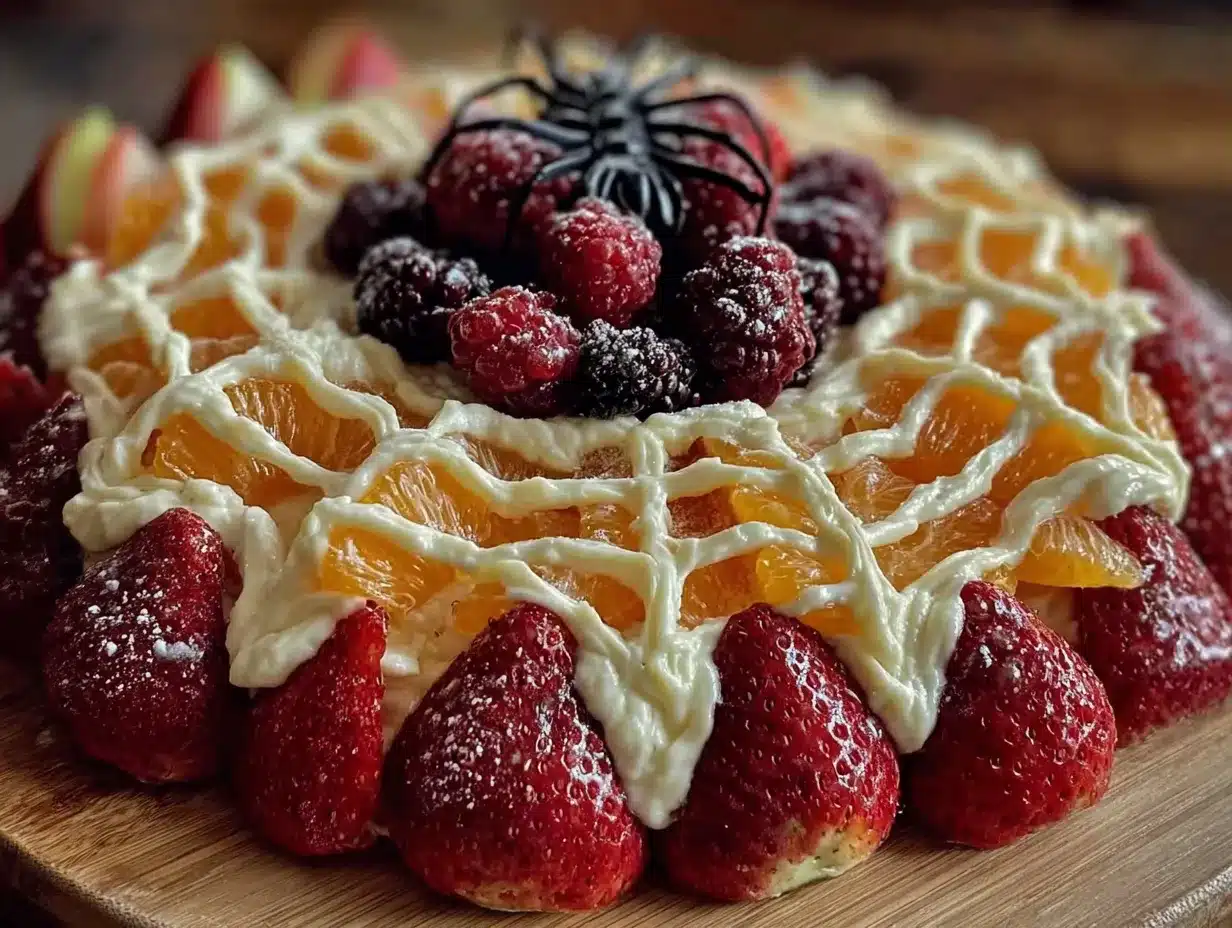
- Plain Greek yogurt (1 cup) – Full-fat gives the creamiest results, but 2% works great too. I recommend Fage or Chobani for thickness. Avoid nonfat—it gets too watery.
- Honey (2 tablespoons) – Local honey adds nice floral notes. Maple syrup works as a substitute if you’re vegan (use coconut yogurt instead).
- Vanilla extract (1 teaspoon) – Pure vanilla makes a difference. Skip the imitation stuff if you can.
- Lemon zest (from 1 small lemon) – This brightens everything up. Don’t skip it—it’s the secret to making the dip taste fresher than store-bought.
- Pinch of salt – Just a tiny bit balances the sweetness and brings out the fruit flavors.
For the Spider Web Design
- Blackberry juice or dark grape juice (2 tablespoons) – This creates the web lines. You can also use a little blackberry jam thinned with water.
- Small squeeze bottle or toothpick – For drawing the web. A clean ketchup bottle works if you don’t have a squeeze bottle.
For the fruit, I recommend shopping at a farmers’ market if you can—the berries are usually firmer and sweeter. If you’re using frozen fruit, thaw and drain it well first to avoid watery drips on the platter.
Equipment Needed
You don’t need much for this recipe, which is part of why I love it. Here’s what you’ll want to have on hand:
- Large round platter or serving board – A 12-inch round platter works best for the spider web design. A wooden cutting board or large dinner plate works too. I use a white ceramic platter because the contrast makes the web pop.
- Small mixing bowl – For the yogurt dip. Any medium bowl works.
- Small squeeze bottle or toothpick – For drawing the web lines. I lost my squeeze bottle once and used a clean medicine dropper—worked perfectly.
- Sharp knife and cutting board – For slicing fruit. A serrated knife works best for citrus and kiwi.
- Measuring spoons – For the dip ingredients. Eyeballing works, but measuring ensures consistency.
- Small spatula or spoon – For spreading the yogurt dip evenly.
If you don’t have a squeeze bottle, don’t stress. A toothpick dipped in blackberry juice works just fine for drawing the web lines—it just takes a little more patience. I’ve also used the tip of a butter knife in a pinch. Budget-friendly tip: dollar stores often carry small squeeze bottles perfect for this.
Preparation Method
Let me walk you through this step by step. The whole thing takes about 15 minutes, and most of that is just arranging fruit prettily.
- Make the yogurt dip (5 minutes). In your small mixing bowl, combine 1 cup plain Greek yogurt, 2 tablespoons honey, 1 teaspoon vanilla extract, the zest of 1 small lemon, and a pinch of salt. Whisk until smooth and creamy. Taste it—if you want it sweeter, add another half tablespoon of honey. Cover and refrigerate while you prep the fruit. The dip gets thicker and more flavorful as it sits.
- Prep your fruit (5 minutes). Wash everything thoroughly. Hull and halve the strawberries. Slice the kiwi into thin rounds. Cut the apple into thin wedges—toss with a little lemon juice if you’re worried about browning. Drain the mandarin oranges if using canned. Leave the blackberries, blueberries, and grapes whole. Pat everything dry with paper towels; wet fruit makes the yogurt dip slide around.
- Spread the yogurt base (2 minutes). Take your large round platter. Using your small spatula or the back of a spoon, spread the yogurt dip in a circle in the center of the platter. Make it about 6 inches across and about 1/4 inch thick. Leave a border around the edges for the fruit. Don’t make it too thin or the fruit won’t stick.
- Create the spider web spokes (3 minutes). This is the fun part. Take your blackberries and arrange them in straight lines radiating outward from the yogurt circle, like spokes on a wheel. Space them evenly—I usually do 6 to 8 spokes. The blackberries should extend from the edge of the yogurt dip to the outer edge of the platter. Use about 3-4 blackberries per spoke.
- Fill in between the spokes. Now arrange the rest of your fruit in the spaces between the blackberry spokes. I like to group similar fruits together for visual appeal: strawberries in one section, kiwi in another, grapes in another. Alternate colors for maximum impact. Press the fruit gently into the yogurt where they touch to help them stay put.
- Draw the web lines (2 minutes). If you’re using a squeeze bottle, fill it with the blackberry juice. Starting from the center yogurt circle, draw curved lines between each blackberry spoke to create the web effect. Connect each spoke to the next with a gentle curve. If using a toothpick, dip it in the juice and draw the lines carefully. Don’t worry about perfection—slightly uneven lines look more organic and web-like.
- Add the finishing touches. Fill any empty spots with blueberries or extra fruit pieces. The platter should look abundant and full. Add a small bowl of extra yogurt dip on the side if you want, though the center dip should be enough for everyone.
- Chill and serve. Refrigerate the tray for at least 15 minutes before serving. This helps the yogurt firm up and the flavors meld. Take it out about 5 minutes before serving to take the chill off—fruit tastes best slightly cool, not ice cold.
Cooking Tips & Techniques
After making this tray about a dozen times (including some spectacular failures), here’s what I’ve learned:
Keep the fruit dry. This is the number one mistake I made early on. Wet fruit makes the yogurt dip watery and runny, and your beautiful spider web turns into a mess. Wash your fruit ahead of time and let it air dry on paper towels for at least 10 minutes before assembling. Pat everything dry right before you arrange it.
Don’t overmix the dip. I learned this the hard way when I whisked the yogurt too vigorously and it turned thin and soupy. Stir gently until just combined. Overmixing breaks down the yogurt’s structure and makes it runny. If your dip seems too thin, add a tablespoon more yogurt to thicken it up.
Temperature matters. Cold yogurt spreads much easier than room temperature. Keep your yogurt in the fridge until the last minute. If you’re making this for a party, assemble the tray no more than 2 hours ahead. Any longer and the fruit starts releasing juices that make the yogurt watery. Trust me on this—I prepped one the night before and woke up to a soggy mess.
Use the right platter. A white or light-colored round platter makes the spider web design pop. Dark platters hide the contrast. I learned this when I used my grandmother’s dark blue platter and the web was practically invisible. Stick with white or cream for maximum visual impact.
Practice your web design. If you’re nervous about the spider web, practice on a piece of wax paper first. Draw a few circles and spokes until you get the hang of it. Your first attempt won’t be perfect, and that’s okay—it adds character. The kids at my Halloween party actually preferred the slightly messy web because it looked more “realistic.”
Variations & Adaptations
This recipe is incredibly flexible. Here are some ways to make it your own:
Dairy-Free Version: Swap the Greek yogurt for coconut yogurt or cashew-based yogurt. Coconut yogurt is thicker and holds up better. Use maple syrup instead of honey to keep it vegan. The flavor will be slightly different but still delicious—I actually prefer the coconut version sometimes for the tropical hint.
Seasonal Fruit Swaps: In summer, use fresh peaches, nectarines, and raspberries. In fall, try sliced pears, pomegranate seeds, and persimmons. Winter calls for blood oranges, pomelos, and star fruit. The spider web design works with any colorful fruit—just keep the contrast in mind. Dark berries create the best spokes, but you can use dark grapes or even dried figs in a pinch.
Flavor Boosters: Add a tablespoon of cocoa powder to the yogurt dip for a chocolate version—it’s surprisingly good with strawberries. Or mix in a teaspoon of cinnamon and a pinch of nutmeg for a fall twist. I once added a splash of orange juice to the dip and it was incredible with the kiwi and grapes.
Individual Servings: Instead of one large tray, make individual spider web cups. Layer yogurt dip at the bottom of small clear cups, then arrange fruit in a web pattern on top. Perfect for parties where people are standing and mingling. Kids love having their own personal spider web.
Savory Twist: For a non-dessert version, use plain yogurt mixed with herbs (dill, chives, parsley) and arrange vegetable sticks (carrot, cucumber, bell pepper) in the web pattern. The spider web design works just as well for a savory appetizer platter.
Serving & Storage Suggestions
This tray is best served cold, straight from the fridge. The contrast between the chilled fruit and the creamy yogurt dip is what makes it so refreshing. I like to set it out about 5 minutes before guests arrive so it’s not ice cold, but still nicely cool.
What to serve alongside: This fruit tray pairs beautifully with other light appetizers. I often serve it alongside a cheese board with mild cheeses like brie or goat cheese. It also works great as a dessert option after a heavy meal—the lightness balances out richer dishes. For a Halloween party, I add a bowl of popcorn and some pretzel sticks for salty contrast.
Storage: If you have leftovers (which honestly, rarely happens), store the fruit and yogurt dip separately. The fruit keeps in an airtight container in the fridge for 1-2 days. The yogurt dip stays good for up to 3 days. Don’t store assembled leftovers—the fruit will make the yogurt watery overnight.
Reheating: This is a no-reheat recipe. If the dip has been sitting out for more than 2 hours, toss it. Food safety first, especially with dairy. The fruit can be refreshed by giving it a quick rinse and patting dry before serving again.
Make-ahead tips: You can wash and slice the fruit up to a day ahead. Store each type separately in the fridge. The yogurt dip can be made 2 days ahead. Just assemble everything within 2 hours of serving for the best presentation. The flavors actually improve after the dip sits overnight—the honey and vanilla meld together beautifully.
Nutritional Information & Benefits
Here’s the approximate nutritional breakdown per serving (based on 8 servings):
- Calories: 120-140
- Protein: 6-8g (from the Greek yogurt)
- Carbohydrates: 22-26g (natural sugars from fruit and honey)
- Fiber: 3-4g
- Fat: 2-3g (from yogurt)
- Vitamin C: 60-80% of daily value
- Calcium: 10-15% of daily value
The health benefits here are real. Greek yogurt is packed with probiotics for gut health and protein for satiety. Berries are loaded with antioxidants that fight inflammation. Kiwi provides more vitamin C than an orange, and apples offer fiber that keeps you full. This is a treat that actually nourishes your body.
For those watching sugar intake, the honey adds about 3-4 grams per serving, which is minimal compared to traditional fruit dips made with marshmallow fluff or condensed milk. You can reduce the honey to 1 tablespoon if you prefer a tarter dip. The fruit itself provides natural sweetness without refined sugar.
Dietary considerations: This recipe is naturally gluten-free, nut-free, and vegetarian. For a vegan version, use coconut yogurt and maple syrup. For a lower-carb option, use fewer grapes and more berries and kiwi.
Frequently Asked Questions
Can I make this fruit tray the night before?
I don’t recommend it. The fruit releases juices that make the yogurt dip watery and runny. You can prep the fruit and dip separately the night before, but assemble the tray no more than 2 hours before serving for the best presentation.
What if I can’t find blackberries for the web spokes?
No problem! Use dark grapes, blueberries, or even sliced figs instead. The key is using a dark-colored fruit that creates visual contrast against the lighter fruits. You can also use pomegranate seeds for a different look.
How do I keep the apple slices from turning brown?
Toss them in a little lemon juice or lime juice right after slicing. The acid prevents oxidation. You can also use a commercial product like Fruit-Fresh, but lemon juice works just fine and adds a nice flavor boost.
Can I use frozen fruit for this recipe?
You can, but thaw and drain it thoroughly first. Frozen fruit releases a lot of water as it thaws, which will make your yogurt dip watery. Pat the fruit dry with paper towels before arranging. Fresh fruit really does work better here for both texture and presentation.
What’s the best way to transport this fruit tray to a party?
Assemble the tray at home, then cover it tightly with plastic wrap. Place it on a flat surface in your car—the trunk or back seat floor works well. Keep it refrigerated until you’re ready to leave. If traveling more than 30 minutes, bring a small cooler to keep it cold.
Conclusion
This Light & Fresh Spider Web Fruit Tray with Yogurt Dip has become my go-to for every Halloween gathering, and honestly, for any party where I want to offer something that feels special without the guilt. It’s proof that festive food doesn’t have to be loaded with sugar and artificial colors. Sometimes the simplest ideas—like a nine-year-old asking why we can’t just use fruit—turn into the best traditions.
I love how this recipe brings people together. Kids get excited about the spider web design, adults appreciate the healthier option, and everyone goes back for seconds of that yogurt dip. It’s the kind of recipe that makes you feel good about what you’re serving, both in terms of nutrition and the joy it brings.
I’d love to hear how your spider web fruit tray turns out! What fruits did you use? Did the kids help arrange the web? Drop a comment below and share your creation—I’m always looking for new variations to try. And if you loved this recipe, please share it with your friends and family. Happy Halloween, and happy healthy eating!
Pin This Recipe!
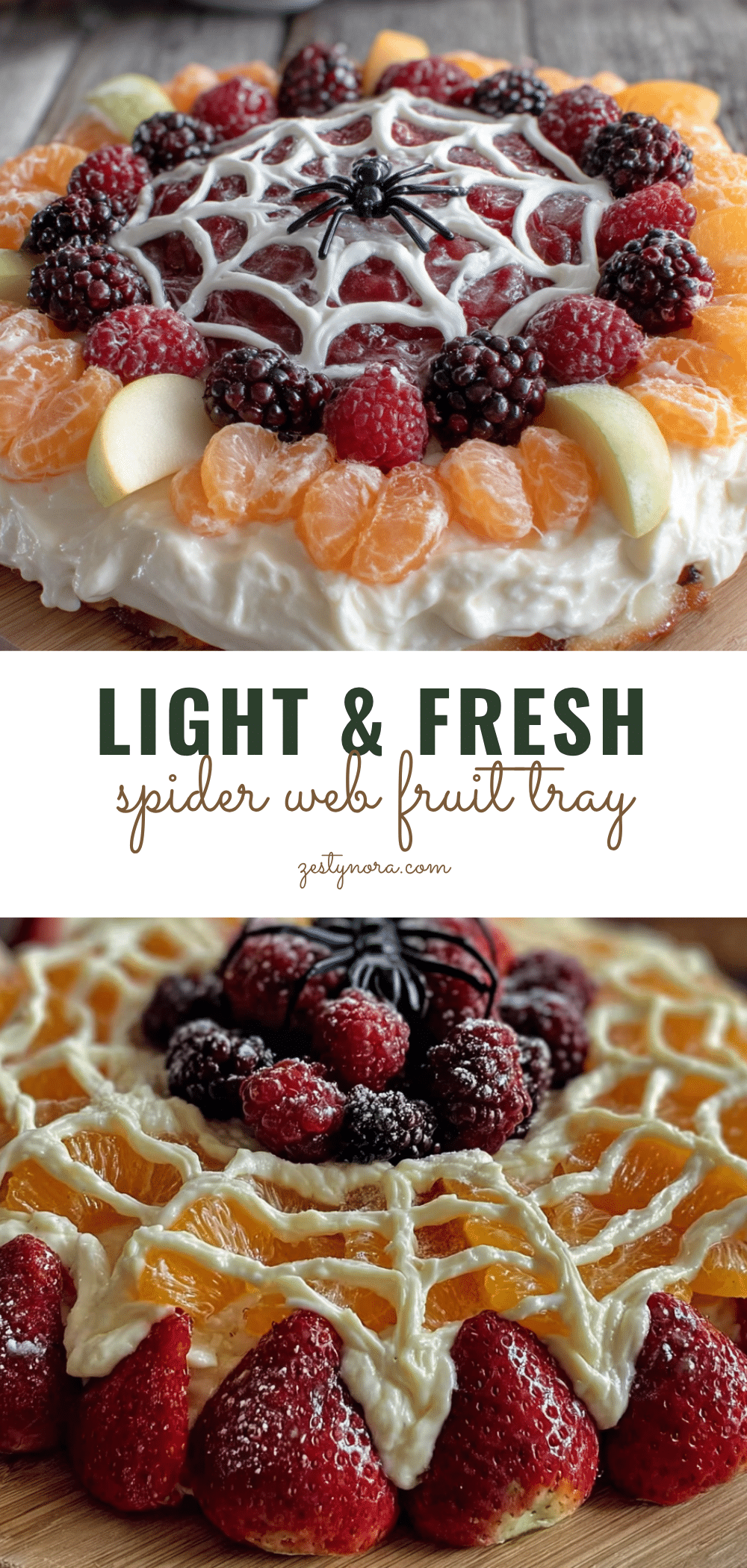
Light & Fresh Spider Web Fruit Tray with Easy Yogurt Dip
A festive and healthy Halloween fruit tray featuring a spider web design with fresh fruit and a creamy Greek yogurt dip. Quick to assemble in under 15 minutes, it’s a crowd-pleaser that’s perfect for parties and guilt-free indulgence.
- Prep Time: 15 minutes
- Cook Time: 0 minutes
- Total Time: 15 minutes
- Yield: 8 servings 1x
- Category: Appetizer
- Cuisine: American
Ingredients
- 2 cups strawberries, hulled and halved
- 1 cup blackberries
- 1 cup green grapes, seedless
- 1 cup blueberries
- 1 medium apple (Granny Smith or Honeycrisp), sliced
- 2 kiwis, peeled and sliced
- 1 cup mandarin orange segments (canned, drained, or fresh)
- 1 cup plain Greek yogurt (full-fat or 2%)
- 2 tablespoons honey
- 1 teaspoon vanilla extract
- Zest of 1 small lemon
- Pinch of salt
- 2 tablespoons blackberry juice or dark grape juice (for web design)
- Small squeeze bottle or toothpick (for drawing web)
Instructions
- Make the yogurt dip: In a small mixing bowl, combine 1 cup plain Greek yogurt, 2 tablespoons honey, 1 teaspoon vanilla extract, the zest of 1 small lemon, and a pinch of salt. Whisk until smooth and creamy. Taste and adjust sweetness if desired. Cover and refrigerate while prepping fruit.
- Prep the fruit: Wash all fruit thoroughly. Hull and halve strawberries. Slice kiwi into thin rounds. Cut apple into thin wedges (toss with lemon juice to prevent browning if desired). Drain mandarin oranges if using canned. Leave blackberries, blueberries, and grapes whole. Pat all fruit dry with paper towels.
- Spread the yogurt base: On a large round platter, use a small spatula or the back of a spoon to spread the yogurt dip in a circle in the center, about 6 inches across and 1/4 inch thick. Leave a border around the edges for fruit.
- Create the spider web spokes: Arrange blackberries in straight lines radiating outward from the yogurt circle, like spokes on a wheel. Space evenly (6 to 8 spokes), using about 3-4 blackberries per spoke, extending from the edge of the yogurt to the outer edge of the platter.
- Fill in between the spokes: Arrange the rest of the fruit in the spaces between the blackberry spokes. Group similar fruits together for visual appeal (e.g., strawberries in one section, kiwi in another, grapes in another). Alternate colors for maximum impact. Press fruit gently into the yogurt where they touch.
- Draw the web lines: If using a squeeze bottle, fill it with blackberry juice. Starting from the center yogurt circle, draw curved lines between each blackberry spoke to create the web effect, connecting each spoke to the next with a gentle curve. If using a toothpick, dip it in the juice and draw lines carefully.
- Add finishing touches: Fill any empty spots with blueberries or extra fruit pieces. The platter should look abundant and full. Optionally, add a small bowl of extra yogurt dip on the side.
- Chill and serve: Refrigerate the tray for at least 15 minutes before serving. Take it out about 5 minutes before serving to take the chill off. Serve cold.
Notes
Keep fruit dry to prevent yogurt from becoming watery. Assemble no more than 2 hours before serving for best presentation. For dairy-free version, use coconut yogurt and maple syrup. Practice web design on wax paper first if nervous. Leftovers: store fruit and dip separately.
Nutrition
- Serving Size: 1 serving (approxima
- Calories: 130
- Sugar: 18
- Sodium: 45
- Fat: 2.5
- Saturated Fat: 1.5
- Carbohydrates: 24
- Fiber: 3.5
- Protein: 7
Keywords: Halloween fruit tray, spider web fruit platter, healthy Halloween snack, yogurt dip, fruit platter, easy appetizer, party fruit tray