Marta, the woman who runs the little produce stand at the end of my street, watched me staring at a pile of butternut squash one chilly October morning. I was trying to figure out how to get my kids to eat this thing without a fight or a bribe. She didn’t say anything at first. Then she just picked up a squash, handed it to me, and said, “You make it sweet, like a candy. They will eat it. Trust me.” She didn’t give me a recipe right then, just that one piece of advice. We got to talking about her family back in Portugal, and how she used to roast squash with honey and pine nuts for her own boys. I went home that day with the squash and a promise to myself to figure out a version my own picky eaters would actually ask for. Honestly, it took a few tries. The first batch was too savory, the second too mushy. But the third time, with a generous drizzle of maple syrup and some crunchy pecans, I hit the jackpot. The kids didn’t just eat it; they asked for seconds. Marta was right. You just have to make it sweet, like a candy.
This recipe for Kid-Friendly Maple Roasted Butternut Squash with Pecans is the direct result of that conversation. It’s the side dish that finally got my family to stop side-eyeing the vegetables on their plates. Maybe you’ve been there, trying every trick in the book to get a little green (or in this case, orange) onto the dinner table. This one is different. It’s not about hiding the squash; it’s about making it so undeniably delicious that no one cares it’s good for them. The maple syrup caramelizes in the oven, creating these gorgeous, sticky edges, and the pecans add a toasty crunch that makes it feel almost like a treat. It’s become our go-to for everything from busy Tuesday night dinners to Thanksgiving, and it’s the recipe that makes me feel like a pretty smart cook, even on my most tired days.
Why You’ll Love This Recipe
I have tested this recipe more times than I can count, tweaking the temperature, the size of the cubes, and the amount of maple syrup until it was just right. What I ended up with is a dish that hits every single note a busy parent is looking for. It’s not just another roasted vegetable recipe; it’s the one that actually works for our family.
- Quick & Easy: With only about 10 minutes of active prep time, this comes together in a flash. The oven does all the hard work, freeing you up to focus on the main dish.
- Simple Ingredients: You probably already have maple syrup, oil, and salt in your pantry. All you need to grab is a butternut squash and some pecans. No fancy grocery store trips required.
- Perfect for Regular Family Meals: This isn’t a special-occasion-only dish. It’s simple enough for a weeknight but pretty enough for a holiday table. It fits right in with roasted chicken, pork chops, or even a cozy pasta bake.
- Crowd-Pleaser: My kids, who once claimed to hate squash, now ask for this by name. The sweet maple glaze and crunchy pecans are a winning combo for even the pickiest eaters.
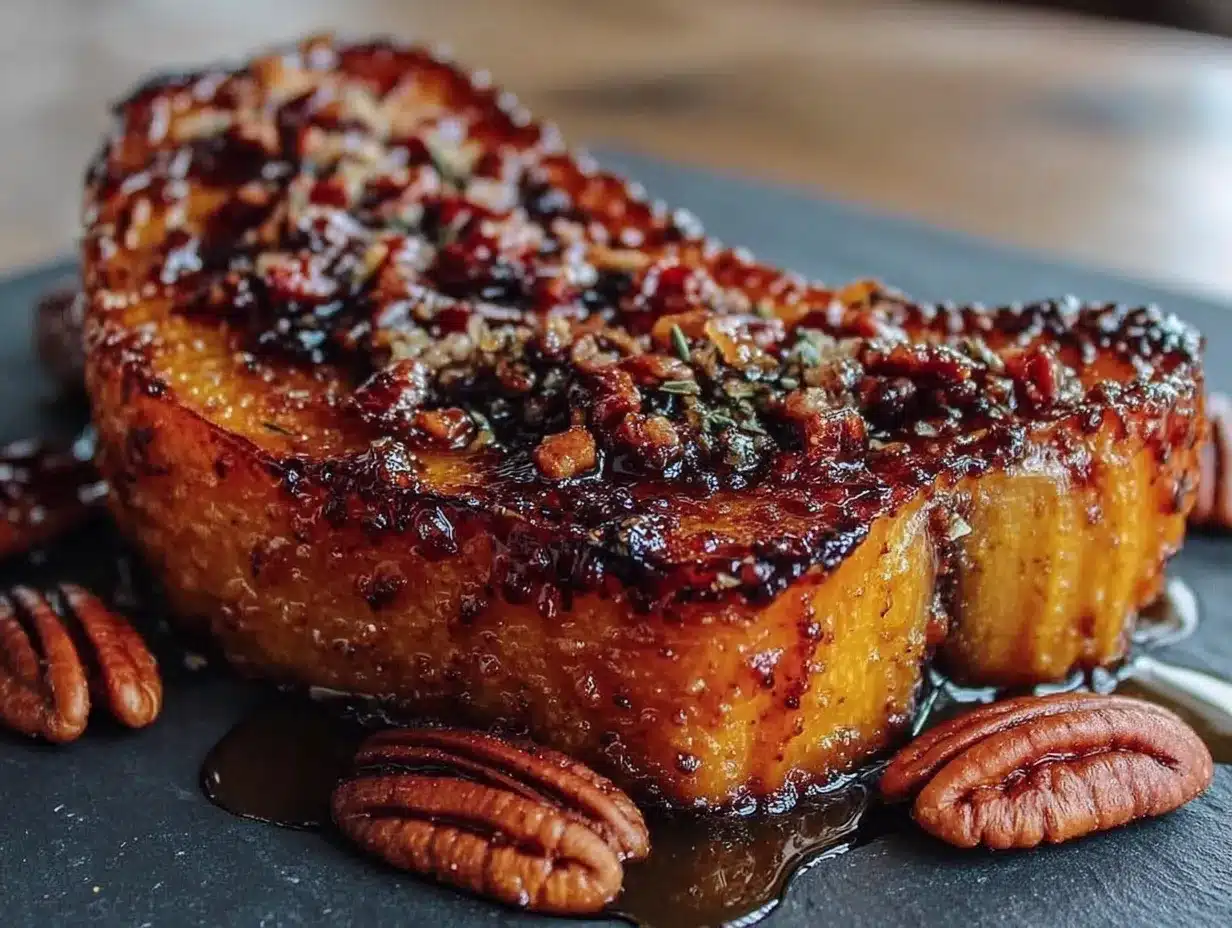
- Unbelievably Delicious: The texture is what gets me every time. The squash gets incredibly tender and creamy on the inside, while the edges caramelize into these little pockets of sweet, sticky goodness. The pecans toast right alongside it, adding a warm, nutty crunch that makes every bite interesting.
This recipe is different from the rest because of the technique. Instead of just tossing everything together, we take a moment to toss the pecans in a little maple syrup separately before adding them. This ensures they get perfectly candied and crunchy, rather than just soggy. It’s a small step that makes a huge difference. This is the kind of side dish that makes you close your eyes after the first bite. It’s comfort food reimagined—healthier, faster, but with the same soul-soothing satisfaction. It is perfect for impressing guests without stress, or turning a simple meal into something memorable.
What Ingredients You Will Need
This recipe relies on a handful of simple, wholesome ingredients to create something truly special. Each one plays a key role in building that perfect balance of sweet, savory, and crunchy. Most of these are pantry staples, making this an easy recipe to whip up on a whim.
- Butternut Squash (1 large, about 2.5 to 3 pounds): This is the star of the show. Look for a squash that feels heavy for its size with a firm, unblemished skin. I find that pre-cut squash from the store can be uneven, so I prefer to buy a whole one and cube it myself. It takes an extra five minutes, but the consistent size means even cooking. You’ll need about 4-5 cups of cubed squash.
- Pure Maple Syrup (¼ cup): Please, please use real maple syrup here, not pancake syrup. The flavor is complex and not just cloyingly sweet. It’s what creates that beautiful caramelization. I prefer a darker amber syrup for a more robust flavor, but any pure maple syrup will work beautifully.
- Pecan Halves (½ cup): These add that essential crunch. I like to use pecan halves because they look prettier and offer a bigger crunch, but chopped pecans work just as well. Make sure they are fresh—give them a sniff; rancid pecans will ruin the dish.
- Avocado Oil (2 tablespoons): Avocado oil has a high smoke point, which is perfect for roasting at 400°F. It has a neutral flavor that lets the squash and maple shine. You can substitute with melted coconut oil or a light olive oil if that’s what you have on hand.
- Unsalted Butter (1 tablespoon, melted): This adds a touch of richness and helps the squash get those gorgeous golden-brown edges. It also helps the seasoning stick. You can use a dairy-free butter alternative or just use all oil if you need it to be dairy-free.
- Ground Cinnamon (½ teaspoon): A little warmth goes a long way. Cinnamon pairs perfectly with the maple and squash, making the whole dish taste cozy and autumnal. You can also use pumpkin pie spice for a more complex flavor.
- Sea Salt (½ teaspoon): This is non-negotiable. The salt balances the sweetness of the maple syrup and brings out the natural flavor of the squash. I like to use a flaky sea salt at the end for a final pop of flavor and texture.
- Fresh Thyme (optional, 1 teaspoon, leaves only): This is my secret weapon. The earthy, slightly floral notes of fresh thyme cut through the sweetness beautifully. It’s not traditional, but it adds a layer of sophistication that makes this dish feel grown-up, even while the kids are loving it. If you don’t have fresh, skip it—dried won’t have the same effect here.
Equipment Needed
You don’t need a lot of fancy equipment to make this recipe, which is one of the reasons I love it. A few basic kitchen tools are all it takes to get this on the table.
- Large Baking Sheet (18×13 inch or similar): A rimmed baking sheet is crucial. It catches any sticky maple syrup drips and prevents a mess in your oven. I recommend using a heavy-duty, light-colored metal pan for the most even browning. Darker pans can cause the bottoms to burn before the squash is tender.
- Sharp Chef’s Knife and Cutting Board: A sharp knife is your best friend when dealing with a hard butternut squash. It makes the job safer and much easier. A large, sturdy cutting board will give you plenty of room to work.
- Vegetable Peeler: You’ll need this to remove the tough skin from the squash. A Y-shaped peeler is my favorite for this job because it glides around the curves of the squash so easily.
- Large Mixing Bowl: You’ll use this to toss the squash cubes with the oil, butter, and maple mixture. A big bowl makes it much easier to get everything evenly coated without making a mess.
- Small Bowl: This is for tossing the pecans with their own little bit of maple syrup before adding them to the pan.
- Spatula or Wooden Spoon: For tossing the squash halfway through roasting and for serving.
If you don’t have a Y-peeler, a standard vegetable peeler will work, it just might take a little more effort. And honestly, I’ve used a paring knife in a pinch to cut the skin off, but it takes a lot longer. A good baking sheet is worth the investment—it’s a workhorse in any kitchen.
Preparation Method
Let’s get cooking! This method is straightforward, but I’ve included a few little tricks I’ve learned along the way to make sure it turns out perfectly every single time. Follow these steps, and you’ll have a side dish that steals the show.
- Preheat and Prep: First things first, preheat your oven to 400°F (200°C). Place your oven rack in the middle position. While the oven is heating up, line your large baking sheet with parchment paper for easy cleanup. I don’t always use foil, as the maple syrup can sometimes react with it.
- Prepare the Squash: This is the most important step. Using a sharp chef’s knife, carefully cut off both ends of the butternut squash. Then, cut it in half crosswise, separating the long neck from the round bulb. Stand the neck piece upright and carefully slice off the thick skin, following the curve of the squash with your knife or peeler. Do the same for the round bulb, then cut it in half and scoop out the seeds and stringy bits with a spoon. Now, cut all the squash into uniform ¾-inch cubes. This size is perfect—big enough to not get mushy, but small enough to cook through quickly. Don’t stress about being perfect, but try to keep them similar in size so they finish at the same time.
- Make the Glaze: In your large mixing bowl, whisk together the ¼ cup of maple syrup, 2 tablespoons of avocado oil, and 1 tablespoon of melted butter. Add the ½ teaspoon of cinnamon and ½ teaspoon of sea salt. This is your flavor base. Give it a good taste—it should be sweet, salty, and a little bit buttery. If you’re using the fresh thyme, stir that in now too.
- Toss the Squash: Add all the cubed squash to the bowl with the glaze. Using a spatula or your hands (I find hands work best for even coating!), toss everything together until every single piece of squash is glistening and well-coated. Make sure to get the glaze into all the nooks and crannies.
- Spread and Roast: Pour the glazed squash onto your prepared baking sheet and spread it out into a single, even layer. This is crucial. If the pieces are crowded or overlapping, they will steam instead of roast, and you won’t get those beautiful caramelized edges. Give them a little space to breathe. Roast for 20 minutes.
- Prepare the Pecans: While the squash is roasting, toss the ½ cup of pecan halves in a small bowl with about 1 tablespoon of the remaining maple syrup (just eyeball it). You want them lightly coated, not swimming in it. Set them aside.
- Flip and Add Pecans: After 20 minutes, carefully pull the baking sheet out of the oven. Use your spatula to flip the squash pieces over. This helps them brown evenly on all sides. Now, sprinkle the maple-coated pecans over the squash. Don’t bury them; just scatter them around so they can toast.
- Final Roast: Return the baking sheet to the oven and roast for another 15-20 minutes. The squash is done when it is fork-tender and the edges are deeply caramelized and sticky. The pecans should be fragrant and golden brown. Keep an eye on them in the last few minutes—pecans can go from toasted to burnt very quickly.
- Rest and Serve: Once it’s out of the oven, let it rest on the baking sheet for about 5 minutes. This allows the glaze to set up a little. Transfer it to a serving dish. If you want, you can sprinkle a tiny pinch of flaky sea salt over the top right before serving. It sounds weird, but that final salty pop against the sweet maple is absolutely incredible.
Cooking Tips & Techniques
Over the years, I’ve made every mistake in the book with roasted vegetables. Here are the lessons I’ve learned so you don’t have to make them yourself. These tips are the difference between a good side dish and a great one.
- The Crowding Trap: My biggest failure was always overcrowding the pan. I wanted to get it all done at once, so I’d pile the squash on. The result? Soggy, steamed squash. It needs room! If your baking sheet is too small, use two. The hot air needs to circulate around each cube to caramelize the sugars. Trust me on this one; a single layer is non-negotiable.
- Cut for Consistency: I learned this the hard way after a batch of half-burnt, half-raw squash. Take the extra two minutes to cut your cubes the same size. A ¾-inch cube is my sweet spot. It’s big enough to have a creamy interior but small enough to get those crispy edges in the 35-40 minute total roasting time.
- Don’t Skip the Flip: I know it’s tempting to just set the timer and walk away, but flipping the squash halfway through is key. It ensures even browning and allows the bottom of the cubes to get their chance at the hot pan. I use a thin metal spatula for this, and it works like a charm.
- The Pecan Timing: This was a game-changer for me. I used to add the pecans at the very beginning, and they would always burn. Now, I add them for the last 15-20 minutes. They get perfectly toasted and candied without a hint of bitterness. It’s a small adjustment that makes a huge difference.
- Room Temperature Matters: If your maple syrup is cold and thick from the fridge, it won’t coat the squash as well. Let it sit out for a few minutes while you prep the squash, or warm the bowl of glaze slightly. A smooth, even coating is what we’re after.
Variations & Adaptations
One of the best things about this recipe is how easy it is to change it up. I love playing with different flavors and ingredients to keep it exciting. Here are a few of my favorite ways to adapt it.
- Spicy Maple Kick: For the adults at the table, I sometimes add a pinch of cayenne pepper or a dash of red pepper flakes to the glaze. The heat plays beautifully off the sweet maple and creates a wonderful sweet-and-spicy contrast. My husband loves this version.
- Savory Herb Twist: Instead of cinnamon and thyme, try using fresh rosemary and a clove of minced garlic. Toss the garlic with the squash, and add the whole rosemary sprigs to the pan while it roasts. The aroma is incredible, and it gives the dish a more savory, almost Thanksgiving-dinner vibe.
- Swap the Nuts: If you have a nut allergy in the house or just want to try something different, you can easily swap the pecans. Toasted pumpkin seeds (pepitas) are fantastic—they get nice and crunchy. Walnuts or even slivered almonds would also work beautifully. Just keep an eye on them as they can burn quickly.
- Make it a Meal: This roasted squash is amazing on its own, but it’s also a fantastic base for a grain bowl. Toss it with some cooked farro or quinoa, crumbled feta cheese, dried cranberries, and a simple lemon vinaigrette. It’s a hearty, healthy lunch that comes together in minutes.
- Maple Balsamic Version: For a more complex, tangy-sweet flavor, swap out 1 tablespoon of the maple syrup for 1 tablespoon of good balsamic vinegar. The balsamic reduces and gets syrupy in the oven, adding a wonderful depth that the kids still love. This is my go-to when I’m serving it with a roast chicken.
Serving & Storage Suggestions
This dish is incredibly versatile. It’s just as good straight out of the oven as it is at room temperature. Here’s how I like to serve it and how to handle any leftovers (if there are any!).
- Serving Temperature: I prefer to serve this Maple Roasted Butternut Squash warm, right after it’s come out of the oven. The pecans are at their crunchiest, and the maple glaze is perfectly sticky. However, it’s also delicious at room temperature, making it a great option for potlucks or holiday buffets.
- Presentation: Transfer the squash to a warm serving platter. I like to sprinkle a few extra fresh thyme leaves and a tiny pinch of flaky sea salt over the top right before serving. It adds a beautiful pop of color and that final touch of flavor. A simple white platter makes the orange and brown colors really pop.
- What to Serve With It: This side dish is a dream with so many mains. It’s a natural partner for roasted chicken, pork tenderloin, or a juicy steak. I also love it alongside a cozy bowl of soup and some crusty bread for a simple, satisfying meal. For a holiday table, it fits right in next to the turkey and mashed potatoes.
- Storage Instructions: Store any leftovers in an airtight container in the refrigerator for up to 4 days. The pecans will lose some of their crunch, but the flavor will still be fantastic.
- Reheating Methods: The best way to reheat this is in the oven. Spread the leftovers on a baking sheet and warm them at 350°F (175°C) for about 5-10 minutes. This will help re-crisp the edges and pecans. You can also use the microwave in a pinch, but the texture will be softer.
- How Flavors Develop: Honestly, this dish is almost better the next day. The flavors meld together overnight, and the squash becomes even more infused with the sweet maple and warm cinnamon. I often make a double batch just so we can have the leftovers for lunch.
Nutritional Information & Benefits
This recipe isn’t just a treat for the taste buds; it’s packed with good-for-you ingredients. Knowing what’s in our food makes me feel even better about serving it to my family. Here’s a quick look at the nutritional side of things.
Estimated Nutritional Values (per serving, based on 6 servings):
- Calories: ~220
- Fat: 14g
- Carbohydrates: 25g
- Fiber: 4g
- Sugar: 12g
- Protein: 3g
Health Benefits:
- Butternut Squash: This is a powerhouse of nutrition. It’s loaded with Vitamin A (great for eye health and immunity), Vitamin C, and fiber, which helps keep everyone feeling full and satisfied. It’s also naturally low in calories.
- Pecans: These little nuts are full of healthy fats, which are good for heart health. They also provide a good dose of magnesium and zinc. The crunch makes them feel indulgent, but they’re actually a nutritional powerhouse.
- Maple Syrup: While it is a sugar, pure maple syrup contains antioxidants and minerals like zinc and manganese. It’s a more natural sweetener than refined sugar, and its distinct flavor means you can use less of it to get a big impact.
Dietary Considerations: This recipe is naturally gluten-free and can easily be made dairy-free by using a dairy-free butter alternative or just using all avocado oil. It’s also vegetarian and vegan-friendly if you use a plant-based butter. As always, be mindful of potential allergens, specifically tree nuts (pecans).
Conclusion
This Kid-Friendly Maple Roasted Butternut Squash with Pecans is more than just a recipe; it’s a little victory in the kitchen. It’s proof that you don’t need a million ingredients or hours of prep to make something that feels special and that your whole family will actually enjoy. It’s the side dish that turns a regular Tuesday into a little celebration, and it’s the one I turn to again and again when I need a guaranteed win. I really hope you give it a try and see those happy faces around your own dinner table.
I would absolutely love to hear how it turns out for you! Did your kids gobble it up? Did you try a fun variation? Please let me know in the comments below. Share a photo of your creation on Pinterest and tag me—I love seeing your delicious results. And if you’re looking for another simple, family-friendly side, you might also enjoy my Honey Garlic Roasted Carrots. Happy cooking, friends!
Frequently Asked Questions
Can I use frozen butternut squash?
Yes, you can, but the texture will be different. Frozen squash has a higher water content, so it tends to steam rather than caramelize. If you use it, don’t thaw it first, and increase the roasting time by about 10-15 minutes. You may not get the same crispy edges, but it will still taste delicious.
My squash is too hard to cut. Any tips?
You are not alone! A butternut squash can be a beast to cut. The easiest method is to poke a few holes in it with a fork and microwave the whole squash for 2-3 minutes. This softens the skin just enough to make it easier to slice. Also, make sure your knife is very sharp—a dull knife is more dangerous than a sharp one.
Can I make this recipe ahead of time?
Absolutely. You can prep the squash and make the glaze up to a day in advance. Store the cubed squash in a bowl of cold water in the fridge, and keep the glaze in a separate container. When you’re ready to cook, just drain the squash well, toss it with the glaze, and roast as directed. You can also fully roast it a day ahead and reheat it in the oven.
Can I use honey instead of maple syrup?
Yes, honey can be a good substitute. It will give a slightly different, more floral flavor. Because honey is a bit sweeter than maple syrup, you may want to use a little less—start with 3 tablespoons and taste the glaze. Also, keep an eye on the squash as it roasts, as honey can burn a little faster than maple syrup.
How do I get the pecans to stay crunchy?
The key is to add them for the last 15-20 minutes of roasting, as I mentioned in the recipe. If you add them too early, they will burn. Also, make sure they are in a single layer on the pan, not piled on top of the squash. And for the crunchiest result, serve the dish immediately after it comes out of the oven.
Pin This Recipe!
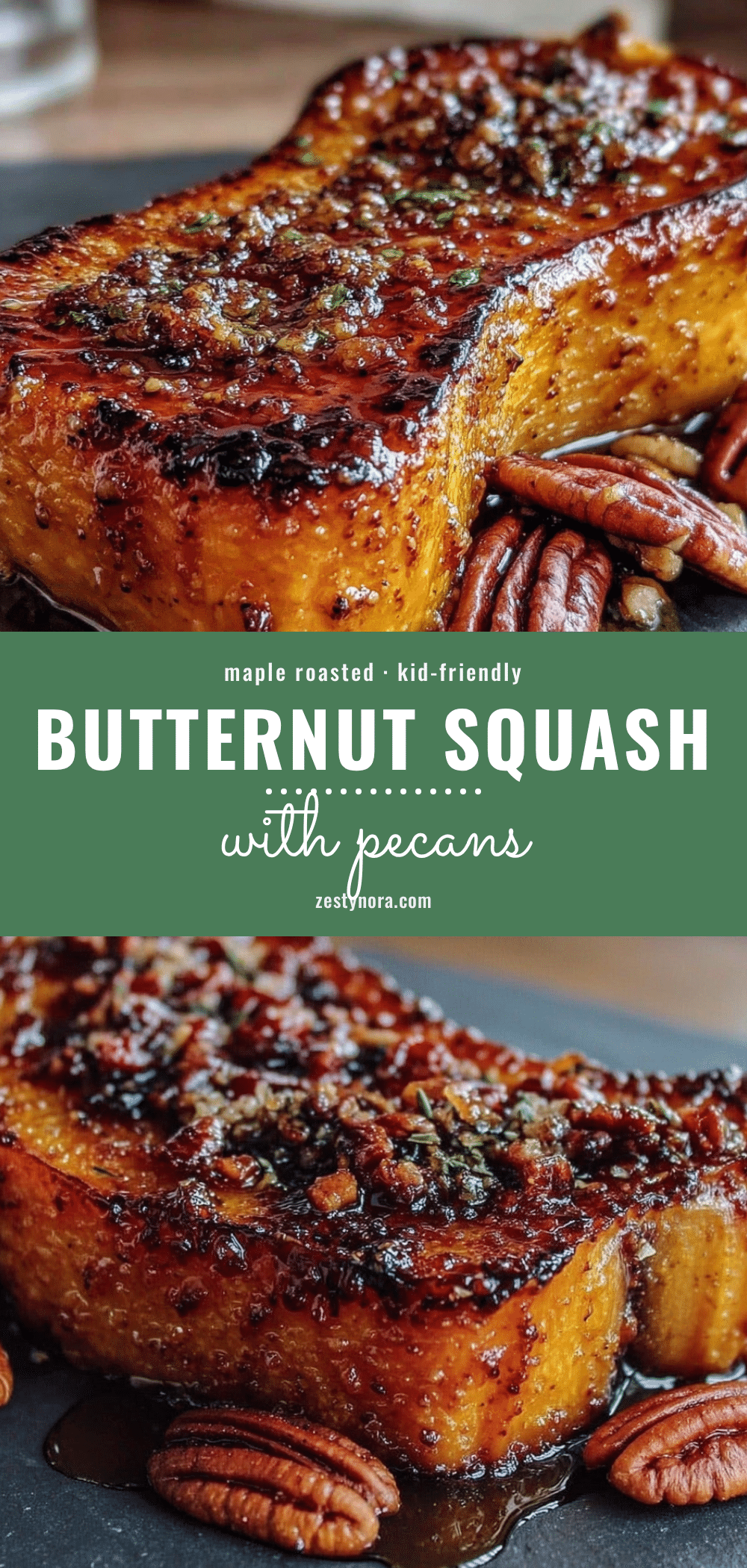
Kid-Friendly Maple Roasted Butternut Squash with Pecans
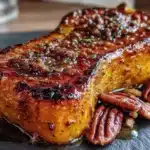
This sweet and crunchy roasted butternut squash with maple syrup and pecans is the perfect side dish that even picky eaters will love. It’s quick, easy, and made with simple ingredients for a delicious weeknight or holiday meal.
- Prep Time: 10 minutes
- Cook Time: 35-40 minutes
- Total Time: 45-50 minutes
- Yield: 6 servings 1x
- Category: Side Dish
- Cuisine: American
Ingredients
- 1 large butternut squash (about 2.5 to 3 pounds), peeled and cut into 3/4-inch cubes (about 4–5 cups)
- 1/4 cup pure maple syrup
- 1/2 cup pecan halves
- 2 tablespoons avocado oil
- 1 tablespoon unsalted butter, melted
- 1/2 teaspoon ground cinnamon
- 1/2 teaspoon sea salt
- 1 teaspoon fresh thyme leaves (optional)
Instructions
- Preheat oven to 400°F (200°C). Line a large baking sheet with parchment paper.
- Cut off both ends of the butternut squash, then cut in half crosswise. Stand the neck upright and slice off the skin. Cut the bulb in half and scoop out seeds. Cut all squash into uniform 3/4-inch cubes.
- In a large mixing bowl, whisk together maple syrup, avocado oil, melted butter, cinnamon, and sea salt. If using fresh thyme, stir it in.
- Add cubed squash to the bowl and toss until evenly coated.
- Spread squash in a single layer on the prepared baking sheet. Roast for 20 minutes.
- While squash roasts, toss pecan halves in a small bowl with about 1 tablespoon of maple syrup until lightly coated.
- After 20 minutes, flip the squash pieces. Sprinkle the maple-coated pecans over the squash.
- Return to oven and roast for another 15-20 minutes, until squash is fork-tender and edges are caramelized, and pecans are golden and fragrant.
- Let rest on baking sheet for 5 minutes. Transfer to serving dish and sprinkle with flaky sea salt if desired.
Notes
For best results, cut squash cubes uniformly. Do not overcrowd the pan; use two sheets if needed. Add pecans in the last 15-20 minutes to prevent burning. Let squash rest after roasting for glaze to set. For dairy-free, use all avocado oil or dairy-free butter.
Nutrition
- Serving Size: 1 serving
- Calories: 220
- Sugar: 12
- Sodium: 200
- Fat: 14
- Saturated Fat: 2
- Carbohydrates: 25
- Fiber: 4
- Protein: 3
Keywords: roasted butternut squash, maple roasted squash, kid-friendly squash, butternut squash with pecans, easy side dish, fall recipe, Thanksgiving side