The stack had disappeared before I even finished pouring the maple syrup. My husband looked up from his empty plate and just said, “What did you put in those?” Not in a suspicious way—more like he needed to know how to get them again. I’d been messing around with breakfast recipes for weeks, trying to find something that actually kept me full past 10 a.m. without feeling like I was eating cardboard. And honestly? These fluffy high-protein cottage cheese pancakes were the happy accident I didn’t see coming.
I wasn’t trying to reinvent breakfast. I just wanted pancakes that didn’t leave me hungry an hour later. Regular pancakes are delicious—don’t get me wrong—but they’re basically a sugar crash waiting to happen. So I started experimenting. First batch was too dense. Second batch was too thin. Third batch? That was the one where I finally stopped and took a bite and thought, oh, this is it. The texture was light, the edges were golden, and you couldn’t even tell there was cottage cheese hiding in there.
That morning, I made a double batch and froze half. By the end of the week, I was making them for my sister when she came over, and she texted me the next day asking for the recipe. That’s usually how I know something’s worth sharing—when people actually ask for it without me offering first. So here we are. These fluffy high-protein cottage cheese pancakes have become my go-to breakfast, and I think they’re about to become yours too.
Why You’ll Love This Recipe
Let me tell you why these pancakes are different from every other recipe you’ve seen floating around. I’ve tested this more times than I care to admit, and each batch taught me something new. Here’s what makes this version stand out:
- Quick & Easy: From bowl to plate in under 20 minutes. No complicated steps, no weird ingredients you have to hunt down at three different stores.
- Simple Ingredients: You probably have everything in your kitchen right now. Eggs, oats, cottage cheese, a little vanilla—that’s basically it.
- Perfect for Busy Mornings: These freeze beautifully, so you can make a big batch on Sunday and have breakfast ready all week. Just pop them in the toaster and go.
- Crowd-Pleaser: I’ve served these to kids, picky eaters, and even my dad who “doesn’t do healthy food.” Everyone went back for seconds.
- Unbelievably Delicious: The texture is genuinely fluffy—not dense or rubbery like some protein pancakes. And the flavor? Slightly sweet, a little tangy from the cottage cheese, and perfectly golden on the outside.
What really sets this recipe apart is the technique. Instead of just tossing everything in a blender (which works fine but can make the pancakes tough), I fold the cottage cheese in at the end. It keeps the batter light and gives you those little pockets of melted cheese that turn into the most incredible texture. Plus, using a combination of oat flour and cottage cheese means you’re getting about 15 grams of protein per serving without any protein powder. That’s a win in my book.
These aren’t just healthy pancakes that taste “good for a healthy recipe.” They’re genuinely good pancakes that happen to be packed with protein. And that’s the kind of breakfast I can get behind.
What Ingredients You Will Need
This recipe uses simple, wholesome ingredients to deliver bold flavor and satisfying texture without the fuss. Most of these are pantry staples, and the ones that aren’t are easy to find at any grocery store.
- Rolled oats (1 cup / 100g) – I prefer old-fashioned rolled oats for the best texture. Quick oats work in a pinch, but they can make the pancakes a little gummier. You’ll blend these into a flour, so there’s no need to buy oat flour separately.
- Cottage cheese (1 cup / 240g) – This is the star of the show. Use full-fat or 2% for the creamiest texture. I like Good Culture brand because it has a nice curd size and isn’t too watery. Small-curd cottage cheese blends more smoothly, but large-curd works too—just blend it a little longer.
- Large eggs (2) – Eggs help bind everything together and add structure. Room temperature eggs work best, but cold eggs are fine if you’re in a hurry.
- Vanilla extract (1 teaspoon) – Adds warmth and rounds out the flavor. Use pure vanilla extract if you have it, but imitation works fine too.
- Baking powder (1 teaspoon) – This gives the pancakes their lift. Make sure it’s fresh—test it by dropping a little in hot water; if it bubbles, you’re good.
- Salt (¼ teaspoon) – Just a pinch to balance the sweetness and enhance all the flavors.
- Butter or oil (for cooking) – I use butter for flavor, but coconut oil or avocado oil work great too. You’ll need about a tablespoon total for the whole batch.
- Optional add-ins: A tablespoon of honey or maple syrup if you like sweeter pancakes, a pinch of cinnamon, or a handful of blueberries folded into the batter.
For substitutions, you can use gluten-free certified oats if needed, or swap the cottage cheese for Greek yogurt (though the texture will be slightly denser). If you’re dairy-free, try a plant-based cottage cheese alternative—I’ve had good luck with the Kite Hill brand. And for a lower-carb version, replace the oats with almond flour, but note that the texture will be more delicate.
Equipment Needed
You don’t need much for this recipe, which is part of why I love it. Here’s what you’ll need:
- Blender or food processor – A blender works best for turning the oats into flour and mixing the batter. I use my NutriBullet for small batches, but any blender will do. If you don’t have one, you can use pre-made oat flour and whisk everything by hand—just make sure the cottage cheese is well mashed.
- Non-stick skillet or griddle – A good non-stick pan makes all the difference. I use a 10-inch skillet and cook two pancakes at a time. Cast iron works too if it’s well-seasoned, but you’ll need a little more butter to prevent sticking.
- Spatula – A thin, flexible spatula is best for flipping. I’ve ruined plenty of pancakes with a thick spatula that just smushed them.
- Measuring cups and spoons – For accuracy. I’ve included gram measurements too, but cups work just fine.
- Mixing bowl – If you’re folding in add-ins, you’ll want a bowl to combine everything after blending.
- Ladle or ¼-cup measure – For portioning the batter evenly.
If you’re new to making protein pancakes, don’t overthink the equipment. A blender and a pan are really all you need. I’ve made these in a hotel room with a mini blender and a frying pan, and they still turned out great.
Preparation Method
- Blend the oats into flour. Add the rolled oats to your blender and pulse until they become a fine powder. This takes about 20-30 seconds. Don’t over-blend or the oats will start to heat up and clump together. You’re looking for a texture similar to whole wheat flour—slightly coarse but mostly fine.
- Add the wet ingredients. To the oat flour, add the cottage cheese, eggs, vanilla extract, baking powder, and salt. Blend on low until everything is combined, about 15-20 seconds. The batter should be thick but pourable—like a regular pancake batter. If it looks too thick, add a tablespoon of milk or water. If it’s too thin, let it sit for 2 minutes; the oats will absorb some liquid and thicken up.
- Check the consistency. Here’s where a lot of people go wrong. The batter should be lump-free but not over-blended. Over-blending develops the gluten in the oats and makes the pancakes tough. I usually blend just until I don’t see any white streaks from the cottage cheese, then stop. A few tiny curds are totally fine—they’ll melt into the pancake as it cooks.
- Let the batter rest. This is a step I never skip. Let the batter sit for 5 minutes while you heat your pan. This gives the oat flour time to hydrate, which makes the pancakes fluffier. You’ll notice the batter thickens slightly as it rests.
- Heat your pan. Place your non-stick skillet over medium heat and add about a teaspoon of butter. Let it melt and foam slightly—you want the pan hot but not smoking. To test, flick a drop of water onto the pan; if it sizzles and evaporates immediately, it’s ready.
- Pour the batter. Use a ¼-cup measure to pour the batter onto the pan. Don’t overcrowd—I do two pancakes at a time in a 10-inch skillet. The batter will be thicker than regular pancake batter, so use the back of your measuring cup to gently spread it into a circle if needed.
- Cook until bubbles form. Let the pancakes cook undisturbed for 2-3 minutes. You’ll see small bubbles forming on the surface, and the edges will start to look set. When the bubbles pop and leave little holes that don’t fill back in, it’s time to flip. Don’t flip too early—these pancakes need a little more time than regular ones because of the cottage cheese.
- Flip and finish. Slide your spatula under the pancake and flip it quickly. Cook for another 1-2 minutes on the second side, until golden brown and cooked through. The second side usually cooks faster, so keep an eye on it. If you’re making a big batch, keep the finished pancakes in a warm oven (200°F) on a baking sheet while you cook the rest.
- Serve immediately. Stack them up, add your favorite toppings, and dig in. These are best fresh, but they’re also great reheated.
One thing I’ve learned the hard way: don’t press down on the pancakes with your spatula while they’re cooking. I know it’s tempting to flatten them out, but it squeezes out all the air and makes them dense. Let them rise naturally.
Cooking Tips & Techniques
After making these pancakes more times than I can count, I’ve picked up a few tricks that make a real difference. Here’s what I wish someone had told me:
Don’t over-blend the batter. This is the number one mistake I see. When you over-blend, you incorporate too much air and the pancakes become tough and rubbery. Blend just until combined, then stop. A few small lumps are fine—they’ll cook out.
Use medium heat, not high. I know you want those golden-brown pancakes fast, but high heat will burn the outside before the inside is cooked through. Medium heat gives you a nice even color and a fully cooked center. If your pancakes are browning too quickly, turn the heat down a notch.
Let the pan reheat between batches. After you flip your first batch, the pan cools down. Give it 30-60 seconds to come back up to temperature before adding more butter and batter. This ensures consistent results every time.
Add a little butter between each batch. Even if your pan is non-stick, a little butter adds flavor and helps the pancakes brown evenly. Wipe out any burnt bits with a paper towel between batches to keep things clean.
Test one pancake first. Before you commit to a whole batch, cook one pancake as a test. This lets you check the seasoning, consistency, and heat level without wasting a whole batch. I learned this after making an entire batch of pancakes that were too salty—now I always test one first.
Keep pancakes warm in the oven. If you’re making a big batch, preheat your oven to 200°F and place a baking sheet inside. As each pancake comes off the pan, transfer it to the baking sheet. They’ll stay warm and fluffy while you finish cooking.
I once tried to rush the process by cranking the heat up and ended up with pancakes that were burnt on the outside and raw in the middle. Not my finest moment. But that’s how I learned—sometimes you have to mess up to get it right.
Variations & Adaptations
One of the best things about this recipe is how versatile it is. Here are some variations I’ve tried and loved:
- Blueberry Lemon: Fold in ½ cup of fresh or frozen blueberries and the zest of one lemon. The tartness of the berries pairs beautifully with the tangy cottage cheese. If using frozen berries, don’t thaw them first—just toss them in frozen to prevent the batter from turning purple.
- Chocolate Chip: Add ¼ cup of mini chocolate chips to the batter. I like dark chocolate chips for a less sweet option. The mini chips distribute more evenly than regular-sized ones.
- Savory Version: Omit the vanilla and add ¼ teaspoon of garlic powder, a pinch of black pepper, and 2 tablespoons of chopped chives. Serve with a fried egg and avocado for a savory breakfast that feels totally different.
- Vegan Option: Replace the eggs with 2 flax eggs (2 tablespoons ground flaxseed + 6 tablespoons water, let sit for 5 minutes) and use a plant-based cottage cheese. The texture won’t be as fluffy, but it’s still delicious.
- Gluten-Free: Use certified gluten-free oats. That’s it—everything else is naturally gluten-free. Just make sure your baking powder is also gluten-free (most brands are).
I’ve also tried adding a scoop of vanilla protein powder for an extra protein boost, but it made the pancakes dry. If you want to try it, reduce the oats by 2 tablespoons and add an extra tablespoon of milk to compensate.
Serving & Storage Suggestions
These pancakes are incredibly versatile when it comes to serving. Here’s how I like to enjoy them:
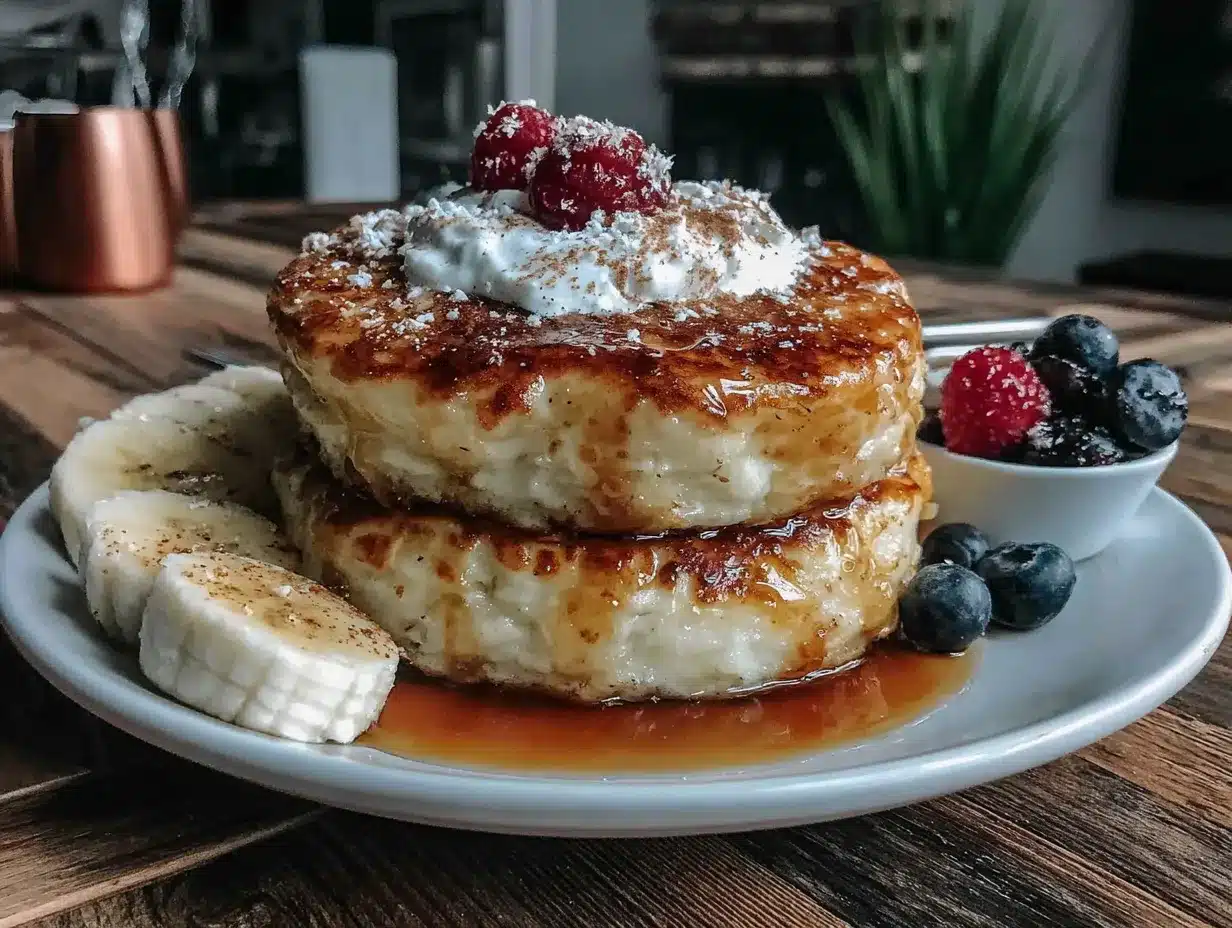
Serving temperature: Serve them warm, straight from the pan. If you’ve kept them in the oven, they’ll be perfectly warm and ready to go. I like to stack 3-4 pancakes and top them with a pat of butter and a drizzle of maple syrup.
Topping ideas: Fresh berries, sliced bananas, a dollop of Greek yogurt, a sprinkle of cinnamon, or a drizzle of nut butter. For a special treat, try them with warmed apple compote or a spoonful of fresh peach jam. The sweetness of the jam pairs perfectly with the tangy pancakes.
What to serve alongside: A side of crispy turkey bacon or chicken sausage rounds out the meal. If you’re going for a lighter option, a simple fruit salad or a Greek orzo pasta salad makes a surprisingly good brunch companion. And for a cozy fall morning, a warm mug of apple cider or coffee is all you need.
Storage instructions: Let the pancakes cool completely on a wire rack. Store them in an airtight container in the refrigerator for up to 5 days. To freeze, place the cooled pancakes in a single layer on a baking sheet and freeze for 1 hour, then transfer to a freezer-safe bag. They’ll keep for up to 3 months.
Reheating methods: The best way to reheat is in a toaster or toaster oven—it crisps up the edges perfectly. You can also microwave them for 30-45 seconds, but they’ll be softer. For a stovetop reheat, place them in a dry pan over medium heat for 1-2 minutes per side.
One thing I’ve noticed is that these pancakes actually get better after a day in the fridge. The flavors meld together, and the texture becomes even more tender. So don’t be afraid to make a double batch.
Nutritional Information & Benefits
Here’s the approximate nutritional breakdown per serving (3 pancakes, without toppings):
- Calories: 320
- Protein: 22g
- Carbohydrates: 35g
- Fiber: 5g
- Fat: 10g
- Sugar: 6g
The protein comes primarily from the cottage cheese and eggs, which are both complete proteins—meaning they contain all nine essential amino acids. The oats provide complex carbohydrates and fiber, which help keep you full and provide steady energy without the blood sugar spike you get from regular pancakes.
Cottage cheese is also rich in calcium, phosphorus, and B vitamins, which support bone health and energy metabolism. And because we’re using whole oats instead of refined flour, you’re getting more fiber and nutrients than traditional pancakes.
This recipe is naturally low in added sugar—only about 6 grams per serving from the vanilla and any natural sugars in the cottage cheese. If you’re watching your sugar intake, you can skip the maple syrup and top with fresh berries instead.
For those with dietary restrictions, these pancakes are easily adaptable. They’re gluten-free if you use certified oats, and they can be made dairy-free with plant-based cottage cheese and butter. They’re also nut-free, making them a safe option for school lunches or nut-free households.
Conclusion
These fluffy high-protein cottage cheese pancakes have genuinely changed my breakfast game. They’re quick enough for a weekday morning, satisfying enough to keep me full until lunch, and delicious enough that I actually look forward to making them. No protein powder, no weird ingredients, no complicated steps—just real food that tastes good and makes you feel good.
I hope you give them a try and make them your own. Add your favorite toppings, experiment with mix-ins, and don’t be afraid to double the batch. And if you come up with a variation I haven’t tried, please let me know in the comments. I’m always looking for new ways to enjoy these pancakes, and I’d love to hear what works for you.
So go ahead—fire up that blender, grab your cottage cheese, and make yourself a stack of pancakes that’ll actually keep you going. You deserve a breakfast that’s both delicious and nourishing. And honestly? You’re going to love these.
Frequently Asked Questions
Can I use a different type of cheese instead of cottage cheese?
You can substitute cottage cheese with ricotta or Greek yogurt, but the texture will change slightly. Ricotta gives a creamier, slightly denser pancake, while Greek yogurt makes them tangier and a bit thinner. Cottage cheese really is the best for that light, fluffy texture.
Why are my pancakes sticking to the pan?
This usually happens when the pan isn’t hot enough or you’re not using enough fat. Make sure your pan is preheated over medium heat, and add a fresh pat of butter before each batch. If you’re using a non-stick pan, check that it’s still in good condition—old non-stick pans lose their coating over time.
Can I make the batter ahead of time?
I don’t recommend making the batter ahead of time because the oats will continue to absorb liquid and the batter will become too thick. However, you can blend the dry ingredients (oat flour, baking powder, salt) ahead of time and store them in an airtight container. When you’re ready to cook, just add the wet ingredients and blend.
How do I make these pancakes sweeter without adding sugar?
You can add a mashed ripe banana to the batter, which adds natural sweetness and moisture. Just reduce the oats by 2 tablespoons to compensate for the extra liquid. You can also top them with sliced fruit, a drizzle of honey, or a spoonful of peanut butter oat energy balls crumbled on top for a sweet, crunchy finish.
Can I make these pancakes without a blender?
Yes! If you don’t have a blender, use pre-made oat flour (available at most grocery stores) and mash the cottage cheese with a fork before whisking everything together. The texture won’t be as smooth, but they’ll still taste great. Just make sure to mix thoroughly to avoid lumps of cottage cheese.
Pin This Recipe!
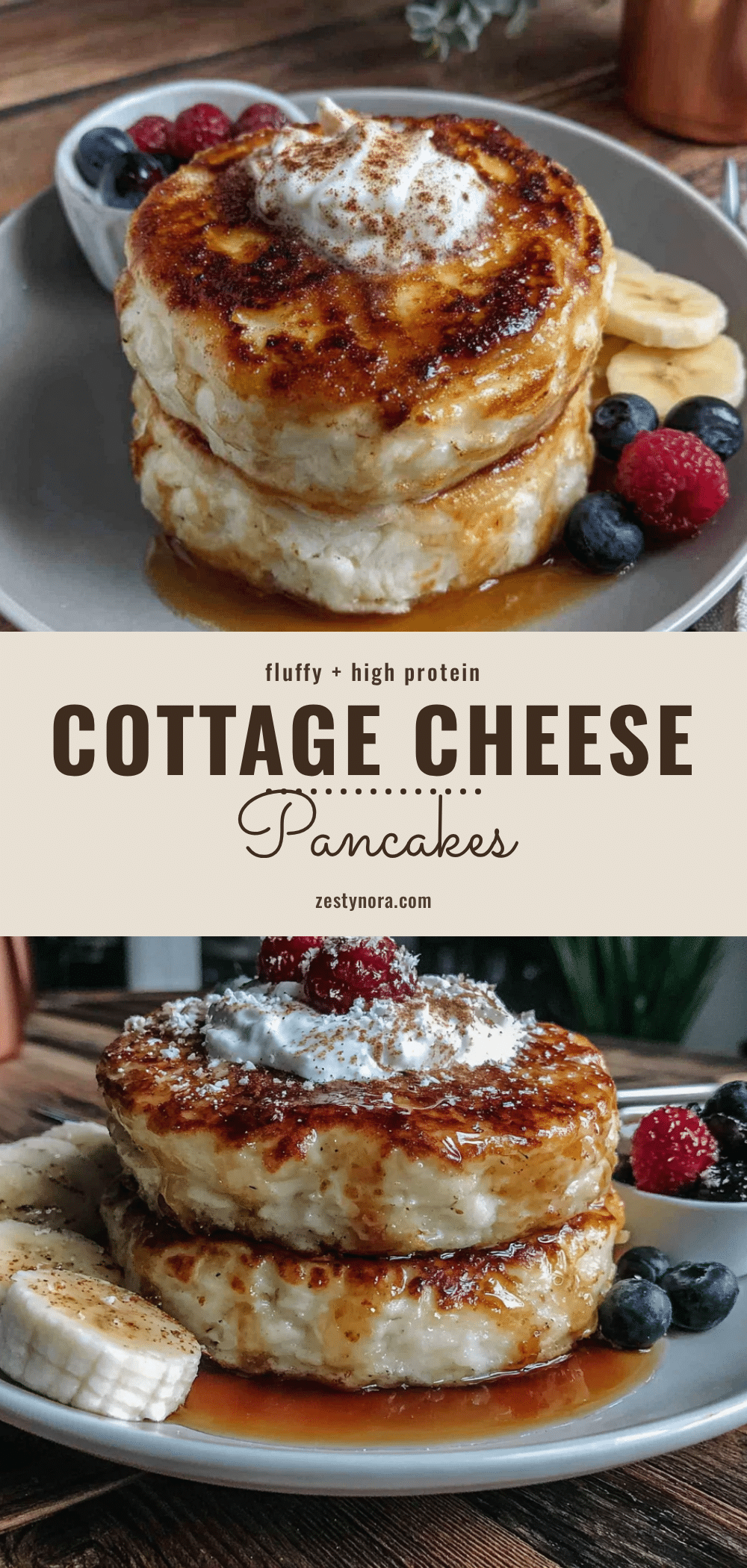
Fluffy High-Protein Cottage Cheese Pancakes (Easy Recipe)
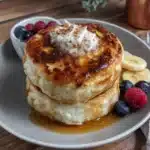
These fluffy high-protein cottage cheese pancakes are quick, easy, and packed with protein without any protein powder. Made with simple ingredients like oats, cottage cheese, and eggs, they’re perfect for busy mornings and freeze beautifully.
- Prep Time: 10 minutes
- Cook Time: 10 minutes
- Total Time: 20 minutes
- Yield: 4 servings (about 12 pancakes) 1x
- Category: Breakfast
- Cuisine: American
Ingredients
- 1 cup (100g) rolled oats
- 1 cup (240g) cottage cheese (full-fat or 2%)
- 2 large eggs
- 1 teaspoon vanilla extract
- 1 teaspoon baking powder
- ¼ teaspoon salt
- Butter or oil for cooking
- Optional: 1 tablespoon honey or maple syrup, pinch of cinnamon, handful of blueberries
Instructions
- Blend the rolled oats in a blender until they become a fine powder, about 20-30 seconds.
- Add the cottage cheese, eggs, vanilla extract, baking powder, and salt to the oat flour. Blend on low until combined, about 15-20 seconds. The batter should be thick but pourable.
- Check the consistency: the batter should be lump-free but not over-blended. A few tiny curds are fine.
- Let the batter rest for 5 minutes while you heat your pan.
- Heat a non-stick skillet over medium heat and add about a teaspoon of butter. Let it melt and foam slightly.
- Pour ¼ cup of batter onto the pan for each pancake. Do not overcrowd; cook 2 at a time in a 10-inch skillet.
- Cook undisturbed for 2-3 minutes until bubbles form on the surface and edges look set. Flip when bubbles pop and leave holes that don’t fill back in.
- Cook for another 1-2 minutes on the second side until golden brown and cooked through.
- Serve immediately with desired toppings. Keep finished pancakes warm in a 200°F oven if making a batch.
Notes
Don’t over-blend the batter to avoid tough pancakes. Let the batter rest for 5 minutes for fluffier results. Use medium heat to prevent burning. These pancakes freeze well for up to 3 months. For best reheating, use a toaster or toaster oven.
Nutrition
- Serving Size: 3 pancakes
- Calories: 320
- Sugar: 6
- Sodium: 450
- Fat: 10
- Saturated Fat: 3
- Carbohydrates: 35
- Fiber: 5
- Protein: 22
Keywords: cottage cheese pancakes, high protein pancakes, healthy pancakes, easy breakfast, fluffy pancakes, gluten-free pancakes