I wasn’t expecting a life-changing recipe tip from a man holding a hedge trimmer, but there I was, wrestling with an overgrown boxwood on a crisp November afternoon, while my neighbor across the fence casually described how he decorates his holiday desserts. His name is Frank, and he’s been a commercial electrician for forty years—the last person I’d expect to have a secret weapon for Christmas entertaining. “You gotta try the rosemary sugared cranberries,” he said, not even looking up from his work. “My wife’s family has been making them since before we met. They’re the only thing I’m allowed to bring to Thanksgiving.”
Honestly, I almost laughed it off. But something about the way he said it—with this quiet, unassuming confidence—made me stop. So I asked for the details, scribbling notes on a scrap of receipt I found in my coat pocket. Frank’s version was simple: cranberries, sugar, water, and a sprig of fresh rosemary. That’s it. No complicated technique, no fancy equipment. Just a little patience and a whole lot of sparkle.
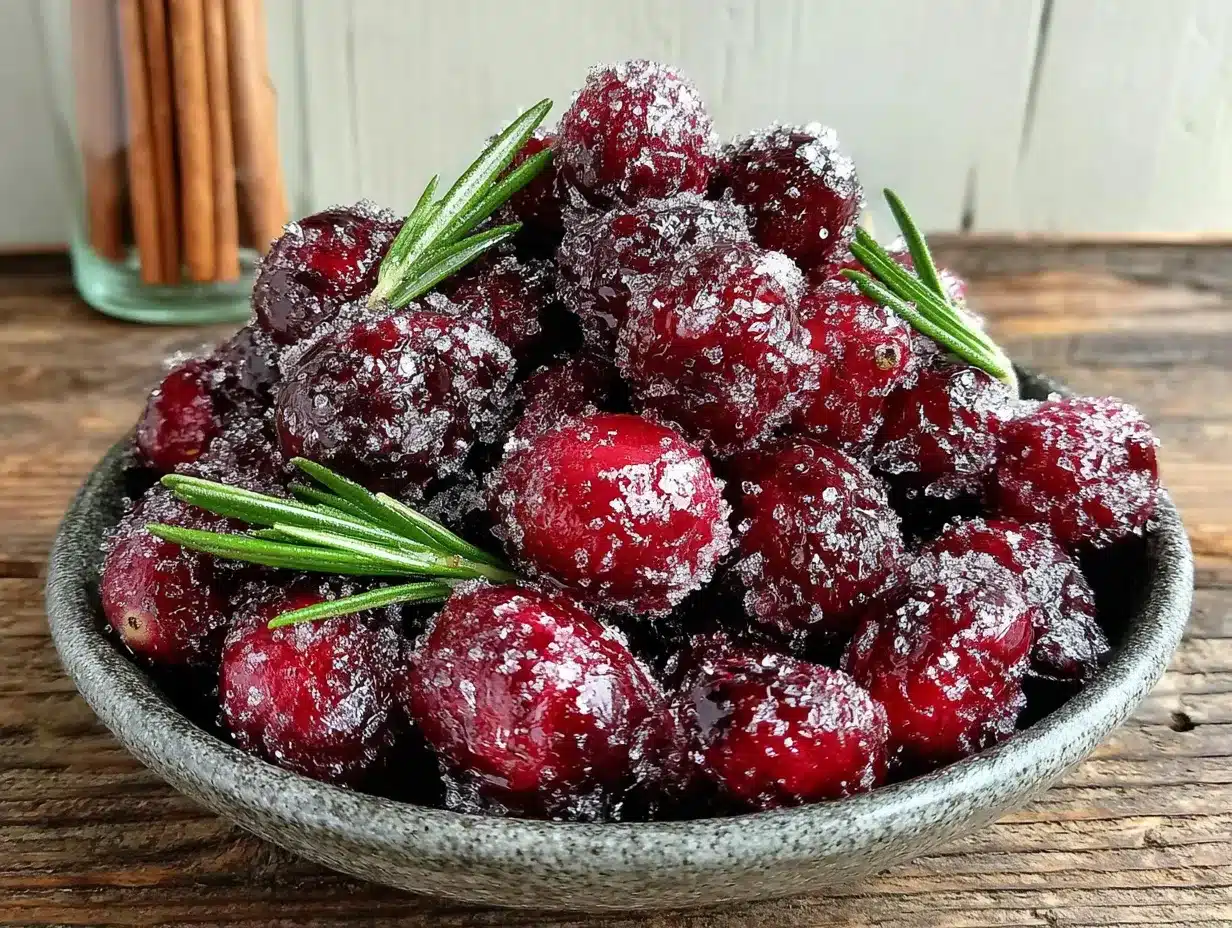
Let me tell you, that first batch changed my holiday game completely. These Festive Sparkling Rosemary Sugared Cranberries are now my go-to for every single winter gathering. They’re tart, sweet, and subtly herbaceous—a combination you didn’t know you needed until you try it. And the way they catch the light? Pure magic. Maybe you’ve been looking for that one thing that makes your dessert table feel special without turning your kitchen upside down. If so, this is it. I’ve been making them every year since that day, and I honestly can’t imagine a holiday season without them.
Why You’ll Love This Recipe
These sparkling rosemary sugared cranberries aren’t just pretty—they’re genuinely foolproof. After testing this recipe more times than I can count (including one memorable batch where I forgot the rosemary entirely and ended up with perfectly fine but boring cranberries), I can confidently say this version is the best. Here’s why you’ll absolutely love it:
- Quick & Easy : Comes together in under 30 minutes of active work, plus a few hours of drying time. Perfect for busy holiday prep.
- Simple Ingredients : You only need four things—fresh cranberries, sugar, water, and rosemary. No weird grocery store scavenger hunts.
- Perfect for Holiday Entertaining : These make any dessert table look like a professional pastry chef stopped by. Great for Thanksgiving, Christmas, New Year’s Eve, or even winter weddings.
- Crowd-Pleaser : Kids love the sparkly look, adults love the sophisticated flavor. I’ve never brought a bowl of these anywhere that didn’t get completely demolished.
- Unbelievably Delicious : The tart pop of the cranberry, the sweet crunchy coating, and that subtle piney note from the rosemary—it’s next-level flavor that somehow feels both nostalgic and brand new.
What makes this recipe different from all the others? It’s the rosemary infusion. Most sugared cranberry recipes just toss the berries in syrup and sugar, but steeping the rosemary in the simple syrup first adds a layer of complexity that makes people stop and ask, “What is that amazing flavor?” It’s subtle enough not to overpower, but distinct enough to make these unforgettable. This isn’t just another version—it’s your new holiday signature.
These cranberries are the kind of thing that makes you close your eyes after the first bite. They’re festive without being fussy, impressive without being complicated. Perfect for impressing guests without stress, or turning a simple cheese board into something memorable.
What Ingredients You Will Need
This recipe uses simple, wholesome ingredients to deliver bold flavor and stunning visual appeal. You probably already have most of these in your kitchen—the rosemary might be the only thing you need to pick up.
- Fresh cranberries, 12 ounces (340g) — Look for firm, bright red berries without any soft spots. Frozen cranberries won’t work here; they’ll turn mushy when thawed. I prefer Ocean Spray brand for consistent quality.
- Granulated sugar, 1 ½ cups (300g), divided — You’ll use some for the syrup and the rest for coating. Regular white sugar gives the best sparkle. Avoid superfine sugar for coating; it doesn’t create the same crystalline effect.
- Water, ½ cup (120ml) — Just tap water is fine. Filtered water works too if that’s what you have.
- Fresh rosemary, 2-3 sprigs (about 4-5 inches each) — Use fresh, not dried. The oils in fresh rosemary are what infuse the syrup with that subtle piney flavor. I like to use slightly thicker sprigs with lots of needles.
Optional additions for variation:
- Vanilla extract, ½ teaspoon — Adds warmth and rounds out the flavor beautifully.
- Orange zest, from 1 orange — Brightens everything up and pairs wonderfully with rosemary.
- Lavender buds, 1 teaspoon — For a floral twist that’s surprisingly lovely.
When selecting rosemary, give the sprigs a gentle squeeze—you should be able to smell the oils right away. If it doesn’t smell strongly, it won’t infuse well. For the cranberries, I always buy an extra bag because I inevitably snack on some while working. They freeze beautifully too, so no waste!
One thing I learned the hard way: don’t use coarse sugar or turbinado for the coating. While they look pretty, they don’t stick as well and can feel gritty on your teeth. Regular granulated sugar creates that perfect, delicate crunch.
Equipment Needed
You don’t need much for this recipe, which is part of its charm. Here’s what you’ll need:
- Small saucepan — For making the rosemary simple syrup. A 1-quart saucepan is perfect.
- Mixing bowls — One medium bowl for the syrup and cranberries, one shallow dish or baking sheet for the sugar coating.
- Slotted spoon — For transferring cranberries from the syrup to the sugar. A spider strainer works even better.
- Baking sheet — Lined with parchment paper or a silicone baking mat for drying the coated cranberries.
- Wire cooling rack — Optional, but helps with even drying and prevents sticking.
- Measuring cups and spoons — For accuracy, especially with the sugar.
- Fine-mesh strainer — For removing rosemary sprigs from the syrup (though you can also just fish them out with tongs).
Budget-friendly alternatives: If you don’t have a slotted spoon, a regular spoon works fine—just let the excess syrup drip off before rolling in sugar. No wire rack? Just use the parchment-lined baking sheet directly and flip the cranberries halfway through drying.
I’ve made these in a tiny apartment kitchen with mismatched bowls and a flimsy saucepan, and they turned out just as gorgeous as when I use my fancy equipment. Don’t overthink the tools—focus on the technique.
Preparation Method
Making these sparkling rosemary sugared cranberries is surprisingly straightforward. Let me walk you through it step by step.
- Prepare the rosemary simple syrup. In a small saucepan, combine ½ cup (120ml) water and ½ cup (100g) of the granulated sugar. Add your fresh rosemary sprigs. Bring to a gentle simmer over medium heat, stirring occasionally until the sugar dissolves completely. This takes about 3-4 minutes. Don’t let it boil vigorously—you want a gentle simmer to extract the rosemary flavor without cooking off too much water.
- Steep the rosemary. Once the sugar is dissolved, remove the saucepan from heat. Let the rosemary steep in the hot syrup for 15-20 minutes. The longer it steeps, the stronger the rosemary flavor will be. I usually go for 15 minutes for a subtle hint, or 20 if I want it more pronounced. You’ll notice the syrup takes on a very faint golden-green tint—that’s the rosemary oils doing their thing.
- Prepare the cranberries. While the syrup steeps, rinse your fresh cranberries in a colander and pick through them. Discard any that are soft, shriveled, or have broken skins. Pat them very dry with a clean kitchen towel or paper towels. This is crucial—any moisture on the berries will cause the syrup to slide right off instead of adhering properly. I learned this the hard way after my first batch ended up with patchy coating.
- Strain the syrup. After steeping, remove the rosemary sprigs from the syrup. You can pour it through a fine-mesh strainer or simply fish them out with tongs. Let the syrup cool for about 5 minutes—it should be warm but not hot. If it’s too hot, it can start to cook the cranberries slightly, making them soft.
- Soak the cranberries. Place the dry cranberries in a medium bowl. Pour the warm rosemary syrup over them and gently stir to coat every berry. Let them sit in the syrup for 2-3 minutes, stirring once or twice. Don’t leave them longer than 5 minutes or they’ll start absorbing too much liquid and become mushy.
- Drain the cranberries. Using a slotted spoon, transfer the cranberries from the syrup to a colander or strainer set over a bowl. Let them drain for about 1 minute. You want them still slightly tacky but not dripping wet. Too much syrup will make the sugar coating clumpy instead of crystalline.
- Coat with sugar. Place the remaining 1 cup (200g) of granulated sugar in a shallow dish or on a baking sheet with sides. Working in batches, add the drained cranberries to the sugar. Gently roll them around using a fork or your hands (lightly floured fingers help) until each berry is completely coated. Don’t press hard—you don’t want to burst the skins.
- Dry the coated cranberries. Transfer the sugared cranberries to a parchment-lined baking sheet or wire rack. Spread them out in a single layer so they’re not touching. Let them dry at room temperature for at least 2 hours, or up to overnight. The sugar will harden into that beautiful sparkling crust. If you’re in a humid environment, they might need closer to 4 hours.
- Final touch (optional but gorgeous). Once dry, you can add a light dusting of finely chopped fresh rosemary for extra visual appeal and flavor. Just sprinkle it over the top—don’t toss them again or you’ll disturb the sugar coating.
Sensory cues: When the syrup is ready, it should smell distinctly like rosemary—like walking past a rosemary bush on a warm day. The cranberries, when coated, should look like tiny, sugared jewels—each one catching the light with a sparkly, frosted appearance. When you bite into one, you should hear a slight crunch from the sugar, followed by the tart pop of the cranberry, with that subtle herbal note lingering at the end.
Cooking Tips & Techniques
After making these more times than I care to count (including some real disasters), I’ve gathered a few tips that make all the difference.
Patience with drying is non-negotiable. I once rushed the drying process because guests were arriving in an hour, and the sugar coating stayed tacky and melted off onto everyone’s fingers. The cranberries looked sad and streaky instead of sparkling. Let them dry fully—that 2-hour minimum isn’t just a suggestion. If you can, make them a day ahead and leave them out overnight. They actually get better as they sit.
Don’t skip the rosemary steeping step. Some recipes just mix rosemary into the sugar, but that gives you uneven flavor—some bites are overpowering, others have none. Steeping the rosemary in the syrup distributes the flavor evenly throughout every single cranberry. Trust me on this one. My first attempt at shortcutting this resulted in cranberries that tasted like… well, just sugar. Boring.
Temperature matters more than you think. The syrup should be warm when you add the cranberries, not hot. If it’s too hot, the berries start to cook and soften, and you lose that satisfying pop when you bite into them. If it’s too cold, the syrup thickens and doesn’t coat evenly. Aim for bathwater temperature—warm to the touch but comfortable.
Work in small batches for the sugar coating. If you dump all the cranberries into the sugar at once, they’ll clump together and you’ll end up with uneven coating and broken berries. Add them in handfuls, gently rolling each batch. It takes a little longer, but the result is so much prettier.
One mistake I still make sometimes: over-soaking the cranberries in the syrup. I get distracted (usually by my phone or someone walking into the kitchen) and leave them in there for 10 minutes instead of 3. The result is soft, sad cranberries that don’t pop. Set a timer. Seriously.
Variations & Adaptations
This recipe is wonderfully flexible. Here are some variations I’ve tried and loved:
Citrus Rosemary Sparkling Cranberries: Add the zest of one orange and one lemon to the simple syrup while it steeps. The citrus brightens everything up and makes the flavor even more festive. I made these for a New Year’s Eve party and they disappeared in minutes.
Vanilla Bean Version: Split one vanilla bean and add it to the syrup along with the rosemary. The warm, floral vanilla note pairs beautifully with the piney rosemary. Use vanilla extract in a pinch, but the specks from a real bean make them look extra special.
Spiced Holiday Cranberries: Add a cinnamon stick, two star anise, and three cloves to the syrup while it steeps. This creates a chai-like flavor profile that’s incredible on a winter cheese board. I love these with sharp cheddar and crackers.
Low-Sugar Option: Use a sugar alternative like monk fruit sweetener or erythritol for the coating. The syrup still needs real sugar for texture, but you can reduce it by half. The texture won’t be quite as crystalline, but the flavor is still fantastic.
Dried Rosemary Alternative: If you only have dried rosemary, use 1 tablespoon and steep for only 10 minutes. Dried herbs are more concentrated and can become bitter if steeped too long. Fresh is definitely better here, but dried works in a pinch.
I once made a batch with lavender instead of rosemary, and it was surprisingly wonderful—floral and delicate, perfect for a spring brunch. Don’t be afraid to experiment!
Serving & Storage Suggestions
These sparkling rosemary sugared cranberries are incredibly versatile. Here’s how to serve and store them:
Serving temperature: Room temperature is best. The sugar coating stays crunchy, and the cranberries have the perfect texture. If you refrigerate them, let them sit out for about 15 minutes before serving so the coating isn’t damp from condensation.
Presentation ideas: Pile them in a beautiful glass bowl or scatter them around a cheese board for instant holiday glam. They look stunning on top of frosted cakes, nestled into a trifle, or floating in cocktails (try them in champagne or gin and tonic!). I love placing them in small, clear jars tied with twine as edible holiday gifts.
Complementary dishes: These pair beautifully with roasted meats like turkey or pork, add a pop of color to green salads, or serve as a garnish for creamy desserts like panna cotta or cheesecake. They’re also incredible on their own as a sweet-tart snack.
Storage instructions: Store in an airtight container at room temperature for up to 3 days. After that, the sugar may start to soften. You can refrigerate them for up to a week, but the coating will lose some of its crunch. Do not freeze them—the texture becomes mushy when thawed.
Re-crisping tip: If your cranberries lose their sparkle after a day or two, spread them on a baking sheet and pop them in a 200°F (93°C) oven for 10-15 minutes. Let them cool completely, and the sugar will crisp back up. This works like magic!
Flavor development: These actually taste better the next day. The rosemary flavor continues to meld with the cranberries, creating a more complex, harmonious taste. Just don’t expect them to last that long—they’re too addictive.
Nutritional Information & Benefits
While these are definitely a treat, they do offer some surprising nutritional perks:
Estimated nutritional values per serving (about ¼ cup):
- Calories: 85
- Total Fat: 0g
- Sodium: 1mg
- Total Carbohydrates: 22g
- Dietary Fiber: 1g
- Sugars: 20g
- Protein: 0g
Health highlights: Cranberries are packed with antioxidants, particularly proanthocyanidins, which support urinary tract health and may help reduce inflammation. They’re also a good source of vitamin C and fiber. Rosemary contains compounds like rosmarinic acid that have anti-inflammatory and antioxidant properties. Plus, the fresh herbs add flavor without any artificial ingredients.
Dietary considerations: This recipe is naturally gluten-free, dairy-free, and vegan. For a lower-sugar option, you can reduce the coating sugar or use a sugar alternative (though the texture will change slightly). The main allergen concern is none—these are safe for most dietary restrictions.
I love that these feel indulgent while still being made from whole, recognizable ingredients. They’re a holiday treat I can feel good about serving to my family and friends.
Conclusion
These Festive Sparkling Rosemary Sugared Cranberries are the kind of recipe that makes you look like a holiday hero with almost no effort. They’re beautiful, delicious, and surprisingly simple—the perfect combination for busy holiday seasons. Whether you’re decorating a dessert table, gifting them in pretty jars, or just snacking on them while wrapping presents (no judgment here), they bring a little extra magic to the season.
I love that this recipe came from Frank, my neighbor with the hedge trimmer and the unexpected culinary wisdom. It’s a reminder that the best recipes often come from the most unlikely places—you just have to be willing to listen. Now, every time I make these, I think of that crisp November afternoon and smile.
I’d love to hear how these turn out for you! Did you try any variations? Serve them with something unexpected? Drop a comment below and let me know—your ideas might inspire someone else’s holiday table. And if you loved this recipe, share it with a friend who needs a little sparkle in their life. Happy cooking, friends!
Frequently Asked Questions
Can I use frozen cranberries for this recipe?
No, frozen cranberries won’t work well here. When they thaw, they release too much moisture and become soft and mushy. The sugar coating won’t adhere properly, and you’ll lose that satisfying pop when you bite into them. Stick with fresh, firm cranberries for the best results.
How far in advance can I make these?
You can make them up to 3 days ahead. Store them in an airtight container at room temperature. If you need to make them further in advance, prepare the rosemary syrup and coat the cranberries, then store them in the refrigerator for up to a week—just know the sugar coating will soften slightly. They’re best within the first 2-3 days.
My sugar coating turned out clumpy. What went wrong?
This usually happens when the cranberries are too wet when you add them to the sugar. Make sure you drain them well after the syrup soak—let them sit in a colander for at least a minute. Also, work in small batches and use your hands (lightly floured) to gently roll the berries in the sugar. Clumpy sugar can also mean the syrup was too hot when you coated the berries.
Can I use dried rosemary instead of fresh?
Yes, but use less. Dried rosemary is more concentrated and can become bitter if steeped too long. Use 1 tablespoon of dried rosemary and steep for only 10 minutes instead of 15-20. Fresh rosemary really does give the best flavor, though—the oils are more aromatic and subtle.
How do I keep the cranberries from sticking together?
Make sure they’re completely dry before storing. Spread them in a single layer on a baking sheet and let them dry for at least 2 hours at room temperature. If they still stick, you can gently separate them with your fingers once the sugar has hardened. Storing them in a single layer in the container also helps, rather than piling them on top of each other.
Pin This Recipe!
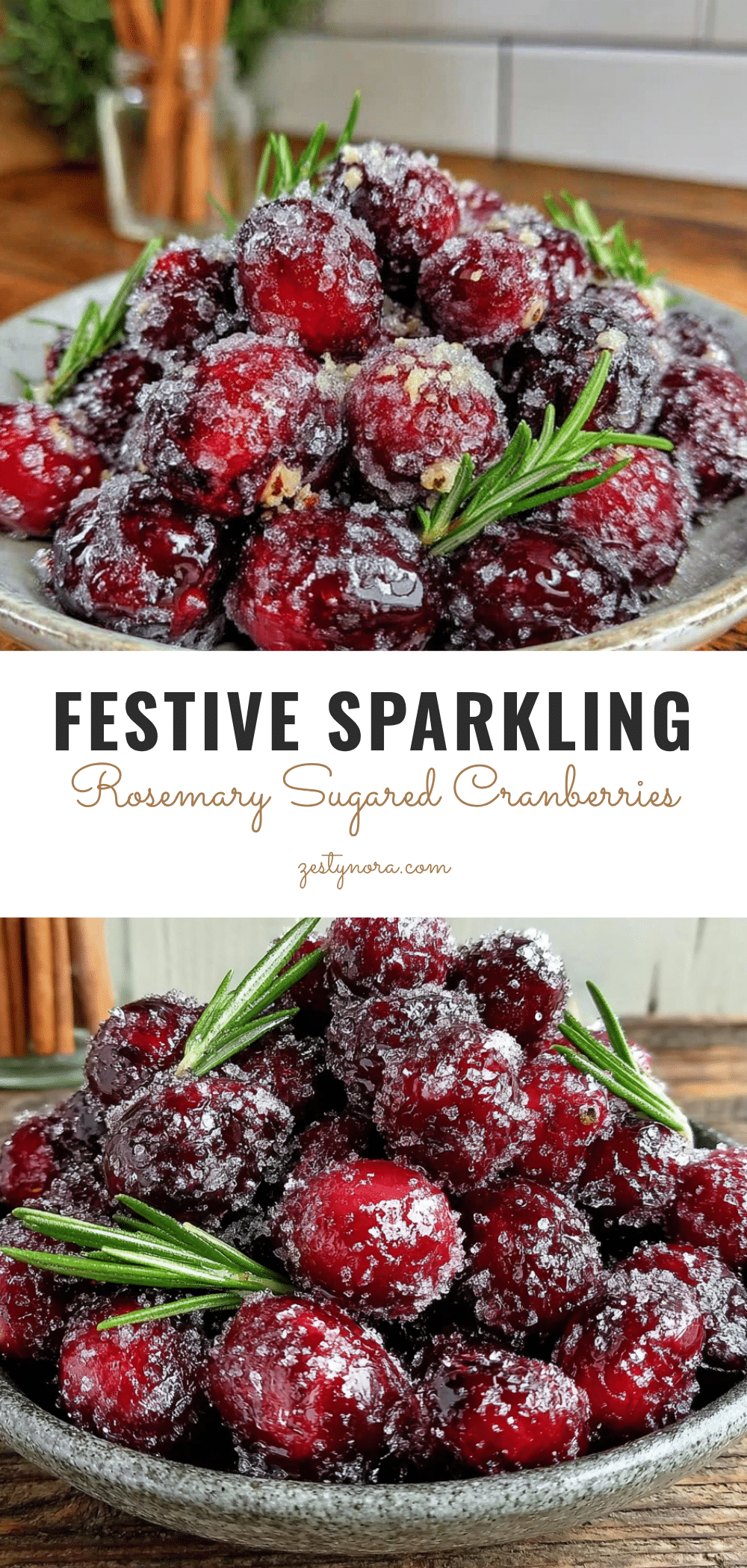
Festive Sparkling Rosemary Sugared Cranberries
These sparkling rosemary sugared cranberries are tart, sweet, and subtly herbaceous—a perfect holiday treat that’s quick, easy, and stunning on any dessert table.
- Prep Time: 15 minutes
- Cook Time: 5 minutes
- Total Time: 2 hours 20 minutes (includes drying time)
- Yield: 4 servings 1x
- Category: Dessert
- Cuisine: American
Ingredients
- 12 ounces (340g) fresh cranberries
- 1 ½ cups (300g) granulated sugar, divided
- ½ cup (120ml) water
- 2–3 sprigs fresh rosemary (about 4–5 inches each)
- ½ teaspoon vanilla extract (optional)
- Zest of 1 orange (optional)
- 1 teaspoon lavender buds (optional)
Instructions
- Prepare the rosemary simple syrup: In a small saucepan, combine ½ cup (120ml) water and ½ cup (100g) of the granulated sugar. Add fresh rosemary sprigs. Bring to a gentle simmer over medium heat, stirring occasionally until sugar dissolves completely (about 3-4 minutes). Do not let it boil vigorously.
- Steep the rosemary: Remove saucepan from heat. Let rosemary steep in hot syrup for 15-20 minutes. Longer steeping gives stronger rosemary flavor.
- Prepare the cranberries: Rinse fresh cranberries in a colander, discarding any soft or shriveled ones. Pat them very dry with a clean towel.
- Strain the syrup: Remove rosemary sprigs from syrup (strain or fish out with tongs). Let syrup cool for about 5 minutes until warm but not hot.
- Soak the cranberries: Place dry cranberries in a medium bowl. Pour warm rosemary syrup over them and gently stir to coat. Let sit for 2-3 minutes, stirring once or twice. Do not exceed 5 minutes.
- Drain the cranberries: Using a slotted spoon, transfer cranberries to a colander set over a bowl. Let drain for about 1 minute until slightly tacky but not dripping.
- Coat with sugar: Place remaining 1 cup (200g) granulated sugar in a shallow dish. Working in batches, add drained cranberries and gently roll them in sugar until completely coated. Do not press hard.
- Dry the coated cranberries: Transfer sugared cranberries to a parchment-lined baking sheet or wire rack in a single layer. Let dry at room temperature for at least 2 hours, or up to overnight, until sugar hardens into a sparkling crust.
- Optional final touch: Once dry, lightly dust with finely chopped fresh rosemary for extra visual appeal.
Notes
Patience with drying is non-negotiable—let them dry fully for at least 2 hours. Don’t skip the rosemary steeping step for even flavor. Syrup should be warm, not hot, when added to cranberries. Work in small batches for sugar coating. Set a timer to avoid over-soaking cranberries.
Nutrition
- Serving Size: ¼ cup
- Calories: 85
- Sugar: 20
- Sodium: 1
- Carbohydrates: 22
- Fiber: 1
Keywords: sugared cranberries, rosemary cranberries, holiday dessert, easy recipe, sparkling cranberries, festive cranberries