My neighbor asked why I couldn’t just dump the whole orange—peel, pith, and all—into the batter. I started to explain why that wouldn’t work, something about bitterness and texture and the science of baking. Then I stopped. Honestly, I had no good reason. I’d just never tried it.
So I did. I quartered a navel orange, tossed it into the food processor, and blitzed it until it looked like marmalade. The batter turned out looser than usual, and I remember thinking, “Well, this is going to be a disaster.” I slid the pan into the oven and waited.
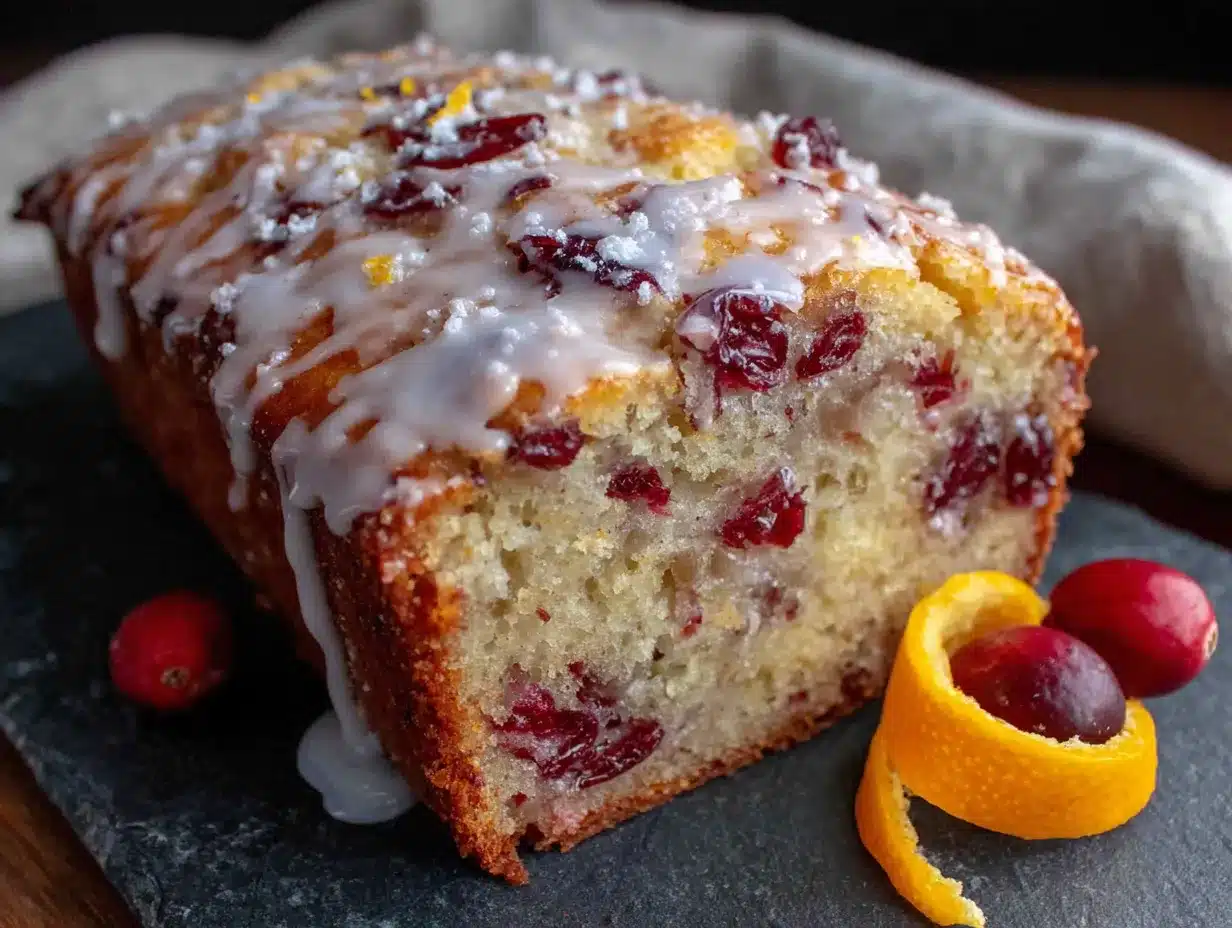
When I pulled it out, the kitchen smelled incredible—bright and citrusy and warm. The loaf had this gorgeous golden top, and when I sliced into it, the crumb was so tender it practically fell apart. That first bite? It had this unexpected, complex orange flavor that no amount of zest or juice had ever given me. No bitterness, just pure, sunny sweetness.
My neighbor just smiled. She didn’t say “I told you so,” but she didn’t have to. I’ve been making this Easy Orange Cranberry Quick Bread with Glaze ever since, and I always think about that moment. Maybe you’ve been there—when someone suggests something that sounds like a terrible idea, and it turns out to be genius. This bread is proof that sometimes the best recipes come from letting go of what you think you know.
Why You’ll Love This Recipe
This isn’t just another quick bread recipe. I’ve tested this one more times than I care to admit, and it’s the version I keep coming back to. Here’s why it works so well for busy weeknights and lazy weekends alike:
- Quick & Easy: From mixing bowl to oven in about 15 minutes. No stand mixer required, no complicated techniques—just stir, pour, and bake.
- Simple Ingredients: You likely have everything in your kitchen right now. Flour, sugar, butter, eggs—and that bag of cranberries hiding in your freezer.
- Perfect for Holiday Mornings or Anytime: It’s festive enough for Christmas brunch but simple enough for a Tuesday afternoon snack with coffee.
- Crowd-Pleaser: I’ve brought this to potlucks, book club meetings, and neighbor drop-offs. It always disappears first, and people always ask for the recipe.
- Unbelievably Delicious: The combination of tart cranberries and sweet orange glaze is pure comfort. The crumb is tender, the glaze sets up perfectly, and every bite has that pop of fruit.
What makes this recipe different from the rest is that whole-orange trick. Instead of just using zest and juice, you’re getting the entire fruit—the oils in the peel, the subtle bitterness of the pith, the natural pectin. It gives the bread a depth of flavor that’s hard to describe but impossible to forget. It’s comfort food reimagined—faster, simpler, but with the same soul-soothing satisfaction.
What Ingredients You Will Need
This recipe uses simple, wholesome ingredients to deliver bold flavor and satisfying texture without the fuss. Most of these are pantry staples, so you can whip this up anytime the craving hits.
For the Bread
- 1 large navel orange (washed, quartered, seeds removed—the whole thing goes in)
- 1/2 cup unsalted butter, softened (I use Kerrygold for the rich flavor)
- 1 cup granulated sugar
- 2 large eggs, room temperature
- 1 teaspoon vanilla extract
- 2 cups all-purpose flour (spooned and leveled—don’t scoop from the bag)
- 1 teaspoon baking powder
- 1/2 teaspoon baking soda
- 1/2 teaspoon salt
- 1 cup fresh or frozen cranberries (if using frozen, don’t thaw them first)
For the Glaze
- 1 cup powdered sugar, sifted
- 2-3 tablespoons fresh orange juice (from the orange you already have)
- 1/2 teaspoon orange zest (optional, for extra pop)
A few notes on ingredients: Look for a navel orange that feels heavy for its size—that means it’s juicy. If you only have a different variety, that’s fine, but navel oranges tend to be less acidic and sweeter, which works beautifully here. For the cranberries, I’ve used both fresh and frozen with equal success. Frozen berries actually hold their shape a bit better during mixing, which is a nice bonus.
If you need to make substitutions, here are some that work well: Use vegan butter and a flax egg (1 tablespoon ground flaxseed mixed with 3 tablespoons water) for a dairy-free, egg-free version. Swap all-purpose flour with a good gluten-free blend like King Arthur’s Measure for Measure. You can also use dried cranberries in a pinch, but rehydrate them in warm water for 10 minutes first, then drain well before adding.
Equipment Needed
You don’t need a lot of fancy equipment for this bread, which is part of why I love it. Here’s what you’ll need:
- Food processor or high-speed blender (for pureeing the orange—this is non-negotiable, but a good blender works too)
- 9×5-inch loaf pan (I prefer a metal pan for even browning, but glass works—just reduce the oven temperature by 25°F)
- Parchment paper (for easy removal—trust me, this saves so much cleanup)
- Large mixing bowl
- Whisk and rubber spatula
- Cooling rack
- Small bowl for the glaze
If you don’t have a food processor, you can grate the orange zest and squeeze the juice, then finely chop the peel. It won’t be quite the same texture, but it’ll still taste great. I’ve used my old Cuisinart for years, and it’s never let me down—but even a $20 mini chopper will do the job.
Preparation Method
Preheat your oven to 350°F (175°C). Line a 9×5-inch loaf pan with parchment paper, leaving some overhang on the long sides—this makes lifting the bread out so much easier later.
- Puree the orange: Quarter the navel orange and remove any seeds. Place the quarters (peel and all) into your food processor. Pulse until it forms a chunky puree, about 15-20 seconds. You want it to look like coarse marmalade. Set aside.
- Cream the butter and sugar: In a large bowl, beat the softened butter and granulated sugar together until light and fluffy, about 2-3 minutes. I use a hand mixer for this, but a wooden spoon will work if your butter is really soft.
- Add the eggs and vanilla: Beat in the eggs one at a time, making sure each is fully incorporated before adding the next. Stir in the vanilla extract. The mixture should look smooth and glossy.
- Mix in the orange puree: Fold the orange puree into the butter mixture. It will look a little curdled at this point—don’t panic. That’s normal. The batter will come together once you add the dry ingredients.
- Combine dry ingredients: In a separate bowl, whisk together the flour, baking powder, baking soda, and salt. This ensures everything is evenly distributed.
- Fold dry ingredients into wet: Add the flour mixture to the wet ingredients in two additions, folding gently with a rubber spatula after each. Mix just until you no longer see streaks of flour—overmixing will make the bread tough.
- Add the cranberries: Gently fold in the cranberries. If you’re using frozen berries, don’t thaw them—they’ll bleed less color into the batter. The batter will be thick and studded with fruit.
- Bake: Pour the batter into your prepared loaf pan and spread it evenly. Bake for 50-60 minutes, or until a toothpick inserted into the center comes out clean or with just a few moist crumbs. The top should be golden brown and spring back when lightly touched.
- Cool: Let the bread cool in the pan for 15 minutes, then use the parchment overhang to lift it onto a cooling rack. Cool completely before glazing—about 1 hour. I know it’s tempting, but warm glaze will just slide right off.
- Make the glaze: In a small bowl, whisk together the sifted powdered sugar and fresh orange juice. Start with 2 tablespoons of juice and add more if needed—you want a thick but pourable consistency. Drizzle over the cooled bread and let it set for about 15 minutes before slicing.
Cooking Tips & Techniques
I’ve made this bread at least a dozen times, and I’ve learned a few things the hard way. Here’s what I wish someone had told me:
Don’t skip the parchment paper. The first time I made this, I just greased the pan. The cranberries stuck to the bottom, and I ended up with half a loaf and a lot of frustration. Parchment paper with overhang makes removal effortless.
Watch your oven temperature. Every oven runs differently. Mine runs hot, so I start checking at 45 minutes. If the top is browning too quickly, tent the loaf with foil for the last 15 minutes of baking.
Room temperature eggs matter. I know it’s a pain, but cold eggs will seize up your butter mixture and give you a dense loaf. Set them out 30 minutes before you start, or place them in a bowl of warm water for 5 minutes.
Measure your flour correctly. Spoon it into your measuring cup and level it off with a knife. Scooping directly from the bag can add up to 25% more flour, which makes the bread dry and crumbly. I learned this one the hard way after a particularly sad loaf.
Let it cool completely. I know you want to eat it warm—I do too. But glazing a warm loaf is like trying to paint a wet wall. The glaze will soak in and disappear. Patience pays off here.
Variations & Adaptations
One of the best things about this recipe is how flexible it is. Here are some variations I’ve tried and loved:
Lemon-Blueberry Version: Swap the orange for a lemon (same process—quarter and puree the whole thing) and use fresh or frozen blueberries instead of cranberries. The lemon version is brighter and more delicate, perfect for spring brunches.
Gluten-Free Option: Use a 1:1 gluten-free flour blend like King Arthur’s Measure for Measure. I’ve tested this, and the texture is surprisingly good—just slightly more crumbly, so let it cool completely before slicing.
Spiced Orange Cranberry: Add 1 teaspoon of cinnamon and 1/2 teaspoon of ground ginger to the dry ingredients. The warm spices complement the tart cranberries beautifully and make the kitchen smell like the holidays.
Nutty Crunch: Fold in 1/2 cup of toasted pecans or walnuts along with the cranberries. The crunch adds a lovely contrast to the tender crumb.
Dairy-Free Version: Use melted coconut oil or a good vegan butter stick instead of butter. I’ve used Earth Balance with great results. The texture is slightly denser but still delicious.
My personal favorite variation is the spiced version—I make it every December and give mini loaves as neighbor gifts. It’s always a hit.
Serving & Storage Suggestions
This bread is best served at room temperature, but I won’t judge you if you eat a warm slice straight from the pan. The glaze sets into a beautiful, crackly shell that contrasts perfectly with the tender crumb.
For serving, I love to slice it thick and serve it alongside a cup of strong coffee or a tall glass of cold milk. It’s also wonderful toasted—just pop a slice in the toaster or under the broiler for a minute, then spread with a little butter. The cranberries get all jammy and the edges turn crisp.
For storage, wrap the cooled, glazed bread tightly in plastic wrap or store it in an airtight container at room temperature. It will stay fresh for up to 3 days—though in my house, it rarely lasts that long. If you live in a humid climate, skip the plastic wrap and use a paper bag instead to prevent sogginess.
You can also freeze this bread for up to 3 months. Wrap it tightly in plastic wrap, then a layer of foil, and pop it in the freezer. Thaw overnight in the refrigerator, then bring to room temperature before serving. I actually prefer freezing the bread without the glaze and adding it fresh after thawing—the glaze stays prettier that way.
The flavors actually develop and deepen over the first 24 hours, so this is one of those rare quick breads that tastes even better the next day. If you can resist eating it all immediately, that is.
Nutritional Information & Benefits
Here’s the nutritional breakdown for one slice (based on 10 slices per loaf):
| Nutrient | Amount per Slice |
|---|---|
| Calories | 285 |
| Total Fat | 11g |
| Saturated Fat | 6g |
| Cholesterol | 55mg |
| Sodium | 210mg |
| Total Carbohydrates | 44g |
| Dietary Fiber | 2g |
| Sugars | 28g |
| Protein | 4g |
Cranberries are packed with antioxidants and vitamin C, and using the whole orange gives you all the fiber and flavonoids from the peel. This bread isn’t health food, but it’s made with real ingredients—no preservatives, no artificial flavors, just honest baking.
If you’re watching your sugar intake, you can reduce the granulated sugar to 3/4 cup and use a lighter glaze. The bread will be slightly less sweet, but the cranberries and orange still provide plenty of natural flavor.
Conclusion
This Easy Orange Cranberry Quick Bread with Glaze has become my go-to for so many reasons. It’s simple enough for a Tuesday night baking session but special enough for holiday gatherings. The whole-orange trick is the kind of kitchen wisdom that makes you wonder why you never tried it before.
I love how forgiving this recipe is—you can swap fruits, adjust the sweetness, make it gluten-free or dairy-free, and it still turns out beautifully. It’s the kind of bread that makes you feel like a hero when you pull it out of the oven, even if you only spent 15 minutes mixing it together.
I’d love to hear how yours turns out. Did you try a variation? Did your family devour it in one sitting? Drop a comment below and let me know—I read every single one, and your feedback helps me create better recipes for you. Happy baking, friends!
Frequently Asked Questions
Can I use bottled orange juice instead of fresh?
You can, but fresh orange juice makes a noticeable difference in flavor. Bottled juice often has added sugars and a cooked taste that doesn’t shine as brightly. Since you’re already using a whole orange for the bread, just squeeze the other half for the glaze.
Why did my bread sink in the middle?
This usually happens if the oven door is opened too early or if the batter was overmixed. Try to resist peeking for the first 40 minutes, and mix just until the flour disappears. A sunken center can also mean the bread is slightly underbaked—use the toothpick test to be sure.
Can I use dried cranberries instead of fresh?
Yes, but rehydrate them first. Soak 1 cup of dried cranberries in warm water for 10 minutes, then drain well before folding into the batter. Dried cranberries straight from the bag will absorb moisture from the batter and leave you with a drier loaf.
How do I know when the bread is done baking?
Insert a toothpick or skewer into the center of the loaf. If it comes out clean or with just a few moist crumbs, it’s done. If there’s wet batter on it, bake for another 5 minutes and check again. The top should also be golden brown and spring back when lightly pressed.
Can I make this into muffins instead of a loaf?
Absolutely! Grease a 12-cup muffin tin and divide the batter evenly. Bake at 350°F for 18-22 minutes, or until a toothpick comes out clean. The glaze can be drizzled over the cooled muffins. This is a great option if you need individual servings for a brunch or bake sale.
Pin This Recipe!

Easy Orange Cranberry Quick Bread with Glaze

This quick bread uses a whole orange—peel, pith, and all—for an unexpectedly bright and complex citrus flavor, paired with tart cranberries and a sweet orange glaze. It’s simple to make, perfect for holiday mornings or any day, and always a crowd-pleaser.
- Prep Time: 15 minutes
- Cook Time: 50-60 minutes
- Total Time: 1 hour 15 minutes (plus cooling)
- Yield: 10 servings 1x
- Category: Quick Bread
- Cuisine: American
Ingredients
- 1 large navel orange (washed, quartered, seeds removed)
- 1/2 cup unsalted butter, softened
- 1 cup granulated sugar
- 2 large eggs, room temperature
- 1 teaspoon vanilla extract
- 2 cups all-purpose flour (spooned and leveled)
- 1 teaspoon baking powder
- 1/2 teaspoon baking soda
- 1/2 teaspoon salt
- 1 cup fresh or frozen cranberries (if frozen, do not thaw)
- 1 cup powdered sugar, sifted
- 2–3 tablespoons fresh orange juice
- 1/2 teaspoon orange zest (optional)
Instructions
- Preheat oven to 350°F (175°C). Line a 9×5-inch loaf pan with parchment paper, leaving overhang on the long sides.
- Quarter the navel orange and remove any seeds. Place quarters (peel and all) into a food processor. Pulse until it forms a chunky puree, about 15-20 seconds. Set aside.
- In a large bowl, beat softened butter and granulated sugar together until light and fluffy, about 2-3 minutes.
- Beat in eggs one at a time, ensuring each is fully incorporated. Stir in vanilla extract.
- Fold the orange puree into the butter mixture (mixture may look curdled; this is normal).
- In a separate bowl, whisk together flour, baking powder, baking soda, and salt.
- Add flour mixture to wet ingredients in two additions, folding gently with a rubber spatula after each. Mix just until no streaks of flour remain.
- Gently fold in cranberries. Batter will be thick and studded with fruit.
- Pour batter into prepared loaf pan and spread evenly. Bake for 50-60 minutes, or until a toothpick inserted into the center comes out clean or with a few moist crumbs. Top should be golden brown and spring back when lightly touched.
- Let bread cool in pan for 15 minutes, then use parchment overhang to lift onto a cooling rack. Cool completely before glazing (about 1 hour).
- For the glaze: In a small bowl, whisk together sifted powdered sugar and fresh orange juice. Start with 2 tablespoons juice, adding more if needed for a thick but pourable consistency. Drizzle over cooled bread and let set for about 15 minutes before slicing.
Notes
Don’t skip the parchment paper for easy removal. Room temperature eggs are important for proper texture. Measure flour by spooning and leveling to avoid a dry loaf. Cool completely before glazing. For variations, try lemon-blueberry, spiced orange cranberry, or add toasted nuts. Bread can be frozen for up to 3 months (preferably without glaze).
Nutrition
- Serving Size: 1 slice
- Calories: 285
- Sugar: 28
- Sodium: 210
- Fat: 11
- Saturated Fat: 6
- Carbohydrates: 44
- Fiber: 2
- Protein: 4
Keywords: orange cranberry bread, quick bread, whole orange, cranberry orange loaf, easy bread recipe, holiday bread