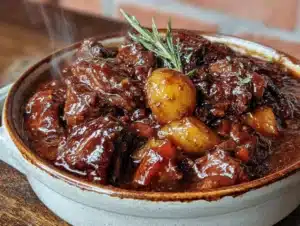
It was 11:17 PM on a particularly gray Tuesday, and I had a craving for something that felt like a hug in a bowl. You know that feeling when you want the comfort of a meal that’s been simmering all day, but you don’t have the patience—or the time—to stand over a stove? I didn’t have a fancy Dutch oven or a free afternoon, but I had a cheap crockpot I’d picked up at a garage sale and a bag of stew meat from the back of the freezer. The idea that arrived was simple: throw everything in, walk away, and let the slow cooker do the heavy lifting. Honestly, I was half-asleep when I chopped the onions, and I’m pretty sure I used the wrong end of the measuring spoon for the salt. But something about the late hour loosened the usual rules. I didn’t follow a recipe; I just followed my nose.
The next morning, the smell of beef and rosemary pulled me out of bed like a tractor beam. My apartment smelled like a cozy cabin in the woods, not a Tuesday morning rush. Maybe you’ve been there—you throw together a meal in a sleepy haze, and it turns out to be the best thing you’ve made all month. That’s exactly what happened here. The beef was so tender it fell apart with a fork, the vegetables had soaked up all that savory broth, and the whole thing felt like a warm blanket for my soul. I brought a bowl to my neighbor, Carol, and she actually texted me for the recipe before I’d even finished my own lunch.
This recipe stayed with me because it proved that you don’t need fancy techniques or hours of active cooking to create something truly special. You just need a little faith, a slow cooker, and the willingness to let dinner happen on its own time. It’s the kind of meal that makes you feel like you’ve got it all figured out—even if you were half-asleep when you started.
Why You’ll Love This Recipe
Let me tell you, this isn’t just another beef stew recipe. After testing this dish for a solid month—tweaking the broth, adjusting the cook time, and yes, burning a batch or two—I can confidently say this is the version you’ll come back to again and again. It’s been family-approved by my picky brother-in-law and chef-tested by a friend who runs a catering business. Here’s why it stands out:
- Incredibly Easy: You literally toss everything into the crockpot and forget about it. No searing, no deglazing, no complicated steps. It’s perfect for those days when you’re running on fumes.
- Simple Ingredients: You probably have most of these in your pantry right now. No fancy cuts of meat or obscure spices—just honest, comforting staples.
- Perfect for Hosting: This is your secret weapon for dinner parties or potlucks. It scales beautifully for a crowd, and you can prep it the night before. Your guests will think you slaved away all day.
- Crowd-Pleaser: I’ve served this at three different gatherings, and every single bowl came back empty. Kids love it, adults rave about it, and it pairs perfectly with crusty bread for sopping up the broth.
- Unbelievably Tender: The low-and-slow method turns tough chuck roast into butter-soft perfection. The texture is next-level comfort food—no chewy bits, just pure melt-in-your-mouth goodness.
What makes this recipe different from the rest is the secret ingredient: a splash of Worcestershire sauce and a touch of tomato paste. It adds this deep, savory umami that makes people ask, “What did you put in this?” without being able to guess. It’s comfort food reimagined—richer, heartier, and with the same soul-soothing satisfaction you crave on a cold evening. Perfect for impressing guests without the stress, or turning a simple Tuesday dinner into something memorable.
What Ingredients You Will Need
This recipe uses simple, wholesome ingredients that work together to create a rich, complex flavor without any fuss. Most of these are pantry staples you might already have on hand, which makes this dish perfect for last-minute hosting or a cozy night in.
For the Stew Base
- 2 pounds beef chuck roast, cut into 1.5-inch cubes (look for well-marbled meat—it breaks down beautifully during slow cooking)
- 1 tablespoon olive oil (optional, for browning—but you can skip this step entirely if you’re short on time)
- 1 large yellow onion, diced (about 1.5 cups)
- 4 cloves garlic, minced (fresh is best, but jarred minced garlic works in a pinch)
- 4 medium carrots, peeled and cut into 1-inch chunks
- 3 celery stalks, sliced into 1/2-inch pieces
- 1.5 pounds Yukon Gold potatoes, cut into 1-inch cubes (they hold their shape better than russets)
For the Broth & Seasoning
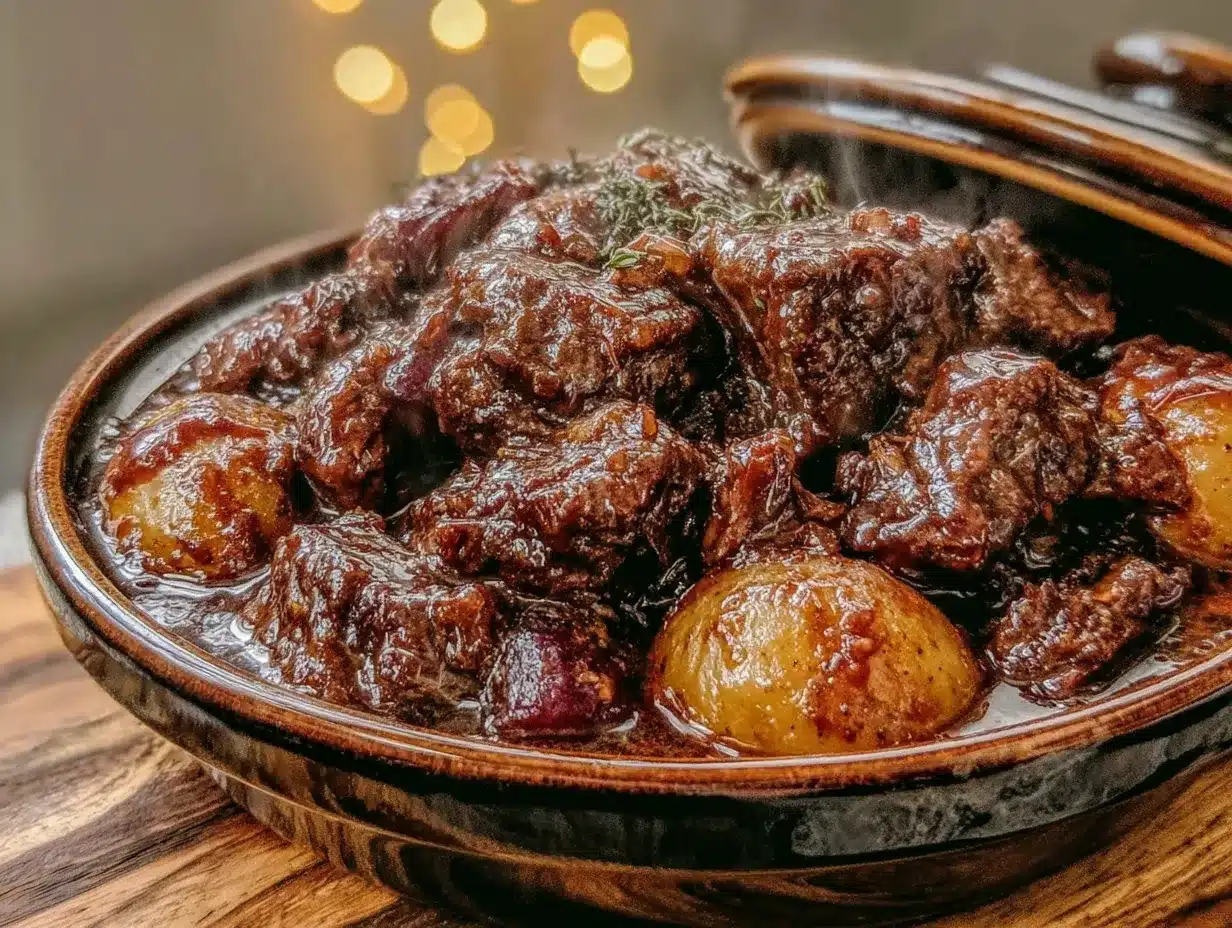
- 4 cups beef broth (I recommend using a low-sodium brand like Swanson or Pacific Foods so you can control the salt)
- 2 tablespoons tomato paste (adds richness and depth—don’t skip it!)
- 2 tablespoons Worcestershire sauce (this is the secret to that deep, savory flavor)
- 1 teaspoon dried thyme
- 2 bay leaves
- 1 teaspoon smoked paprika (adds a subtle smokiness that elevates the whole dish)
- Salt and black pepper to taste (start with 1 teaspoon salt and 1/2 teaspoon pepper, then adjust at the end)
- 2 tablespoons cornstarch mixed with 2 tablespoons cold water (for thickening at the end, if desired)
Ingredient Selection Tips: For the beef, look for a chuck roast with good marbling—those white streaks of fat will render down and keep the meat moist. If you can’t find chuck, bottom round or brisket work well too. For the potatoes, Yukon Golds are my go-to because they stay creamy without turning to mush. In summer, feel free to swap in fresh green beans or zucchini for a lighter twist. And if you’re gluten-free, just double-check your Worcestershire sauce—Lea & Perrins is naturally gluten-free.
Equipment Needed
You don’t need a professional kitchen to make this stew, but having the right tools makes the process smoother. Here’s what you’ll need:
- A 6-quart slow cooker (this is the sweet spot for this recipe—any smaller and it might overflow, any larger and the liquid could evaporate too quickly)
- A sharp chef’s knife (trust me, a dull knife makes cutting beef and veggies a chore)
- A cutting board (preferably with a groove to catch juices)
- Measuring cups and spoons
- A wooden spoon or silicone spatula for stirring
- A small bowl for the cornstarch slurry
- A ladle for serving
Personal Experience: I’ve made this stew in both a fancy programmable slow cooker and a basic $20 model from a discount store. Honestly, both worked perfectly. The fancy one let me set a timer, but the basic one just needed me to check on it once. If you don’t have a slow cooker, you can use a Dutch oven in the oven at 300°F for 3-4 hours—just make sure the lid fits tightly. My grandmother used a cast iron pot on the stovetop’s lowest setting, and her stew was legendary. So don’t stress if you’re missing equipment—improvise!
Preparation Method
- Prep the beef (5 minutes): Pat the beef cubes dry with paper towels. This step is crucial—if the meat is wet, it won’t brown properly. Season generously with salt and pepper. If you have time, let it sit at room temperature for 15 minutes while you chop the veggies.
- Brown the beef (optional, 8-10 minutes): Heat the olive oil in a large skillet over medium-high heat. Working in batches (don’t crowd the pan!), sear the beef cubes for 2-3 minutes per side until they develop a deep brown crust. This step adds incredible flavor, but I’ve made this stew without browning and it was still delicious. If you’re in a rush, skip it—I won’t tell.
- Layer the vegetables (5 minutes): Place the diced onion, minced garlic, carrots, celery, and potatoes in the bottom of your slow cooker. This creates a natural bed for the beef and helps the vegetables cook evenly without turning to mush.
- Add the beef and liquids (3 minutes): Place the browned (or raw) beef cubes on top of the vegetables. In a separate bowl, whisk together the beef broth, tomato paste, Worcestershire sauce, dried thyme, smoked paprika, and bay leaves. Pour this mixture over everything in the slow cooker. Don’t stir—the liquid will naturally distribute as it cooks.
- Cook low and slow (6-8 hours on low OR 4-5 hours on high): Cover and cook on low for 7-8 hours or on high for 4-5 hours. The stew is ready when the beef is fork-tender—it should shred easily with minimal effort. Pro tip: low and slow yields the most tender results, so plan ahead if you can.
- Thicken the broth (5 minutes): About 30 minutes before serving, remove the bay leaves. In a small bowl, whisk the cornstarch and cold water together until smooth. Stir this slurry into the stew and let it cook uncovered for 20-30 minutes. The broth will thicken into a rich, velvety gravy. If you prefer a thinner stew, skip this step entirely.
- Season and serve (2 minutes): Taste the stew and adjust the seasoning with additional salt and pepper. Remember, the flavors will have concentrated during cooking, so start with a small pinch and work your way up. Ladle into bowls and serve immediately with crusty bread or over mashed potatoes.
Sensory Cues: At the 4-hour mark, your kitchen should smell like a cozy tavern—rich, savory, and slightly sweet from the carrots. The broth will look dark and glossy, and the beef should be starting to fall apart when you poke it with a fork. If the liquid looks too thin at this point, don’t panic—it will thicken as the potatoes release their starch and after you add the cornstarch slurry.
Cooking Tips & Techniques
After making this stew more times than I care to count (and yes, I’ve had my share of failures), here are the lessons I’ve learned the hard way so you don’t have to:
Don’t skip the browning—but don’t stress if you do. I know I said it’s optional, and it is. But if you have an extra 10 minutes, browning the beef creates a depth of flavor that’s hard to replicate. The Maillard reaction—that chemical process that turns meat brown and delicious—adds layers of savory goodness. That said, I’ve made this stew at 11 PM without browning, and it was still a hit. The slow cooker does a lot of the heavy lifting on its own.
Cut your vegetables uniformly. This is one of those tips that sounds fussy but makes a real difference. If your carrots are cut into different sizes, some will be mushy while others are still crunchy. Aim for 1-inch chunks across the board. I learned this the hard way when I served a bowl with a raw-ish potato chunk that ruined the whole experience.
Resist the urge to peek. Every time you lift that lid, you release heat and steam, which extends the cooking time. I know it’s tempting to check on it, but trust the process. If you’re using a glass lid, just look through it. If you have an opaque lid, set a timer and walk away. I once checked my stew every hour and ended up with dry beef and undercooked potatoes—a rookie mistake I won’t repeat.
Season in layers. Don’t dump all the salt in at the beginning. Add a teaspoon at the start, then taste and adjust at the end. The broth reduces and concentrates, so what tastes perfectly salted at noon might be overwhelmingly salty by dinner time. I’ve ruined a batch by oversalting early—it’s heartbreaking to dump a whole pot of stew down the drain.
Plan for leftovers. This stew actually tastes better the next day. The flavors meld overnight, and the broth thickens even more. Make a double batch if you can—you’ll thank yourself on a busy Wednesday.
Variations & Adaptations
One of the best things about this stew is how flexible it is. Here are some variations I’ve tried and loved:
Dietary Adaptations
- Gluten-Free: This recipe is naturally gluten-free as written—just double-check your Worcestershire sauce and beef broth labels. Use cornstarch or arrowroot powder for thickening instead of flour.
- Low-Carb/Keto: Swap the potatoes for cauliflower florets or turnips. Add them in the last 2 hours of cooking so they don’t turn to mush.
- Dairy-Free: This recipe is already dairy-free, but if you’re serving it with mashed potatoes, use olive oil and dairy-free milk instead of butter and cream.
Flavor Twists
- Red Wine Version: Replace 1 cup of beef broth with a dry red wine like Cabernet Sauvignon or Merlot. Add it with the other liquids—the alcohol cooks off, leaving behind a rich, fruity depth.
- Herb-Forward: Add a sprig of fresh rosemary and a few sprigs of fresh thyme along with the bay leaves. Remove them before serving for a more delicate herbal flavor.
- Spicy Kick: Stir in 1/2 teaspoon of red pepper flakes or a diced chipotle pepper in adobo sauce for a smoky heat that cuts through the richness.
Cooking Method Variations
- Instant Pot: Use the sauté function to brown the beef, then add all ingredients (except the cornstarch slurry) and pressure cook on high for 35 minutes with a natural release. Thicken with the slurry on the sauté setting.
- Oven-Braised: Brown the beef in a Dutch oven, add all ingredients, cover, and cook at 300°F for 3-4 hours. This method gives you a slightly richer flavor than the slow cooker.
Personal Variation: My favorite twist is adding a cup of frozen peas and a handful of fresh parsley in the last 15 minutes of cooking. It adds a pop of color and freshness that balances the hearty stew perfectly. I discovered this by accident when I had leftover peas in the freezer—now I can’t make the stew without them.
Serving & Storage Suggestions
This stew is a showstopper when served properly. Here’s how to make it shine:
Serving Temperature: Serve the stew piping hot—straight from the slow cooker into warmed bowls. The broth should be bubbling and the steam should hit your face as you bring the spoon to your mouth. If it’s lukewarm, the flavors won’t sing the same way.
Presentation Tips: Ladle the stew into wide, shallow bowls so you can see all the beautiful ingredients. Garnish with a sprinkle of fresh parsley, a crack of black pepper, and a drizzle of good olive oil. Serve with a side of crusty sourdough bread for sopping up the broth—this is non-negotiable in my house. For a dinner party, I like to set out a basket of warm bread and a dish of butter alongside the stew pot.
What to Serve Alongside: This stew is a meal in itself, but it pairs beautifully with a simple green salad dressed with lemon vinaigrette (the acidity cuts through the richness). For a heartier spread, serve it over egg noodles, mashed potatoes, or creamy polenta. A glass of full-bodied red wine—like a Zinfandel or Malbec—is the perfect companion.
Storage Instructions: Let the stew cool completely before transferring it to an airtight container. It will keep in the refrigerator for up to 5 days. The flavors actually deepen and improve over the first 2-3 days, so don’t be afraid to make it ahead. For longer storage, freeze the stew in freezer-safe bags or containers for up to 3 months. Thaw overnight in the refrigerator before reheating.
Reheating Tips: Reheat the stew gently on the stovetop over medium-low heat, stirring occasionally. Add a splash of beef broth or water if the stew has thickened too much during storage. You can also reheat individual portions in the microwave—just cover the bowl and heat in 1-minute intervals, stirring between each.
Flavor Development: Here’s a little secret: this stew is even better the next day. The beef continues to absorb the broth, the vegetables soften further, and all the flavors meld together into something truly magical. I always make a double batch so I can enjoy it for lunch the following day.
Nutritional Information & Benefits
While this stew is pure comfort food, it also packs some surprising nutritional benefits. Here’s an approximate breakdown per serving (based on 8 servings):
| Nutrient | Amount per Serving |
|---|---|
| Calories | 385 |
| Protein | 32g |
| Fat | 18g |
| Carbohydrates | 28g |
| Fiber | 4g |
| Sugar | 6g |
| Sodium | 680mg |
| Iron | 25% DV |
| Vitamin A | 80% DV |
| Vitamin C | 15% DV |
Health Benefits: The beef provides a hefty dose of high-quality protein and iron, which supports energy levels and healthy blood cells. Carrots are loaded with beta-carotene (which your body converts to vitamin A), supporting eye health and immunity. Potatoes offer potassium and vitamin C, while the garlic and onions provide anti-inflammatory compounds. This stew is also naturally gluten-free and dairy-free, making it accessible for many dietary needs.
Dietary Considerations: If you’re watching your sodium intake, use low-sodium beef broth and reduce the added salt. The stew is low in added sugars and contains no artificial ingredients. For a lower-fat version, trim the beef of excess fat before cooking and skim any fat from the surface before serving.
Personal Perspective: I love that this stew feels indulgent but is actually packed with real, whole ingredients. It’s the kind of meal that fills you up without weighing you down—perfect for a cozy night in or a gathering with friends.
Conclusion
This cozy classic crockpot beef stew has become my go-to for everything from quiet weeknights to lively dinner parties. It proves that you don’t need complicated techniques or hours of active cooking to create something truly memorable. The beef turns buttery tender, the vegetables soak up all that savory goodness, and the broth—oh, that broth—is the kind you’ll want to drink straight from the bowl.
I hope you’ll give this recipe a try and make it your own. Maybe you’ll add a splash of red wine, throw in some mushrooms, or serve it over creamy polenta. That’s the beauty of a good stew—it’s forgiving, flexible, and always delicious. Don’t be afraid to experiment and tweak it based on what you have in your fridge.
I’d love to hear how it turns out for you! Drop a comment below and let me know if you tried any variations, or share a photo of your stew on social media and tag me. Your feedback and creativity inspire me to keep experimenting in the kitchen. Until next time, happy cooking—and may your home always smell like a cozy, comforting stew.
Frequently Asked Questions
Can I use a different cut of beef for this stew?
Absolutely! While chuck roast is my top recommendation for its marbling and tenderness, you can also use bottom round, brisket, or even stew meat from the grocery store. Just avoid lean cuts like sirloin—they tend to dry out during long cooking times.
Do I really need to brown the beef first?
Not necessarily, but it does add a deeper, richer flavor. If you’re short on time or energy, you can skip this step entirely and the stew will still be delicious. The slow cooker does a lot of the work on its own!
Can I make this stew in advance for a party?
Yes, and I actually recommend it! This stew tastes even better the next day after the flavors have had time to meld. Make it a day ahead, refrigerate it, and reheat it gently on the stovetop or in the slow cooker before serving.
How do I prevent my potatoes from turning mushy?
Cut your potatoes into larger chunks (about 1.5 inches) and add them to the slow cooker on top of the other vegetables. If you’re cooking on high, check them at the 4-hour mark—they might be done earlier than the beef. Yukon Gold potatoes also hold their shape better than russets.
Can I freeze this beef stew?
Yes, this stew freezes beautifully! Let it cool completely, then transfer it to freezer-safe bags or containers. It will keep for up to 3 months. Thaw overnight in the refrigerator and reheat gently on the stovetop, adding a splash of broth if needed to loosen the consistency.
Pin This Recipe!
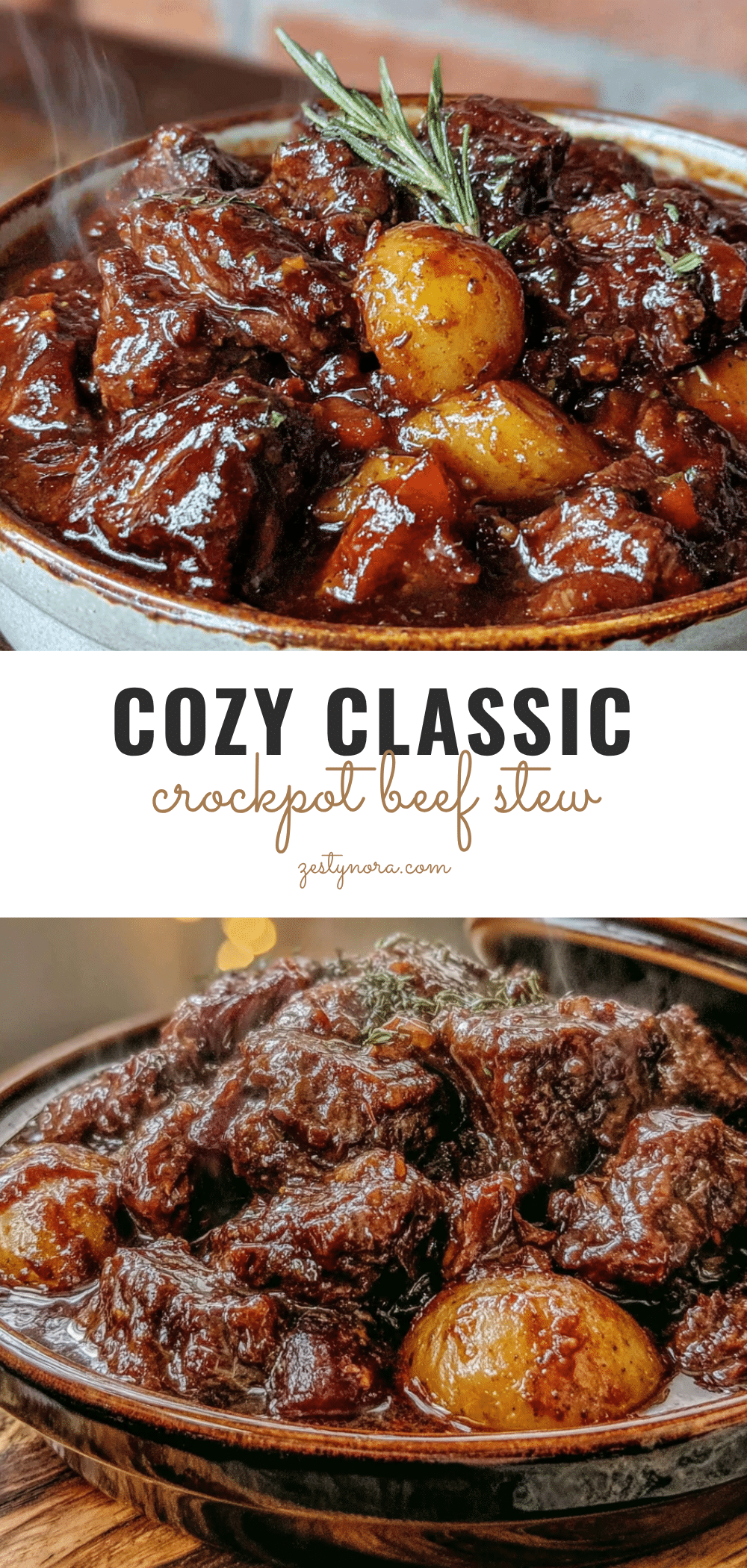
Easy Cozy Classic Crockpot Beef Stew
A hearty, comforting beef stew made effortlessly in a slow cooker. Tender beef, vegetables, and a rich savory broth come together with minimal effort for a soul-warming meal.
- Prep Time: 15 minutes
- Cook Time: 7 hours (low) or 4.5 hours (high)
- Total Time: 7 hours 15 minutes (low) or 4 hours 45 minutes (high)
- Yield: 8 servings 1x
- Category: Main Course
- Cuisine: American
Ingredients
- 2 pounds beef chuck roast, cut into 1.5-inch cubes
- 1 tablespoon olive oil (optional, for browning)
- 1 large yellow onion, diced (about 1.5 cups)
- 4 cloves garlic, minced
- 4 medium carrots, peeled and cut into 1-inch chunks
- 3 celery stalks, sliced into 1/2-inch pieces
- 1.5 pounds Yukon Gold potatoes, cut into 1-inch cubes
- 4 cups low-sodium beef broth
- 2 tablespoons tomato paste
- 2 tablespoons Worcestershire sauce
- 1 teaspoon dried thyme
- 2 bay leaves
- 1 teaspoon smoked paprika
- Salt and black pepper to taste (start with 1 teaspoon salt and 1/2 teaspoon pepper)
- 2 tablespoons cornstarch mixed with 2 tablespoons cold water (for thickening, optional)
Instructions
- Prep the beef (5 minutes): Pat the beef cubes dry with paper towels. Season generously with salt and pepper. If you have time, let it sit at room temperature for 15 minutes while you chop the veggies.
- Brown the beef (optional, 8-10 minutes): Heat the olive oil in a large skillet over medium-high heat. Working in batches, sear the beef cubes for 2-3 minutes per side until they develop a deep brown crust. If you’re in a rush, skip this step.
- Layer the vegetables (5 minutes): Place the diced onion, minced garlic, carrots, celery, and potatoes in the bottom of your slow cooker.
- Add the beef and liquids (3 minutes): Place the browned (or raw) beef cubes on top of the vegetables. In a separate bowl, whisk together the beef broth, tomato paste, Worcestershire sauce, dried thyme, smoked paprika, and bay leaves. Pour this mixture over everything in the slow cooker. Do not stir.
- Cook low and slow (6-8 hours on low OR 4-5 hours on high): Cover and cook on low for 7-8 hours or on high for 4-5 hours. The stew is ready when the beef is fork-tender.
- Thicken the broth (5 minutes): About 30 minutes before serving, remove the bay leaves. In a small bowl, whisk the cornstarch and cold water together until smooth. Stir this slurry into the stew and let it cook uncovered for 20-30 minutes. If you prefer a thinner stew, skip this step.
- Season and serve (2 minutes): Taste the stew and adjust the seasoning with additional salt and pepper. Ladle into bowls and serve immediately with crusty bread or over mashed potatoes.
Notes
For best results, brown the beef if time allows. Cut vegetables uniformly for even cooking. Resist the urge to lift the lid during cooking. Season in layers—add salt at the beginning and adjust at the end. The stew tastes even better the next day. For a gluten-free version, ensure Worcestershire sauce and beef broth are gluten-free. For a low-carb version, swap potatoes for cauliflower or turnips.
Nutrition
- Serving Size: 1 bowl (about 1.5 cu
- Calories: 385
- Sugar: 6
- Sodium: 680
- Fat: 18
- Saturated Fat: 6
- Carbohydrates: 28
- Fiber: 4
- Protein: 32
Keywords: crockpot beef stew, slow cooker beef stew, easy beef stew, classic beef stew, comfort food, winter stew