Third batch in three days and I finally stopped overthinking the butter-to-flour ratio. The first round crumbled like bad confetti. The second tasted fine but looked like a sad, blobby cartoon football instead of the crisp, clean laces-and-all shape I was chasing. But this third one—cheddar sharp enough to wake up your whole mouth, shortbread tender enough to snap cleanly in two—this one finally felt right. I pulled the baking sheet out of the oven, let them cool just long enough to stop being dangerous, and ate one standing over the counter. Then another. Honestly, I think I made these because I needed a snack that felt like an event. The playoffs were on, everyone was yelling at the TV, and I wanted something that matched the energy—salty, buttery, snackable, and shaped like a tiny football.
These Easy Cheddar Football Shortbread cookies are exactly that. They’re not sweet. They’re not complicated. They’re basically a cheese cracker that grew up, got a little fancy with the shortbread technique, and decided to show up for game day in uniform. I used a simple football cookie cutter I found at a kitchen supply store for like four bucks, and honestly, the shape does half the work. People see them and immediately smile—even before they taste the sharp cheddar and the whisper of cayenne that sneaks up on you at the end. I’ve brought these to two watch parties already and they disappeared faster than the wings.
The best part? You don’t need to be a baker. You don’t need to be a football fan. You just need a few basic ingredients and a cutter. This recipe stuck with me because it’s the kind of thing you make when you want to contribute something that feels thoughtful without spending all day in the kitchen. And when someone asks, “Did you make these?” you get to say yes—and mean it.
Why You’ll Love This Recipe
These aren’t your average game-day crackers. Here’s why they earn a permanent spot in your snack rotation:
- Quick & Easy: From mixing bowl to cooling rack in under 40 minutes. No chilling required—seriously, I tested it both ways and skipping the chill gives you a tenderer crumb with less fuss.
- Simple Ingredients: Butter, flour, sharp cheddar, salt, cayenne. That’s it. You probably have everything except the cheese right now.
- Perfect for Game Day: Whether it’s the Super Bowl, a college rivalry, or just a Tuesday night game, these shortbread footballs bring the energy. They’re also great for tailgates, potlucks, or any gathering where finger foods reign.
- Crowd-Pleaser: I’ve watched kids grab them by the handful and adults quietly stash extras in napkins. The savory-savory combo hits everyone the same way—more, please.
- Unbelievably Delicious: The texture is where this recipe shines. It’s not a crunchy cracker and it’s not a soft cookie—it’s that perfect shortbread snap that melts into buttery, cheesy goodness. The cayenne is optional but I strongly recommend it; just a pinch adds a warmth that keeps you reaching for another.
What makes this recipe different from all the other cheese cracker recipes out there? It’s the shortbread method. Using a 3:2:1 ratio of flour to butter to cheese (roughly) gives you a dough that’s forgiving to work with and bakes up with that signature shortbread tenderness. No rolling pins sticking, no dough tearing—just smooth, easy shaping. And because there’s no egg, the flavor stays pure and buttery. I’ve tried versions with added milk powder and cream cheese, but this stripped-down version tastes the most like what you actually want: a cheese-forward, buttery, satisfying bite.
This is comfort food reimagined—faster, simpler, and somehow more fun than store-bought. Perfect for impressing guests without stress, or turning a simple snack into something memorable.
What Ingredients You Will Need
This recipe uses a short list of everyday ingredients to deliver big flavor. Each one plays a specific role, so here’s what to look for and why it matters.
- Unsalted butter (1 cup, 226 grams, cold and cubed): Cold butter is non-negotiable here. It creates steam pockets as it bakes, giving you that flaky, tender shortbread texture. I prefer Kerrygold or Plugrà for their lower water content, but any good-quality unsalted butter works. If you only have salted, reduce the added salt to ¼ teaspoon.
- Sharp cheddar cheese (8 ounces, 226 grams, freshly grated): Pre-shredded cheese is coated in anti-caking agents that prevent proper melting and blending. Grate it yourself from a block—it takes two minutes and makes a noticeable difference in texture and flavor. Extra-sharp cheddar gives the most pronounced cheese taste. White or yellow cheddar both work; yellow gives a more classic “cheese cracker” look.
- All-purpose flour (2 cups, 240 grams): Standard AP flour gives the right structure. Don’t substitute with whole wheat or gluten-free blends unless you’ve tested them—the texture changes significantly. Spoon and level your flour for accuracy; scooping directly compacts it and can make the dough dry.
- Salt (½ teaspoon, 3 grams): Fine sea salt or table salt dissolves evenly. Kosher salt works too, but use a full teaspoon since the flakes are larger.
- Cayenne pepper (¼ teaspoon, optional but recommended): This doesn’t make the shortbread spicy—it adds a gentle warmth that wakes up the cheddar flavor. Skip it if you’re sensitive to heat or serving to very young kids.
- Optional: Garlic powder (¼ teaspoon): Adds a subtle savory depth. I sometimes add this when I want a more “grown-up” flavor profile, but it’s not traditional shortbread territory.
That’s the whole list. No eggs, no sugar, no weird stabilizers. The beauty of shortbread is its simplicity—the quality of your butter and cheese will directly determine the final result. If you’re looking for a dairy-free version, I’ve had decent luck with vegan butter sticks (not tubs) and a sharp vegan cheddar block, but the texture won’t be identical. For a gluten-free option, a 1:1 gluten-free baking flour blend works surprisingly well—just add an extra tablespoon of cold water if the dough feels too crumbly.
Equipment Needed
You don’t need a fancy kitchen to pull these off. Here’s what you’ll actually use:
- Football cookie cutter: About 3 inches long is ideal. I found mine at a craft store in the seasonal section, but any sports-themed cutter works. If you don’t have one, you can shape the dough into a log, chill it, and slice into rounds—they won’t look like footballs but they’ll taste the same.
- Food processor: This is my preferred method for cutting cold butter into flour quickly. A pastry cutter or two forks work too, but the food processor keeps the butter cold and the dough uniform. I use a 7-cup Cuisinart and it handles this batch easily.
- Baking sheets: Two standard half-sheet pans. Line them with parchment paper or a silicone baking mat for easy cleanup and even browning.
- Rolling pin: A standard rolling pin is fine. If you don’t have one, a wine bottle works in a pinch—just wrap it in plastic wrap first.
- Cooling rack: Lets air circulate so the shortbread stays crisp, not soggy. If you don’t have one, transfer them to a plate after 5 minutes.
- Box grater: For grating the cheese. The large holes are perfect. A microplane works but takes longer.
Budget-friendly tip: Skip the food processor. Grate your cold butter using the large holes of a box grater, then rub it into the flour with your fingertips. It takes a few extra minutes but the result is identical.
Preparation Method
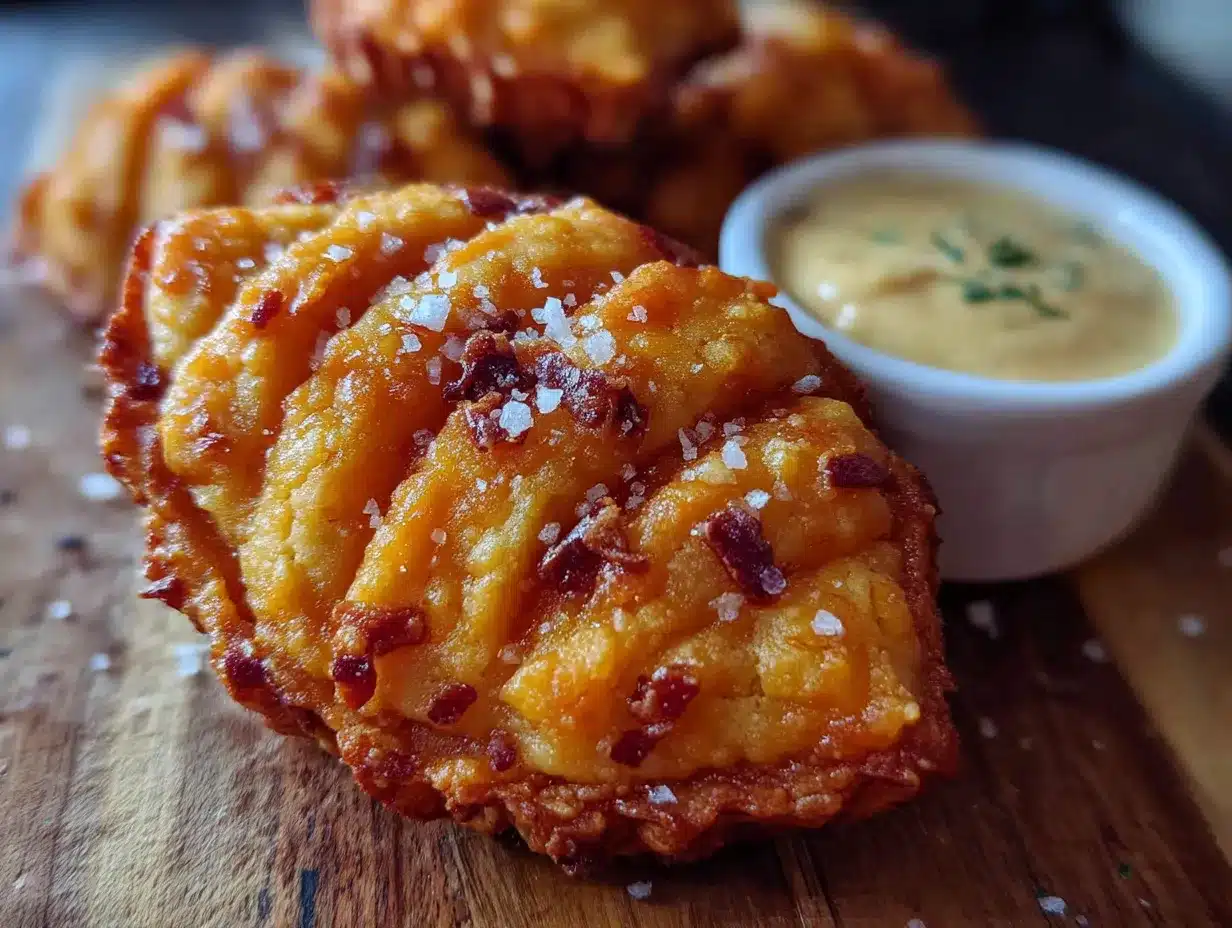
Let’s make these shortbread footballs. The process is straightforward, but I’ve added notes at each step so you know exactly what to look for.
Step 1: Preheat and Prep
Preheat your oven to 350°F (175°C). Line two baking sheets with parchment paper. Set aside.
Step 2: Grate the Cheese
Grate 8 ounces of sharp cheddar using the large holes of a box grater. You should have about 2 cups loosely packed. Let it sit at room temperature while you prep the other ingredients—slightly softened cheese incorporates more evenly into the dough.
Step 3: Combine Dry Ingredients
In the bowl of a food processor, add 2 cups (240g) all-purpose flour, ½ teaspoon salt, and ¼ teaspoon cayenne (if using). Pulse 3-4 times to combine. If you’re adding garlic powder, add it now.
Step 4: Cut in the Butter
Cut 1 cup (226g) cold unsalted butter into ½-inch cubes. Scatter them over the flour mixture. Pulse in 1-second bursts about 10-12 times, until the mixture looks like coarse sand with some pea-sized butter pieces remaining. You want visible butter bits—this is what creates the flaky texture. Don’t over-process or the dough will be tough.
Step 5: Add the Cheese
Add the grated cheddar to the food processor. Pulse 5-6 more times, just until the cheese is distributed. The mixture should look crumbly but hold together when you squeeze a handful. If it feels dry, add 1 tablespoon of cold water and pulse once more.
Step 6: Form the Dough
Turn the crumbly mixture out onto a clean work surface. Gather it into a mound and press it together with your hands—don’t knead. The warmth of your hands will help it come together. Shape into a flat disc about 1 inch thick. If the dough feels too warm or sticky, wrap it in plastic and refrigerate for 15 minutes. (I rarely need to, but it’s a good fix if your kitchen is hot.)
Step 7: Roll and Cut
Place the disc between two sheets of parchment paper. Roll it out to ¼-inch thickness (about 6mm). Aim for even thickness—if some spots are thinner, they’ll overbake. Peel off the top parchment. Use your football cookie cutter to press shapes closely together, like a puzzle. Transfer the cut shapes to the prepared baking sheets, spacing them about 1 inch apart. Gather the scraps, re-roll, and cut again. You should get about 30-36 shortbread footballs, depending on cutter size.
Step 8: Bake
Bake one sheet at a time on the center rack for 14-16 minutes, rotating halfway through. The shortbreads are done when the edges are just starting to turn golden brown and the centers look dry. They will be soft when hot—that’s normal. Let them cool on the baking sheet for 5 minutes, then transfer to a cooling rack. They crisp up as they cool.
Step 9: Cool Completely
Let them cool completely on the rack, about 20 minutes. They’re best at room temperature. If you can resist eating them all warm, they’ll be perfectly crisp and tender by the time they’ve cooled.
Cooking Tips & Techniques
I’ve made this recipe about a dozen times now, and I’ve learned a few things the hard way. Here’s what I wish someone had told me:
- Keep everything cold: Warm butter melts into the flour instead of creating those precious steam pockets. If your kitchen is warm (above 75°F), chill your flour and cheese for 10 minutes before starting. I’ve also popped the shaped dough into the freezer for 10 minutes before baking when my AC was struggling—it helped them hold their shape better.
- Don’t twist the cutter: Press straight down and lift straight up. Twisting seals the edges and prevents the shortbread from rising evenly. I learned this the hard way with my first batch—they came out looking like deformed potato chips.
- Watch the bake time: Ovens vary wildly. My first batch overbaked by two minutes and they were noticeably darker and less tender. Start checking at 12 minutes. The shortbreads should be pale with just a hint of gold at the edges. They continue to set as they cool, so don’t wait for them to look fully baked in the oven.
- Use a ruler for even rolling: I place two ¼-inch thick wooden dowels (or even chopsticks) on either side of the dough before rolling. This guarantees uniform thickness and even baking. It’s a game-changer for consistency.
- Multitask smartly: While one sheet bakes, arrange the next batch on the other sheet. By the time the first sheet is done, the second is ready to go in. This keeps the workflow smooth and prevents the dough from warming up too much.
- If the dough cracks: It’s too dry. Sprinkle a teaspoon of cold water over it and press it back together. If it’s sticky, dust lightly with flour. Shortbread dough is forgiving—just don’t overwork it.
Variations & Adaptations
This recipe is a great base for experimentation. Here are a few variations I’ve tried and loved:
- Spicy Pepper Jack: Swap half the cheddar for pepper jack cheese. The jalapeño bits add little flecks of heat and color. I made these for a playoff party and they were gone in five minutes. Pair them with a creamy dip like ranch or a creamy roasted hatch chili corn chowder for a full game-day spread.
- Herb & Garlic: Add 1 tablespoon of finely chopped fresh rosemary or thyme to the flour mixture. The herbal notes complement the sharp cheddar beautifully. I also add an extra ¼ teaspoon of garlic powder. These are excellent alongside a smashed beef and cheddar slider for a double-cheddar experience.
- Smoked Gouda Variation: Replace the sharp cheddar with smoked gouda. The smoky flavor is more subtle, so I add a pinch of smoked paprika along with the cayenne. These are less “in your face” cheesy and more sophisticated—perfect for a cheese board.
- Gluten-Free Version: Use a 1:1 gluten-free baking flour blend (I like Bob’s Red Mill). Add 1 extra tablespoon of cold butter because gluten-free flours absorb more moisture. The texture is slightly more crumbly but still very good.
- Dairy-Free Version: Use vegan butter sticks (like Miyoko’s) and a firm vegan cheddar block. The dough will be a bit softer, so chill it for 20 minutes before rolling. They won’t be as flaky, but the flavor is surprisingly close.
- Mini Footballs: Use a smaller cutter (1.5 inches) for bite-sized snacks. Reduce bake time to 10-12 minutes. These are perfect for grazing and look adorable on a snack board alongside fresh burrata stuffed cherry tomatoes.
Serving & Storage Suggestions
These shortbread footballs are best served at room temperature, straight from the cooling rack. The texture is at its peak—crisp on the outside, tender inside, with that perfect shortbread snap. If you want to get fancy, arrange them in a football-shaped pile on a wooden board. Add a small bowl of honey mustard or a spicy ranch dip on the side. The sweetness of honey mustard is a surprisingly good foil to the sharp cheddar.
For a game-day spread, I like to serve these alongside a slow cooker hatch chile white chicken chili for dipping—the creamy chili and the crunchy shortbread are a match made in snack heaven. They also pair well with sliced apples, grapes, or pickles for a sweet-tart contrast.
Storage: Store cooled shortbread in an airtight container at room temperature for up to 5 days. They stay crisp and fresh. Do not refrigerate—the fridge draws out moisture and makes them soft. If they do soften, re-crisp them in a 300°F oven for 3-4 minutes.
Freezing: You can freeze the baked shortbread for up to 2 months. Layer them between sheets of parchment in a freezer-safe container. Thaw at room temperature for 15 minutes before serving. You can also freeze the unbaked dough: roll it out, cut the shapes, and freeze them on a baking sheet. Once solid, transfer to a freezer bag. Bake from frozen, adding 2-3 minutes to the bake time.
Flavor development: Honestly, these taste even better the next day. The cheddar flavor deepens and the texture settles into that perfect shortbread crumb. If you can resist eating them all on day one, you’re in for a treat on day two.
Nutritional Information & Benefits
Here’s an approximate breakdown per shortbread football (based on 32 cookies):
- Calories: 110
- Fat: 8g (5g saturated)
- Carbohydrates: 7g
- Protein: 3g
- Sodium: 95mg
These are a treat, not a health food, but they do offer some surprising benefits. The sharp cheddar provides a decent amount of calcium and protein—about 10% of your daily calcium per serving. The butter adds fat-soluble vitamins A, D, and E, though in small amounts. The cayenne pepper (if you use it) contains capsaicin, which has anti-inflammatory properties and can slightly boost metabolism.
Dietary considerations: This recipe is vegetarian and can be made gluten-free or dairy-free with the substitutions noted above. It contains dairy and gluten in its standard form. There are no eggs, nuts, or soy in the base recipe, but check your specific cheese and butter brands for hidden additives if you have allergies.
My personal take: I don’t make these for the nutritional profile. I make them because they’re a joy to eat and share. But knowing they have a little protein and calcium makes me feel slightly better about grabbing a third handful. Everything in moderation, right?
Conclusion
So there you have it—Easy Cheddar Football Shortbread that tastes like game day in every bite. These little guys are proof that you don’t need complicated techniques or exotic ingredients to make something that feels special. A good cutter, good butter, and good cheese are all it takes. I love this recipe because it’s the kind of thing that brings people together. You set out a plate of these and suddenly everyone’s talking about the shape, the flavor, the perfect crunch. It’s a conversation starter disguised as a snack.
I’d love to hear how yours turn out. Did you stick with classic sharp cheddar or try one of the variations? Did you dip them in something unexpected? Drop a comment below and let me know—I read every single one. And if you share a photo on Pinterest or Instagram, tag me so I can see your football-shaped creations. Seriously, nothing makes my day like seeing someone else’s kitchen success.
Go make these for your next watch party. Your friends will thank you. Your taste buds will thank you. And honestly? You’ll thank yourself when you’re reaching for that third one and realizing you’ve already planned your next batch.
Frequently Asked Questions
Can I make these ahead of time for a party?
Absolutely. Bake them up to 3 days in advance and store in an airtight container at room temperature. They actually taste better on day two. You can also freeze the baked shortbread for up to 2 months—just thaw at room temperature before serving.
Why did my shortbread spread too much in the oven?
This usually happens when the dough is too warm. Make sure your butter is cold when you start, and if your kitchen is warm, chill the shaped cutouts for 10 minutes before baking. Also, don’t skip the parchment paper—it helps prevent spreading.
Can I use pre-shredded cheese?
I really don’t recommend it. Pre-shredded cheese is coated with cellulose and other anti-caking agents that prevent it from melting smoothly into the dough. Freshly grated cheese blends better and gives you a more cohesive, tender shortbread. It takes two extra minutes—worth it.
My dough is too crumbly and won’t hold together. What did I do wrong?
The dough might be too dry. Sprinkle 1 tablespoon of cold water over it and squeeze it together with your hands. If it still feels crumbly, add another teaspoon. Also, make sure your butter is properly distributed—visible pea-sized pieces are fine, but if you see large chunks, pulse a few more times in the food processor.
Can I use a different cookie cutter shape?
Of course! This dough works with any cutter shape. For other game days, try star, helmet, or even team logo cutters. For holidays, use leaf or pumpkin cutters in the fall, or tree and snowflake shapes in winter. The bake time stays the same as long as the thickness is consistent.
Pin This Recipe!
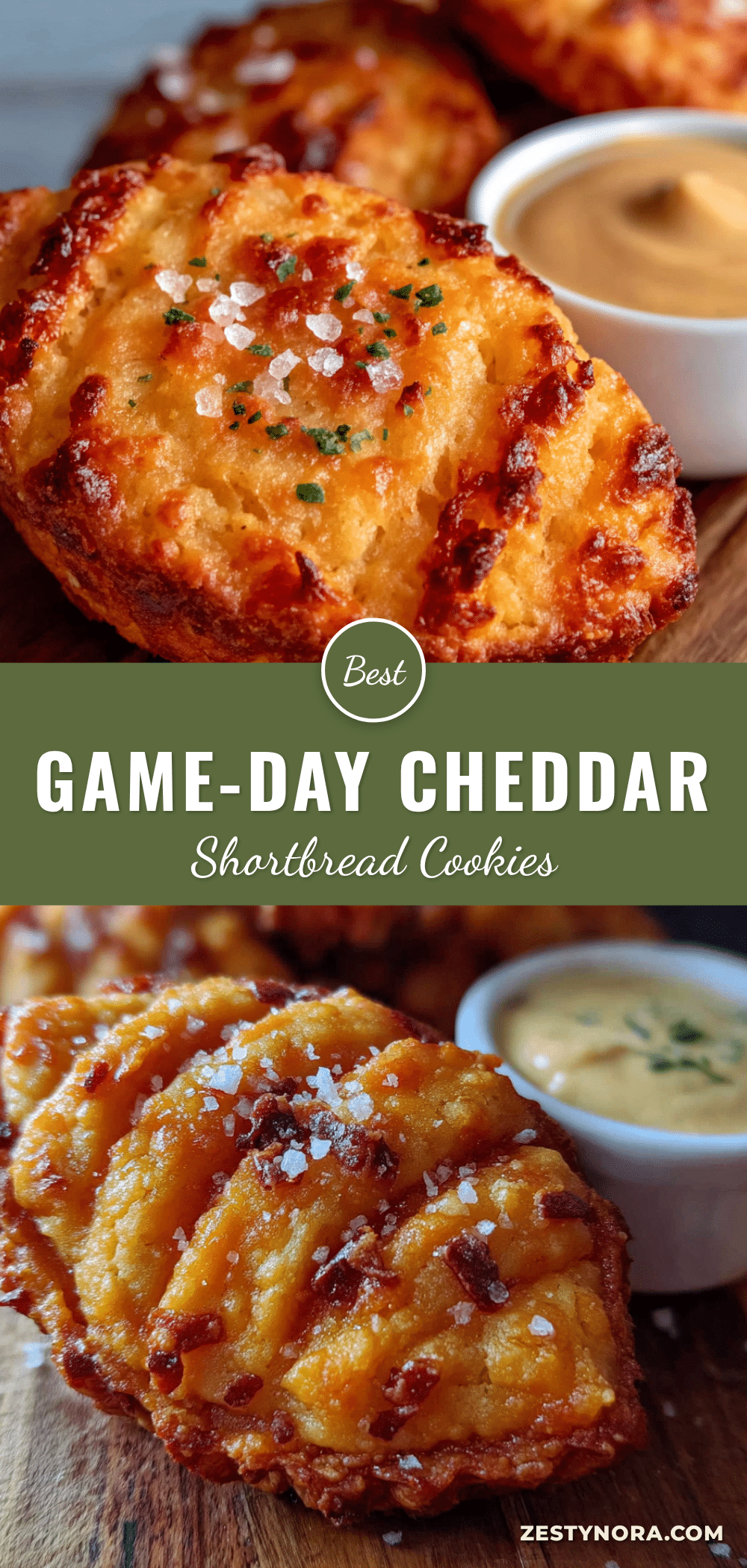
Easy Cheddar Football Shortbread Best Recipe for Playoffs

These savory cheddar shortbread cookies are shaped like tiny footballs and perfect for game day. They’re buttery, cheesy, and have a perfect shortbread snap that melts in your mouth.
- Prep Time: 15 minutes
- Cook Time: 16 minutes
- Total Time: 31 minutes
- Yield: 32 servings 1x
- Category: Appetizer
- Cuisine: American
Ingredients
- 1 cup (226g) unsalted butter, cold and cubed
- 8 ounces (226g) sharp cheddar cheese, freshly grated
- 2 cups (240g) all-purpose flour
- ½ teaspoon (3g) salt
- ¼ teaspoon cayenne pepper (optional but recommended)
- ¼ teaspoon garlic powder (optional)
Instructions
- Preheat oven to 350°F (175°C). Line two baking sheets with parchment paper.
- Grate 8 ounces of sharp cheddar using the large holes of a box grater. Let it sit at room temperature.
- In a food processor, combine flour, salt, and cayenne (if using). Pulse 3-4 times.
- Add cold cubed butter and pulse 10-12 times until mixture resembles coarse sand with some pea-sized butter pieces.
- Add grated cheddar and pulse 5-6 times until just distributed. If dry, add 1 tablespoon cold water and pulse once.
- Turn mixture onto a clean surface and press together into a 1-inch thick disc. Do not knead.
- Roll dough between two sheets of parchment paper to ¼-inch thickness.
- Use a football cookie cutter to cut shapes. Transfer to prepared baking sheets, spacing 1 inch apart. Re-roll scraps and repeat.
- Bake one sheet at a time on center rack for 14-16 minutes, rotating halfway, until edges are just golden.
- Cool on baking sheet for 5 minutes, then transfer to a cooling rack to cool completely (about 20 minutes).
Notes
Keep all ingredients cold for best texture. Do not twist the cookie cutter when cutting. Shortbreads continue to crisp as they cool. Store in an airtight container at room temperature for up to 5 days. Freeze baked shortbread for up to 2 months.
Nutrition
- Serving Size: 1 shortbread footbal
- Calories: 110
- Sodium: 95
- Fat: 8
- Saturated Fat: 5
- Carbohydrates: 7
- Protein: 3
Keywords: cheddar shortbread, football cookies, game day snacks, cheese crackers, savory shortbread, playoff party food