My friend Jenna asked why I couldn’t just throw everything in the slow cooker and walk away. It was a Tuesday afternoon, and she was helping me chop carrots for what I thought would be a carefully monitored stovetop stew. I started to explain why that wouldn’t work — something about browning the meat first, building layers of flavor, the science of caramelization. Then I stopped.
Honestly, I was tired. It had been a long week, and the idea of standing over a hot stove for two hours sounded exhausting. Jenna, who bakes cookies from boxed mix and calls it a win (no judgment, they’re delicious), looked at me like I was speaking another language. “But isn’t the whole point of a slow cooker that it does the work for you?” she asked.
She had a point. I’d been so caught up in doing things “properly” that I’d forgotten the whole reason I bought the slow cooker in the first place — to make my life easier. So I decided to try it her way. I skipped the browning step, dumped everything in, and prayed for the best. The result? A rich, deeply flavorful beef stew that had my husband asking for seconds before he’d even finished his first bowl. I mean, I was genuinely shocked. The red wine did all the heavy lifting, and the rosemary tied everything together like it was meant to be.
Maybe you’ve been there — so focused on doing things the “right” way that you forget there’s often an easier path. This Crowd-Pleasing Slow Cooker Beef Stew with Red Wine and Rosemary became my go-to for dinner parties and potlucks after that day. It’s the dish I bring when I want to impress without the stress, and it never fails to get that “oh, this is amazing” reaction. Let me tell you, there’s something special about a meal that tastes like you spent hours on it when you really just pressed a button and walked away.
Why You’ll Love This Recipe
This isn’t just another beef stew recipe. After countless batches and a few happy accidents, I’ve landed on a version that delivers every single time — and I’m honestly a little proud of it. Here’s why it works so well for hosting:
- Set It and Forget It: Prep takes 15 minutes, then the slow cooker does the rest. Perfect when you’re busy getting the house ready for guests.
- Simple Ingredients: No obscure spices or trips to specialty stores. Everything is available at your regular grocery store.
- Perfect for Entertaining: This stew is made for dinner parties, potlucks, and festive gatherings. It scales beautifully for a crowd.
- Crowd-Pleaser: I’ve served this to picky eaters, foodie friends, and everyone in between. It gets rave reviews from all of them.
- Unbelievably Delicious: The red wine creates a rich, velvety broth, and the rosemary adds an aromatic depth that makes this taste restaurant-worthy.
What makes this recipe different from the rest? It’s the method. By skipping the browning step (yes, really), you let the slow cooker work its magic over low, gentle heat. The beef becomes incredibly tender, and the flavors meld together in a way that tastes like you’ve been cooking all day — because technically, you have, but without the effort. Plus, the red wine breaks down the meat’s connective tissues, creating that melt-in-your-mouth texture we all crave.
This is comfort food at its finest. It’s the kind of meal that makes people close their eyes after the first bite and let out a little “mmm.” It’s perfect for impressing guests without breaking a sweat, and it turns a simple weeknight dinner into something memorable. Honestly, I’ve never had a batch last longer than a day in my house.
What Ingredients You Will Need
This recipe uses simple, wholesome ingredients that work together to create something truly special. Most of these are pantry staples, but a few key players make all the difference.
For the Stew Base
- 2 lbs beef chuck, cut into 1.5-inch cubes — This cut is perfect for slow cooking; it becomes incredibly tender. I prefer getting it from a local butcher when I can, but grocery store packages work great too.
- 1 tbsp olive oil — For sautéing the vegetables. Use a good quality extra virgin olive oil for better flavor.
- 1 large yellow onion, diced — Adds sweetness and depth as it cooks down.
- 4 cloves garlic, minced — Fresh garlic is non-negotiable here. The jarred stuff just doesn’t compare.
- 4 large carrots, peeled and cut into 1-inch chunks — They soften perfectly in the slow cooker and add natural sweetness.
- 3 celery stalks, sliced — Adds a subtle earthy flavor and nice texture.
- 1.5 lbs Yukon Gold potatoes, cubed — These hold their shape better than russets. Cut them into 1-inch pieces so they cook evenly.
For the Broth
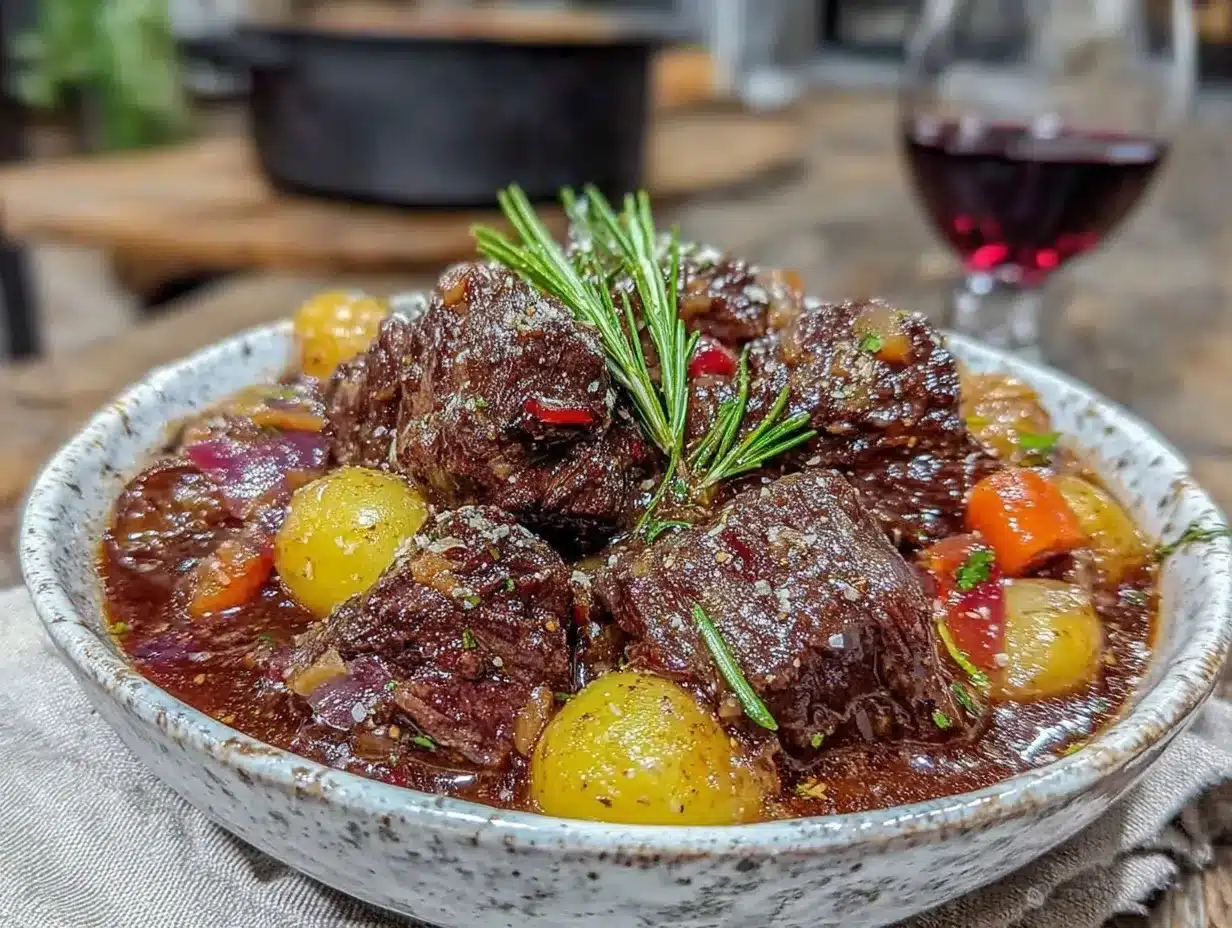
- 1 cup dry red wine — I recommend a Cabernet Sauvignon or Merlot. Don’t use cooking wine; use something you’d actually drink. The flavor concentrates as it cooks.
- 4 cups beef broth — Low-sodium is best so you can control the salt level. I like Swanson or Kitchen Basics.
- 2 tbsp tomato paste — Adds richness and a slight tang. It also helps thicken the broth.
- 2 tbsp Worcestershire sauce — This is the secret ingredient. It adds umami and depth without being overpowering.
- 1 tbsp balsamic vinegar — A little acidity brightens everything up. Trust me on this one.
For Seasoning
- 2 sprigs fresh rosemary — Fresh is essential here. Dried rosemary can be woody and overpowering. If you must substitute, use 1 tsp dried, but fresh really makes a difference.
- 3 sprigs fresh thyme — Adds an earthy, slightly floral note.
- 2 bay leaves — For subtle depth. Remember to remove them before serving!
- 1 tsp salt — Start with this and adjust at the end.
- 1/2 tsp black pepper — Freshly ground is always better.
- 1/2 tsp smoked paprika — Optional, but adds a lovely smoky undertone.
For Thickening (Optional)
- 2 tbsp cornstarch mixed with 2 tbsp cold water — This creates a slurry that thickens the broth at the end. I only use this if the stew seems too thin.
Equipment Needed
You don’t need a fancy kitchen to pull this off. Here’s what you’ll need:
- 6-quart slow cooker — This size is perfect for a full batch. If yours is smaller, halve the recipe. I’ve used both a Crock-Pot brand and a cheaper store brand, and both worked fine.
- Large skillet — For sautéing the vegetables. A 12-inch skillet works well. If you don’t have one, you can sauté directly in the slow cooker using the sauté function (if it has one).
- Cutting board and sharp knife — A good chef’s knife makes prep so much easier. I learned that the hard way after nearly slicing my finger on a dull blade.
- Measuring cups and spoons — For accuracy. I know some people eyeball it, but for consistent results, measure.
- Wooden spoon or spatula — For stirring. Metal can scratch your slow cooker insert.
- Mixing bowl — For the cornstarch slurry if you use it.
Budget-friendly tip: You can often find slow cookers at thrift stores for under $20. I got my first one for $8, and it lasted me five years.
Preparation Method
This is where the magic happens. Follow these steps, and you’ll have a stew that tastes like you’ve been slaving over it all day — even though you really haven’t.
- Prep the vegetables (10 minutes): Dice the onion, mince the garlic, and chop the carrots, celery, and potatoes. Keep them in separate piles; you’ll add them at different times. I like to do this while my skillet heats up.
- Sauté the aromatics (5 minutes): Heat the olive oil in a large skillet over medium heat. Add the diced onion and cook for 3-4 minutes until it’s translucent and starting to brown. Add the minced garlic and cook for another 30 seconds until fragrant. Don’t let the garlic burn — it turns bitter. Transfer the mixture to your slow cooker.
- Add the remaining vegetables (2 minutes): Toss the carrots, celery, and potatoes into the slow cooker with the onions and garlic. Give everything a quick stir to combine.
- Season the beef (2 minutes): Place the beef cubes in a bowl and sprinkle with salt, pepper, and smoked paprika. Toss to coat evenly. This step is quick but important — it ensures every piece of meat is seasoned.
- Layer the beef in the slow cooker (2 minutes): Place the seasoned beef cubes on top of the vegetables. Don’t stir yet — keeping the meat on top helps it cook more evenly. I learned this after a batch where the meat on the bottom got overcooked while the top was still tough.
- Add the liquids and herbs (3 minutes): Pour the red wine, beef broth, tomato paste, Worcestershire sauce, and balsamic vinegar over everything. Tuck the rosemary sprigs, thyme sprigs, and bay leaves into the liquid. Give everything a gentle stir — just enough to combine the liquids, but don’t disturb the meat too much.
- Cook low and slow (6-8 hours on low or 4-5 hours on high): Cover the slow cooker and set it to low. I prefer low because it gives the beef more time to break down and become tender. If you’re short on time, high works, but the texture won’t be quite as silky. Here’s a sensory cue: after about 4 hours on low, your kitchen will start smelling incredible — that rich, winey, herby aroma that makes everyone wander into the kitchen asking what’s for dinner.
- Check for doneness (1 minute): After 6 hours on low, test a piece of beef with a fork. It should shred easily. If it’s still tough, let it cook another 30-60 minutes. The potatoes should be fork-tender as well.
- Thicken the broth (optional, 2 minutes): If you want a thicker stew, mix the cornstarch and cold water in a small bowl until smooth. Stir the slurry into the stew and cook on high for 15-20 minutes, uncovered, until the broth thickens. I only do this if I’m serving it immediately; if it’s going to sit in the slow cooker for a while, it thickens naturally.
- Remove the herb sprigs and bay leaves (1 minute): Fish out the rosemary, thyme stems, and bay leaves. They’ve done their job, and nobody wants to bite into a woody stem. I always double-check because I’ve missed one before and it was not pleasant.
- Adjust seasoning (1 minute): Taste the stew and add more salt or pepper if needed. The flavors will have concentrated, so you might need less than you think. I usually add a pinch more salt and a crack of fresh pepper.
- Let it rest (5-10 minutes): Turn off the slow cooker and let the stew sit for a few minutes before serving. This allows the flavors to settle and the broth to thicken slightly. I know it’s hard to wait, but it’s worth it.
Cooking Tips & Techniques
After making this stew more times than I can count, I’ve picked up a few tricks that make a real difference. Here’s what I’ve learned — sometimes the hard way.
The biggest mistake people make is overcrowding the slow cooker. I did this once when I tried to double the recipe for a party. The stew came out watery and bland because the slow cooker couldn’t maintain temperature properly. Stick to the recommended amounts, and if you need more, make two batches. Trust me, it’s better to have two perfect batches than one mediocre one.
Don’t lift the lid. I know it’s tempting to peek, but every time you lift that lid, you release heat and add 20-30 minutes to the cooking time. I learned this after a particularly frustrating batch where I kept checking on it, and it took forever to cook. Set a timer and walk away. The stew will be fine without you.
Cut your vegetables uniformly. This sounds basic, but it’s crucial. If some potato chunks are twice the size of others, they’ll cook unevenly. I aim for 1-inch pieces across the board. It takes an extra minute of prep, but the result is worth it.
Timing is everything when hosting. If you’re having people over at 7 PM, start cooking by noon. The stew can sit on warm for up to an hour without losing quality. I’ve actually found that it tastes better after resting for 30 minutes — the flavors meld together even more. Just make sure to remove the herb sprigs before it sits too long, or they’ll overpower the dish.
One more thing — taste as you go. I know you can’t taste raw beef, but you can taste the broth after it’s been cooking for a few hours. Dip a clean spoon in and see if it needs more salt or a splash of vinegar. I’ve saved many batches this way by catching a flat flavor early and adjusting.
Variations & Adaptations
This recipe is wonderfully flexible. Here are some ways to make it your own:
Dietary Adaptations: For a gluten-free version, skip the Worcestershire sauce (some brands contain gluten) or use a gluten-free alternative. The cornstarch slurry is naturally gluten-free. For a lower-carb option, swap the potatoes for cauliflower florets or turnips. I’ve tried both, and the cauliflower soaks up the broth beautifully. For dairy-free, this recipe is already dairy-free, so you’re good.
Seasonal Twists: In the fall, add a cup of diced butternut squash along with the potatoes. It adds sweetness and a gorgeous color. In spring, swap the potatoes for new potatoes and add a cup of frozen peas in the last 30 minutes of cooking. In summer, use fresh herbs from the garden — I’ve used rosemary and thyme from my own backyard, and it made the stew taste even fresher.
Flavor Variations: For a more robust flavor, add a cup of sliced mushrooms along with the vegetables. They add an earthy depth that complements the red wine. If you like a bit of heat, add a pinch of red pepper flakes with the other seasonings. I did this once for a party, and it was a hit — just enough warmth without being spicy. For an herby twist, try swapping the rosemary for fresh sage or adding a sprig of oregano.
Cooking Method Variations: If you don’t have a slow cooker, you can make this in a Dutch oven. Brown the beef in batches (yes, I know I skipped this step for the slow cooker, but for stovetop, it matters), then add everything else and simmer on low for 2-3 hours. The result is slightly different but just as delicious. For an Instant Pot version, use the sauté function for the vegetables, then pressure cook on high for 35 minutes with a natural release.
Serving & Storage Suggestions
This stew is incredibly versatile when it comes to serving. Here’s how to make it shine:
Serving Temperature and Presentation: Serve the stew hot, straight from the slow cooker. Ladle it into wide, shallow bowls so you can see all the beautiful chunks of beef and vegetables. Garnish with a sprig of fresh rosemary or a sprinkle of fresh parsley for color. I like to serve it with crusty bread for dipping — a good sourdough or a crusty baguette works perfectly. For a dinner party, set out a basket of bread and a dish of butter so guests can help themselves.
Complementary Dishes and Beverages: This stew pairs beautifully with a simple green salad dressed with a vinaigrette — the acidity cuts through the richness. For a heartier meal, serve it over mashed potatoes or egg noodles. I’ve also served it with roasted vegetables on the side. For drinks, a glass of the same red wine you used in the stew is perfect. A Cabernet Sauvignon or a bold Zinfandel works well. For non-alcoholic options, a sparkling water with lemon or a rich apple cider complements the flavors nicely.
Storage Instructions: Store leftovers in an airtight container in the refrigerator for up to 4 days. The flavors actually deepen overnight, so it tastes even better the next day. I’ve had friends tell me they prefer it cold the next morning — not my thing, but to each their own. For longer storage, freeze the stew in a freezer-safe container for up to 3 months. Leave some headspace for expansion. Thaw overnight in the refrigerator before reheating.
Reheating Methods: Reheat individual portions in the microwave for 2-3 minutes, stirring halfway through. For larger batches, reheat on the stovetop over medium-low heat, stirring occasionally. Add a splash of beef broth or water if the stew has thickened too much. You can also reheat it in the slow cooker on low for 1-2 hours — great if you’re serving it for a second night. The key is to reheat gently so the beef doesn’t dry out.
How Flavors Develop Over Time: As I mentioned, this stew tastes better the next day. The flavors meld and deepen, and the broth becomes even richer. I’ve actually started making it a day ahead when I’m hosting. I cook it, let it cool, refrigerate it overnight, and reheat it the next day. It’s one less thing to worry about on the day of the party, and the stew is always better for it.
Nutritional Information & Benefits
Here’s a rough estimate per serving (based on 8 servings):
- Calories: 380-420
- Protein: 32g
- Fat: 14g
- Carbohydrates: 28g
- Fiber: 4g
- Sugar: 6g
- Sodium: 680mg (varies based on broth and added salt)
This stew is packed with nutritional benefits. The beef provides high-quality protein and iron, which is essential for energy and oxygen transport in the body. The carrots are rich in beta-carotene, which supports eye health and immune function. The potatoes provide potassium and vitamin C, and the celery adds fiber and antioxidants. The red wine contains resveratrol, an antioxidant that’s been linked to heart health — in moderation, of course.
This recipe is naturally dairy-free and can easily be made gluten-free with a simple swap. It’s also relatively low in added sugars, with most of the sweetness coming from the vegetables. I love that I can serve this to guests with different dietary needs without having to make multiple dishes. It’s comfort food that actually does your body some good.
Conclusion
This Crowd-Pleasing Slow Cooker Beef Stew with Red Wine and Rosemary has become my signature dish for a reason. It’s the recipe I turn to when I want to impress without stress, when I need a reliable dish for a potluck, or when I just want a cozy dinner that feels special. The fact that it came from a moment of letting go of my own rigid rules makes it even more meaningful.
I encourage you to make this recipe your own. Add more vegetables, swap the herbs, adjust the seasoning to your taste. Cooking is about making food that brings you joy, and this stew is the perfect canvas for that. Whether you’re hosting a dinner party or just feeding your family on a cold night, this stew delivers every single time.
I’d love to hear how it turns out for you. Drop a comment below and let me know if you made any changes, or share a photo of your stew on social media. Don’t forget to pin this recipe for later — you’ll want it handy the next time you need a crowd-pleaser. Happy cooking, and remember: sometimes the best recipes come from breaking the rules.
Frequently Asked Questions
Can I make this stew without red wine?
Absolutely. You can substitute the red wine with an equal amount of beef broth. The flavor won’t be as rich, but it will still be delicious. You can also add a splash of balsamic vinegar or a tablespoon of red wine vinegar to mimic some of the acidity. I’ve made it this way for friends who don’t drink alcohol, and it still got rave reviews.
Can I use frozen beef in the slow cooker?
I don’t recommend it. Frozen beef takes longer to reach a safe temperature, which can lead to uneven cooking and potential food safety issues. Always thaw beef in the refrigerator overnight before adding it to the slow cooker. If you’re short on time, you can brown the frozen beef in a skillet first, but it’s better to plan ahead.
How do I prevent the potatoes from turning mushy?
Cut them into larger chunks — about 1.5 inches — and add them halfway through cooking if you’re using a smaller slow cooker. I’ve found that Yukon Gold potatoes hold their shape better than russets. Also, avoid stirring too much once the potatoes are in; it can break them down.
Can I prepare this stew in advance for a party?
Yes, and I highly recommend it. Cook the stew completely, let it cool, and refrigerate it overnight. Reheat it in the slow cooker on low for 1-2 hours before serving. The flavors will be even better, and you’ll have one less thing to worry about on the day of your event. Just remember to remove the herb sprigs before refrigerating.
How long can I keep leftovers in the freezer?
This stew freezes beautifully for up to 3 months. Store it in a freezer-safe container with some headspace for expansion. Thaw it overnight in the refrigerator before reheating. I’ve made double batches and frozen half for busy weeks — it’s a lifesaver on nights when I don’t feel like cooking.
Pin This Recipe!
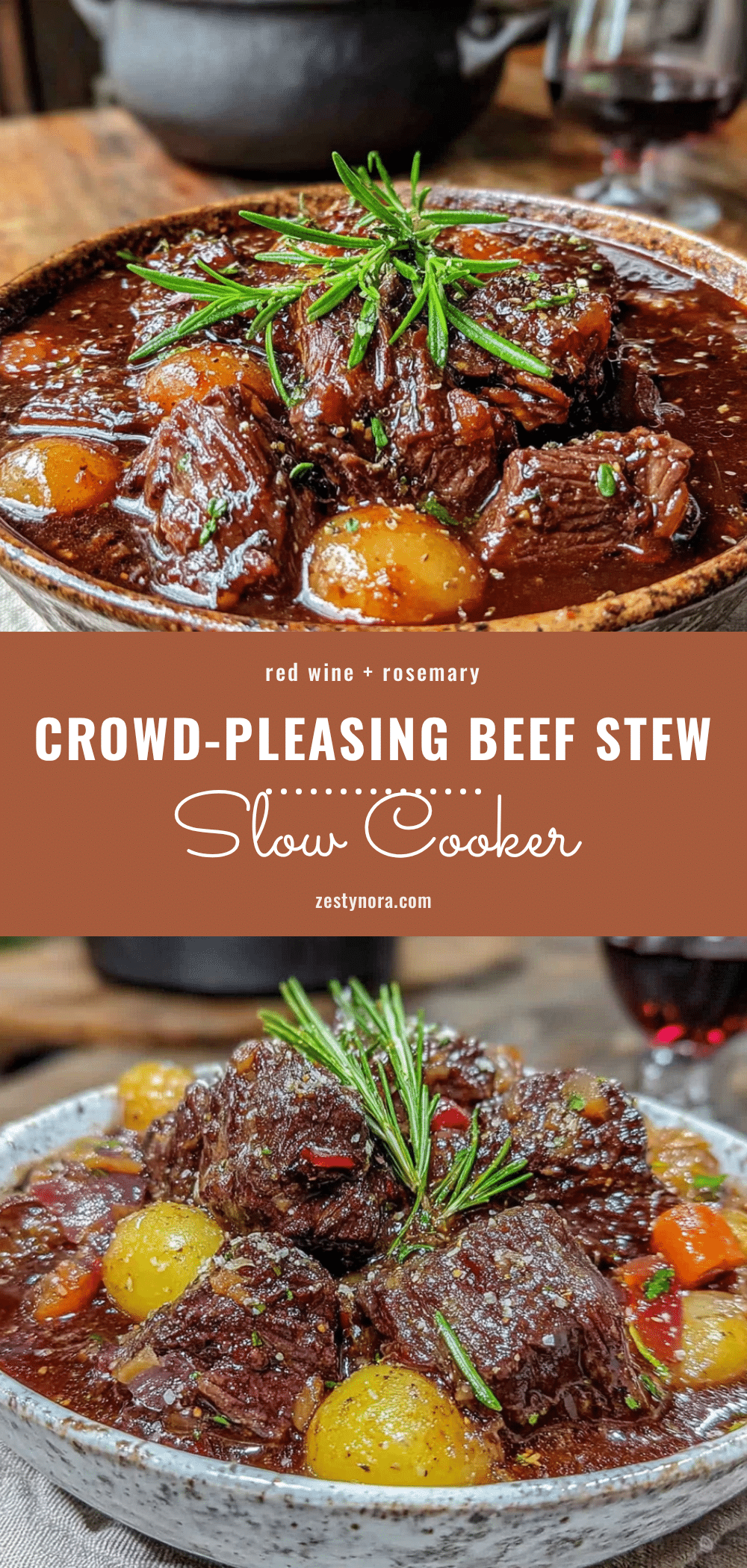
Crowd-Pleasing Slow Cooker Beef Stew with Red Wine and Rosemary
A rich, deeply flavorful beef stew made entirely in the slow cooker without browning the meat first. The red wine creates a velvety broth, and the rosemary adds aromatic depth, making this a perfect one-pot dinner for entertaining or cozy nights.
- Prep Time: 15 minutes
- Cook Time: 6 hours
- Total Time: 6 hours 15 minutes
- Yield: 8 servings 1x
- Category: Main Course
- Cuisine: American
Ingredients
- 2 lbs beef chuck, cut into 1.5-inch cubes
- 1 tbsp olive oil
- 1 large yellow onion, diced
- 4 cloves garlic, minced
- 4 large carrots, peeled and cut into 1-inch chunks
- 3 celery stalks, sliced
- 1.5 lbs Yukon Gold potatoes, cubed
- 1 cup dry red wine (Cabernet Sauvignon or Merlot)
- 4 cups low-sodium beef broth
- 2 tbsp tomato paste
- 2 tbsp Worcestershire sauce
- 1 tbsp balsamic vinegar
- 2 sprigs fresh rosemary
- 3 sprigs fresh thyme
- 2 bay leaves
- 1 tsp salt
- 1/2 tsp black pepper
- 1/2 tsp smoked paprika (optional)
- 2 tbsp cornstarch mixed with 2 tbsp cold water (optional, for thickening)
Instructions
- Prep the vegetables: dice the onion, mince the garlic, and chop the carrots, celery, and potatoes into 1-inch pieces.
- Heat olive oil in a large skillet over medium heat. Sauté the onion for 3-4 minutes until translucent, then add garlic and cook 30 seconds until fragrant. Transfer to the slow cooker.
- Add the carrots, celery, and potatoes to the slow cooker with the onions and garlic. Stir to combine.
- Place beef cubes in a bowl and sprinkle with salt, pepper, and smoked paprika. Toss to coat evenly.
- Layer the seasoned beef on top of the vegetables in the slow cooker. Do not stir.
- Pour red wine, beef broth, tomato paste, Worcestershire sauce, and balsamic vinegar over everything. Tuck rosemary sprigs, thyme sprigs, and bay leaves into the liquid. Gently stir to combine liquids without disturbing the meat too much.
- Cover and cook on low for 6-8 hours or on high for 4-5 hours, until beef is fork-tender.
- Test a piece of beef with a fork; it should shred easily. Potatoes should be fork-tender.
- If desired, mix cornstarch with cold water to make a slurry, stir into stew, and cook on high for 15-20 minutes uncovered until thickened.
- Remove rosemary sprigs, thyme stems, and bay leaves.
- Taste and adjust seasoning with additional salt or pepper if needed.
- Let the stew rest for 5-10 minutes before serving.
Notes
For best results, do not lift the lid during cooking. The stew tastes even better the next day. To make gluten-free, use a gluten-free Worcestershire sauce. For a lower-carb option, swap potatoes for cauliflower florets.
Nutrition
- Serving Size: 1 serving (about 1.5
- Calories: 400
- Sugar: 6
- Sodium: 680
- Fat: 14
- Saturated Fat: 5
- Carbohydrates: 28
- Fiber: 4
- Protein: 32
Keywords: slow cooker beef stew, red wine beef stew, easy beef stew, one-pot dinner, crowd-pleasing stew, comfort food, dinner party recipe