My sister swore she hated roasted vegetables for a solid decade. I mean, *hated* them. She’d push them to the side of her plate at Thanksgiving, make a face at the mention of parsnips, and once told me that carrots belonged in cake and nowhere else. Then, last November, I made this pomegranate glazed version on a whim—mostly because I had an open bottle of pomegranate molasses and a fridge full of root veggies that needed using up. I caught her standing at the counter, picking glazed carrots straight from the baking sheet with her fingers, trying to look casual about it.
“These are… okay,” she said, mouth full.
That’s the thing about this dish. It doesn’t announce itself as a vegetable convertor. It just sits there, all glossy and jewel-toned, and lets the pomegranate molasses do the talking. The sweetness isn’t cloying—it’s tangy and deep, the kind of sticky glaze that makes you forget you’re eating something healthy. Honestly, I think the trick is roasting everything until the edges are properly caramelized, then hitting it with that tart-sweet reduction at the end. It changes the whole game.
Maybe you’ve been there—trying to convince yourself (or someone else) that roasted vegetables can be exciting. Let me tell you, this recipe is the one that finally sticks. It’s become my go-to for holiday dinners, cozy Sunday meal prep, and those nights when you want something that feels special without spending hours in the kitchen. The pomegranate seeds on top burst like little surprises, and the whole thing smells like winter in the best way. I keep making it because it proved me—and my sister—wrong.
Why You’ll Love This Recipe
This isn’t just another roasted vegetable side dish. I’ve tested this recipe at least a dozen times, tweaking the glaze ratio and roasting times until everything came out perfectly every single time. Here’s why it’s earned a permanent spot in my rotation:
- Simple Ingredients: You probably have most of these in your pantry right now. No hunting down obscure spices or specialty oils.
- Quick & Easy: About 15 minutes of active prep, then the oven does the rest. Perfect for busy weeknights or holiday cooking marathons.
- Perfect for Entertaining: The vibrant color and glossy finish make it look like you spent way more effort than you actually did. Guests always ask for the recipe.
- Crowd-Pleaser: I’ve served this to picky eaters, vegetable skeptics, and full-on carnivores. It disappears every time.
- Unbelievably Delicious: The combination of caramelized root vegetables with that tangy pomegranate glaze is honestly addictive. The pomegranate seeds add a pop of freshness that cuts through the richness.
What sets this recipe apart is the glaze technique. Instead of just tossing everything in oil and hoping for the best, we’re building layers of flavor. The pomegranate molasses reduces slightly in the oven, creating a sticky, almost candy-like coating on the vegetables. It’s the kind of detail that turns a simple side dish into something memorable—the kind that makes you close your eyes after the first bite.
This is comfort food reimagined. Healthier than most holiday sides, faster than you’d expect, but with the same soul-soothing satisfaction. Perfect for impressing guests without the stress, or turning a Tuesday night dinner into something that feels like an occasion.
What Ingredients You Will Need
This recipe uses simple, wholesome ingredients that work together to create something truly special. The magic happens when the natural sweetness of the root vegetables meets the tangy complexity of pomegranate molasses. Here’s what you’ll need:
For the Roasted Vegetables
- 2 large carrots, peeled and cut into 2-inch chunks – Look for firm, bright orange carrots. The natural sugars caramelize beautifully in the oven.
- 2 large parsnips, peeled and cut into 2-inch chunks – Parsnips have a slightly peppery, earthy flavor that mellows and sweetens when roasted. I recommend medium-sized ones—they’re less woody.
- 1 medium sweet potato, peeled and cut into 1½-inch cubes – Adds that creamy, sweet contrast. I prefer orange-fleshed sweet potatoes here.
- 1 medium red onion, cut into wedges – Red onion gets sweet and jammy when roasted. Keep the root end intact so the wedges hold together.
- 2 tablespoons olive oil – Use a good-quality extra virgin olive oil for best flavor. It helps everything crisp up.
- ½ teaspoon salt – I use fine sea salt. Adjust to taste.
- ¼ teaspoon black pepper, freshly ground – Freshly ground makes a difference here.
- ½ teaspoon dried thyme – Adds an earthy, slightly floral note that pairs beautifully with the pomegranate.
- ¼ teaspoon smoked paprika – Optional, but I love the subtle smokiness it adds. Regular paprika works too.
For the Pomegranate Glaze
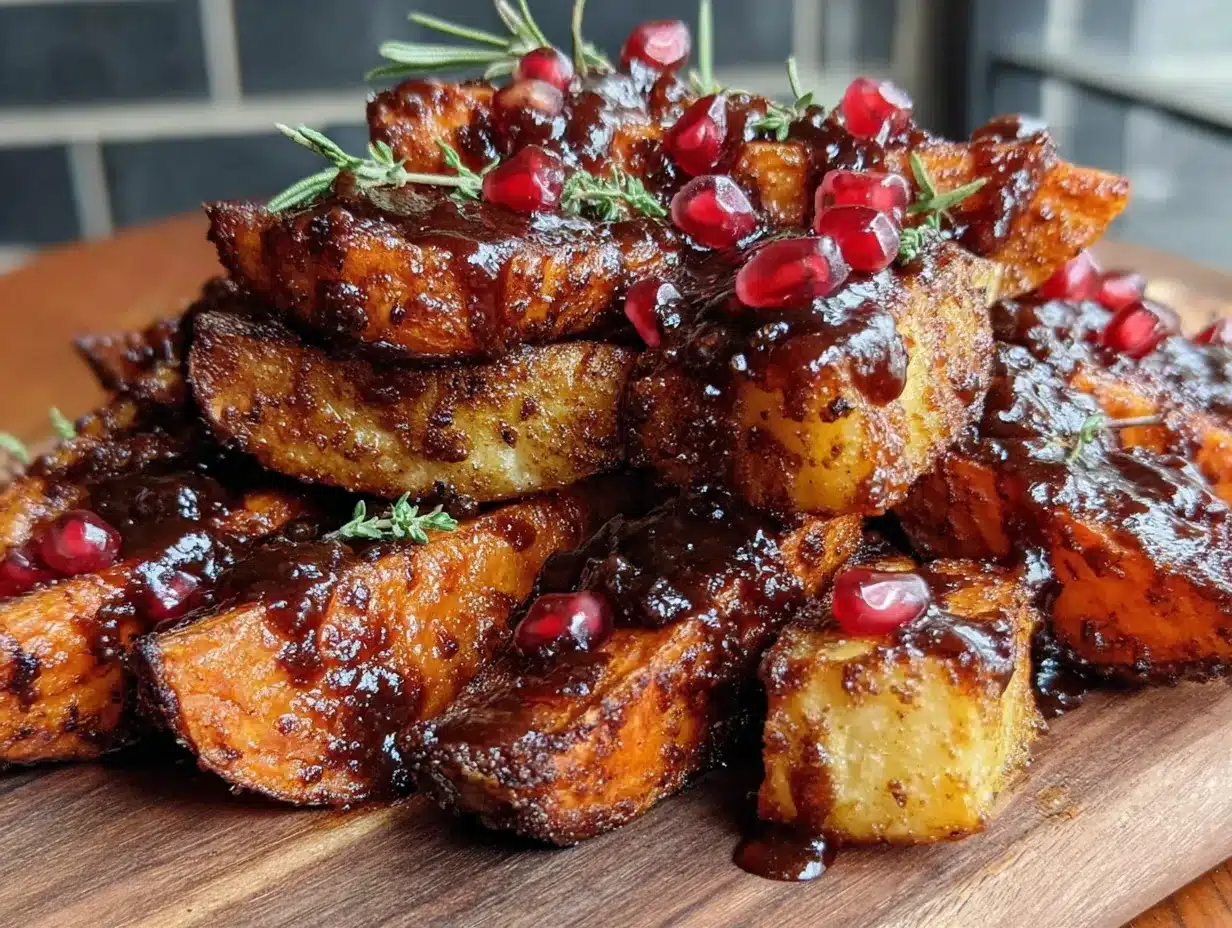
- 3 tablespoons pomegranate molasses – This is the star of the show. I recommend the brand Al Wadi or Cortas for a consistent, tangy-sweet flavor. It’s thick and syrupy—not to be confused with pomegranate juice.
- 1 tablespoon maple syrup or honey – Adds a little extra sweetness to balance the tartness. Maple syrup gives a lovely depth.
- 1 tablespoon balsamic vinegar – Sounds weird, I know, but it rounds out the flavors and adds complexity. Trust me on this one.
- 1 clove garlic, minced – Fresh garlic, not the jarred stuff. It infuses the glaze with a gentle warmth.
For Garnish
- ⅓ cup fresh pomegranate arils (seeds) – These add texture, color, and a burst of fresh tartness. Look for pomegranates that feel heavy for their size.
- 2 tablespoons fresh parsley, chopped – Flat-leaf parsley works best. Adds a fresh, herbaceous finish.
- Optional: 2 tablespoons crumbled feta or goat cheese – The salty, creamy element is a nice contrast if you’re not keeping it vegan.
Equipment Needed
Nothing fancy here—this recipe is designed to be accessible. Here’s what you’ll need:
- Large baking sheet – A half-sheet pan (18×13 inches) is ideal. Avoid overcrowding; use two sheets if needed. I’ve had better results with light-colored pans—dark ones can burn the bottoms.
- Parchment paper or silicone baking mat – Makes cleanup effortless and prevents sticking. I prefer parchment for this recipe.
- Chef’s knife and cutting board – A sharp knife makes cutting root vegetables much safer and easier. I use a 8-inch chef’s knife.
- Vegetable peeler – A standard Y-peeler works great for carrots and parsnips.
- Small bowl – For whisking the glaze together.
- Whisk or fork – To combine the glaze ingredients.
- Spatula or tongs – For tossing the vegetables with the glaze.
- Measuring spoons – For accuracy, especially with the pomegranate molasses.
If you don’t have pomegranate molasses, you can make a quick substitute by simmering 1 cup of pomegranate juice with ¼ cup sugar until it reduces to a syrupy consistency—about 15-20 minutes. It’s not exactly the same, but it works in a pinch. I’ve done this when I’ve run out mid-recipe, and honestly, it’s still delicious.
Preparation Method
Let’s get cooking. This recipe comes together in about 45 minutes total, with most of that being hands-off oven time.
- Preheat your oven to 400°F (200°C). This is the sweet spot for roasting root vegetables—hot enough to caramelize the sugars without burning them. Position the rack in the middle of the oven.
- Prep the vegetables. Peel the carrots, parsnips, and sweet potato. Cut the carrots and parsnips into 2-inch chunks—try to keep them roughly the same size so they cook evenly. Cut the sweet potato into 1½-inch cubes. Cut the red onion into wedges, leaving the root end intact so they don’t fall apart. I once forgot to do this and ended up with a tray of loose onion petals. They still tasted good, but they were a pain to serve.
- Toss with oil and seasonings. Place all the cut vegetables on your baking sheet. Drizzle with the olive oil, then sprinkle with salt, pepper, dried thyme, and smoked paprika (if using). Use your hands or a spatula to toss everything until evenly coated. Spread them out in a single layer—crowding leads to steaming instead of roasting. If they’re packed too tightly, use two baking sheets.
- Roast for 25 minutes. Place the baking sheet in the preheated oven. Set a timer. At the 25-minute mark, remove the sheet and give everything a good stir with a spatula. The vegetables should be starting to brown on the edges. If they look pale, give them another 5 minutes before moving to the next step.
- Make the glaze while the vegetables roast. In your small bowl, whisk together the pomegranate molasses, maple syrup (or honey), balsamic vinegar, and minced garlic. It should be thick and syrupy. Set aside. The smell of garlic and pomegranate together is surprisingly lovely—kind of like a fancy balsamic reduction.
- Glaze and finish roasting. After the initial 25 minutes (or when the vegetables are tender and browned at the edges), drizzle the pomegranate glaze over the vegetables. Toss gently to coat. Return the sheet to the oven and roast for another 10-12 minutes, until the glaze is sticky and bubbling. Watch closely toward the end—the sugars can burn quickly. You want them glossy and caramelized, not blackened.
- Add the finishing touches. Remove the baking sheet from the oven. Let the vegetables cool for 2-3 minutes on the sheet—the glaze will continue to set. Transfer to a serving platter. Sprinkle the fresh pomegranate arils and chopped parsley over the top. If you’re using cheese, crumble it on now. The contrast of warm, glazed vegetables with cool, juicy pomegranate seeds is pure magic.
- Serve immediately. These are best enjoyed warm, right after roasting. The glaze is at its stickiest and most flavorful straight from the oven. But honestly, they’re pretty amazing at room temperature too—I’ve been known to eat leftovers straight from the fridge.
Cooking Tips & Techniques
I’ve made this recipe enough times to learn a few things the hard way. Here’s what I wish someone had told me:
Cut your vegetables uniformly. This is the single most important tip for even roasting. If your sweet potato chunks are twice the size of your carrot chunks, one will be mushy while the other is still crunchy. I use a ruler in my head—about 2 inches for the longer vegetables, 1½ inches for the denser ones like sweet potato.
Don’t skip the pre-roast before glazing. I made this mistake the first time. I added the glaze at the beginning, thinking it would save time. Instead, the pomegranate molasses burned before the vegetables were fully cooked. The glaze goes on during the last 10-12 minutes for a reason—it needs that shorter, hotter exposure to caramelize without turning bitter.
Use two baking sheets if needed. Overcrowding is the enemy of caramelization. Vegetables need space to release steam and crisp up. If you’re doubling the recipe, use two sheets and rotate them halfway through. I once tried to cram everything onto one sheet, and I ended up with steamed, sad vegetables. Never again.
Watch the glaze at the end. That last 10-12 minutes is crucial. The sugars in the pomegranate molasses and maple syrup can go from perfectly caramelized to burnt in under a minute. I set a timer for 8 minutes, check, then add time in 2-minute increments. Your nose is a good guide too—if it smells like burnt sugar, pull it out.
Let them rest before serving. I know it’s tempting to dig in immediately, but giving the vegetables 2-3 minutes on the baking sheet allows the glaze to set. They’ll be easier to serve and the flavors will meld together better. Plus, you won’t burn your mouth on molten-hot pomegranate molasses. Trust me, I’ve done that.
Season in layers. Don’t just rely on the glaze for flavor. Seasoning the vegetables with salt and thyme before roasting builds a foundation. The glaze adds another dimension. This layering is what makes the dish taste complex without being complicated.
Variations & Adaptations
This recipe is wonderfully flexible. Here are some ways to make it your own:
Seasonal Swap: In the fall, add cubed butternut squash or pumpkin. In spring, try asparagus and radishes (reduce roasting time to 15-20 minutes). In summer, bell peppers and zucchini work beautifully—just adjust the timing since they cook faster. I made a summer version with yellow squash and cherry tomatoes last July, and it was a completely different (but equally delicious) dish.
Herb Variations: Swap the dried thyme for rosemary, sage, or a mix of fresh herbs. Rosemary pairs particularly well with the pomegranate glaze. If using fresh herbs, double the amount since they’re less concentrated than dried.
Spice It Up: Add a pinch of red pepper flakes or a dash of cayenne to the glaze for a sweet-heat combination. I did this for a dinner party once, and it was the first thing to disappear from the table.
Make It Vegan: This recipe is already vegan if you use maple syrup instead of honey and skip the cheese garnish. The pomegranate molasses is naturally vegan-friendly.
Protein Addition: Toss in some chickpeas or tofu cubes during the last 15 minutes of roasting for a heartier meal. The chickpeas get wonderfully crispy and catch some of the glaze.
Nutty Crunch: Sprinkle toasted walnuts, pecans, or pine nuts over the finished dish. Add them right before serving so they stay crunchy. I tried this with candied pecans last Christmas, and it was dangerously good.
Citrus Twist: Add a tablespoon of orange zest to the glaze for an extra layer of brightness. The orange and pomegranate flavors are natural friends.
Serving & Storage Suggestions
These glazed root vegetables are incredibly versatile. Here’s how to serve and store them:
Serving Temperature: Best served warm, straight from the oven. They’re also delicious at room temperature, which makes them perfect for buffets and potlucks. I’ve even served them cold in salads the next day—the glaze acts like a dressing.
Presentation: Arrange the vegetables on a large, flat platter rather than piling them in a bowl. This shows off the glossy glaze and allows the pomegranate seeds to sparkle. A white platter makes the colors pop beautifully. Sprinkle the garnishes just before serving for maximum visual impact.
Complementary Dishes: These pair wonderfully with roasted chicken, grilled steak, or baked salmon. They’re also fantastic alongside a hearty grain salad or stuffed into a bowl with quinoa and greens. For holiday meals, they’re a natural fit next to turkey or ham. I’ve even served them as a topping for creamy polenta—absolute comfort food.
Beverage Pairings: A crisp white wine like Sauvignon Blanc or a light red like Pinot Noir works well. For non-alcoholic options, sparkling water with a splash of pomegranate juice echoes the flavors in the dish.
Storage: Store leftovers in an airtight container in the refrigerator for up to 4 days. The glaze will soften the vegetables slightly, but the flavor actually deepens overnight. I often make a double batch specifically for leftovers—they’re amazing cold straight from the fridge.
Reheating: Reheat in a 350°F (175°C) oven for 8-10 minutes to restore some crispness. You can also reheat in a skillet over medium heat for 5 minutes, stirring occasionally. Avoid the microwave—it makes the vegetables mushy and the glaze turns into a sticky mess. I learned this the hard way when I was too impatient to use the oven.
Freezing: I don’t recommend freezing these. The vegetables become watery when thawed, and the glaze loses its magic. They’re best enjoyed fresh or within a few days.
Nutritional Information & Benefits
This dish is as nutritious as it is delicious. Here’s what you’re getting in each serving (approximate values for 1/6 of the recipe):
| Nutrient | Amount per Serving |
|---|---|
| Calories | 185 |
| Total Fat | 7g |
| Saturated Fat | 1g |
| Carbohydrates | 30g |
| Fiber | 5g |
| Sugar | 14g |
| Protein | 3g |
| Vitamin A | 180% DV |
| Vitamin C | 25% DV |
| Potassium | 450mg |
Health Highlights: Root vegetables are packed with fiber, vitamins, and antioxidants. Carrots are famous for their beta-carotene (which your body converts to vitamin A), while sweet potatoes offer a hefty dose of vitamin C and potassium. Pomegranate seeds are rich in antioxidants called punicalagins, which are linked to heart health and anti-inflammatory benefits. Pomegranate molasses also retains some of these benefits, though in smaller amounts due to the reduction process.
Dietary Considerations: This recipe is naturally gluten-free, dairy-free (if you skip the cheese garnish), and vegan (if you use maple syrup). It’s also relatively low in calories and fat compared to many holiday side dishes. The fiber content helps keep you feeling full and satisfied.
Potential Allergens: None of the main ingredients are common allergens, but always check your pomegranate molasses label for any additives. The cheese garnish contains dairy if you choose to include it.
Conclusion
This cozy pomegranate glazed roasted root vegetables recipe is proof that simple ingredients can create something truly memorable. It’s the dish that converted my vegetable-hating sister, the one that gets requested at every family gathering, and the one I turn to when I want to feel like I’m eating something special without spending hours in the kitchen. The combination of caramelized roots, tangy-sweet glaze, and bright pomegranate seeds is honestly addictive.
I hope you give this recipe a try and make it your own. Maybe you’ll add extra garlic, swap in different vegetables, or skip the cheese—that’s the beauty of cooking. Play around with it, and let me know how it turns out in the comments below. I’d love to hear about your variations and which combinations you discover. Don’t forget to share your photos on Pinterest and tag me—I’m always looking for new inspiration.
Until next time, happy roasting. Your oven is about to smell incredible.
Frequently Asked Questions
Can I use frozen vegetables for this recipe?
I don’t recommend frozen vegetables here. They release too much water during roasting, which prevents proper caramelization and makes the glaze watery. Stick with fresh root vegetables for the best results. If you’re in a pinch, thaw frozen vegetables completely and pat them very dry before roasting, but the texture won’t be quite the same.
Where can I find pomegranate molasses?
Pomegranate molasses is available in most well-stocked grocery stores, usually in the international foods aisle or near the vinegars. Middle Eastern markets almost always carry it. You can also find it online. If you can’t find it, you can make a substitute by simmering 1 cup of pomegranate juice with ¼ cup sugar and 1 tablespoon lemon juice until reduced by half—about 15-20 minutes. It’s not identical, but it works.
Can I make this recipe ahead of time?
You can prep the vegetables up to a day ahead—just peel, cut, and store them in an airtight container in the refrigerator. The glaze can also be made ahead and refrigerated. However, I recommend roasting them just before serving for the best texture. The glaze is at its stickiest and most caramelized straight from the oven. If you must reheat, use the oven method described above.
How do I prevent the vegetables from burning?
Three tips: First, cut your vegetables into uniform sizes for even cooking. Second, don’t add the glaze until the last 10-12 minutes of roasting—the sugars can burn if exposed to heat too long. Third, keep an eye on them during those final minutes. Every oven runs slightly differently, so check at 8 minutes and add time in 2-minute increments if needed. If you notice the glaze starting to darken too quickly, reduce the oven temperature to 375°F (190°C).
What can I substitute for pomegranate arils?
If fresh pomegranates aren’t in season, you can use dried cranberries or dried cherries for a similar tart-sweet pop. Fresh raspberries or halved grapes also work in a pinch, though they won’t have the same crunch. For a completely different but delicious twist, try toasted chopped walnuts or pecans instead—they add a lovely nutty crunch that complements the glaze beautifully.
Pin This Recipe!
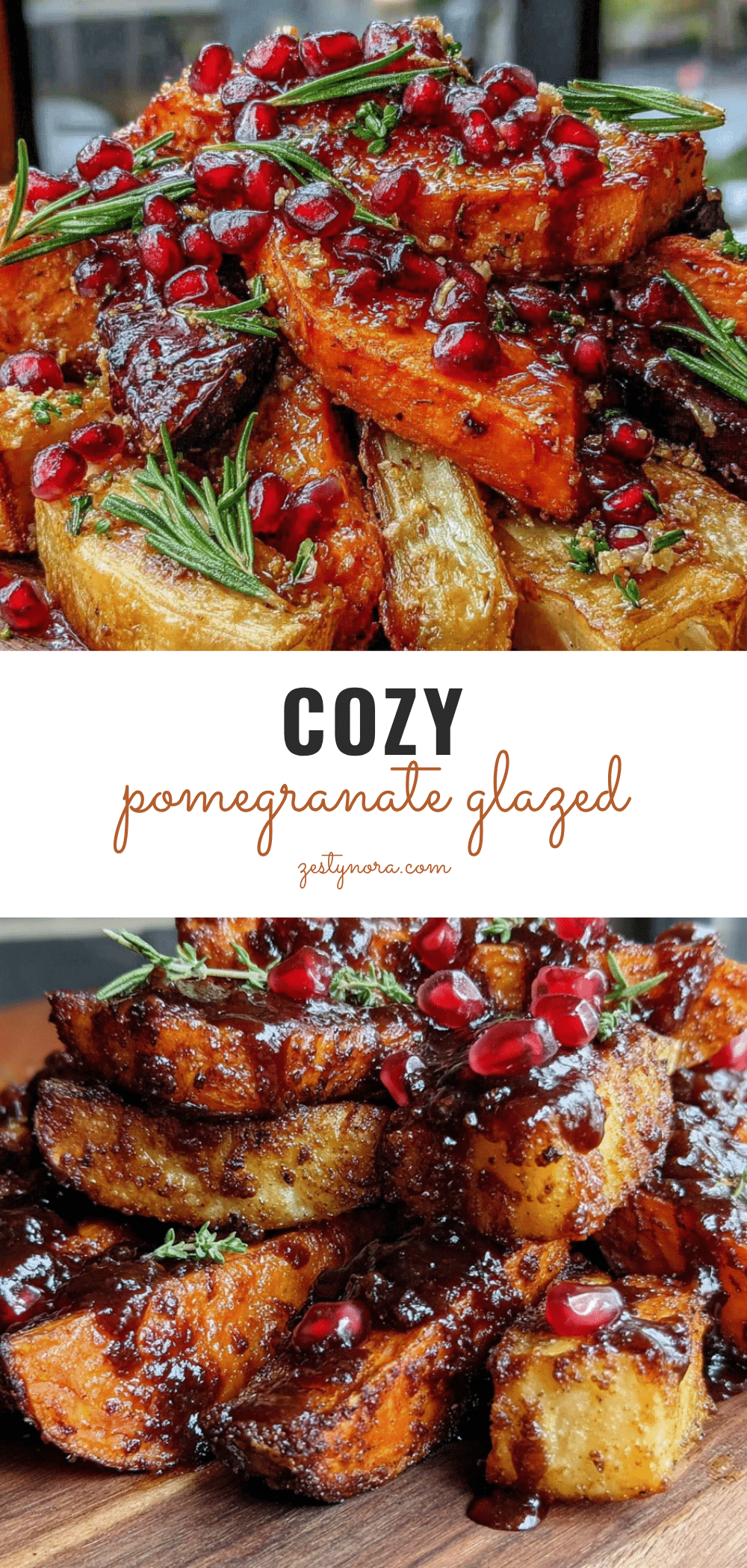
Cozy Pomegranate Glazed Roasted Root Vegetables

These pomegranate glazed roasted root vegetables are a game-changer for vegetable skeptics. The tangy-sweet glaze caramelizes beautifully in the oven, creating a sticky, jewel-toned coating that makes this side dish irresistible.
- Prep Time: 15 minutes
- Cook Time: 35-37 minutes
- Total Time: 50-52 minutes
- Yield: 6 servings 1x
- Category: Side Dish
- Cuisine: American
Ingredients
- 2 large carrots, peeled and cut into 2-inch chunks
- 2 large parsnips, peeled and cut into 2-inch chunks
- 1 medium sweet potato, peeled and cut into 1½-inch cubes
- 1 medium red onion, cut into wedges
- 2 tablespoons olive oil
- ½ teaspoon salt
- ¼ teaspoon black pepper, freshly ground
- ½ teaspoon dried thyme
- ¼ teaspoon smoked paprika (optional)
- 3 tablespoons pomegranate molasses
- 1 tablespoon maple syrup or honey
- 1 tablespoon balsamic vinegar
- 1 clove garlic, minced
- ⅓ cup fresh pomegranate arils (seeds)
- 2 tablespoons fresh parsley, chopped
- Optional: 2 tablespoons crumbled feta or goat cheese
Instructions
- Preheat your oven to 400°F (200°C). Position the rack in the middle of the oven.
- Prep the vegetables: Peel the carrots, parsnips, and sweet potato. Cut the carrots and parsnips into 2-inch chunks, the sweet potato into 1½-inch cubes. Cut the red onion into wedges, leaving the root end intact.
- Toss with oil and seasonings: Place all cut vegetables on a large baking sheet. Drizzle with olive oil, then sprinkle with salt, pepper, dried thyme, and smoked paprika (if using). Toss to coat evenly and spread in a single layer.
- Roast for 25 minutes. Remove from oven and stir.
- Make the glaze: In a small bowl, whisk together pomegranate molasses, maple syrup (or honey), balsamic vinegar, and minced garlic.
- After the initial 25 minutes, drizzle the glaze over the vegetables and toss gently to coat. Return to the oven and roast for another 10-12 minutes, until the glaze is sticky and bubbling.
- Remove from oven and let cool for 2-3 minutes on the baking sheet. Transfer to a serving platter.
- Sprinkle fresh pomegranate arils and chopped parsley over the top. If using cheese, crumble it on now. Serve immediately.
Notes
Cut vegetables uniformly for even roasting. Do not add glaze at the beginning; add during the last 10-12 minutes to prevent burning. Use two baking sheets if needed to avoid overcrowding. Let vegetables rest 2-3 minutes before serving to allow glaze to set. Store leftovers in an airtight container in the refrigerator for up to 4 days. Reheat in a 350°F oven for 8-10 minutes or in a skillet over medium heat for 5 minutes. Not recommended for freezing.
Nutrition
- Serving Size: 1/6 of recipe
- Calories: 185
- Sugar: 14
- Sodium: 300
- Fat: 7
- Saturated Fat: 1
- Carbohydrates: 30
- Fiber: 5
- Protein: 3
Keywords: roasted root vegetables, pomegranate glaze, holiday side dish, vegan, gluten-free, easy side dish