I wasn’t supposed to be there for the cornbread dressing. I’d stopped by my neighbor Miss Clara’s house on a random Thursday afternoon to return her cake carrier—the one she’d loaned me three weeks prior that I kept forgetting to give back. The smell hit me before I even got to her screen door. Sage. Onions. Butter doing something holy in a hot pan. I stood there on her porch like a fool, cake carrier in hand, just breathing.
Miss Clara opened the door and barely looked at me. “You’re late for the tasting,” she said, and walked back toward the kitchen like it was the most normal thing in the world. I followed her, honestly, because what else was I supposed to do? She had cornbread cooling on the counter, a mountain of chopped celery looking like a tiny green forest, and this big blue mixing bowl that had seen more Thanksgivings than I’d probably ever see in my lifetime.
She wasn’t trying to impress me. That’s the thing. She wasn’t hosting a dinner party or filming a cooking video. She was just making dressing because her grandson was coming into town and she wanted it waiting for him when he walked through the door. The casualness of it all—the way she crumbled cornbread with her bare hands like she’d done it a thousand times before—that’s what got me.
I sat on a stool in her kitchen for two hours watching her work. She let me taste the sage before she added it, told me to rub it between my fingers first. “That’s how you wake it up,” she said. I’ve been making this dressing every holiday season since that day. Maybe you’ve had that moment too—where someone makes something so good, so ordinary and extraordinary at the same time, that you know you’ll never forget the taste.
Why You’ll Love This Recipe
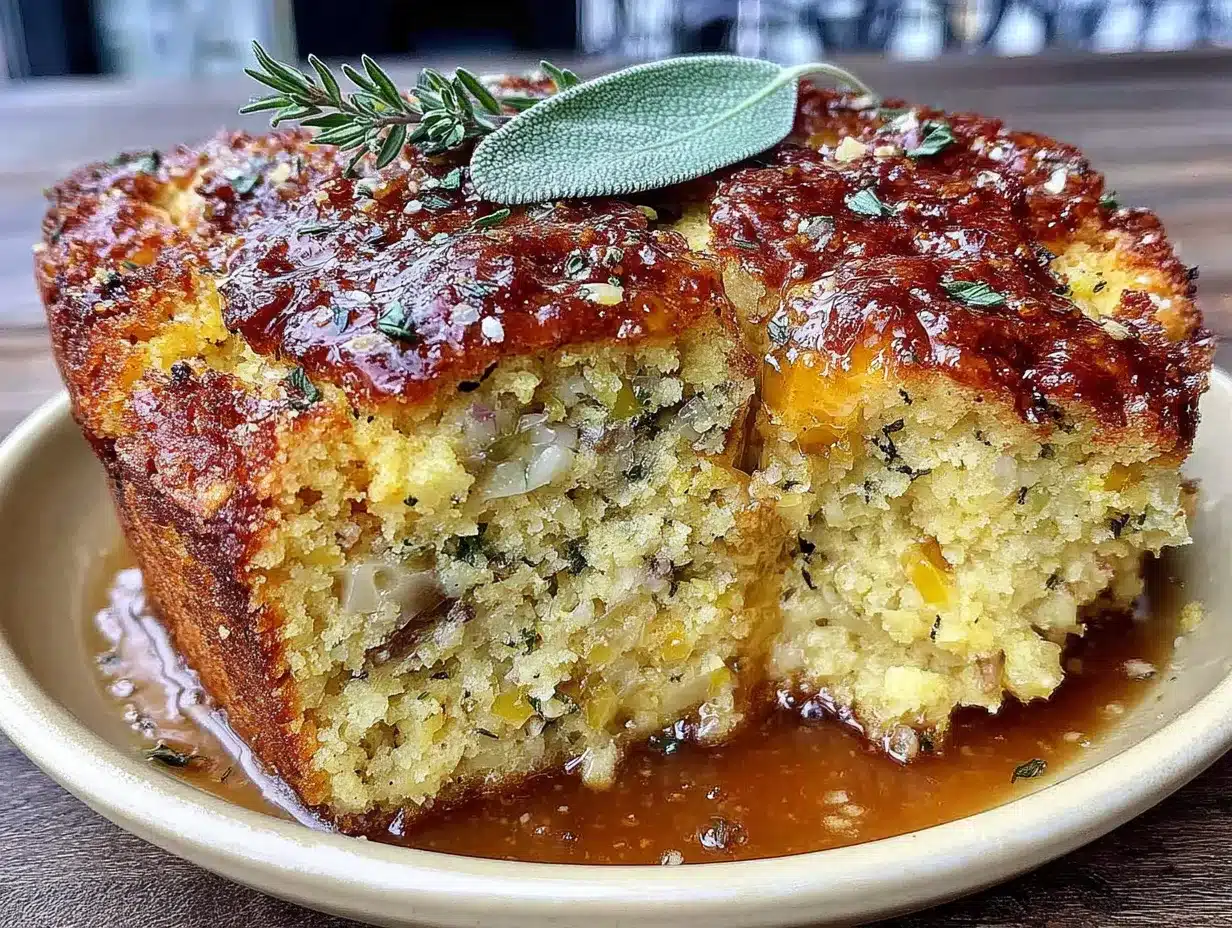
This cozy Black folks cornbread dressing with sage isn’t just another side dish. It’s the one people fight over at the table. The one that gets scooped onto plates before the turkey even makes it around. I’ve tested this recipe at least a dozen times over the years, tweaking the sage ratio, adjusting the moisture level, and asking everyone I fed it to for their honest opinion. This version? It’s the one that got the nod from Miss Clara herself.
- Made with Real Cornbread : No boxed stuffing mix here. You start with homemade cornbread that gives this dressing its soul.
- Perfectly Savory : The sage and poultry seasoning work together to create that classic Southern flavor you remember from grandma’s kitchen.
- Moist But Not Soggy : The texture is just right—moist enough to hold together, but with a little structure so every bite feels substantial.
- Simple Ingredients : Nothing fancy. You probably have most of these in your pantry right now.
- Feeds a Crowd : This recipe makes enough for a big family gathering, with leftovers for the next day.
- Make-Ahead Friendly : You can prep it the day before and just bake it when you’re ready. Total lifesaver on Thanksgiving morning.
What makes this dressing different from every other recipe out there? It’s the balance. I’ve had dressings that were so dry they crumbled into dust, and others that were so wet they felt like spoonbread. This one walks that perfect line. The sage isn’t overpowering—it’s present enough to taste, but it lets the cornbread and broth shine through. And the texture? Let me tell you, when you get that first bite with a little bit of crispy edge and a soft, tender center, you’ll understand why this recipe has become my most-requested dish for every holiday gathering.
This isn’t just good cornbread dressing. It’s the kind that makes people close their eyes after the first bite. The kind that tastes like home, even if you’ve never made it before in your life.
Ingredients Needed
This recipe uses simple, honest ingredients that come together to create something truly special. Most of these are pantry staples, but I’ve included a few notes to help you pick the best options at the store.
For the Cornbread
- 2 cups yellow cornmeal (I prefer White Lily for a softer texture)
- 1 cup all-purpose flour
- 1 tablespoon baking powder
- 1 teaspoon salt
- 1 tablespoon sugar (just a touch for balance)
- 2 large eggs, room temperature
- 1 ½ cups buttermilk (adds tenderness)
- ½ cup vegetable oil or melted butter
For the Dressing
- 6 cups crumbled cornbread (from the recipe above)
- 4 cups day-old white bread cubes (about 6 slices, crusts on—gives the dressing body)
- 1 cup unsalted butter (2 sticks)
- 2 cups finely diced yellow onion (about 1 large onion)
- 1 ½ cups finely diced celery (about 4-5 stalks)
- 6 cloves garlic, minced
- 3 tablespoons fresh sage, finely chopped (or 1 tablespoon dried)
- 1 tablespoon fresh thyme leaves (or 1 teaspoon dried)
- 1 tablespoon poultry seasoning
- 1 teaspoon black pepper
- 1 teaspoon salt (plus more to taste)
- 3 cups low-sodium chicken broth (vegetable broth works too)
- 2 large eggs, beaten (helps bind everything together)
A few things about these ingredients. The cornbread needs to be at least a day old. Fresh cornbread crumbles too easily and gets mushy. I usually make mine two days ahead and leave it out on the counter, uncovered, so it dries out a bit. If you’re in a pinch, you can spread the crumbled cornbread on a baking sheet and toast it in a 300°F oven for about 15 minutes.
The white bread cubes serve a purpose. Cornbread alone can make dressing too dense. The white bread lightens things up and helps absorb the broth without turning into paste. I use plain sandwich bread—nothing fancy. You can leave the crusts on or off; I leave them on for texture.
For the fresh sage, rub the leaves between your fingers before chopping. This releases the oils and makes the flavor stronger. If you’re using dried sage, crumble it in your palm first. And don’t skip the poultry seasoning—it’s that mysterious blend that makes Southern dressing taste like Southern dressing.
Equipment Needed
You don’t need a lot of fancy equipment for this recipe. Here’s what you’ll need:
- 9×13-inch baking dish (glass or metal both work fine)
- Large mixing bowl (big enough to hold all the bread and vegetables)
- Large skillet or sauté pan (for cooking the vegetables)
- Medium saucepan (for warming the broth)
- Sharp knife and cutting board
- Measuring cups and spoons
- Wooden spoon or spatula
- Whisk
- Aluminum foil
If you don’t have a 9×13 dish, you can use a similar-sized casserole dish or even a cast-iron skillet. I’ve made this in a 10-inch cast iron before and loved how the edges got extra crispy. The only thing I’d recommend avoiding is a dish that’s too deep—you want the dressing to have enough surface area to develop that golden-brown top.
For the cornbread, you’ll need a 9-inch square baking pan or an 8-inch cast iron skillet. I prefer the cast iron because it gives the cornbread a nice crust, but a regular pan works perfectly fine too.
Preparation Method
Let me walk you through this step by step. I’ve included visual cues and timing so you know exactly what to look for at each stage.
Step 1: Make the Cornbread (Day Before or at Least 4 Hours Ahead)
Preheat your oven to 400°F. In a large bowl, whisk together the cornmeal, flour, baking powder, salt, and sugar. In a separate bowl, whisk the eggs, buttermilk, and oil until combined. Pour the wet ingredients into the dry and stir until just mixed—a few lumps are fine. Pour the batter into a greased 9-inch pan or cast iron skillet. Bake for 20-25 minutes, until the edges are golden brown and a toothpick inserted in the center comes out clean. Let it cool completely, then crumble it into a large bowl. Leave it uncovered on the counter overnight to dry out.
Step 2: Prep Your Bread (Day Before or at Least 2 Hours Ahead)
Cut the white bread slices into ½-inch cubes. Spread them on a baking sheet and leave them out overnight, or toast them in a 300°F oven for about 10 minutes until they’re dry but not browned. You want them stale, not hard.
Step 3: Sauté the Vegetables (About 20 Minutes)
Melt the butter in a large skillet over medium heat. Add the diced onions and celery. Cook for about 10 minutes, stirring occasionally, until the onions are translucent and the celery has softened. You should be able to smell the butter and onions filling your kitchen—that’s the smell of something good coming. Add the minced garlic and cook for another minute until fragrant. Remove from heat and let it cool slightly.
Step 4: Combine the Dry Ingredients (About 10 Minutes)
In your largest mixing bowl, combine the crumbled cornbread and white bread cubes. Add the chopped sage, thyme, poultry seasoning, salt, and pepper. Use your hands to toss everything together—this is the best way to make sure the seasonings are evenly distributed without crushing the bread too much.
Step 5: Add the Wet Ingredients (About 10 Minutes)
Pour the sautéed vegetables and butter over the bread mixture. Toss gently to combine. In a separate bowl, whisk the eggs into the chicken broth. Pour this over the bread mixture and stir until everything is evenly moistened. The mixture should look wet but not soupy. If it seems too dry, add another ¼ cup of broth. If it seems too wet, add a handful more crumbled cornbread.
Step 6: Bake the Dressing (About 45-55 Minutes)
Preheat your oven to 350°F. Transfer the dressing mixture to a greased 9×13 baking dish and spread it evenly. Cover with aluminum foil and bake for 30 minutes. Remove the foil and bake for another 15-25 minutes, until the top is golden brown and the edges are crispy. The dressing should be set but still moist in the center—not dry and crumbly. Let it rest for 10 minutes before serving.
A quick note here: every oven runs a little differently. If your top is browning too quickly, tent the foil back on for the last 10 minutes. If it’s not browning at all, turn the oven up to 375°F for the uncovered portion.
Cooking Tips & Techniques
I’ve made this dressing enough times to know where things can go wrong. Here are the lessons I learned the hard way so you don’t have to.
Don’t overmix the cornbread batter. I know it’s tempting to keep stirring until it’s smooth, but that develops the gluten and makes the cornbread tough. Mix until the flour disappears and stop. Lumps are your friend here.
Season in layers. This is something Miss Clara taught me that I almost didn’t believe at first. You season the cornbread. You season the vegetables. You season the broth. Each layer gets its own pinch of salt and pepper. If you wait to season everything at the end, the flavors sit on top of each other instead of blending together.
Toast your dried herbs. If you’re using dried sage and thyme, add them to the butter in the skillet for about 30 seconds before you add the vegetables. This wakes up their flavor in a way that just stirring them into the bread never does. I burned my first batch of butter learning this—keep the heat medium and watch closely.
Trust your hands. When you’re mixing the dressing, use your hands. You can feel when the bread is evenly moistened in a way that a spoon just can’t replicate. Wash your hands first, take off your rings, and get in there. It’s messy, but it works.
Let it rest. I know you’re going to want to dig in right away, but letting the dressing rest for 10 minutes after it comes out of the oven is crucial. It continues to set as it cools, and the texture becomes much more cohesive. I once served it straight from the oven and it fell apart on the plate. Patience pays off here.
Variations & Adaptations
This recipe is a great foundation, but feel free to make it your own. Here are some variations I’ve tried over the years.
Add Sausage : Brown 1 pound of breakfast sausage or andouille sausage, crumble it, and stir it into the dressing before baking. This turns it into a main dish that’s perfect for Sunday dinner. I did this for a Friendsgiving once and it disappeared in minutes.
Make it Vegetarian : Use vegetable broth instead of chicken broth and add an extra tablespoon of butter. The flavor is slightly lighter but still packed with sage and onion goodness. I’ve served this to vegetarians who asked for seconds.
Add Diced Apples : For a sweet-savory twist, fold in 1 cup of finely diced Granny Smith apples along with the vegetables. The tartness cuts through the richness beautifully. My aunt tried this once and now she won’t make dressing any other way.
Gluten-Free Version : Use gluten-free cornbread (check your cornmeal label—most are naturally gluten-free) and substitute the white bread with gluten-free bread cubes or additional cornbread. The texture will be a bit more crumbly, but the flavor is still there.
Extra Herby : Double the fresh sage and add ¼ cup of fresh parsley. This gives the dressing a brighter, more complex flavor. I do this when I’m serving it alongside roasted chicken instead of turkey.
Serving & Storage Suggestions
This cornbread dressing is best served warm, straight from the baking dish. I like to set it on the table with a big spoon so everyone can scoop their own portion. The crispy edges are the most coveted pieces—if you’re serving a crowd, make sure everyone gets a little bit of the corner.
It pairs beautifully with roast turkey, baked chicken, or even a simple roasted pork loin. For a classic Southern spread, serve it alongside collard greens, candied yams, and macaroni and cheese. If you’re keeping it simple, a side of cranberry sauce and some warm dinner rolls are all you need.
Storage: Leftover dressing keeps well in the refrigerator for up to 4 days. Store it in an airtight container or cover the baking dish tightly with foil. The flavors actually get better after a day or two as they meld together.
Reheating: The best way to reheat is in the oven. Place the dressing in a 350°F oven, covered with foil, for about 15-20 minutes. If it seems dry, add a splash of chicken broth before reheating. You can also microwave individual portions, but the texture won’t be quite as good.
Freezing: This dressing freezes beautifully. Bake it as directed, let it cool completely, then wrap the dish tightly in plastic wrap and foil. Freeze for up to 3 months. To serve, thaw overnight in the refrigerator and reheat in a 350°F oven until warmed through.
Nutritional Information & Benefits
This is comfort food, so I won’t pretend it’s a health food. But it does have some redeeming qualities worth mentioning.
One serving (about 1 cup) contains approximately 350-400 calories, 18g fat, 42g carbohydrates, and 8g protein. The exact numbers depend on your specific ingredients and portion sizes.
The onions and celery provide fiber, vitamin K, and antioxidants. Sage has been used for centuries in traditional medicine for its anti-inflammatory properties—it’s also what gives the dressing that distinctive earthy flavor. The eggs add protein and help bind everything together without needing extra fat.
If you’re watching your sodium, use low-sodium broth and go easy on the added salt. You can also reduce the butter by half without sacrificing too much flavor, though the texture will be slightly less rich.
This recipe contains gluten (from the cornmeal and bread), dairy (butter and buttermilk), and eggs. For allergen-friendly options, check the variations section above.
Conclusion
This cozy Black folks cornbread dressing with sage has become my go-to recipe for every holiday gathering, every family dinner, and every time I need a taste of something that feels like home. It’s the recipe I make when I want to feed people not just food, but a memory. The kind of dish that makes you slow down and actually taste what you’re eating.
I hope you give this recipe a try. Don’t be afraid to make it your own—add more sage if you love it, throw in some sausage if that’s your thing, or keep it exactly as written. The beauty of this dressing is that it’s forgiving. It wants to be made. It wants to be shared.
When you make it, I’d love to hear how it turned out. Drop a comment below and let me know if your family fought over the crispy edges like mine does. And if you tweaked something and it worked brilliantly, share that too. That’s how recipes live on—one kitchen at a time.
Now go preheat that oven. Your cornbread dressing is waiting.
Frequently Asked Questions
Can I use boxed cornbread mix for this recipe?
You can, but I really recommend making cornbread from scratch. Boxed mixes tend to be sweeter than what you want for dressing, and the texture isn’t quite the same. If you’re in a pinch, use a boxed mix and reduce the sugar to just 1 tablespoon.
Why is my dressing too dry?
This usually happens when the bread absorbs too much moisture during baking. Make sure your broth mixture is wet enough before baking—it should look like a very thick oatmeal, not like dry crumbles. Also, covering with foil for the first 30 minutes traps steam and keeps things moist.
Can I make this dressing ahead of time?
Absolutely. You can assemble the dressing completely, cover it, and refrigerate it overnight. Just add about 10 minutes to the baking time since you’re starting from cold. This is actually my preferred method—the flavors have more time to meld together.
What’s the difference between dressing and stuffing?
In Southern cooking, dressing is baked in a dish, while stuffing is stuffed inside the turkey. They use similar ingredients, but dressing tends to be more moist and has a different texture because it’s not absorbing turkey juices during cooking. Both are delicious, but this recipe is definitely dressing.
Can I freeze leftover cornbread dressing?
Yes! Let the dressing cool completely, then wrap it tightly in plastic wrap and foil. It will keep in the freezer for up to 3 months. Thaw overnight in the refrigerator and reheat in a 350°F oven until warmed through. Add a splash of broth if it seems dry after reheating.
Pin This Recipe!
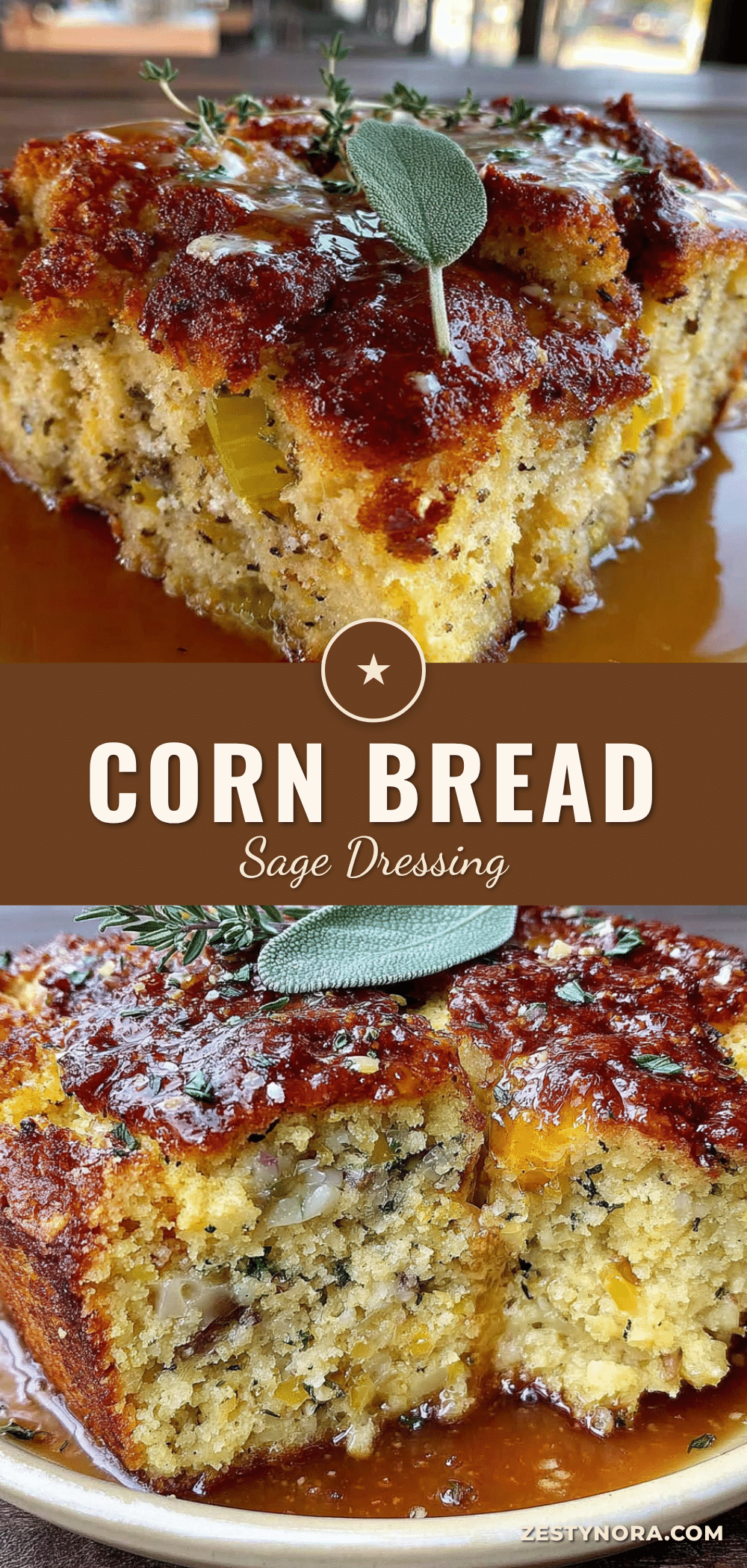
Cozy Black Folks Cornbread Dressing with Sage – Best Homemade Recipe
This cozy cornbread dressing with sage is the perfect Southern side dish, moist but not soggy, with a perfect balance of savory flavors. It’s the one people fight over at the table, made with real cornbread and simple ingredients.
- Prep Time: 30 minutes
- Cook Time: 1 hour 15 minutes
- Total Time: 1 hour 45 minutes (plus overnight drying)
- Yield: 12 servings 1x
- Category: Side Dish
- Cuisine: Southern
Ingredients
- 2 cups yellow cornmeal (preferably White Lily for a softer texture)
- 1 cup all-purpose flour
- 1 tablespoon baking powder
- 1 teaspoon salt
- 1 tablespoon sugar
- 2 large eggs, room temperature
- 1 ½ cups buttermilk
- ½ cup vegetable oil or melted butter
- 6 cups crumbled cornbread (from the recipe above)
- 4 cups day-old white bread cubes (about 6 slices, crusts on)
- 1 cup unsalted butter (2 sticks)
- 2 cups finely diced yellow onion (about 1 large onion)
- 1 ½ cups finely diced celery (about 4–5 stalks)
- 6 cloves garlic, minced
- 3 tablespoons fresh sage, finely chopped (or 1 tablespoon dried)
- 1 tablespoon fresh thyme leaves (or 1 teaspoon dried)
- 1 tablespoon poultry seasoning
- 1 teaspoon black pepper
- 1 teaspoon salt (plus more to taste)
- 3 cups low-sodium chicken broth (vegetable broth works too)
- 2 large eggs, beaten
Instructions
- Make the Cornbread (Day Before or at Least 4 Hours Ahead): Preheat oven to 400°F. In a large bowl, whisk together cornmeal, flour, baking powder, salt, and sugar. In a separate bowl, whisk eggs, buttermilk, and oil until combined. Pour wet into dry and stir until just mixed. Pour batter into a greased 9-inch pan or cast iron skillet. Bake for 20-25 minutes until edges are golden and a toothpick comes out clean. Cool completely, then crumble into a large bowl. Leave uncovered on the counter overn…
- Prep Your Bread (Day Before or at Least 2 Hours Ahead): Cut white bread slices into ½-inch cubes. Spread on a baking sheet and leave out overnight, or toast in a 300°F oven for about 10 minutes until dry but not browned.
- Sauté the Vegetables (About 20 Minutes): Melt butter in a large skillet over medium heat. Add diced onions and celery. Cook for about 10 minutes, stirring occasionally, until onions are translucent and celery has softened. Add minced garlic and cook for another minute until fragrant. Remove from heat and let cool slightly.
- Combine the Dry Ingredients (About 10 Minutes): In your largest mixing bowl, combine crumbled cornbread and white bread cubes. Add chopped sage, thyme, poultry seasoning, salt, and pepper. Use your hands to toss everything together until seasonings are evenly distributed.
- Add the Wet Ingredients (About 10 Minutes): Pour sautéed vegetables and butter over the bread mixture. Toss gently to combine. In a separate bowl, whisk eggs into chicken broth. Pour over bread mixture and stir until evenly moistened. The mixture should look wet but not soupy. If too dry, add another ¼ cup broth; if too wet, add more crumbled cornbread.
- Bake the Dressing (About 45-55 Minutes): Preheat oven to 350°F. Transfer dressing mixture to a greased 9×13 baking dish and spread evenly. Cover with aluminum foil and bake for 30 minutes. Remove foil and bake for another 15-25 minutes until top is golden brown and edges are crispy. Let rest for 10 minutes before serving.
Notes
Cornbread needs to be at least a day old; fresh cornbread crumbles too easily. For dried herbs, toast them in butter for 30 seconds before adding vegetables to wake up their flavor. Use your hands to mix the dressing for even moisture distribution. Let dressing rest for 10 minutes after baking to set properly. To make ahead, assemble completely, cover, and refrigerate overnight; add about 10 minutes to baking time.
Nutrition
- Serving Size: 1 cup
- Calories: 375
- Sugar: 6
- Sodium: 580
- Fat: 18
- Saturated Fat: 9
- Carbohydrates: 42
- Fiber: 3
- Protein: 8
Keywords: cornbread dressing, sage dressing, Southern dressing, Thanksgiving dressing, Black folks dressing, homemade dressing, holiday side dish