Flaky, almost breaking apart at the slightest touch of a fork, and that is the whole point. I am not talking about the taste yet. I am not talking about the bright, citrusy punch of the sauce. I am talking about the texture. You know that specific kind of flake? The kind that separates into tender, opaque white ribbons when you press down gently? That is what I made this for — everything else is secondary. When I pull a sheet pan out of the oven and see that surface, I can tell instantly if I nailed it before I even take a bite. It’s a tactile thing, honestly. You look for the way the flesh pulls away from the center bone line, leaving just a thin, clean gap. It looks dry if you overcook it by thirty seconds. But if you get it right, it glistens slightly, holding its shape but surrendering to pressure like a warm cloud.
I used to be terrified of baking fish. I thought it was too easy to mess up, too delicate for my clumsy hands. I would end up with rubbery, overcooked chunks that tasted like disappointment. It took me years to realize that the secret wasn’t in the cooking method, but in watching the fish like a hawk. This sheet pan salmon with lemon dill sauce changed my relationship with weeknight dinners. It stopped being a chore and started being a ritual. The ritual is simple: season, bake, sauce, eat. But the result is that perfect, shattering flake that makes you close your eyes for a second. It’s not just dinner; it’s a small victory against the chaos of the evening. You know, that moment when you’re tired and just want something good, something fast, but also something that feels like you cared? That’s this. It’s the quiet confidence of a meal that cooks itself while you do something else, only to deliver a texture so satisfying you’ll plan your whole week around it.
Why You’ll Love This Recipe
There is a reason this sheet pan salmon with lemon dill sauce has become my go-to for everything from solo Tuesday nights to impromptu dinner parties. I have tested this method so many times that I can probably close my eyes and know exactly when the timer should ding. It is not just about convenience, though the fact that it comes together in under 25 minutes is a huge win for busy weeknights. It is about the reliability. You likely already have everything in your kitchen right now. No fancy grocery trips needed. Just fish, butter, lemon, dill, and a pan. It is perfect for those times when you want to feel like a gourmet chef without the cleanup headache. And let’s face it, who has time for three different pots and pans after a long day?
What makes this recipe different from the rest is the sauce. Most people just squeeze lemon on top and call it a day. But emulsifying that butter with the lemon juice and fresh herbs creates a glossy, rich coating that clings to every flake. It transforms a simple piece of fish into something luxurious. Whether it is the specific technique of brushing the pan halfway through to keep it moist, or the perfectly balanced acidity of the lemon cutting through the richness of the salmon, this isn’t just another version. It is my best version. I remember the first time I made this for friends. They didn’t say much at first. They just kept eating. One of them finally looked up and said, “How is this so tender?” That is the reaction I live for. It is the kind of meal that makes you feel capable and generous. It is comfort food reimagined—healthy, fast, but with the same soul-soothing satisfaction as a heavy stew. Perfect for impressing guests without stress, or turning a simple meal into something memorable.
What Ingredients You Will Need
This recipe uses simple, wholesome ingredients to deliver bold flavor and satisfying texture without the fuss. The beauty of sheet pan salmon lies in its minimalism. You do not need a pantry full of obscure spices. You need quality basics that work together. The salmon itself is the star, so choosing the right cut matters. I prefer wild-caught fillets for their firmer texture, which holds up better to the oven heat without turning mushy. But farmed salmon works too, especially if you are looking for a richer, fattier bite. The sauce is where the magic happens, relying on just a few key components to create that signature bright, herbaceous finish.
- Salmon Fillets: Look for center-cut fillets, about 6 to 8 ounces each. They cook more evenly than tail pieces. (Wild-caught is preferred for better texture).
- Unsalted Butter: You will need about 4 tablespoons for the sauce. Using unsalted allows you to control the sodium level. (Adds richness and helps emulsify the lemon).
- Fresh Lemons: Two lemons are essential. One for the sauce and one for slicing to place under the fish. (Use organic if possible, as you will use the zest).
- Fresh Dill: A generous handful of fresh dill. Do not use dried dill if you can help it; the fresh leaves have a lighter, grassier flavor that pairs perfectly with lemon. (Chop finely for the sauce).
- Garlic: Two cloves, minced. (Adds depth without overpowering the delicate fish).
- Extra Virgin Olive Oil: For brushing the salmon and lining the pan. (I recommend using a high-quality oil for better flavor).
- Kosher Salt and Black Pepper: To season the fish. (Kosher salt is easier to control than table salt).
- Red Pepper Flakes: A pinch for a subtle kick. (Optional, but adds a nice contrast to the cooling lemon).
If you need substitutions, you can swap the dill for fresh parsley or tarragon if you prefer a different herbal profile. For a dairy-free option, you can use olive oil or avocado oil instead of butter in the sauce, though it will be less creamy. I always keep a bag of frozen lemon juice in the pinch, but fresh is really where the flavor shines. The simplicity of these ingredients means you can adapt this to whatever you have on hand, but sticking to fresh herbs will make the biggest difference in the final result.
Equipment Needed
You do not need anything fancy to make this recipe. A standard 13×9 inch sheet pan is perfect. I use a rimmed baking sheet because it keeps the lemon juice and butter from spilling over into the oven. If you do not have one, a half-sheet pan works fine too, though you may need to cook in two batches if you have more than four fillets. Parchment paper is my best friend here. It makes cleanup a breeze and prevents the fish from sticking, which is crucial for maintaining that flaky texture. I also recommend using a small saucepan or just a microwave-safe bowl for melting the butter and mixing the sauce. A pastry brush is helpful for coating the fish evenly, but a spoon works too. If you have an instant-read thermometer, use it. It takes the guesswork out of knowing when the salmon is done, ensuring it never gets dry. These tools are basic, but they make the process foolproof.
Preparation Method
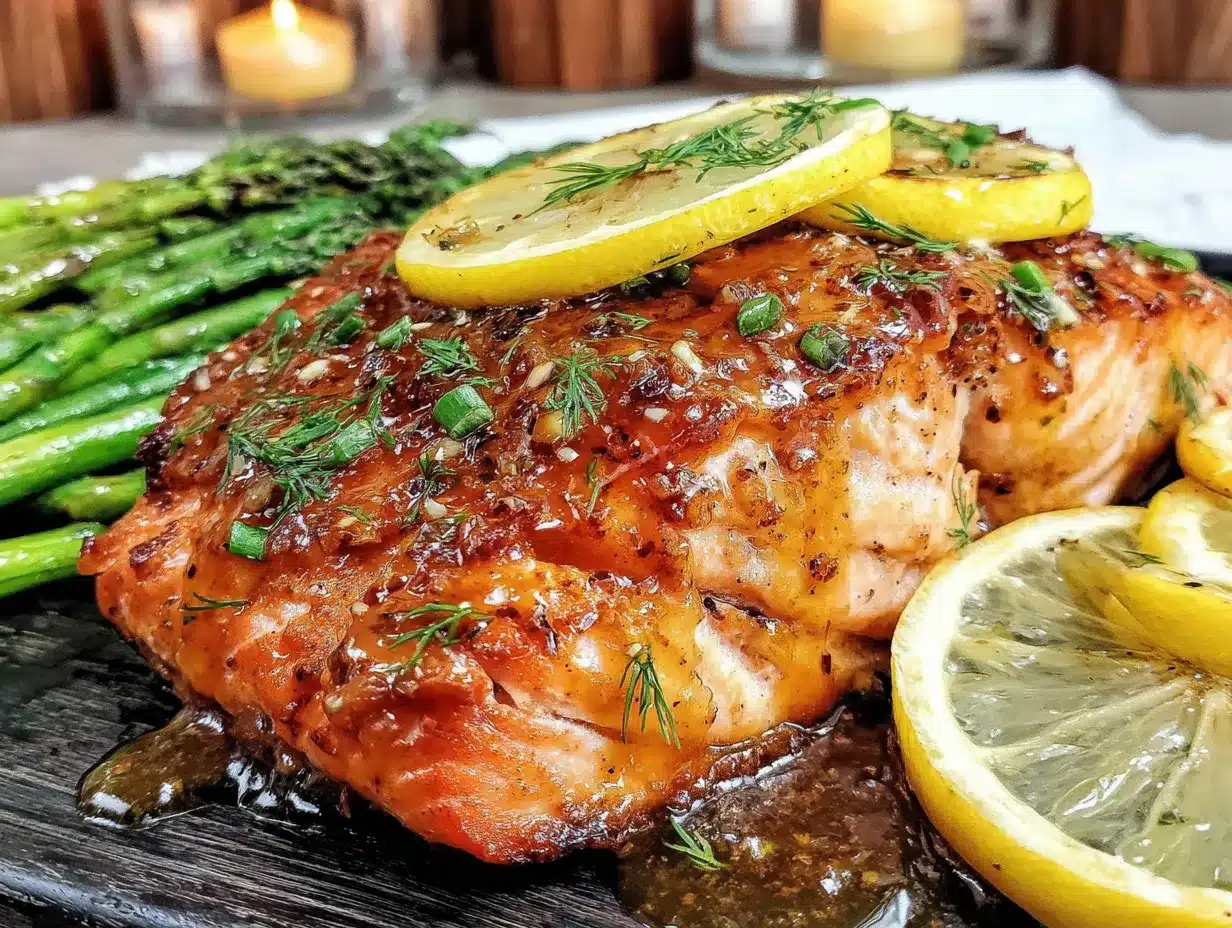
- Preheat the Oven: Start by heating your oven to 400°F (200°C). This high heat is key to getting that nice exterior without overcooking the inside. While the oven heats, line your sheet pan with parchment paper and lightly grease it with olive oil. This step takes about 5 minutes.
- Prepare the Salmon: Pat the salmon fillets dry with paper towels. This is important because moisture is the enemy of good texture. If the fish is wet, it will steam instead of bake. Season both sides generously with kosher salt and black pepper. Place the fillets on the prepared pan, skin-side down. If your fillets have small pin bones, use tweezers to pull them out now. It is easier to do it before they cook.
- Add Lemon Slices: Slice one lemon into thin rounds. Place these slices on the bottom of the pan, underneath the salmon. As the fish bakes, the lemon will release juices that steam the bottom of the fillets, keeping them moist. This adds a subtle layer of flavor that you might miss otherwise.
- Bake the Salmon: Place the pan in the oven. Bake for 12 to 15 minutes. The exact time depends on the thickness of your fillets. A good rule of thumb is 10 minutes per inch of thickness. You want the fish to be opaque and flake easily with a fork, but still slightly translucent in the very center if you like it medium. Do not overcook it!
- Make the Sauce: While the salmon is baking, melt the butter in a small saucepan over low heat. Add the minced garlic and cook for just 30 seconds until fragrant. Be careful not to brown the garlic, or it will turn bitter. Remove from heat and stir in the juice of one lemon, the zest of that lemon, and the chopped fresh dill. Whisk in a pinch of red pepper flakes.
- Combine and Serve: Once the salmon is done, remove it from the oven. Immediately brush or spoon the warm lemon dill sauce over the hot fish. The heat from the salmon will help the sauce adhere. Serve immediately while the fish is still hot and flaky.
One thing to watch out for is the oven temperature variance. Every oven is different. If your oven runs hot, check the fish at the 10-minute mark. If it is browning too quickly, you can tent it loosely with foil. Trust your eyes and your fork more than the timer. The goal is tender, flaky fish, not dry, chalky blocks.
Cooking Tips & Techniques
I have made this recipe enough times to know where things can go wrong. The biggest mistake people make is overcrowding the pan. If you pile the fillets on top of each other, they will steam and stick together. Give each piece some space. Another common error is skipping the drying step. I know it seems tedious, but patting the salmon dry ensures that the seasoning sticks and the surface sears slightly rather than steaming. This creates that desirable texture contrast. Also, do not skip the lemon slices underneath. They act as a natural rack and add a layer of citrus aroma that infuses the bottom of the fish. It is a small detail that makes a big difference. When making the sauce, keep the heat low. High heat can cause the butter to separate, resulting in a greasy sauce instead of a smooth emulsion. If it does separate, a splash of cold water can bring it back together. Finally, let the fish rest for just two minutes after baking. This allows the juices to redistribute, ensuring every bite is moist.
Variations & Adaptations
This recipe is a versatile canvas. If you want to change up the flavor profile, try swapping the dill for fresh parsley and capers for a more Mediterranean vibe. You can also add a teaspoon of Dijon mustard to the sauce for a tangy kick. For a spicy version, increase the red pepper flakes or add a diced jalapeño to the sauce. If you are cooking for a crowd, you can double the recipe and use two sheet pans, but make sure not to overlap the fillets. You can also use other white fish like cod or halibut, though they may require slightly less cooking time. For a gluten-free option, this recipe is naturally gluten-free, so you can serve it with rice or quinoa without worry. I once tried making this with trout, and it worked beautifully, offering a slightly earthier flavor. The key is to adjust the cooking time based on the thickness of the fish, not the type. Feel free to experiment with different herbs like chives or cilantro if you want a different twist.
Serving & Storage Suggestions
This sheet pan salmon with lemon dill sauce is best served immediately while the fish is hot and the sauce is glossy. It pairs wonderfully with roasted asparagus, steamed broccoli, or a simple green salad with a vinaigrette. For a heartier meal, serve it over fluffy couscous or wild rice to soak up the extra sauce. Leftovers can be stored in an airtight container in the refrigerator for up to two days. To reheat, gently warm the salmon in the microwave at low power for 30-second intervals, or place it in a covered dish in a 300°F oven. Avoid high heat, as it will dry out the fish. The flavors actually meld nicely overnight, making it a great option for meal prep. Just add a squeeze of fresh lemon before serving to brighten it up again.
Nutritional Information & Benefits
Salmon is a powerhouse of omega-3 fatty acids, which are great for heart and brain health. This recipe keeps the calorie count relatively low by using a moderate amount of butter and olive oil. Each serving provides a good amount of protein, making it a satisfying and balanced meal. It is naturally gluten-free and can be made dairy-free. The lemon and dill add antioxidants and vitamin C, boosting the overall nutritional value. It is a clean, wholesome dish that feels indulgent but is actually quite healthy. I love that it nourishes my body without weighing me down, leaving me feeling energized for the rest of the evening.
Conclusion
This sheet pan salmon with lemon dill sauce is more than just a quick dinner; it is a testament to the power of simple, high-quality ingredients. The flaky texture, the bright sauce, and the ease of preparation make it a standout in my recipe box. I encourage you to try it and see how it transforms your weeknight routine. Feel free to tweak the herbs or spices to suit your taste. I would love to hear how it turns out for you. Leave a comment below with your variations or questions. Happy cooking, and enjoy every flaky bite!
FAQs
How do I know when the salmon is done?
The salmon is done when it turns opaque and flakes easily with a fork. The internal temperature should reach 145°F (63°C), but many chefs prefer to remove it at 125°F-130°F for a medium finish. It will continue to cook slightly after being removed from the oven.
Can I use frozen salmon?
Yes, you can use frozen salmon, but it is best to thaw it completely in the refrigerator overnight before cooking. Pat it very dry to remove excess moisture. Cooking from frozen can lead to uneven cooking and a softer texture.
What can I serve with this salmon?
This salmon pairs well with roasted vegetables like asparagus, green beans, or Brussels sprouts. It also goes great with rice, quinoa, or crusty bread to soak up the lemon dill sauce.
Can I make the sauce ahead of time?
You can prepare the sauce ingredients ahead of time, but it is best to mix and warm the sauce just before serving. The fresh herbs lose their flavor if they sit in the butter for too long. Store the mixture in the fridge and reheat gently when ready to serve.
Is this recipe suitable for meal prep?
Yes, this recipe is excellent for meal prep. The salmon stores well in the refrigerator for up to two days. Just be sure to store the sauce separately if you want to keep the fish from getting too soggy. Reheat gently to maintain the texture.
Pin This Recipe!
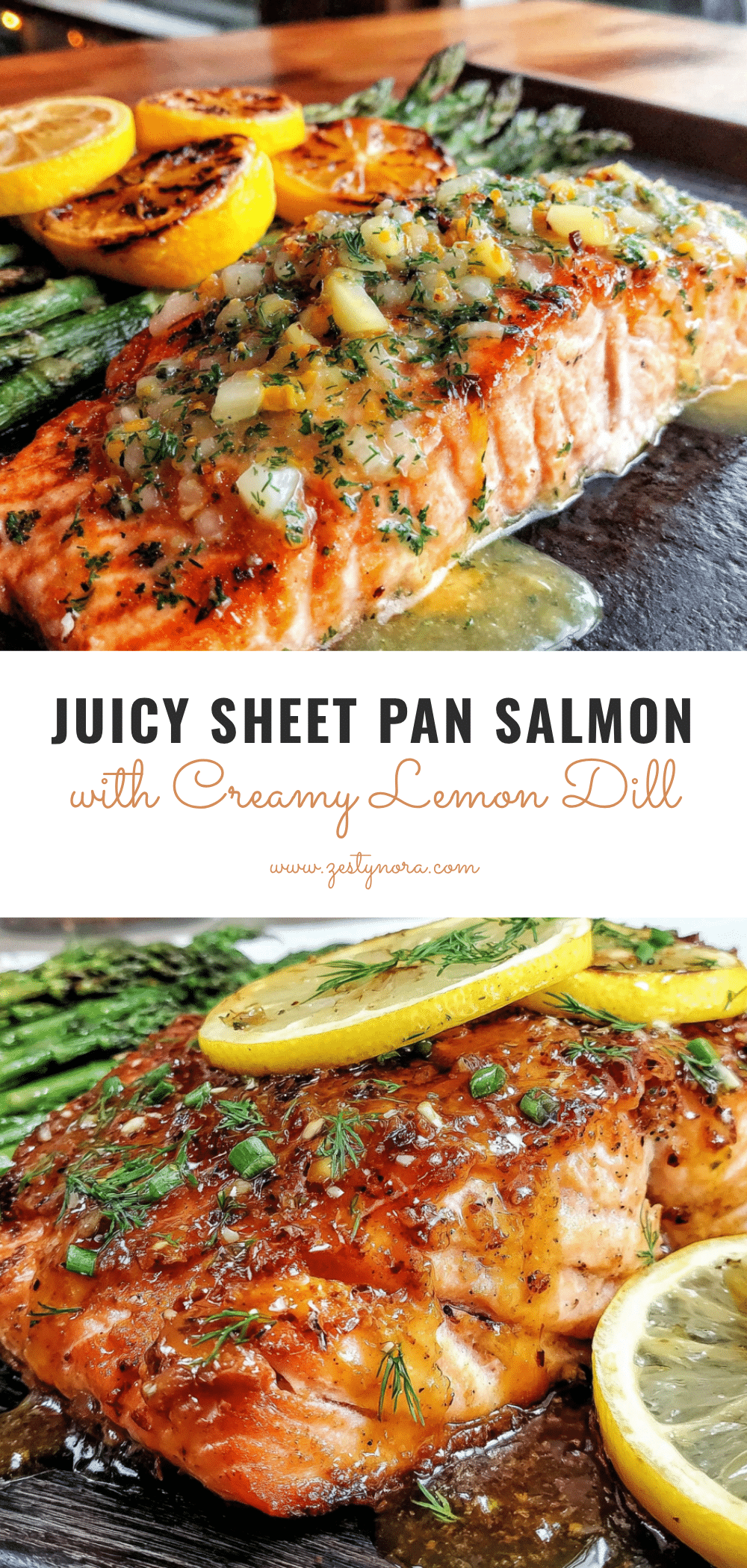
Flaky Sheet-Pan Salmon with Lemon Dill Sauce
A quick and elegant weeknight dinner featuring tender, flaky salmon baked on a sheet pan with a bright, emulsified lemon dill butter sauce.
- Prep Time: 5 minutes
- Cook Time: 15 minutes
- Total Time: 20 minutes
- Yield: 4 servings 1x
- Category: Main Course
- Cuisine: American
Ingredients
- 4 salmon fillets (6–8 oz each, center-cut)
- 4 tablespoons unsalted butter
- 2 fresh lemons (one for juice/zest, one sliced into rounds)
- 1 generous handful fresh dill, chopped finely
- 2 cloves garlic, minced
- Extra virgin olive oil (for brushing)
- Kosher salt and black pepper
- Pinch of red pepper flakes (optional)
Instructions
- Preheat oven to 400°F (200°C). Line a 13×9 inch rimmed baking sheet with parchment paper and lightly grease with olive oil.
- Pat salmon fillets dry with paper towels. Season both sides generously with kosher salt and black pepper.
- Place salmon fillets on the prepared pan, skin-side down. Slice one lemon into thin rounds and place them on the bottom of the pan underneath the salmon.
- Bake for 12-15 minutes, or until the fish is opaque and flakes easily with a fork but remains slightly translucent in the center.
- While salmon bakes, melt butter in a small saucepan over low heat. Add minced garlic and cook for 30 seconds until fragrant (do not brown).
- Remove saucepan from heat. Stir in the juice and zest of one lemon, chopped fresh dill, and red pepper flakes.
- Remove salmon from oven and immediately brush or spoon the warm lemon dill sauce over the hot fish.
- Let rest for 2 minutes before serving.
Notes
Pat the salmon dry before seasoning to ensure proper texture and prevent steaming. Do not overcrowd the pan. If your oven runs hot, check the fish at the 10-minute mark. The sauce should be kept on low heat to prevent the butter from separating.
Nutrition
- Serving Size: 1 fillet with sauce
- Calories: 350
- Sugar: 1
- Sodium: 400
- Fat: 22
- Saturated Fat: 8
- Carbohydrates: 4
- Fiber: 1
- Protein: 30
Keywords: salmon, sheet pan dinner, lemon dill sauce, healthy dinner, quick meals, gluten-free, omega-3, weeknight dinner