The lasagna pan was sitting on the counter, completely empty, with only a few smudges of orange sauce clinging to the ceramic edges. My husband stared at it for a solid ten seconds before looking up at me with that specific expression of disbelief that usually precedes a serious conversation about marriage or grocery lists. He asked if I had eaten the entire thing myself, which was ridiculous because we had saved half for lunch the next day, but honestly, the speed at which it vanished was impressive. The text message came twenty minutes later from my sister-in-law, asking if I could make that “orange lasagna” again for her family gathering next month.
I didn’t plan for it to be this popular. I was just trying to use up a massive butternut squash from the farmer’s market that was taking up too much space in my fridge. You know how it goes, you buy one vegetable and suddenly your kitchen looks like a fall harvest festival. I wanted something cozy, something that felt like a warm hug in a dish, but I didn’t want to spend six hours stirring pots. This creamy butternut squash lasagna with sage brown butter came together because I was lazy and hungry, not because I was trying to reinvent Italian cuisine. It started as a quick weeknight fix, but the smell of brown butter and crispy sage changed everything.
Now, every time I make it, I watch the clock, waiting for that moment when the reality sets in that I need to make another one. It’s strange how a simple swap of meat for roasted squash can create such a devoted following. I didn’t know it would become my signature dish, but here we are. The quiet pride of seeing that empty pan is better than any five-star review I could get online. It’s just good food, honestly, but it’s the kind of good food that sticks with people.
Why You’ll Love This Recipe
Let’s be real for a second, making lasagna is usually a lot of work. You have to cook the sauce, boil the noodles, mix the ricotta, and then deal with a kitchen that looks like a bomb went off. This creamy butternut squash lasagna with sage brown butter skips all that stress. It is my go-to when I want to feel fancy but don’t have the energy to manage a dozen different pans. The secret isn’t just in the squash; it is in the technique of browning the butter with fresh sage leaves. That nutty, aromatic fat coats every layer, making the dish taste rich and indulgent without needing heavy cream or excessive cheese.
Here is why this version beats the standard meat lasagna every single time:
- Quick & Easy: By using no-boil noodles and a simple blender for the sauce, you cut the prep time in half. You can have this in the oven in under 30 minutes, leaving you plenty of time to relax or clean up your mess.
- Simple Ingredients: You don’t need specialty stores for this. The butternut squash is cheap and widely available in the fall, and sage is a pantry staple for most home cooks. If you can buy butter and cheese, you can make this.
- Perfect for Fall Entertaining: This is the ultimate crowd-pleaser for potlucks or dinner parties. It looks elegant on the table, with those golden brown edges and crispy sage leaves peeking out, but it feeds a room easily.
- Unbelievably Delicious: The texture is the game-changer. The squash puree creates a silkier, more luxurious sauce than a traditional tomato base, and the brown butter adds a depth of flavor that feels like it came from a high-end restaurant.
What makes this recipe different from other vegetable lasagnas is the balance. A lot of veggie lasagnas can taste bland or watery. By roasting the squash first and then mixing it with a sharp pecorino and plenty of black pepper, you get a flavor profile that is bold and savory. The sage brown butter ties it all together, adding a herbal note that cuts through the richness. It’s comfort food that feels a bit more sophisticated, yet it is still the kind of meal that makes you close your eyes and sigh after the first bite. It turns a simple squash into something memorable.
What Ingredients You Will Need
This recipe relies on high-quality, wholesome ingredients to deliver bold flavor and satisfying texture without the fuss. The beauty of this creamy butternut squash lasagna with sage brown butter is that the quality of your base ingredients really shines through. Since there is no heavy tomato sauce to hide behind, you want your squash to be sweet and your butter to be fresh. Most of these items are likely already in your kitchen or just one stop away from the grocery store.
Here is what you will need to gather:
- Butternut Squash: You will need one large squash, peeled, seeded, and cubed. Look for one that feels heavy for its size, which indicates it is full of moisture and flavor. I prefer roasting it at high heat to get some caramelization before blending.
- Unsalted Butter: You need a good half cup for the brown butter sauce. I recommend using a high-fat European-style butter if you can find it, as it browns more evenly and has a richer nutty flavor. Brands like Plugrá or Land O’Lakes work well.
- Fresh Sage Leaves: A full bunch of fresh sage is essential. Do not use dried sage if you can help it; the fresh leaves fried in butter become crispy chips that add amazing texture. Pick leaves that are vibrant green and smell strong when you rub them.
- No-Boil Lasagna Noodles: These save so much time. They cook right in the oven as they absorb the sauce. Make sure to buy a standard box, not the jumbo sheets, unless you are adjusting your layering strategy.
- Ricotta Cheese: One large container of whole milk ricotta. Some people prefer cottage cheese blended smooth, but I like the classic ricotta texture for this specific dish. Drain it for a few minutes if it looks too watery.
- Mozzarella Cheese: Two cups of shredded low-moisture mozzarella. This gives you that classic stretchy cheese pull. Avoid the pre-shredded bags if possible, as they have anti-caking agents that can make the cheese grainy.
- Pecorino Romano or Parmesan: Half a cup of finely grated hard cheese. Pecorino is saltier and sharper, which balances the sweet squash nicely. If you prefer a milder taste, stick with Parmesan.
- Garlic: Three cloves of fresh garlic, minced. Fresh garlic is non-negotiable here; powdered garlic just won’t give you that aromatic punch.
- Nutmeg: A fresh grating of nutmeg. Just a pinch goes a long way and enhances the natural sweetness of the squash.
- Sea Salt and Black Pepper: To taste. Seasoning at every layer is key to a flavorful dish.
If you are making this for someone with dairy sensitivities, you can swap the ricotta and mozzarella for high-quality vegan alternatives, though the texture will be slightly different. For a gluten-free option, simply use gluten-free no-boil noodles, but keep in mind they may require a bit more liquid to cook properly.
Equipment Needed
You don’t need a fancy kitchen to pull this off, but having the right tools makes the process smoother. First, you will need a large rimmed baking sheet to roast the butternut squash. A sheet pan ensures the squash gets enough airflow to caramelize rather than steam. I usually line it with parchment paper to make cleanup a breeze, though it isn’t strictly necessary.
Next, a high-speed blender or a food processor is essential for getting that silky smooth puree. If you have an immersion blender, you can roast the squash directly in the pot, but using a standard blender gives you more control over the texture. Just be careful when blending hot liquids; leave the vent lid cracked to let steam escape.
For the lasagna itself, a standard 9×13 inch baking dish is perfect. Glass or ceramic dishes work best because they distribute heat evenly. If you don’t have a baking dish, a deep roasting pan works too. You will also need a small saucepan or skillet for browning the butter and frying the sage. A stainless steel or copper pan is ideal here because you can see the color changes clearly. Avoid non-stick if possible, as you want to hear the sizzle to know when the butter is ready.
Finally, a microplane or fine grater is helpful for the nutmeg and hard cheeses. It’s a small tool, but it makes a big difference in how well the flavors incorporate into the cheese mixture. If you don’t have one, a box grater works fine, just take your time grating the nutmeg fresh.
Preparation Method

Getting this creamy butternut squash lasagna with sage brown butter ready involves a few steps, but they happen quickly if you stay organized. The total time from start to finish is about an hour and a half, but most of that is just waiting for things to cook in the oven.
- Roast the Squash (20 minutes prep, 30 minutes cook): Preheat your oven to 400°F (200°C). Peel your butternut squash and remove the seeds. Cube it into roughly one-inch pieces. Toss them on a baking sheet with a little olive oil, salt, and pepper. Roast until they are tender and slightly browned at the edges. This step is crucial because raw squash puree can be watery and bland. Roasting concentrates the flavor. Once done, let them cool slightly.
- Make the Puree (5 minutes): Transfer the roasted squash to your blender. Add the minced garlic, a pinch of nutmeg, and half of your grated Pecorino cheese. Blend until completely smooth. If the mixture looks too thick, add a splash of milk or water. Taste and adjust seasoning. You want it to taste good on its own before you put it in the lasagna.
- Brown the Butter and Fry Sage (5 minutes): In a small saucepan over medium heat, melt your butter. Swirl it occasionally. It will foam up and then settle. Watch it closely as it starts to turn golden brown. You will smell a nutty aroma. Immediately add the fresh sage leaves. They will fry for about 30 seconds until crispy. Remove from heat and set aside. This is your flavor bomb.
- Mix the Cheese Filling (5 minutes): In a medium bowl, combine the ricotta cheese, the remaining Pecorino, an egg, salt, and pepper. Mix until smooth. The egg helps bind the cheese layer so it doesn’t run all over the place.
- Assemble the Lasagna (10 minutes): Preheat your oven to 375°F (190°C). Grease your 9×13 inch baking dish. Spread a thin layer of the squash puree on the bottom to prevent sticking. Add a layer of no-boil noodles. Spoon half of the squash puree over the noodles, spreading it evenly. Dollop half of the ricotta mixture over the puree and spread it out. Sprinkle with a third of the mozzarella. Repeat the layers: noodles, remaining puree, remaining ricotta, and the rest of the mozzarella. Top with the final layer of noodles.
- Bake (45 minutes): Cover the dish tightly with aluminum foil. Bake for 30 minutes. Then, remove the foil and bake for another 15 minutes until the cheese is bubbly and golden brown. If the top isn’t browning enough, you can broil it for the last 2-3 minutes, but watch it like a hawk.
- Rest and Serve (15 minutes): This is the hardest part. Let the lasagna rest for at least 15 minutes before cutting. This allows the layers to set so you get clean slices. Drizzle the sage brown butter over the top just before serving, and garnish with the crispy sage leaves you fried earlier.
Keep an eye on the edges during baking. If they start getting too dark, you can tent the corners with foil. The noodles need enough time to soften, so don’t rush the baking process or you might end up with chewy pasta.
Cooking Tips & Techniques
I have made this lasagna enough times to know where things can go wrong, so here are some tips to ensure success. The biggest mistake people make with vegetable lasagna is using too much moisture. Roasting the squash is non-negotiable. If you skip that step and just boil or microwave the squash, your lasagna will turn into a soup. You want that puree thick and concentrated.
Another tip is to drain your ricotta. If your ricotta is very wet, squeeze it in a cheesecloth or a fine-mesh strainer for 15 minutes before mixing. This prevents a watery layer from forming between the noodles and the cheese. Also, when you brown the butter, take it off the heat the second it smells nutty. Butter goes from perfect to burnt very quickly, and burnt butter tastes bitter and ruins the whole dish. If you miss it, start over; it’s worth the extra butter.
For the best texture, use a fork to gently mix the ricotta and squash puree in the bowl before spreading. You don’t want to fully combine them into one color; leaving little swirls of white ricotta in the orange puree looks beautiful and adds texture contrast. Also, let the lasagna rest. I know the smell is intoxicating and you want to eat it immediately, but cutting it hot will result in a messy pile of ingredients. Resting allows the starches to set, giving you those perfect, distinct squares.
If you are making this ahead of time, you can assemble it completely and refrigerate it for up to 24 hours before baking. Just add 10-15 minutes to the baking time if you are putting a cold lasagna into the oven. This is a lifesaver for busy weeknights or when you are hosting dinner parties.
Variations & Adaptations
While this creamy butternut squash lasagna with sage brown butter is perfect as is, there are plenty of ways to tweak it to suit your taste or dietary needs. One popular variation is adding protein. I often mix in cooked, crumbled Italian sausage or pancini for a heartier meal. The sage and sausage are a classic combination, so it fits perfectly. Just brown the meat separately and layer it in with the cheese.
For a lighter version, you can swap half of the ricotta for blended cauliflower or zucchini. This reduces the calorie count without sacrificing too much creaminess. Another fun twist is adding apples. Thinly sliced Granny Smith apples layered between the noodles add a nice tart crunch that cuts through the richness. It’s a bit like a savory apple crisp in lasagna form.
If you are gluten-free, just use gluten-free no-boil noodles. Be sure to check the box instructions, as some brands require more liquid. You might need to add an extra cup of water or broth to the squash puree. For a vegan version, use vegan ricotta (often made from cashews), vegan mozzarella, and olive oil instead of butter. The flavor will be slightly different, but the roasted squash and sage will still shine through. I’ve tried using almond milk in the puree, and it works surprisingly well.
You can also change the cheese profile. Adding some fontina or gouda to the mozzarella gives it a smokier, creamier depth. It’s a great option if you want to feel a bit fancy. The possibilities are endless, but the core elements of roasted squash and sage brown butter remain the star of the show.
Serving & Storage Suggestions
This lasagna is best served warm, straight out of the oven. It pairs beautifully with a simple green salad dressed with a lemon vinaigrette. The acidity of the lemon helps cut through the richness of the brown butter and cheese. I also like to serve it with crusty garlic bread or my homemade Bavarian soft pretzels for dipping. A glass of Chardonnay or a light red like Pinot Noir complements the nutty flavors perfectly.
For storage, let the lasagna cool completely before covering it with plastic wrap or transferring it to an airtight container. It will last in the refrigerator for up to four days. The flavors actually meld together and get better after a day or two. To reheat, you can microwave individual slices for 2-3 minutes, or warm the whole dish in the oven at 350°F for 20-30 minutes, covered with foil, to keep it moist.
You can also freeze this lasagna. Wrap the entire dish tightly in plastic wrap and then aluminum foil. It will keep for up to three months. Thaw it in the refrigerator overnight before baking. Note that the texture of the cheese might be slightly grainier after freezing, but it still tastes delicious. The brown butter sauce holds up well in the freezer, so you won’t lose that nutty flavor.
Nutritional Information & Benefits
One of the great things about this creamy butternut squash lasagna with sage brown butter is that it packs a nutritional punch. Butternut squash is rich in vitamin A, vitamin C, and fiber, which supports eye health and digestion. The sage adds antioxidants and anti-inflammatory properties. While it is a comfort food, the use of vegetables makes it a more balanced meal than traditional meat lasagna.
Each serving contains a good amount of protein from the cheese and egg, and healthy fats from the butter. However, it is still a calorie-dense dish due to the cheese and butter, so moderation is key. If you are watching your sodium, be careful with the Pecorino cheese, as it can be salty. You can reduce the salt in the recipe and use a lower-sodium cheese option if needed. For those with dairy allergies, this recipe can be adapted, but the traditional version is not suitable for a dairy-free diet.
Personally, I appreciate that this recipe feels indulgent but leaves me feeling satisfied rather than heavy. The fiber from the squash helps with digestion, and the warm spices are soothing. It’s a great way to get your vegetables in without feeling like you’re on a strict diet.
Conclusion
Making this creamy butternut squash lasagna with sage brown butter is a joy, even if it takes a little effort. The combination of sweet squash, salty cheese, and nutty brown butter is simply unbeatable. It’s a dish that brings people together, whether it’s a quiet family dinner or a festive gathering. I hope you try it and find your own way to customize it, maybe adding some sausage or swapping in different herbs.
I love this recipe because it turns simple ingredients into something special. It’s proof that you don’t need fancy techniques to cook well; you just need good food and a little care. If you make this, I’d love to hear how it turns out. Leave a comment below with your thoughts or share a photo of your creation. Don’t forget to pin this recipe to your Pinterest boards so you can find it easily next time you need dinner inspiration. Happy cooking!
Frequently Asked Questions
Can I use fresh lasagna noodles instead of no-boil?
Yes, you can use fresh noodles, but you will need to boil them first according to the package instructions before assembling. Also, fresh noodles cook faster, so you may need to reduce the baking time by 10-15 minutes to prevent them from becoming mushy.
What is the best way to peel a butternut squash?
The easiest way is to roast the whole squash at 400°F for 30-40 minutes until soft, then cut it open to scoop out the seeds and peel the skin with a knife. If you prefer to peel it raw, use a sturdy vegetable peeler or a sharp chef’s knife, being careful of your fingers.
Can I make this recipe ahead of time?
Absolutely. You can assemble the entire lasagna and refrigerate it for up to 24 hours before baking. Just remember to add a few extra minutes to the baking time if you are putting a cold dish into the oven.
How do I store leftovers?
Store leftovers in an airtight container in the refrigerator for up to four days. You can also freeze the lasagna for up to three months. Thaw in the fridge overnight before reheating.
Can I freeze the sage brown butter?
Yes, you can freeze the brown butter with the sage leaves in an ice cube tray. Once frozen, transfer the cubes to a freezer bag. You can drop a cube into pasta sauce or over vegetables later for a quick flavor boost.
Pin This Recipe!
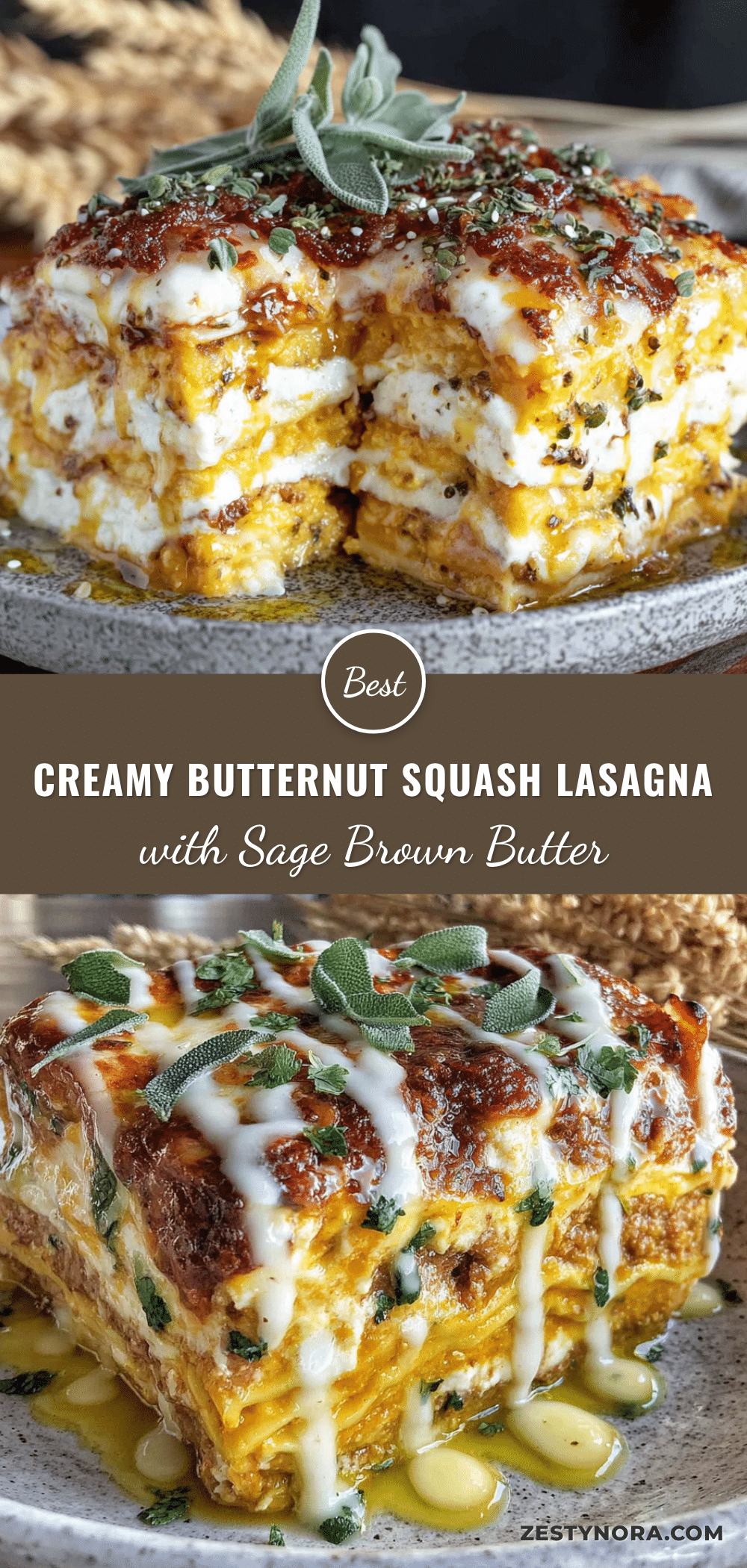
Creamy Butternut Squash Lasagna with Sage Brown Butter

A cozy, crowd-pleasing lasagna that swaps traditional meat for roasted butternut squash puree, layered with ricotta and mozzarella, and finished with a nutty sage brown butter sauce.
- Prep Time: 30 minutes
- Cook Time: 45 minutes
- Total Time: 1 hour 15 minutes
- Yield: 8 servings 1x
- Category: Main Course
- Cuisine: Italian
Ingredients
- 1 large butternut squash, peeled, seeded, and cubed
- 1/2 cup unsalted butter
- 1 bunch fresh sage leaves
- 1 box no-boil lasagna noodles
- 1 large container whole milk ricotta cheese
- 2 cups shredded low-moisture mozzarella cheese
- 1/2 cup finely grated Pecorino Romano or Parmesan cheese
- 3 cloves garlic, minced
- Pinch of fresh nutmeg
- Sea salt and black pepper to taste
- Olive oil for roasting squash
- 1 egg (for cheese filling)
Instructions
- Preheat oven to 400°F (200°C). Toss cubed squash with olive oil, salt, and pepper, then roast for 30 minutes until tender and browned.
- Blend roasted squash with minced garlic, nutmeg, and half of the Pecorino cheese until smooth.
- In a small saucepan, melt butter over medium heat until it turns golden brown and smells nutty. Add sage leaves and fry for 30 seconds until crispy. Remove from heat.
- In a bowl, mix ricotta, remaining Pecorino, egg, salt, and pepper until smooth.
- Preheat oven to 375°F (190°C). Grease a 9×13 inch baking dish.
- Layer the lasagna: spread squash puree on bottom, add noodles, half the puree, half the ricotta mixture, and one-third of the mozzarella. Repeat layers. Top with final noodles.
- Cover with foil and bake for 30 minutes. Remove foil and bake for another 15 minutes until bubbly and golden.
- Let rest for 15 minutes before slicing. Drizzle with sage brown butter and garnish with crispy sage leaves.
Notes
Roasting the squash is crucial to prevent a watery lasagna. Drain ricotta if it appears too wet. Let the lasagna rest for at least 15 minutes to allow layers to set. Can be assembled ahead and refrigerated for up to 24 hours.
Nutrition
- Serving Size: 1 slice
- Calories: 450
- Sugar: 6
- Sodium: 650
- Fat: 28
- Saturated Fat: 14
- Carbohydrates: 35
- Fiber: 4
- Protein: 18
Keywords: butternut squash lasagna, sage brown butter, vegetarian lasagna, fall recipes, creamy lasagna, no-boil noodles, comfort food