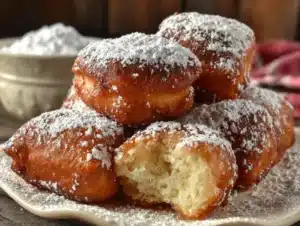
The summer I turned thirty, I found myself standing in a tiny, bustling laundromat on a rainy Thursday afternoon, waiting for my clothes to dry. That’s when Mr. Thompson, the quiet accountant who usually kept to himself, struck up a conversation about his weekend hobby—making beignets. Honestly, I wasn’t expecting cooking advice from someone who wore three-piece suits every day, but there I was, listening to him describe exactly how to make fluffy easy homemade beignets with powdered sugar, right between the hum of dryers and the rustle of folding clothes.
He pulled out a crumpled, flour-dusted napkin, scribbled the recipe in a shaky hand, and swore by its simplicity and crowd-pleasing power. I mean, the idea that these delicate, pillowy treats—things I’d only ever assumed were reserved for New Orleans’ street vendors—could come together with just a few pantry staples was a revelation. Plus, Mr. Thompson’s beignets were perfect for gatherings, he said, especially when you want to impress friends without fussing over complicated desserts.
That day, as the warmth from the dryers mixed with the scent of fresh laundry and beignet dreams, I realized this recipe wasn’t just a snack; it was a little celebration waiting to happen. Maybe you’ve been there—wondering how to pull off something special for your next dinner party or potluck without breaking a sweat. Well, this recipe, passed unexpectedly from a man who probably crunches numbers better than dough, stayed with me. It’s become my go-to for impressing guests—fluffy, easy, and dusted with just the right amount of powdered sugar to steal the show.
Why You’ll Love This Recipe
I’ve tested this fluffy easy homemade beignets recipe countless times at gatherings and, trust me, it delivers every single time. Whether you’re hosting a casual brunch or a festive get-together, these beignets have a way of becoming the star of the table. Let me tell you why they’re a must-try:
- Quick & Easy: You can have the dough ready in under 20 minutes, perfect for last-minute plans or when you want to wow guests without spending all day in the kitchen.
- Simple Ingredients: No rare or fancy items—just basics you probably already have, like flour, yeast, and powdered sugar.
- Perfect for Parties: These beignets scale beautifully for crowds, so you can make a batch that feeds six or sixty with ease.
- Crowd-Pleaser: Kids, adults, picky eaters—everyone loves the light, airy texture combined with that sweet powdered sugar coating.
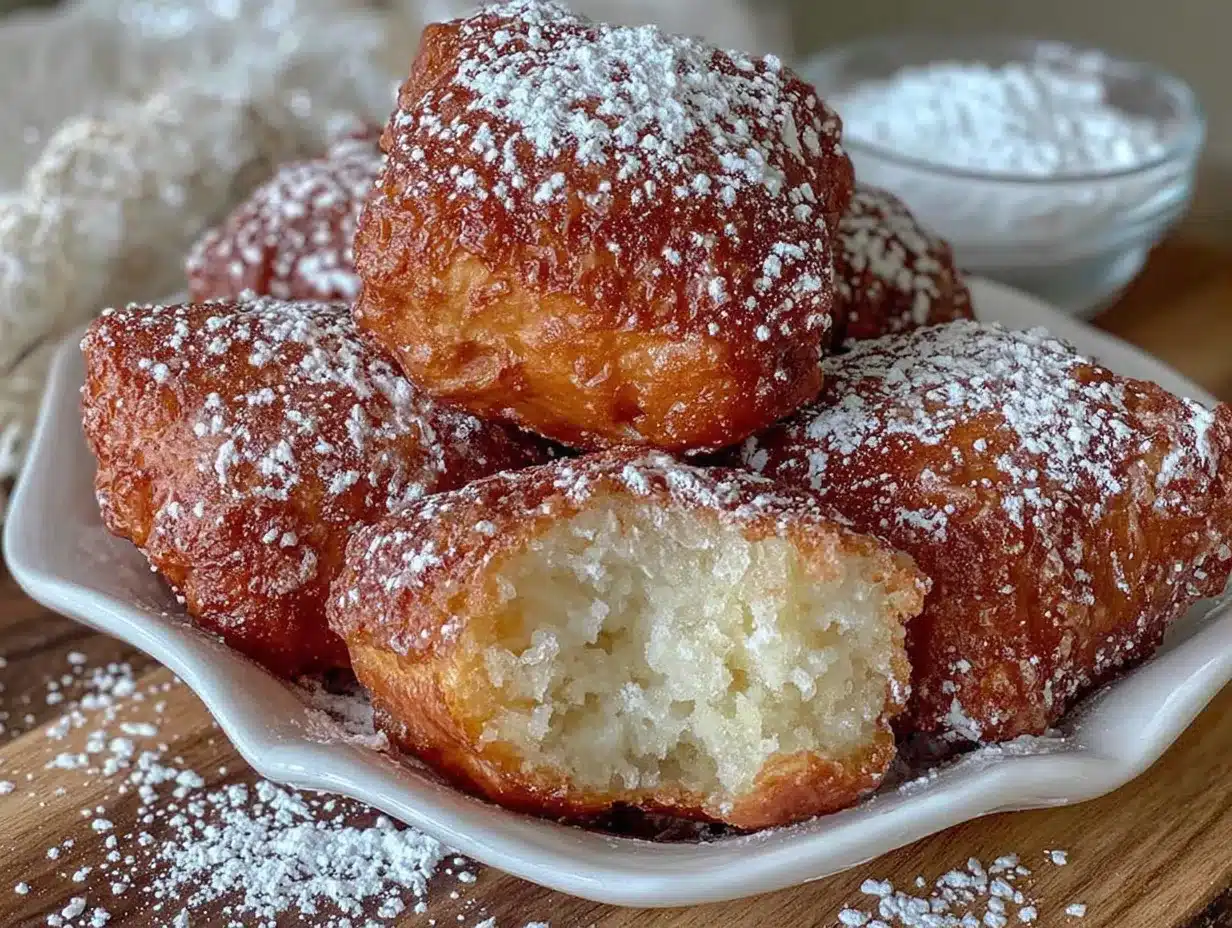
- Unbelievably Delicious: The contrast of the crispy outside with the pillowy inside creates a flavor and texture combo that’s seriously next-level comfort food.
What sets this recipe apart isn’t just the fluff factor—it’s the fail-safe method that even beginners can master. Mr. Thompson’s tip to let the dough rest just right and the trick of frying at the perfect temperature make these beignets impossible to mess up. Plus, the powdered sugar isn’t just sprinkled on; it melts slightly into the warm dough for a delicate sweetness that hits all the right notes. It’s the kind of treat that makes you close your eyes and savor every bite, exactly what you want when you’re hosting and aiming to impress without stress.
What Ingredients You Will Need
This recipe uses simple, wholesome ingredients to deliver bold flavor and satisfying texture without the fuss. Most are pantry staples, and substitutions are easy if needed.
- All-purpose flour (3 ½ cups / 440g) – I recommend King Arthur flour for consistent results and great texture.
- Active dry yeast (2 ¼ teaspoons / one packet) – Make sure it’s fresh for proper rise.
- Sugar (¼ cup / 50g) – Adds just a touch of sweetness to the dough.
- Salt (1 teaspoon) – Balances the flavors perfectly.
- Whole milk (1 cup / 240ml), warmed to about 110°F (43°C) – You can swap with dairy-free milk if needed.
- Large eggs (2, room temperature) – Adds richness and structure.
- Unsalted butter (4 tablespoons / 56g), melted and cooled – Adds tenderness to the dough.
- Vegetable oil (for frying) – Use a neutral oil with a high smoke point; I like canola or peanut oil.
- Powdered sugar (for dusting) – The finishing touch that gives that classic beignet look and taste.
For seasonal twists, try adding a teaspoon of cinnamon or a splash of vanilla extract to the dough. If you want to make these gluten-free, almond flour is a decent substitute, but expect a slightly different texture. I’ve also swapped whole milk for oat milk with great success, especially when cooking for dairy-sensitive guests.
Equipment Needed
- Mixing bowls: A large bowl for combining ingredients and a smaller one for proofing the yeast.
- Stand mixer or hand mixer: While mixing by hand works, a stand mixer with a dough hook saves time and effort, especially when scaling up for a crowd.
- Rolling pin: For rolling out the dough evenly (a clean wine bottle works in a pinch).
- Deep fryer or heavy-bottomed pot: For frying the beignets. I prefer a Dutch oven because it holds temperature well.
- Cooking thermometer: Essential for monitoring oil temperature; frying too hot or cold can ruin the texture.
- Slotted spoon or spider strainer: For safely removing the fried beignets without excess oil.
- Wire rack: To drain the beignets after frying and keep them crisp.
If you don’t have a thermometer, test oil heat by dropping a small piece of dough; it should sizzle and float to the surface quickly. For budget-friendly options, a large, heavy pot and a metal skimmer work just fine.
Preparation Method
- Activate the yeast: In a small bowl, combine the warm milk (110°F/43°C), sugar (1 tablespoon from the total), and active dry yeast. Stir gently and let sit for 5–10 minutes until foamy. If it doesn’t foam, your yeast might be inactive—start again with fresh yeast.
- Mix dry ingredients: In a large bowl, whisk together the flour, remaining sugar, and salt.
- Combine wet ingredients: Beat the eggs lightly, then add melted butter and the foamy yeast mixture.
- Make the dough: Gradually add the wet ingredients to the dry, mixing with a stand mixer’s dough hook or by hand. Knead for about 5–7 minutes until smooth and elastic. The dough will be sticky but should pull away from the bowl sides.
- First rise: Cover the bowl with a damp cloth or plastic wrap and let the dough rise in a warm spot for about 1 hour, or until doubled in size. Pro tip: I like to place mine near a sunny window or the top of the fridge.
- Prepare for frying: Once risen, punch down the dough gently and turn it onto a floured surface. Roll out to about ¼ inch (6mm) thickness. Cut into 2-inch (5cm) squares or rectangles.
- Heat the oil: Pour vegetable oil into your pot or fryer to a depth of about 2-3 inches (5-7cm). Heat to 360°F (182°C). Use a thermometer to keep the temperature steady while frying.
- Fry the beignets: Carefully drop a few pieces into the hot oil, frying in batches to avoid overcrowding. Fry for about 2-3 minutes per side, turning once, until golden brown and puffed. Use a slotted spoon to remove and drain on a wire rack.
- Dust with powdered sugar: While warm, generously sift powdered sugar over the beignets. They should have a delicate, snowy coating that melts slightly into the dough.
- Serve immediately: These beignets are best fresh, but if you need to hold them, keep warm in a low oven (about 200°F / 93°C) for up to 30 minutes.
Watch out for oil temperature fluctuations—too hot and the beignets burn outside while staying doughy inside; too cool and they soak up oil and turn greasy. Also, don’t overcrowd the pot; it drops the oil temperature and slows frying. I learned this the hard way during my first dinner party, when I tried frying twice the batch at once—let’s just say my guests were patient!
Cooking Tips & Techniques
Getting these beignets just right is about attention to detail and a few insider tricks I’ve picked up over time. First, always use fresh yeast. Old yeast can lead to flat, dense beignets, and nobody wants that at a party. I once tried a batch with yeast past its prime, and the dough barely rose—lesson learned.
Temperature control is your best friend. Keep your oil steady at 360°F (182°C); if you don’t have a thermometer, the old bread cube test works—drop a small cube of bread in oil, and if it browns in about 60 seconds, you’re good. Also, frying in small batches helps maintain the temperature and gives the beignets room to puff up beautifully.
When rolling out the dough, keep it even but not too thin—about ¼ inch (6mm) thickness is ideal. Too thin, and they crisp up too much; too thick, and they take longer to cook, risking a doughy center. I like to flour my surface lightly and turn the dough a few times to keep it from sticking.
Lastly, don’t rush the resting period. The first rise is crucial for that airy, fluffy texture. If you’re pressed for time, a warm spot accelerates the process—think the top of your oven with the light on or near a radiator.
Variations & Adaptations
These beignets are incredibly versatile, making them perfect for tailoring to your guests’ tastes or dietary needs. Here are a few ideas I’ve tried and loved:
- Vegan version: Replace eggs with flaxseed “eggs” (1 tablespoon ground flaxseed + 3 tablespoons water per egg) and use almond or oat milk. Swap butter for coconut oil. The texture shifts slightly but stays delightfully fluffy.
- Flavor twists: Add a teaspoon of vanilla extract, orange zest, or a pinch of cinnamon to the dough for a festive flavor boost. I once made a batch with lemon zest that disappeared in minutes.
- Baked alternative: For a lighter option, bake the dough squares at 375°F (190°C) for 12-15 minutes until puffed and golden. Dust with powdered sugar as usual. They won’t have the same crisp exterior but are still delicious and less messy.
- Gluten-free adaptation: Substitute 2 cups (240g) of gluten-free all-purpose flour blend, adding ½ teaspoon xanthan gum if your blend doesn’t include it. The dough will be stickier, so handle gently.
Serving & Storage Suggestions
Serve these fluffy beignets warm, right after frying, dusted generously with powdered sugar. Presentation-wise, a rustic basket lined with a clean linen napkin or a pretty platter sprinkled with a little extra sugar adds a festive touch. Since these treats pair beautifully with coffee or hot chocolate, offering a warm beverage station at your gathering creates a cozy vibe.
If you’re making them ahead, store cooled beignets in an airtight container at room temperature for up to 24 hours. Reheat gently in a 300°F (150°C) oven for 5-7 minutes to regain some crispness. Avoid microwaving—they tend to get rubbery.
Flavors develop subtly over time; the powdered sugar melts slightly into the dough, making leftovers sweeter and moister. However, they’re best enjoyed fresh for that irresistible contrast of crisp outside and soft inside.
Nutritional Information & Benefits
Each beignet (about 2-inch square) contains approximately 150-180 calories, depending on frying oil absorption and sugar coating. They provide a modest amount of protein from eggs and some calcium from milk.
The recipe uses simple ingredients without preservatives or artificial additives, making it a better choice than many store-bought fried treats. Using whole milk and real butter contributes to a richer flavor and texture, though you can easily swap for dairy-free alternatives to suit dietary needs.
Keep in mind these are indulgent treats, perfect for celebrations and special occasions. The powdered sugar adds sweetness without overwhelming, so a little goes a long way toward satisfaction.
Conclusion
This fluffy easy homemade beignets recipe with powdered sugar is one of those gems you’ll return to again and again when hosting friends and family. It’s simple enough for beginners yet impressive enough to steal the show at any party. I love how it turns ordinary pantry staples into something magical, and I’m confident you’ll enjoy putting your own spin on it.
Feel free to customize the flavors, swap ingredients, or scale it up to feed a crowd effortlessly. And hey, if you give this recipe a try, I’d love to hear how your guests react or what twists you came up with—drop a comment or share your photos!
Go ahead, make a batch, and watch those smiles grow. After all, isn’t that what hosting is all about?
Frequently Asked Questions
How do I know when the oil is the right temperature for frying beignets?
Use a cooking thermometer to keep the oil around 360°F (182°C). If you don’t have one, drop a small piece of dough into the oil; it should sizzle and float to the surface within 30-60 seconds without browning too fast.
Can I prepare the dough ahead of time?
Yes! After the first rise, you can refrigerate the dough overnight. Let it come to room temperature before rolling and frying. This can actually improve the flavor.
Why did my beignets turn out greasy?
Most likely, the oil temperature was too low, causing the dough to absorb excess oil. Make sure to maintain the oil at 360°F (182°C) and avoid overcrowding the pot.
What’s the best way to store leftover beignets?
Store cooled beignets in an airtight container at room temperature for up to 24 hours. Reheat in a low oven (300°F/150°C) for a few minutes to crisp them back up.
Can I freeze beignets?
Yes, after frying and cooling, freeze them in a single layer on a baking sheet, then transfer to a freezer bag. Reheat in the oven directly from frozen for best results.
Pin This Recipe!
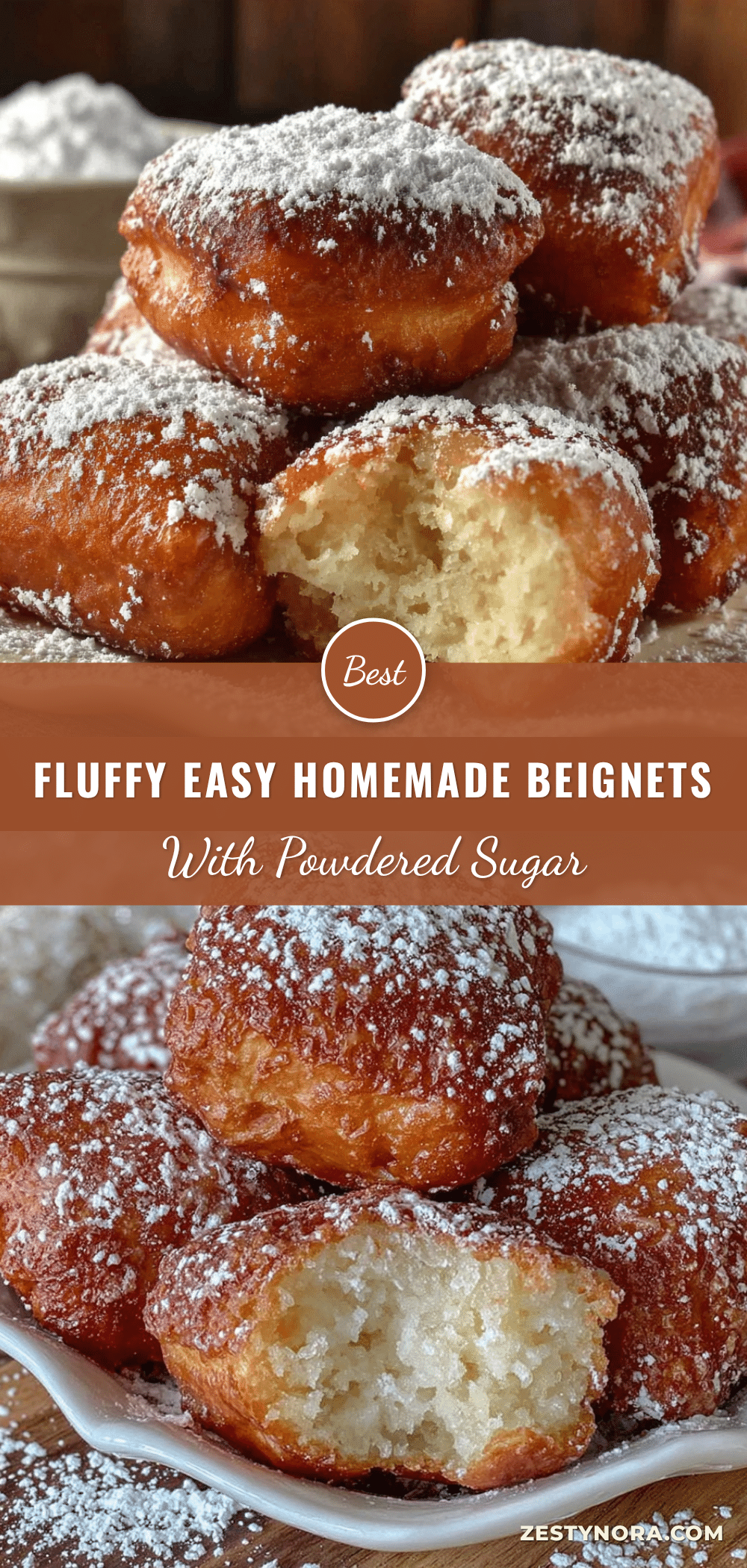
Fluffy Easy Homemade Beignets Recipe with Powdered Sugar Perfect for Beginners

This recipe delivers light, airy, and fluffy homemade beignets dusted with powdered sugar, perfect for beginners and ideal for gatherings or casual brunches.
- Prep Time: 20 minutes
- Cook Time: 15 minutes
- Total Time: 1 hour 35 minutes
- Yield: About 24 beignets (6 servings) 1x
- Category: Dessert
- Cuisine: French / New Orleans
Ingredients
- 3 ½ cups (440g) all-purpose flour
- 2 ¼ teaspoons (one packet) active dry yeast
- ¼ cup (50g) sugar
- 1 teaspoon salt
- 1 cup (240ml) whole milk, warmed to about 110°F (43°C)
- 2 large eggs, room temperature
- 4 tablespoons (56g) unsalted butter, melted and cooled
- Vegetable oil for frying (canola or peanut oil recommended)
- Powdered sugar for dusting
Instructions
- Activate the yeast: In a small bowl, combine warm milk (110°F/43°C), 1 tablespoon sugar (from total), and active dry yeast. Stir gently and let sit for 5–10 minutes until foamy.
- Mix dry ingredients: In a large bowl, whisk together flour, remaining sugar, and salt.
- Combine wet ingredients: Beat eggs lightly, then add melted butter and the foamy yeast mixture.
- Make the dough: Gradually add wet ingredients to dry, mixing with a stand mixer dough hook or by hand. Knead for 5–7 minutes until smooth and elastic. Dough will be sticky but should pull away from bowl sides.
- First rise: Cover bowl with damp cloth or plastic wrap and let dough rise in a warm spot for about 1 hour or until doubled in size.
- Prepare for frying: Punch down dough, turn onto floured surface, roll out to ¼ inch (6mm) thickness. Cut into 2-inch (5cm) squares or rectangles.
- Heat oil: Pour vegetable oil into pot or fryer to 2-3 inches (5-7cm) depth. Heat to 360°F (182°C).
- Fry beignets: Fry in batches, 2-3 minutes per side until golden brown and puffed. Remove with slotted spoon and drain on wire rack.
- Dust with powdered sugar generously while warm.
- Serve immediately or keep warm in a low oven (200°F/93°C) for up to 30 minutes.
Notes
Use fresh yeast for best rise. Maintain oil temperature at 360°F to avoid greasy or burnt beignets. Fry in small batches to keep oil temperature steady. Dough should be rolled to about ¼ inch thickness for ideal texture. Store leftovers in airtight container at room temperature up to 24 hours; reheat in oven to regain crispness. For vegan or gluten-free adaptations, see recipe variations.
Nutrition
- Serving Size: 1 beignet (about 2-i
- Calories: 150180
- Sugar: 6
- Sodium: 150
- Fat: 7
- Saturated Fat: 3.5
- Carbohydrates: 22
- Fiber: 0.5
- Protein: 3
Keywords: beignets, homemade beignets, powdered sugar, fried dough, easy dessert, New Orleans, party treats, beginner recipe