The plumber was packing up his tools—a massive wrench, a roll of duct tape, a half-empty bag of gummy worms from his pocket—when he looked at the pile of takeout containers on my counter and sighed. “You know,” he said, wiping his hands on his coveralls, “my wife makes this lasagna soup that’ll change your life. And it doesn’t wreck your kitchen.”
I wasn’t expecting cooking advice from a plumber, but there I was, standing in my water-stained kitchen, listening to him describe exactly how to make a one-pot lasagna soup. He scribbled the gist of it on the back of his invoice—right above the charge for unclogging the sink. “Italian sausage,” he said, “but not too much. And she adds spinach at the end so you feel good about yourself.”
Honestly, I almost didn’t try it. I mean, lasagna soup sounded like a gimmick, you know? But the next rainy Tuesday, I gave it a shot. And let me tell you—I was wrong. The broth was rich, the sausage was savory, and the little bits of broken lasagna noodles floating around made it feel like the best kind of comfort food chaos. The spinach wilted in at the end, making it look almost healthy. My kid ate two bowls. My husband asked for the recipe. I ate the leftovers cold from the fridge at midnight and didn’t regret a thing.
This lighter one-pot lasagna soup has become my go-to for those nights when I want something that tastes like I spent hours in the kitchen but actually came together in about 40 minutes. It’s got all the flavor of traditional lasagna—the garlic, the herbs, the satisfying richness—but without the layering, the baking, or the three-dish cleanup. Maybe you’ve been there, staring at a box of lasagna noodles and thinking, “I just don’t have the energy for that tonight.” This soup is for you.
Why You’ll Love This Recipe
I’ve tested this recipe about seven times now. The first batch was too brothy. The second was too salty. The third? That was the one. Here’s why I keep coming back to it—and why I think you will too.
- Quick & Easy: From stove to bowl in about 40 minutes. No layering, no baking dish to scrub, no waiting for the oven to preheat. It’s a weeknight hero.
- Simple Ingredients: You probably have most of this in your pantry right now. Canned tomatoes, garlic, onion, chicken broth, dried herbs. The fresh stuff—sausage, spinach, cheese—is just a quick store run away.
- Perfect for Meal Prep: This soup actually gets better after a day in the fridge. Make it on Sunday, and you’ve got lunches or dinners ready to go. The flavors meld together beautifully overnight.
- Crowd-Pleaser: I’ve served this to picky kids, health-conscious friends, and my dad who “doesn’t eat soup for dinner.” Everyone went back for seconds. It’s got that universal appeal—like a warm hug in a bowl.
- Unbelievably Delicious: The secret is browning the sausage really well and letting the tomato broth simmer with the herbs. It creates this deep, savory flavor that tastes like it’s been bubbling for hours.
What makes this version different from other lasagna soup recipes? Two things. First, I use a lighter hand with the cheese—just a sprinkle of Parmesan and a dollop of ricotta on top, instead of drowning the soup in mozzarella. You still get that creamy, cheesy goodness, but it doesn’t feel heavy. Second, I add a splash of balsamic vinegar at the end. It sounds weird, I know, but it brightens the whole pot and balances the richness of the sausage. Trust me on this one.
This isn’t just another soup. It’s the kind that makes you close your eyes after the first bite. It’s comfort food reimagined—healthier, faster, but with the same soul-soothing satisfaction. Perfect for those nights when you need something good, fast, and forgiving.
What Ingredients You Will Need
This recipe uses simple, wholesome ingredients to deliver bold flavor and satisfying texture without the fuss. Most of these are pantry staples or easy to find at any grocery store. Here’s what you’ll need:
- Italian sausage – 1 pound, casings removed. I prefer mild or sweet Italian sausage for this, but hot works if you want some heat. Look for a brand with good flavor—I like Johnsonville or your local butcher’s house-made sausage.
- Yellow onion – 1 medium, diced. About 1 cup. This forms the savory base of the soup.
- Garlic – 4 cloves, minced. Fresh is best here. Don’t use the jarred stuff—it just doesn’t have the same punch.
- Dried oregano – 1 teaspoon
- Dried basil – 1 teaspoon
- Red pepper flakes – ¼ teaspoon (optional, for heat)
- Canned crushed tomatoes – 28 ounces (one large can). I recommend San Marzano tomatoes if you can find them—they’re sweeter and less acidic.
- Low-sodium chicken broth – 4 cups. You can use vegetable broth if you prefer, but chicken adds more depth.
- Balsamic vinegar – 1 tablespoon. This is my secret ingredient. It adds a subtle sweetness and acidity that makes the soup taste more complex.
- Lasagna noodles – 8 ounces (about 6-8 noodles), broken into 1-2 inch pieces. You can use gluten-free lasagna noodles if needed—just adjust the cooking time.
- Fresh spinach – 3 cups (about 3 large handfuls). It wilts down to almost nothing, so don’t be shy.
- Parmesan cheese – ½ cup, freshly grated. Please skip the green can. Fresh Parmesan melts better and tastes so much more nutty and salty.
- Whole milk ricotta cheese – ½ cup. For serving. You can use part-skim if you want, but whole milk is creamier.
- Salt and black pepper – to taste
- Olive oil – 1 tablespoon, for cooking
Substitution notes: If you want to lighten it up even more, use ground turkey or chicken instead of Italian sausage. Just add an extra teaspoon of fennel seeds and a pinch of red pepper flakes to mimic that sausage flavor. For a vegetarian version, swap the sausage for 1 can of drained chickpeas and use vegetable broth. And if you don’t have lasagna noodles, any short pasta like rigatoni or fusilli works great—just cook it separately and add it to the bowls to keep it from getting mushy.
Equipment Needed
You don’t need much for this one—that’s the beauty of a one-pot recipe. Here’s what I use:
- Large Dutch oven or heavy-bottomed pot (5-6 quart) – This is my go-to for soups and stews. Le Creuset is lovely, but I’ve had great results with a $40 Lodge enameled Dutch oven. A deep stockpot works too, just make sure it’s heavy enough to distribute heat evenly.
- Wooden spoon or spatula – For breaking up the sausage and stirring. I prefer wood because it doesn’t scratch the pot.
- Chef’s knife and cutting board – For the onion and garlic. A sharp knife makes all the difference—dull knives are dangerous and frustrating.
- Measuring cups and spoons – For the broth, tomatoes, and seasonings
- Ladle – For serving. A good ladle makes soup night feel official.
- Box grater or microplane – For the Parmesan. Pre-shredded cheese has anti-caking agents that prevent it from melting smoothly. Freshly grated is worth the extra 30 seconds.
Budget-friendly tip: If you don’t have a Dutch oven, a large nonstick pot with a lid works fine. Just keep an eye on the heat to prevent sticking. And if you don’t have a ladle, a large measuring cup works in a pinch—I’ve done it more times than I’d like to admit.
Preparation Method
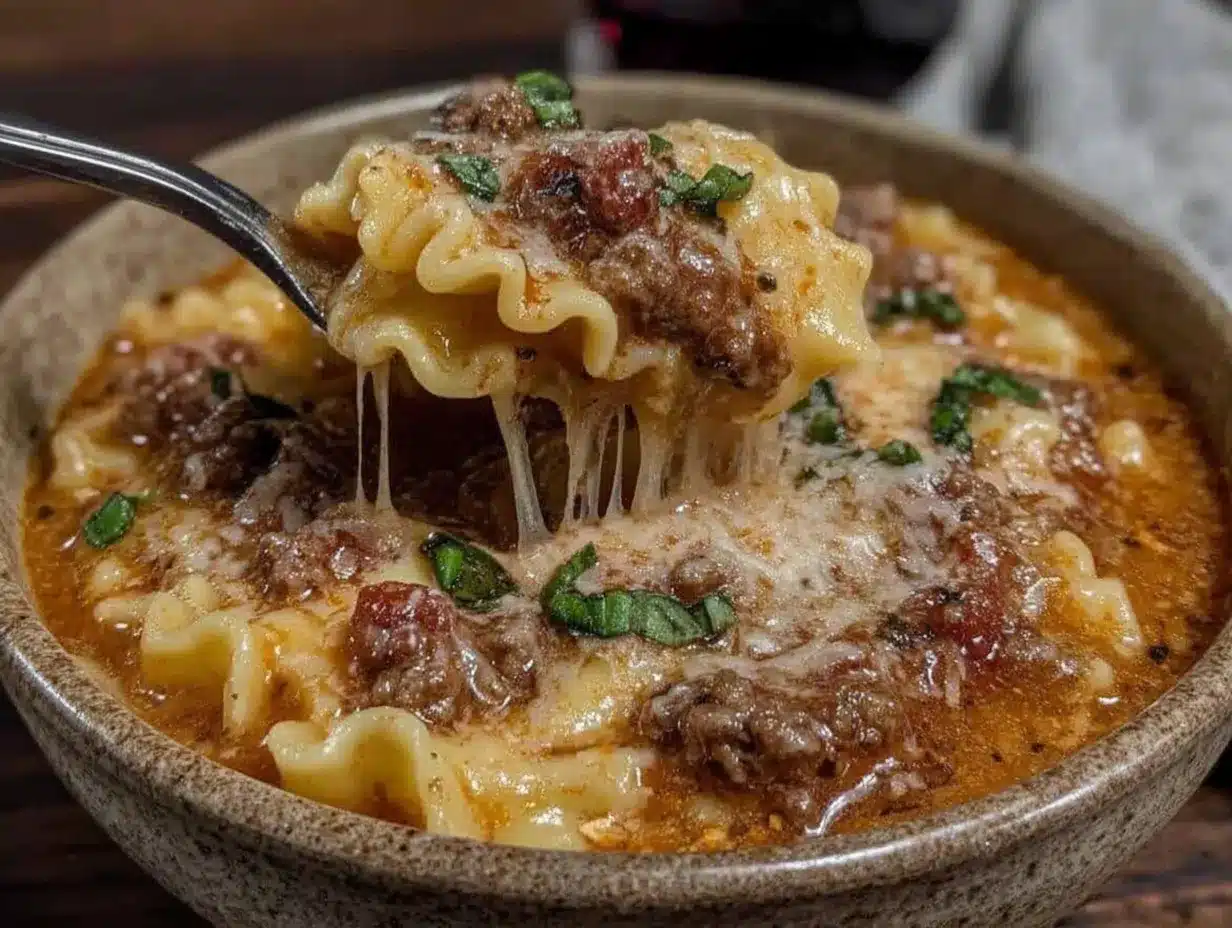
- Brown the sausage. Heat 1 tablespoon of olive oil in your large pot over medium-high heat. Add the Italian sausage (casings removed) and break it up with your wooden spoon. Let it cook undisturbed for about 3-4 minutes to get a good sear—this is where the flavor lives. Then stir and continue cooking until it’s browned and cooked through, about 5-6 minutes total. Use a slotted spoon to transfer the sausage to a plate, leaving about 1 tablespoon of the rendered fat in the pot. Don’t skip the sear step! The browned bits on the bottom of the pot are pure gold for flavor.
- Sauté the aromatics. Reduce the heat to medium. Add the diced onion to the pot and cook, stirring occasionally, until it’s soft and translucent—about 4-5 minutes. If the pot looks dry, add a splash of the chicken broth. Add the minced garlic, dried oregano, dried basil, and red pepper flakes (if using). Cook for 1 more minute until the garlic is fragrant. Your kitchen should smell incredible at this point.
- Build the broth. Pour in the 28-ounce can of crushed tomatoes and the 4 cups of low-sodium chicken broth. Add the 1 tablespoon of balsamic vinegar. Stir everything together, scraping up any browned bits from the bottom of the pot. Bring the soup to a boil over high heat.
- Cook the noodles. Once the soup is boiling, add the broken lasagna noodles. Reduce the heat to a simmer (medium-low), and cook for 10-12 minutes, stirring occasionally to prevent the noodles from sticking to the bottom. The noodles should be tender but still have a slight bite—they’ll continue to soften as the soup sits. Pro tip: If you’re meal prepping, cook the noodles separately and add them to individual bowls when serving. This keeps them from soaking up all the broth overnight.
- Add the spinach and sausage. Stir in the 3 cups of fresh spinach and the cooked sausage. Cook for 1-2 minutes, just until the spinach is wilted and bright green. Don’t overcook it—you want it tender, not mushy.
- Season and finish. Taste the soup and add salt and black pepper as needed. Remember that the Parmesan and sausage are already salty, so go easy at first. Stir in ¼ cup of the freshly grated Parmesan cheese until it’s melted and incorporated.
- Serve. Ladle the soup into bowls. Top each serving with a generous dollop of whole milk ricotta cheese and a sprinkle of the remaining Parmesan. Add a pinch of red pepper flakes or fresh basil if you’re feeling fancy. Serve hot.
Sensory cues: The soup should be thick and hearty—brothy enough to sip, but packed with noodles, sausage, and spinach. The color should be a deep, rusty red with flecks of green from the herbs and spinach. The ricotta on top should be cool and creamy against the hot soup—that contrast is everything.
Cooking Tips & Techniques
I’ve messed up this soup more times than I’ve gotten it right. Here are the lessons I learned the hard way so you don’t have to:
Don’t skip browning the sausage. I know it’s tempting to just dump everything in and let it simmer, but that deep, savory flavor comes from the Maillard reaction on the meat. Let it sit in the hot pot without stirring for a few minutes. You want those brown crusty bits on the bottom—they’re not burnt, they’re flavor bombs.
Watch your noodle-to-broth ratio. Lasagna noodles absorb a ton of liquid. If you add them and walk away, you might come back to a pot of pasta with a little tomato sauce. Stir every few minutes and check the consistency. If it gets too thick, add a splash of broth or water. If it’s too thin, let it simmer uncovered for a few extra minutes.
Taste as you go. This is the most important tip I can give you. Seasoning is personal. What tastes perfectly salted to me might be bland to you. Taste the broth before you add the noodles, taste it again after you add the Parmesan, and adjust accordingly. Your palate is the best tool in your kitchen.
Manage your heat. If you cook the soup on too high a heat, the noodles will cook unevenly and the bottom might scorch. Keep it at a gentle simmer—small bubbles, not a raging boil. If you see the noodles sticking, lower the heat and stir more frequently.
Let it rest. This soup thickens as it sits. That’s actually a good thing—the flavors meld and the noodles absorb the broth. If you’re serving it right away, it’ll be a bit more brothy. If you’re eating leftovers the next day, it’ll be more like a stew. Both versions are delicious, just different.
My biggest failure: I once used pre-shredded Parmesan because I was in a rush. It clumped up and never really melted—just floated around in sad little clumps. Never again. Freshly grated cheese is non-negotiable for this recipe.
Variations & Adaptations
One of the best things about this soup is how flexible it is. Here are some ways to make it your own:
Vegetarian version: Skip the sausage and use 1 can of drained chickpeas or 1 cup of cooked lentils instead. Add an extra teaspoon of fennel seeds and a pinch of smoked paprika to get that savory, slightly sweet flavor. Use vegetable broth instead of chicken. It won’t taste exactly the same, but it’ll still be delicious and hearty.
Gluten-free adaptation: Use gluten-free lasagna noodles or any gluten-free short pasta. Just be careful with the cooking time—gluten-free pasta tends to get mushy faster. I recommend cooking it separately and adding it to the bowls, then storing the soup and pasta separately for leftovers.
Dairy-free option: Omit the Parmesan and ricotta, or use dairy-free alternatives. Nutritional yeast adds a cheesy flavor without the dairy. A dollop of cashew cream on top is also lovely—it adds richness without the lactose.
Spicy kick: Use hot Italian sausage instead of mild, and double the red pepper flakes. Add a chopped jalapeño with the onions for extra heat. My husband loves this version—I call it “firefighter lasagna soup.”
Seasonal twist: In the summer, swap the spinach for fresh basil and add a handful of cherry tomatoes at the end. In the fall, stir in some roasted butternut squash cubes for sweetness. In the winter, add a handful of kale instead of spinach—it holds up better in longer simmering.
My personal favorite variation: I once added a tablespoon of tomato paste when sautéing the onions, and it deepened the flavor even more. Now I do it every time. It’s a small change, but it makes the broth taste like it’s been simmering all day.
Serving & Storage Suggestions
Serving: This soup is best served hot, straight from the pot. Ladle it into wide, shallow bowls so you can see all the good stuff—the noodles, the sausage, the spinach. Top each bowl with a generous dollop of ricotta and a shower of Parmesan. A sprinkle of fresh basil or parsley adds a pop of color and freshness.
What to serve with it: A crusty loaf of bread is mandatory—you’ll want something to soak up that broth. Garlic bread or a simple green salad with lemon vinaigrette are both excellent choices. For a drink, a glass of red wine (something light like a Chianti or Sangiovese) is perfect. Or just water—it’s that good on its own.
Storage: Let the soup cool completely before storing. Transfer it to an airtight container and refrigerate for up to 4 days. The noodles will continue to absorb the broth, so the soup will thicken significantly. When reheating, add a splash of broth or water to thin it back to your preferred consistency.
Freezing: This soup freezes well, but with one caveat—the noodles get a bit soft. If you’re planning to freeze it, I recommend cooking the noodles separately and adding them fresh when you reheat. To freeze, let the soup cool completely, then transfer it to freezer-safe containers (leaving about an inch of headspace for expansion). Freeze for up to 3 months. Thaw overnight in the refrigerator before reheating.
Reheating: Reheat the soup on the stovetop over medium-low heat, stirring occasionally. Add a splash of broth or water to loosen it up. You can also microwave individual portions in 30-second bursts, stirring in between. The ricotta topping should be added fresh—don’t microwave it on the soup or it’ll get grainy.
Flavor development: Honestly, this soup tastes even better the next day. The flavors have time to meld and deepen. The sausage gets more savory, the herbs bloom, and the broth becomes more cohesive. If you can resist eating it all the first night, the leftovers are a gift to your future self.
Nutritional Information & Benefits
Here’s an estimated nutritional breakdown per serving (based on 6 servings, with ricotta and Parmesan topping):
- Calories: 410
- Protein: 24g
- Fat: 18g
- Saturated Fat: 7g
- Carbohydrates: 38g
- Fiber: 5g
- Sugar: 9g
- Sodium: 780mg
Health benefits: This soup is packed with protein from the Italian sausage and the ricotta, which helps keep you full and satisfied. The spinach adds a good dose of iron, vitamin K, and antioxidants. The tomatoes are rich in lycopene, a powerful antioxidant that’s been linked to heart health. And the garlic and onions provide prebiotic fiber that supports gut health.
Dietary considerations: This recipe is naturally gluten-free if you use gluten-free pasta. It’s also relatively low in carbs compared to traditional lasagna (about 38g per serving vs. 50-60g for a slice of baked lasagna). If you’re watching your sodium, use low-sodium broth and go easy on the Parmesan.
My personal wellness perspective: I love that this soup feels indulgent but isn’t heavy. It’s the kind of meal that makes you feel good while you’re eating it and good afterward—no food coma, no regret. It’s proof that you don’t have to sacrifice flavor to eat well. You can have your lasagna and eat it too, you know?
Conclusion
This lighter one-pot lasagna soup is the recipe I keep coming back to, again and again. It’s the one I make when I’m tired, when I’m busy, when I need something that feels like a hug in a bowl. It’s forgiving—you can mess up the timing, use a different pasta, forget the balsamic vinegar, and it’ll still be delicious. That’s the kind of recipe worth keeping in your back pocket.
I hope you give it a try. And when you do, don’t be afraid to make it your own. Add more spinach. Use hot sausage. Double the garlic. Skip the ricotta if that’s not your thing. The best recipes are the ones that adapt to your life, not the other way around.
I’d love to hear how it turns out for you. Drop a comment below and let me know—did you add any twists? Did your family love it? Did you eat the leftovers cold from the fridge at midnight like I did? No judgment here. Happy cooking, friends!
Frequently Asked Questions
Can I use ground beef or turkey instead of Italian sausage?
Absolutely. Ground turkey or beef works well, but you’ll lose some of the seasoning that Italian sausage provides. To compensate, add 1 teaspoon of fennel seeds, ½ teaspoon of garlic powder, and a pinch of red pepper flakes when you cook the meat. It won’t be exactly the same, but it’ll still be delicious.
Why did my soup turn out too thick?
Lasagna noodles are thirsty—they absorb a lot of liquid as they cook. If your soup is too thick, simply stir in a splash of chicken broth or water until it reaches your desired consistency. Next time, you can also cook the noodles separately and add them to individual bowls to keep the broth from disappearing overnight.
Can I make this in a slow cooker or Instant Pot?
You can, but I prefer the stovetop version for the best texture. For a slow cooker, brown the sausage and sauté the onions first, then transfer everything (except the noodles, spinach, and cheese) to the slow cooker. Cook on low for 6-8 hours. Add the noodles in the last 20 minutes, then stir in the spinach and serve. For the Instant Pot, use the sauté function for the sausage and onions, then pressure cook on high for 5 minutes with a quick release. Add the noodles and cook for another 3-4 minutes on sauté mode.
How do I keep the noodles from getting mushy in leftovers?
The best trick is to cook the noodles separately and store them apart from the soup. When you’re ready to eat, reheat the soup and add the noodles. If you’ve already mixed them together and the noodles are soft, don’t worry—it’s still tasty, just a different texture. You can also use a sturdier pasta like rigatoni or fusilli, which holds up better to refrigeration.
Is this recipe freezer-friendly?
Yes, but with one catch: the noodles get soft after freezing and thawing. If you’re planning to freeze the soup, I recommend leaving the noodles out. Make the soup base, freeze it, and then cook fresh noodles when you reheat it. The soup base freezes beautifully for up to 3 months. Just thaw it overnight in the fridge, reheat it on the stove, and add freshly cooked noodles.
Pin This Recipe!
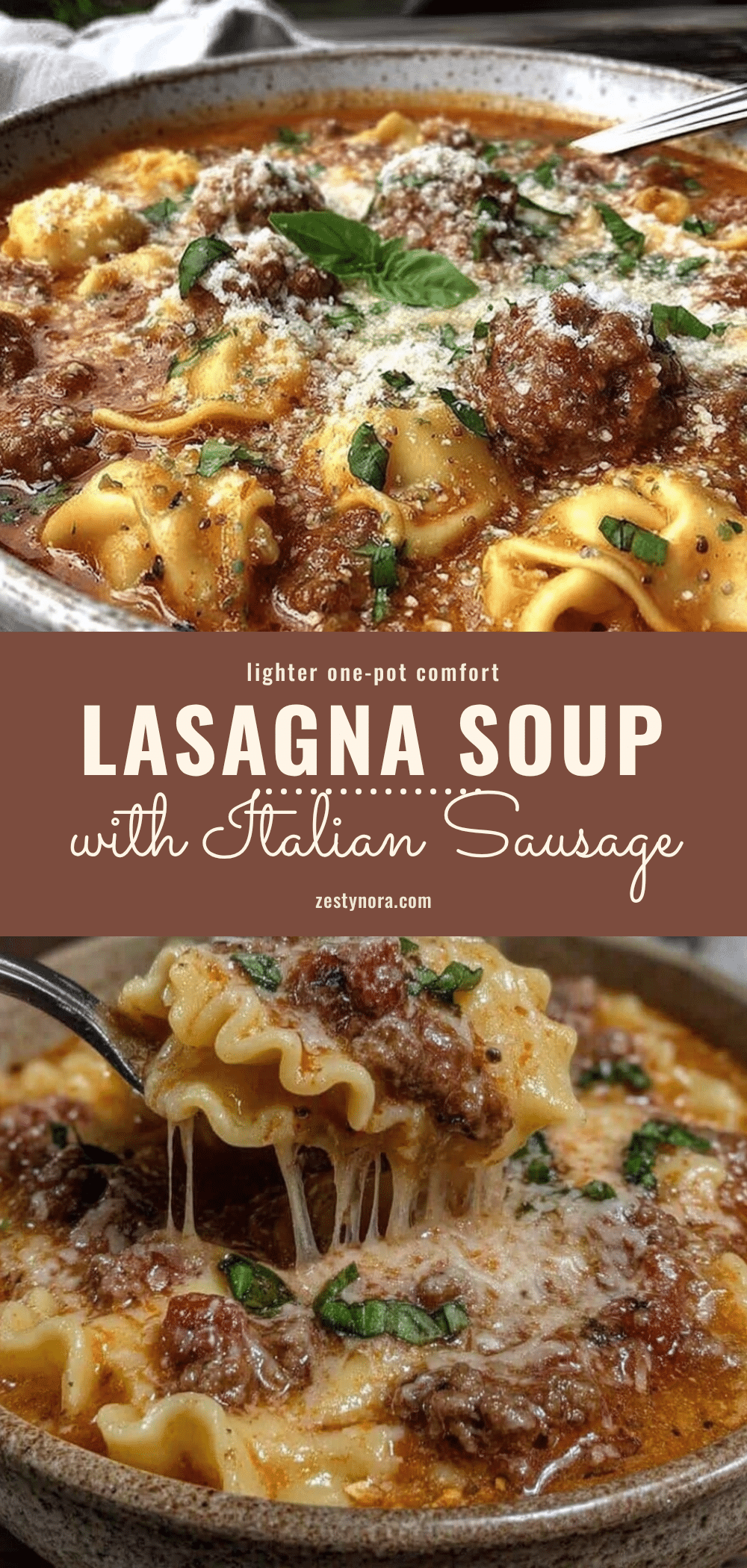
Easy One-Pot Lasagna Soup with Italian Sausage
A lighter, faster version of classic lasagna that comes together in about 40 minutes. This one-pot soup features Italian sausage, broken lasagna noodles, and fresh spinach in a rich tomato broth, topped with creamy ricotta and Parmesan.
- Prep Time: 10 minutes
- Cook Time: 30 minutes
- Total Time: 40 minutes
- Yield: 6 servings 1x
- Category: Main Course
- Cuisine: Italian
Ingredients
- 1 tablespoon olive oil
- 1 pound Italian sausage, casings removed
- 1 medium yellow onion, diced (about 1 cup)
- 4 cloves garlic, minced
- 1 teaspoon dried oregano
- 1 teaspoon dried basil
- ¼ teaspoon red pepper flakes (optional)
- 28 ounces canned crushed tomatoes (preferably San Marzano)
- 4 cups low-sodium chicken broth
- 1 tablespoon balsamic vinegar
- 8 ounces lasagna noodles, broken into 1-2 inch pieces (about 6–8 noodles)
- 3 cups fresh spinach (about 3 large handfuls)
- ½ cup freshly grated Parmesan cheese, divided
- ½ cup whole milk ricotta cheese
- Salt and black pepper to taste
Instructions
- Heat 1 tablespoon olive oil in a large Dutch oven or heavy-bottomed pot over medium-high heat. Add the Italian sausage (casings removed) and break it up with a wooden spoon. Let it cook undisturbed for 3-4 minutes to get a good sear, then stir and continue cooking until browned and cooked through, about 5-6 minutes total. Use a slotted spoon to transfer the sausage to a plate, leaving about 1 tablespoon of rendered fat in the pot.
- Reduce heat to medium. Add the diced onion to the pot and cook, stirring occasionally, until soft and translucent, about 4-5 minutes. If the pot looks dry, add a splash of chicken broth. Add the minced garlic, dried oregano, dried basil, and red pepper flakes (if using). Cook for 1 more minute until fragrant.
- Pour in the 28-ounce can of crushed tomatoes and 4 cups of low-sodium chicken broth. Add 1 tablespoon balsamic vinegar. Stir everything together, scraping up any browned bits from the bottom of the pot. Bring the soup to a boil over high heat.
- Once boiling, add the broken lasagna noodles. Reduce heat to a simmer (medium-low) and cook for 10-12 minutes, stirring occasionally to prevent sticking. The noodles should be tender but still have a slight bite.
- Stir in 3 cups fresh spinach and the cooked sausage. Cook for 1-2 minutes, just until the spinach is wilted and bright green.
- Taste the soup and add salt and black pepper as needed. Stir in ¼ cup of the freshly grated Parmesan cheese until melted and incorporated.
- Ladle the soup into bowls. Top each serving with a generous dollop of whole milk ricotta cheese and a sprinkle of the remaining Parmesan. Serve hot.
Notes
For meal prep, cook noodles separately and add to individual bowls when serving to prevent them from absorbing all the broth overnight. The soup thickens as it sits; add a splash of broth or water when reheating. Leftovers taste even better the next day.
Nutrition
- Serving Size: 1 bowl (about 1.5 cu
- Calories: 410
- Sugar: 9
- Sodium: 780
- Fat: 18
- Saturated Fat: 7
- Carbohydrates: 38
- Fiber: 5
- Protein: 24
Keywords: lasagna soup, one-pot, Italian sausage, comfort food, easy dinner, weeknight meal, spinach, ricotta