It was 11:47 PM on a random Tuesday in late November, and I had this overwhelming need for a gingerbread cookie. Not just any gingerbread cookie—the kind that bends before it breaks, the kind with a crackled, sugar-dusted top and a center that gives way like a soft hug. The problem? It was almost midnight, I was out of all-purpose flour, and my kitchen was a disaster zone of half-empty jars and questionable baking soda that I’d forgotten to replace. I didn’t have the energy for a grocery run, and honestly, the idea of a traditional cookie felt too predictable anyway. But I had a bag of cup-for-cup gluten-free flour blend that my friend swore by, a jar of blackstrap molasses that was dangerously close to its expiration date, and a stubborn, slightly unhinged determination that only shows up when you’re too tired to think straight. So, I started mixing. I figured if it flopped, no one would know but me and my sleepy cat, who was judging me from the counter. I used a little extra molasses than I normally would, because why not? And I threw in a pinch of black pepper because a late-night voice in my head said it would make the spice pop. Honestly, that weird little substitution—the pepper, the gluten-free flour I had zero faith in—turned into something I’ve been chasing ever since. Maybe you’ve been there, standing in a dim kitchen, making a mess and hoping for a miracle. This recipe is that miracle. It’s the one that made me believe gluten-free cookies could actually be chewy, bold, and worth staying up for.
Why You’ll Love This Recipe
Let’s be real—gluten-free cookies have a reputation for being dry, crumbly, or tasting like cardboard. These chewy molasses gingerbread cookies are none of those things. I’ve tested this recipe at least seven times (yes, seven—I have the sticky notes to prove it) to get the texture just right. They’re soft, bendy, and packed with that deep, spicy warmth you want from a gingerbread cookie, all without a speck of wheat flour.
- Quick & Easy: From bowl to oven in about 30 minutes, with zero chill time. Perfect for those last-minute holiday cravings or a Tuesday night baking spree.
- Simple Ingredients: You probably have most of these in your pantry right now—molasses, ginger, cinnamon, and a good gluten-free flour blend. No weird gums or expensive specialty items.
- Perfect for Hosting: These cookies are a showstopper on any dessert table. They hold their shape beautifully, so you can stack them on a platter without fear of crumbling in front of your guests.
- Crowd-Pleaser: I brought a batch to a holiday potluck last year, and three people asked for the recipe before I even set the plate down. Nobody guessed they were gluten-free.
- Unbelievably Chewy: The secret is a higher ratio of molasses to fat and a specific gluten-free flour blend. The result? A cookie that stays soft for days.
This isn’t just another gluten-free gingerbread recipe. It’s the one I make for dinner parties when I want to look like a pro without stressing. It’s the one that gets that quiet “wow” from guests who don’t even know they’re eating gluten-free.
What Ingredients You Will Need
This recipe relies on a handful of pantry staples to create that signature chewy texture and bold spice. The ingredients work together to mimic the structure of gluten while keeping everything simple and accessible.
For the Cookie Dough
- Unsalted butter, softened (1/2 cup / 113g) – Adds richness and helps create that tender crumb. I prefer using Kerrygold for its creamy texture, but any good-quality butter works.
- Light brown sugar, packed (3/4 cup / 150g) – Provides moisture and a subtle caramel note that pairs perfectly with the molasses.
- Blackstrap molasses (1/2 cup / 120ml) – This is the star of the show. It gives the cookies their deep color and intense, slightly bitter-sweet flavor. Don’t use mild molasses here—you want the bold stuff.
- Large egg, room temperature (1) – Helps bind the dough and adds structure. If you forget to take it out early, place it in warm water for 5 minutes.
- Vanilla extract (1 teaspoon) – Rounds out the spices and adds warmth. I use Nielsen-Massey for its pure flavor.
- Cup-for-cup gluten-free flour blend (2 1/4 cups / 315g) – This is crucial. I’ve had the best luck with King Arthur Measure for Measure or Bob’s Red Mill 1-to-1 Baking Flour. They already contain xanthan gum, which mimics gluten’s elasticity.
- Ground ginger (2 teaspoons) – The backbone of the gingerbread flavor. Freshly ground is always better, but store-bought works fine.
- Ground cinnamon (1 1/2 teaspoons) – Adds warmth and sweetness.
- Ground cloves (1/2 teaspoon) – A little goes a long way; it brings that classic holiday spice.
- Freshly ground black pepper (1/4 teaspoon) – Trust me on this one. It adds a subtle heat that makes the ginger pop without being spicy.
- Baking soda (1 teaspoon) – Helps the cookies spread slightly and gives them a tender bite.
- Salt (1/2 teaspoon) – Balances the sweetness.
For Rolling
- Granulated sugar (1/4 cup / 50g) – For coating the dough balls before baking. This gives the cookies their signature crackly, sparkly top.
Pro tip: If your gluten-free flour blend doesn’t contain xanthan gum, add 1/2 teaspoon. Otherwise, the cookies might spread too much and turn out flat.
Equipment Needed
- Electric hand mixer or stand mixer – A hand mixer is easier for small batches, but a stand mixer with the paddle attachment works beautifully too. I’ve used both, and honestly, a sturdy whisk and some elbow grease will also get the job done if you’re in a pinch.
- Large mixing bowls – At least two: one for wet ingredients, one for dry.
- Whisk – For combining the dry ingredients evenly.
- Rubber spatula – For scraping down the bowl and folding in the last bits of flour.
- Cookie scoop (about 1.5 tablespoons) – This ensures even-sized cookies. I use a #40 scoop from OXO; it’s budget-friendly and lasts forever.
- Baking sheets – Line them with parchment paper or silicone baking mats for easy cleanup and even baking.
- Cooling rack – Essential for letting the cookies set without getting soggy bottoms.
- Small bowl – For the granulated sugar coating.
Budget-friendly tip: Don’t have a cookie scoop? Use two spoons to portion the dough, then roll it into balls with your hands. It’s a little messier, but it works perfectly.
Preparation Method
- Preheat your oven to 350°F (175°C). Line two baking sheets with parchment paper or silicone mats. This is non-negotiable—the cookies will stick to bare metal.
- Cream the butter and brown sugar. In a large bowl, beat the softened butter and brown sugar together with an electric mixer on medium speed until light and fluffy, about 2-3 minutes. You’re looking for a pale, airy texture. Scrape down the sides of the bowl with a spatula halfway through.
- Add the wet ingredients. Beat in the molasses, egg, and vanilla extract until fully combined. The mixture might look slightly separated—that’s normal. It should smell like a warm hug at this point.
- Whisk the dry ingredients. In a separate bowl, whisk together the gluten-free flour, ground ginger, cinnamon, cloves, black pepper, baking soda, and salt. Make sure there are no lumps; gluten-free flours can be clumpy.
- Combine wet and dry. Gradually add the dry mixture to the wet mixture, mixing on low speed until just combined. Do not overmix—stop as soon as you no longer see streaks of flour. The dough will be thick, slightly sticky, and very fragrant.
- Portion the dough. Using a cookie scoop (about 1.5 tablespoons), scoop out portions of dough. Roll each portion into a smooth ball between your palms. If the dough is too sticky to handle, lightly grease your hands with a drop of oil.
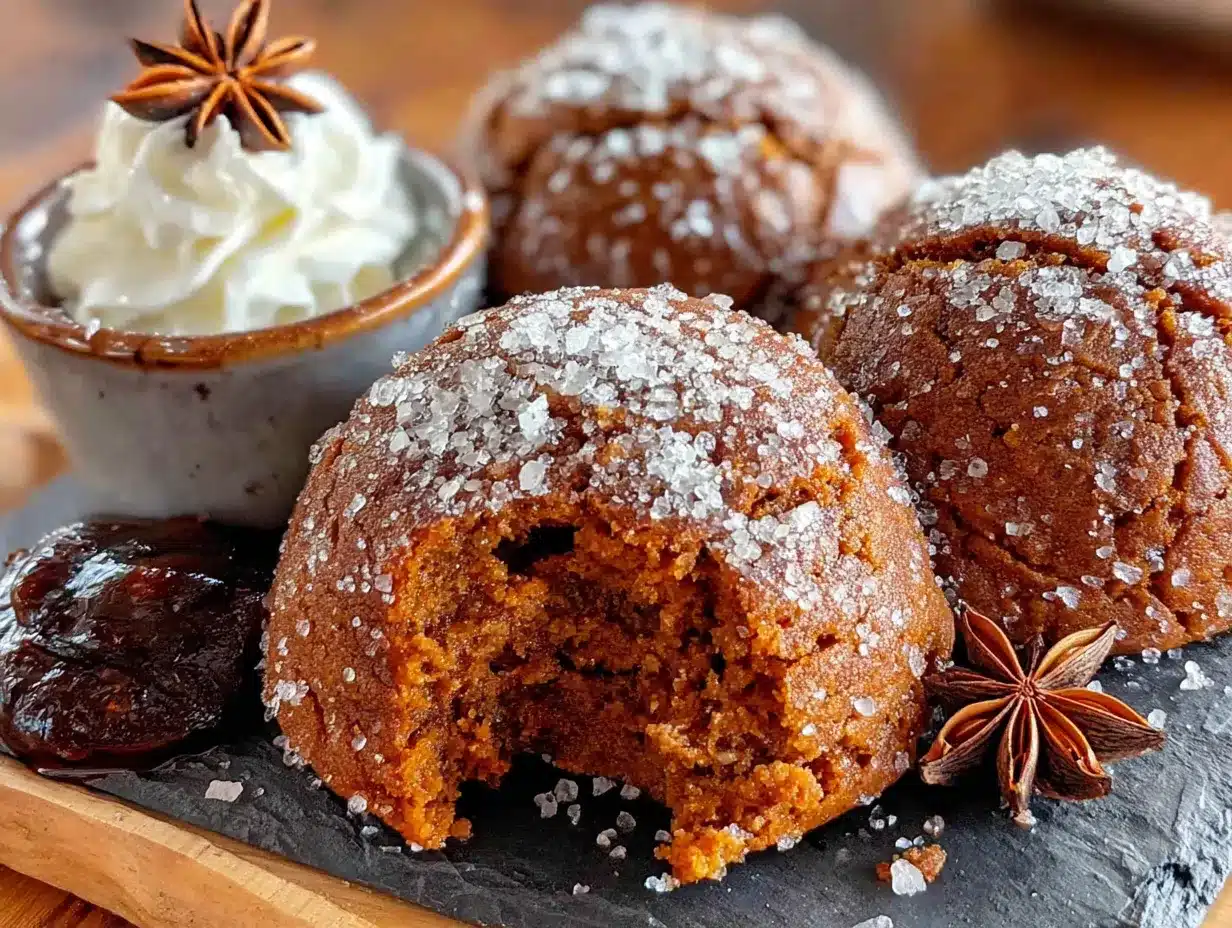
- Coat in sugar. Place the granulated sugar in a small bowl. Roll each dough ball in the sugar until fully coated. This step is what gives the cookies that beautiful crackled top and extra sweetness.
- Arrange on baking sheets. Place the sugar-coated dough balls on the prepared baking sheets, spacing them about 2 inches apart. They will spread slightly, but not too much—gluten-free dough tends to hold its shape well.
- Bake for 10-12 minutes. The cookies are done when the edges are set and the tops are crackled and puffed. The centers will look slightly soft and underdone—that’s exactly what you want. For chewier cookies, bake for 10 minutes. For a slightly firmer bite, go for 12 minutes.
- Cool on the baking sheet. Let the cookies rest on the hot baking sheet for 5 minutes. This allows them to finish setting up without overbaking. Then transfer them to a wire rack to cool completely. Don’t skip this step—moving them too early will cause them to fall apart.
Sensory cue: When the cookies come out of the oven, they should look puffed and matte on top, with a network of fine cracks. The edges will be a deep, dark brown, and the kitchen will smell like a winter spice market.
Cooking Tips & Techniques
I’ve made a lot of mistakes with gluten-free cookies, and I’m here to save you the trouble. Here’s what I’ve learned the hard way.
Don’t overmix the dough. Gluten-free flour doesn’t develop gluten like wheat flour, but it can still get tough if you beat it too much. Mix until the flour just disappears, then stop. I once kept mixing “just to be safe,” and the cookies came out dense and dry.
Use room temperature ingredients. Cold butter won’t cream properly with the sugar, and a cold egg can seize the dough. If you’re in a rush, cut the butter into small cubes and let it sit for 10 minutes. Place the egg in a bowl of warm water for 5 minutes.
Don’t skip the black pepper. I know it sounds weird, but that tiny pinch adds a background warmth that makes the ginger and cinnamon taste bolder. It’s not spicy—it’s just… more. My first test batch without it was flat and one-dimensional.
Bake one sheet at a time. If you put both sheets in the oven at once, the heat won’t circulate properly, and the cookies will bake unevenly. Place one sheet on the middle rack and keep the other in the fridge. Swap them halfway through if you’re in a rush.
Let them cool completely. Gluten-free cookies are more delicate when warm. If you try to move them off the baking sheet too soon, they’ll crumble. Trust the 5-minute rest on the sheet—it’s the difference between a perfect cookie and a sad pile of crumbs.
For consistent sizing, weigh your dough balls. Each one should be about 30 grams (roughly 1 ounce). This ensures they all bake in the same amount of time.
Variations & Adaptations
One of the best things about this recipe is how flexible it is. Here are a few variations I’ve tried and loved.
Vegan version: Swap the butter for vegan butter (I like Miyoko’s or Earth Balance) and replace the egg with a flax egg (1 tablespoon ground flaxseed mixed with 3 tablespoons water, let sit for 5 minutes). The cookies will be slightly less tender but still chewy and delicious.
Spice it up: Add 1/2 teaspoon of cardamom or allspice for a more complex flavor profile. I tried this last Christmas, and it gave the cookies a subtle floral note that paired beautifully with the molasses.
Chocolate-dipped: Once the cookies are completely cool, dip half of each cookie in melted dark chocolate (about 70% cocoa). Let them set on parchment paper. It adds a rich, slightly bitter contrast that makes them feel extra fancy for a dinner party.
Gluten-free flour swap: If you don’t have a cup-for-cup blend, you can make your own by mixing 2 cups white rice flour, 2/3 cup potato starch, and 1/3 cup tapioca flour. Add 1 teaspoon xanthan gum. I’ve used this mix in a pinch, and it worked surprisingly well.
Lower sugar option: Reduce the brown sugar to 1/2 cup (100g) and skip the sugar coating. The cookies will be less sweet and slightly less chewy, but they’ll still have that deep molasses flavor.
Serving & Storage Suggestions
These cookies are best served at room temperature, straight from the cooling rack. The chewy centers and crackled tops are at their peak within the first 24 hours. If you’re hosting a gathering, arrange them on a large wooden board or a festive platter. They look stunning next to a pile of fresh cranberries or sprigs of rosemary for a pop of color.
What to serve alongside: These cookies pair beautifully with a warm cup of chai, spiced apple cider, or a bold black coffee. For a dessert board, add dark chocolate bark, candied ginger, and a bowl of whipped cream or vanilla ice cream for dipping.
Storage: Place the cookies in an airtight container at room temperature. They will stay soft and chewy for up to 5 days. To keep them extra moist, add a slice of bread to the container—the cookies will absorb the moisture from the bread. Replace the bread slice every other day.
Freezing: You can freeze the baked cookies for up to 3 months. Layer them between sheets of parchment paper in a freezer-safe container. To thaw, leave them at room temperature for about 30 minutes. You can also freeze the unbaked dough balls (coated in sugar) on a baking sheet, then transfer them to a freezer bag. Bake straight from frozen, adding 1-2 minutes to the baking time.
Reheating: Pop a cookie in the microwave for 10 seconds for that just-baked warmth. Or place them on a baking sheet in a 300°F (150°C) oven for 5 minutes to crisp up the edges slightly.
Flavor development: Honestly, these cookies taste even better on day two. The spices mellow and meld together, and the texture becomes even more tender. If you can resist eating them all on day one, you’re in for a treat.
Nutritional Information & Benefits
Per cookie (based on 24 cookies): Approximately 140 calories, 5g total fat, 22g carbohydrates, 1g fiber, 12g sugar, 2g protein.
These cookies are gluten-free, making them a great option for those with celiac disease or gluten sensitivity. The blackstrap molasses is a surprising source of iron, calcium, and magnesium—so you can feel a tiny bit virtuous while indulging. The ginger and cinnamon also have anti-inflammatory properties, which is a nice bonus during the holiday season when we’re all eating a little too much.
Dietary considerations: As written, this recipe contains dairy (butter) and eggs. For a dairy-free version, use vegan butter. For an egg-free version, use a flax egg. The recipe is naturally nut-free, but check your gluten-free flour blend for any nut-based ingredients if you have allergies.
My take: I love that these cookies let me enjoy a classic holiday treat without the gluten crash. They’re indulgent enough to feel like a real dessert, but they don’t leave me feeling heavy or sluggish. That’s a win in my book.
Conclusion
These chewy molasses gingerbread cookies are the real deal. They’re bold, spicy, and perfectly tender—everything a gluten-free cookie should be but rarely is. Whether you’re baking for a holiday party, a cozy night in, or just because you had a late-night craving (I see you), this recipe delivers every single time. I love that I can make them ahead, freeze them, and pull them out when I need a quick dessert that impresses without stress.
Now I want to hear from you. Did you try these cookies? Did you add your own twist? Drop a comment below and let me know how they turned out. And if you loved them, share this recipe with a friend who needs a good gluten-free cookie in their life. Happy baking!
Frequently Asked Questions
Can I use mild molasses instead of blackstrap?
Yes, but the flavor will be sweeter and less intense. Blackstrap molasses gives these cookies their signature deep, slightly bitter-sweet taste. If you use mild molasses, reduce the brown sugar by 2 tablespoons to balance the sweetness.
Why are my cookies spreading too much?
This usually happens if the dough is too warm or the gluten-free flour blend doesn’t have enough xanthan gum. Chill the dough balls for 15 minutes before baking, or add 1/2 teaspoon xanthan gum to your flour blend.
Can I make these cookies dairy-free?
Absolutely. Replace the butter with an equal amount of vegan butter. I recommend Miyoko’s or Earth Balance. The texture will be slightly less rich, but they’ll still be chewy and delicious.
How do I get the crackly top?
The crackly top comes from rolling the dough balls in granulated sugar before baking. Make sure they’re fully coated, and don’t skip the 5-minute rest on the baking sheet after baking. That resting time allows the cracks to set.
Can I freeze the dough?
Yes! Roll the dough into balls, coat them in sugar, and place them on a baking sheet in the freezer until solid. Transfer to a freezer bag. Bake straight from frozen at 350°F (175°C) for 12-13 minutes. No need to thaw.
Pin This Recipe!
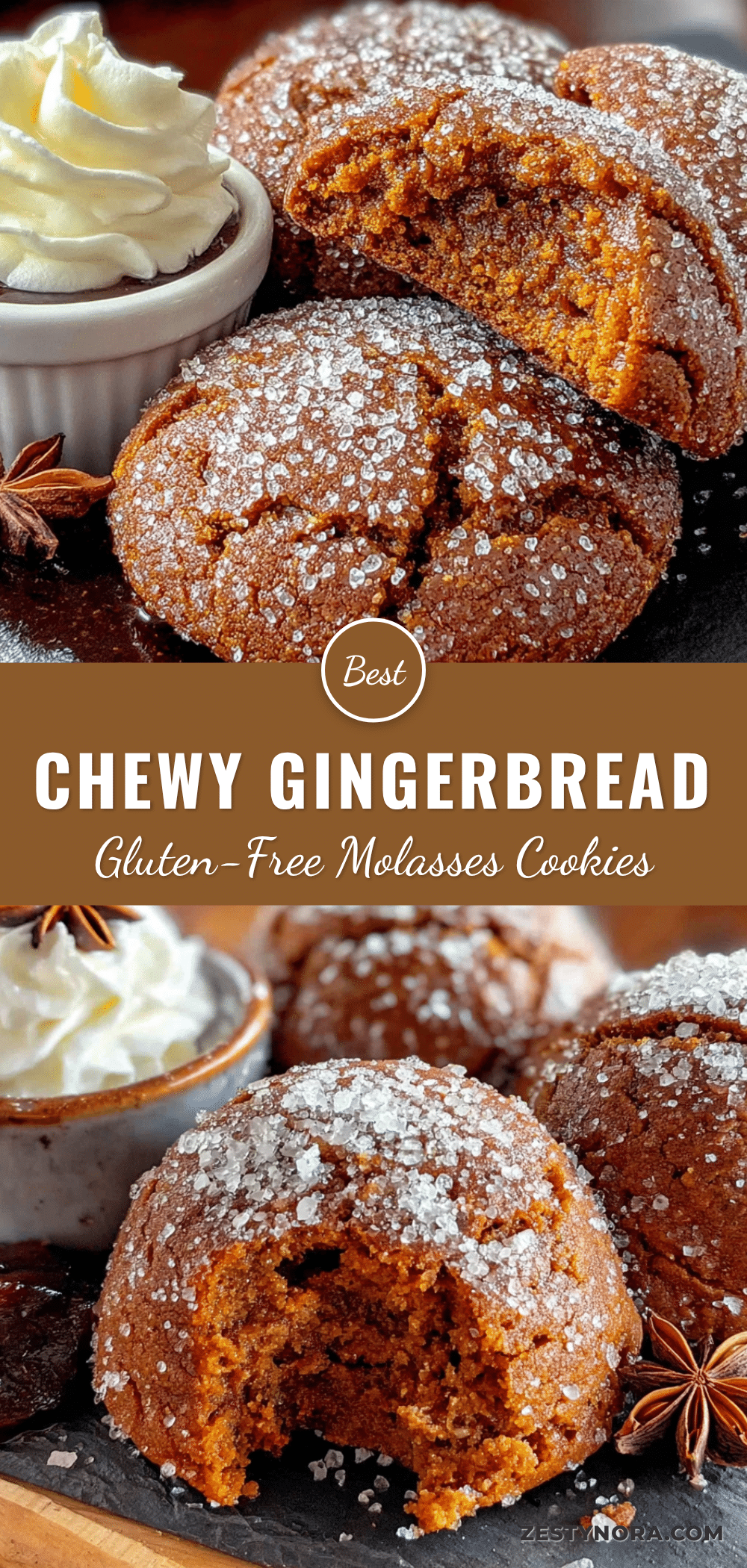
Best Chewy Molasses Gingerbread Cookies (Gluten-Free)
These chewy molasses gingerbread cookies are soft, bendy, and packed with deep, spicy warmth, all without a speck of wheat flour. They’re quick to make, use simple ingredients, and are a crowd-pleaser that nobody will guess is gluten-free.
- Prep Time: 15 minutes
- Cook Time: 12 minutes
- Total Time: 27 minutes
- Yield: 24 servings 1x
- Category: Dessert
- Cuisine: American
Ingredients
- 1/2 cup (113g) unsalted butter, softened
- 3/4 cup (150g) light brown sugar, packed
- 1/2 cup (120ml) blackstrap molasses
- 1 large egg, room temperature
- 1 teaspoon vanilla extract
- 2 1/4 cups (315g) cup-for-cup gluten-free flour blend (e.g., King Arthur Measure for Measure or Bob’s Red Mill 1-to-1 Baking Flour)
- 2 teaspoons ground ginger
- 1 1/2 teaspoons ground cinnamon
- 1/2 teaspoon ground cloves
- 1/4 teaspoon freshly ground black pepper
- 1 teaspoon baking soda
- 1/2 teaspoon salt
- 1/4 cup (50g) granulated sugar (for rolling)
Instructions
- Preheat your oven to 350°F (175°C). Line two baking sheets with parchment paper or silicone mats.
- In a large bowl, beat the softened butter and brown sugar together with an electric mixer on medium speed until light and fluffy, about 2-3 minutes. Scrape down the sides of the bowl halfway through.
- Beat in the molasses, egg, and vanilla extract until fully combined.
- In a separate bowl, whisk together the gluten-free flour, ground ginger, cinnamon, cloves, black pepper, baking soda, and salt until no lumps remain.
- Gradually add the dry mixture to the wet mixture, mixing on low speed until just combined. Do not overmix. The dough will be thick, slightly sticky, and fragrant.
- Using a cookie scoop (about 1.5 tablespoons), scoop out portions of dough. Roll each portion into a smooth ball between your palms. If the dough is too sticky, lightly grease your hands with a drop of oil.
- Place the granulated sugar in a small bowl. Roll each dough ball in the sugar until fully coated.
- Place the sugar-coated dough balls on the prepared baking sheets, spacing them about 2 inches apart.
- Bake for 10-12 minutes. The cookies are done when the edges are set and the tops are crackled and puffed. For chewier cookies, bake for 10 minutes; for a firmer bite, go for 12 minutes.
- Let the cookies rest on the hot baking sheet for 5 minutes, then transfer them to a wire rack to cool completely.
Notes
If your gluten-free flour blend doesn’t contain xanthan gum, add 1/2 teaspoon. Don’t skip the black pepper—it adds a subtle heat that makes the ginger pop. For consistent sizing, weigh dough balls to about 30 grams each. These cookies taste even better on day two as the spices meld.
Nutrition
- Serving Size: 1 cookie
- Calories: 140
- Sugar: 12
- Sodium: 120
- Fat: 5
- Saturated Fat: 3
- Carbohydrates: 22
- Fiber: 1
- Protein: 2
Keywords: gluten-free gingerbread cookies, chewy molasses cookies, gluten-free Christmas cookies, gingerbread cookies, molasses cookies