I used to think meatloaf was just a weird block of ground beef that showed up at potlucks, all dry and sorry-looking. Honestly, I avoided it for years. Then my neighbor, a retired butcher named Frank, watched me fumbling with a package of ground beef in my driveway one Tuesday afternoon. He didn’t say anything at first. He just shook his head, smiled, and walked over. “You’re overthinking it,” he said. “Come by tomorrow. I’ll show you how my mama made it.”
Frank didn’t give me a formal lesson. We just stood in his tiny kitchen, and he talked while he worked. He told me about his mother’s bakery in Ohio and how she’d use a pinch of this and a handful of that. The recipe he shared wasn’t written down anywhere. It was in his hands. The conversation that came with it—about his childhood, the smell of his mother’s kitchen, and why a good meatloaf shouldn’t be complicated—was just as important as the ingredients. I adapted it a little over time, swapping in a few things, but the soul of it is all Frank. Maybe you’ve been there—someone casually changes how you cook something forever, and you don’t even realize it until later.
This old-fashioned meatloaf with brown sugar glaze is the one that finally made me get it. It’s tender, not dry. It’s savory, but that sweet, sticky glaze on top is pure magic. The texture is perfect, and it slices without falling apart. I keep making it because it reminds me that the best recipes aren’t fancy. They’re the ones someone took the time to show you, with a story attached.
Why You’ll Love This Recipe
Let’s be honest—meatloaf has a bad reputation. It’s either a dry, flavorless brick or a greasy mess. This recipe is neither. I’ve tested it more times than I can count, tweaking the ratio of meat to binder, the temperature, the glaze thickness. It’s been family-approved by picky eaters and chef-tested by a friend who runs a catering company. Here’s why it works:
- Quick & Easy: Comes together in about 15 minutes of prep. The oven does the rest. Perfect for a busy weeknight when you want something that feels like a real meal without the stress.
- Simple Ingredients: No weird stuff. You probably have most of this in your pantry right now. Ground beef, breadcrumbs, eggs, ketchup—the usual suspects.
- Perfect for a Comfort Food Dinner: Great for Sunday suppers, rainy days, or when you just need a hug in food form. It also makes killer leftovers.
- Crowd-Pleaser: Kids love the sweet glaze. Adults love the savory, juicy meat. It’s the rare dish that makes everyone at the table happy.
- Unbelievably Delicious: The combination of the tangy-sweet brown sugar glaze with the seasoned, tender meatloaf is next-level comfort food. You’ll close your eyes after the first bite.
What makes this different from every other meatloaf recipe? It’s the technique. I use a panade (a paste of breadcrumbs and milk) to keep the meat incredibly moist. I also don’t overmix the meat, which is the number one mistake people make. The glaze isn’t just a topping—it bakes into the top, creating a caramelized crust that’s slightly sticky and deeply flavorful. It’s comfort food reimagined: familiar, but better than you remember.
What Ingredients You Will Need
This recipe uses simple, wholesome ingredients to deliver big flavor. Most are pantry staples, which is exactly how a good weeknight dinner should be. Here’s what you’ll need, grouped by function.
For the Meatloaf
- Ground beef (2 lbs, 900g): I recommend 80/20 (80% lean, 20% fat). The fat is essential for moisture and flavor. Too lean, and your meatloaf will be dry. I usually buy ground chuck from a local butcher, but any good quality 80/20 will work.
- Breadcrumbs (1 cup, 120g): Plain, unseasoned breadcrumbs are best. You can use panko for a lighter texture, but I prefer regular for a more traditional, dense loaf. I’ve used store brand and it works fine.
- Milk (½ cup, 120ml): Whole milk is ideal for the panade, but 2% works too. The milk softens the breadcrumbs, which keeps the meat tender. (Use unsweetened oat milk if you need a dairy-free option.)
- Yellow onion (1 medium, finely chopped, about 1 cup): Onion adds moisture and sweetness. I like to grate half of it on a box grater for even more moisture distribution, then finely chop the rest for texture.
- Garlic (3 cloves, minced): Fresh garlic is non-negotiable here. Don’t use the jarred stuff. It adds a punchy, aromatic base.
- Large eggs (2): They bind everything together. Make sure they’re at room temperature so they mix in evenly.
- Worcestershire sauce (2 tablespoons): This adds that deep, savory umami flavor. Lea & Perrins is my go-to brand.
- Ketchup (¼ cup, 60ml): For the meatloaf itself, ketchup adds a touch of sweetness and acidity. I use Heinz.
- Dried thyme (1 teaspoon): Earthy and slightly floral. It pairs beautifully with beef.
- Dried parsley (1 teaspoon): Adds a fresh, clean note.
- Salt (1½ teaspoons): Don’t skimp on salt. It’s what brings all the flavors together.
- Black pepper (½ teaspoon): Freshly ground, if you can.
For the Brown Sugar Glaze
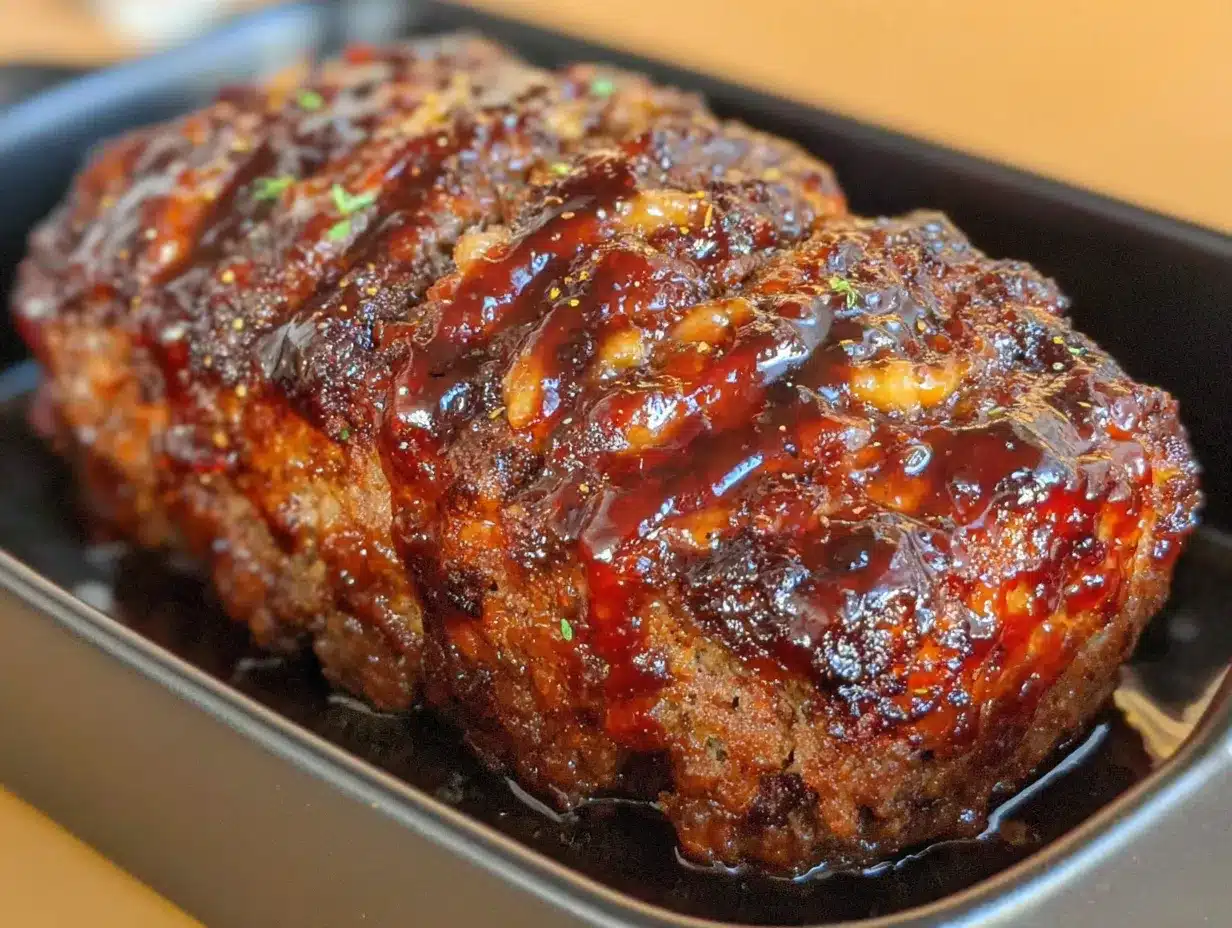
- Ketchup (½ cup, 120ml): The base of the glaze.
- Brown sugar (⅓ cup, packed, 70g): Light or dark brown sugar works. Dark brown sugar will give a deeper, more molasses-like flavor. I use light brown for a classic sweetness.
- Apple cider vinegar (1 tablespoon): This cuts the sweetness and adds a tangy kick. (You can substitute white vinegar or lemon juice.)
- Worcestershire sauce (1 teaspoon): A little more umami for the glaze.
- Garlic powder (½ teaspoon): Not the same as fresh, but it dissolves perfectly into the glaze.
Equipment Needed
You don’t need a lot of fancy gear for this recipe. Here’s what I use:
- Large mixing bowl: A standard 4-quart bowl is perfect.
- 9×5-inch loaf pan: This is the classic shape. I have a glass one that I’ve used for years. A metal pan will work too, but it might brown the bottom a bit more.
- Baking sheet: Place the loaf pan on a baking sheet to catch any drips. Trust me, you don’t want glaze burning on the bottom of your oven.
- Small bowl: For mixing the glaze.
- Whisk or fork: For the glaze.
- Chef’s knife and cutting board: For the onion and garlic.
- Measuring cups and spoons: Standard set.
- Meat thermometer: This is actually my most important tool. An instant-read thermometer takes the guesswork out of meatloaf. No more slicing into a raw center or a dry, overcooked log. I use a Thermapen, but any digital thermometer will do.
If you don’t have a loaf pan, you can free-form the meatloaf on a lined baking sheet. It will cook a little faster, so keep an eye on it. A budget-friendly tip: a disposable aluminum loaf pan from the grocery store works perfectly.
Preparation Method
Let’s get cooking. This is the part where the magic happens. Take your time, and don’t rush the steps.
- Preheat your oven to 350°F (175°C). Place your loaf pan on a baking sheet lined with foil or parchment paper for easy cleanup.
- Make the panade. In your large mixing bowl, combine the breadcrumbs and milk. Stir them together with a fork until the breadcrumbs are completely soaked. Let this sit for 5 minutes. It will look like a thick paste. This is your secret weapon against dry meatloaf.
- Cook the aromatics. While the panade sits, heat a small skillet over medium heat. Add a drizzle of olive oil. Sauté the finely chopped onion for about 3-4 minutes, until it’s soft and translucent. Add the minced garlic and cook for another 30 seconds, until fragrant. Let this cool for a minute. (Why cook them first? Raw onion can release too much water and make the meatloaf soggy. Sautéing them concentrates the flavor.)
- Combine the meatloaf mixture. To the bowl with the panade, add the cooked onion and garlic, eggs, Worcestershire sauce, ketchup, thyme, parsley, salt, and pepper. Mix everything with a fork until it’s well combined. It should look like a thick, wet paste.
- Add the ground beef. Add the ground beef to the bowl. Now, here’s the most important part: do not overmix. Use your hands (it’s the best way) and gently mix everything together until the ingredients are just incorporated. You should still see small flecks of the panade mixture. If you overmix, the meat will become tough and dense. I learned this the hard way after a few hockey-puck meatloaves.
- Shape the loaf. Transfer the meat mixture to your loaf pan. Gently press it into an even shape. Don’t pack it down hard—just smooth the top. The mixture should be mounded slightly in the center.
- Make the glaze. In your small bowl, whisk together the ketchup, packed brown sugar, apple cider vinegar, Worcestershire sauce, and garlic powder. It should be smooth and glossy.
- Apply the glaze. Spread about half of the glaze evenly over the top of the meatloaf. Reserve the rest for later. Use a spoon or a pastry brush.
- Bake the meatloaf. Place the baking sheet with the loaf pan in the preheated oven. Bake for 45 minutes.
- Apply the second layer of glaze. After 45 minutes, carefully remove the pan from the oven. Spread the remaining glaze over the top. This second layer is what creates that gorgeous, caramelized crust.
- Finish baking. Return the meatloaf to the oven and bake for another 15-20 minutes. The total baking time is about 60-65 minutes. The internal temperature should reach 160°F (71°C) when measured with your meat thermometer inserted into the center of the loaf. The glaze will be bubbling and dark, and the edges will be slightly caramelized.
- Rest the meatloaf. This is a crucial step. Remove the meatloaf from the oven and let it rest in the pan for 10-15 minutes. Don’t skip this. Resting allows the juices to redistribute throughout the loaf. If you slice it immediately, it will fall apart and be dry. The internal temperature will also rise a few degrees during this time.
- Slice and serve. After resting, carefully lift the meatloaf out of the pan using a spatula. Transfer it to a cutting board. Slice into 1-inch thick pieces. Spoon any remaining glaze from the pan over the slices.
Cooking Tips & Techniques
I’ve made this recipe probably thirty times, and I’ve messed it up plenty. Here’s what I’ve learned so you don’t have to.
Don’t skip the panade. I know it seems like an extra step, but it’s the single most important thing for a moist meatloaf. The breadcrumbs absorb the milk and create a gel that traps moisture in the meat as it cooks. Without it, you’re just baking a dry brick of beef.
Use a light hand. When you mix the meat, pretend you’re handling a delicate pastry. Overworking the proteins in the ground beef makes it tough. I use a gentle folding motion, almost like I’m combining a cake batter. Stop the moment everything is just combined.
Check the temperature early. Ovens vary wildly. Start checking your meatloaf’s internal temperature at the 50-minute mark. You’re looking for 160°F. If it’s already there, don’t bake it for the full 65 minutes. Every oven is a liar, including mine.
Let it rest. I cannot stress this enough. The first time I made this, I was so excited I sliced into it right away. It crumbled into a sad pile of meat. The juices ran out all over the cutting board. Now I set a timer for 15 minutes and walk away. It’s the hardest part of the recipe, but it’s worth it.
Line your pan. I forgot to line my baking sheet once, and the glaze dripped onto the pan and burned into a black, sticky mess. It took an hour to scrub off. Foil or parchment paper is your friend.
Variations & Adaptations
This recipe is a great base. Here are a few ways I’ve changed it up depending on what I have on hand or who I’m feeding.
Turkey Meatloaf: Swap the ground beef for ground turkey (93/7 is best). Turkey is leaner, so add 2 tablespoons of olive oil to the mixture to keep it moist. The cooking time might be slightly shorter, so check the temperature at 50 minutes.
Gluten-Free: Use gluten-free breadcrumbs or crushed gluten-free crackers (like Schar or Mary’s Gone Crackers). The panade works the same way. Just make sure your Worcestershire sauce is also gluten-free (Lea & Perrins is).
Spicy Kick: Add 1-2 tablespoons of sriracha or a teaspoon of red pepper flakes to the meat mixture. For the glaze, swap the apple cider vinegar for a tablespoon of your favorite hot sauce. I did this for a game day party, and it was a hit.
Cheese-Stuffed: This is my personal favorite variation. After you shape the meatloaf in the pan, create a trench down the center. Fill it with ½ cup of shredded cheddar cheese or crumbled feta. Then cover it with the remaining meat mixture. The cheese melts into a gooey surprise in the middle.
Mini Meatloaves: For faster cooking or portion control, divide the mixture into a 12-cup muffin tin. Press the mixture into each cup. Bake for about 20-25 minutes, then glaze and bake for another 5-10 minutes. They’re perfect for meal prep.
Serving & Storage Suggestions
This meatloaf is best served warm, right after it’s rested. But it’s also fantastic the next day.
Serving: I love this with classic sides. Mashed potatoes are the obvious choice—the creamy texture is perfect against the savory meat and sweet glaze. A side of steamed green beans or roasted carrots adds a nice pop of color and freshness. For a truly nostalgic meal, serve it with a side of creamed corn. The flavors get even better after a day in the fridge, almost like a good stew.
Storage: Let the meatloaf cool completely. Wrap it tightly in plastic wrap or aluminum foil, or store it in an airtight container. It will keep in the refrigerator for up to 4 days. The glaze might get a little sticky on the surface, but it still tastes great.
Freezing: You can freeze the whole cooked meatloaf or individual slices. Wrap it tightly in a layer of plastic wrap, then a layer of foil. It will keep for up to 3 months. Thaw it overnight in the refrigerator before reheating.
Reheating: The best way to reheat is in the oven. Place slices on a baking sheet, cover loosely with foil, and warm at 325°F for 10-15 minutes. You can also microwave individual slices, but the texture will be softer. I’ve been known to eat cold meatloaf sandwiches on toast with a little extra ketchup—don’t judge me.
Nutritional Information & Benefits
This is comfort food, so it’s not a health food. But it’s made with real ingredients, which is something.
Per serving (1 slice, based on 8 servings): Approximately 380 calories, 22g fat, 18g carbohydrates, 28g protein. These are estimates and will vary based on the exact ingredients you use.
The ground beef provides a good amount of protein and iron. The eggs add choline, which is good for brain health. The onions and garlic are both prebiotic and support gut health. By using 80/20 beef, you’re getting a moderate amount of fat, which helps with satiety. If you’re watching your sodium, you can use a low-sodium ketchup and reduce the added salt.
This recipe is naturally gluten-free if you use gluten-free breadcrumbs. It’s also nut-free and soy-free (check your Worcestershire sauce). It’s not low-carb, but you can serve it with cauliflower mash to lighten it up.
Conclusion
This old-fashioned meatloaf with brown sugar glaze is the kind of recipe that earns a permanent spot in your rotation. It’s simple, reliable, and deeply satisfying. It’s the meal you make when you want to feel like you’ve got it all together, even on a Tuesday night. Frank’s mother’s recipe has traveled a long way, and I’m glad it landed here.
I’d love to hear how it turns out for you. Did you add a twist? Did your kids ask for seconds? Let me know in the comments below. And if you share a photo on Pinterest or Instagram, tag me—I always love seeing your creations. Go ahead, make a mess, and enjoy every bite. You’ve got this.
Frequently Asked Questions
Can I make this meatloaf ahead of time?
Absolutely. You can assemble the meatloaf in the pan, cover it, and refrigerate it for up to 24 hours before baking. You might need to add 10-15 minutes to the baking time since it’s starting from cold. Just don’t add the glaze until you’re ready to bake.
Why did my meatloaf fall apart?
It probably didn’t rest long enough, or it was too lean. The panade and eggs are the binders. If you used very lean ground beef (like 93/7), there isn’t enough fat to hold it together. Also, make sure you let it rest for a full 10-15 minutes after baking.
Can I use ground pork or a mix of meats?
Yes! A mix of ground beef and ground pork (like 1 lb beef and 1 lb pork) is traditional in many recipes and adds incredible flavor and moisture. You can also use ground veal. Just keep the total weight at 2 pounds.
How do I know when the meatloaf is done without a thermometer?
Without a thermometer, it’s trickier. The meatloaf should be pulling away from the sides of the pan. The juices should run clear, not pink. A knife inserted into the center should come out hot to the touch. But honestly, a $10 thermometer is a much better investment than a dry meatloaf.
Can I double this recipe?
Yes, but you’ll need two loaf pans. Don’t try to cram 4 pounds of meat into one pan—it won’t cook evenly. Bake them on the same rack, and rotate the pans halfway through. The cooking time might be slightly longer, so use your thermometer to check each loaf.
Pin This Recipe!
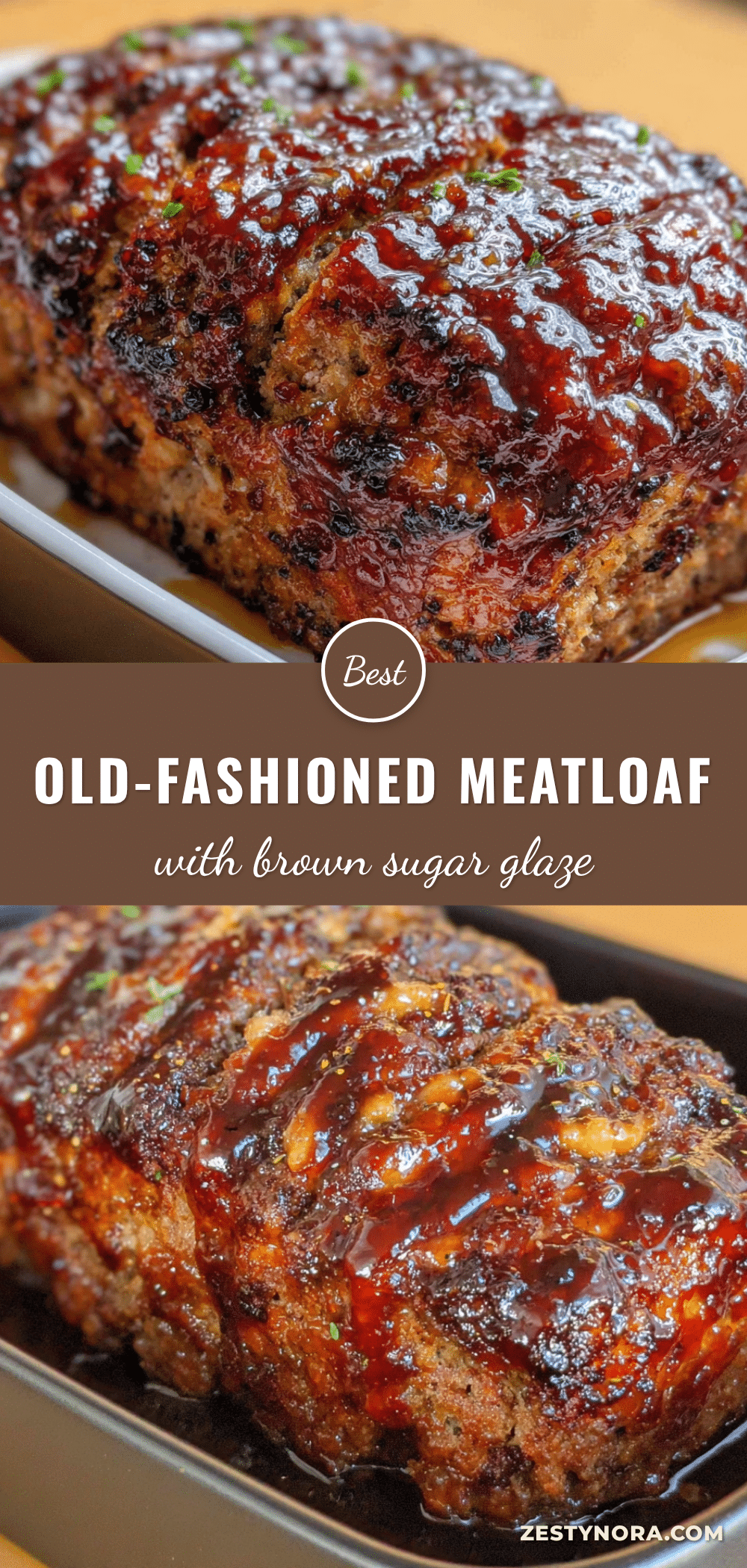
The Best Old-Fashioned Meatloaf with Brown Sugar Glaze
This old-fashioned meatloaf with brown sugar glaze is tender, not dry, and savory with a sweet, sticky glaze on top. It’s a comforting, crowd-pleasing dinner that’s quick and easy to make with simple ingredients.
- Prep Time: 15 minutes
- Cook Time: 60-65 minutes
- Total Time: 75-80 minutes
- Yield: 8 servings 1x
- Category: Main Course
- Cuisine: American
Ingredients
- 2 lbs (900g) ground beef (80/20)
- 1 cup (120g) plain breadcrumbs
- ½ cup (120ml) whole milk
- 1 medium yellow onion, finely chopped (about 1 cup)
- 3 cloves garlic, minced
- 2 large eggs, room temperature
- 2 tablespoons Worcestershire sauce
- ¼ cup (60ml) ketchup
- 1 teaspoon dried thyme
- 1 teaspoon dried parsley
- 1½ teaspoons salt
- ½ teaspoon black pepper
- ½ cup (120ml) ketchup (for glaze)
- ⅓ cup (70g) packed brown sugar (light or dark)
- 1 tablespoon apple cider vinegar
- 1 teaspoon Worcestershire sauce (for glaze)
- ½ teaspoon garlic powder
Instructions
- Preheat your oven to 350°F (175°C). Place your loaf pan on a baking sheet lined with foil or parchment paper for easy cleanup.
- Make the panade: In your large mixing bowl, combine the breadcrumbs and milk. Stir them together with a fork until the breadcrumbs are completely soaked. Let this sit for 5 minutes. It will look like a thick paste.
- Cook the aromatics: While the panade sits, heat a small skillet over medium heat. Add a drizzle of olive oil. Sauté the finely chopped onion for about 3-4 minutes, until it’s soft and translucent. Add the minced garlic and cook for another 30 seconds, until fragrant. Let this cool for a minute.
- Combine the meatloaf mixture: To the bowl with the panade, add the cooked onion and garlic, eggs, Worcestershire sauce, ketchup, thyme, parsley, salt, and pepper. Mix everything with a fork until it’s well combined. It should look like a thick, wet paste.
- Add the ground beef: Add the ground beef to the bowl. Use your hands and gently mix everything together until the ingredients are just incorporated. Do not overmix.
- Shape the loaf: Transfer the meat mixture to your loaf pan. Gently press it into an even shape. Don’t pack it down hard—just smooth the top. The mixture should be mounded slightly in the center.
- Make the glaze: In your small bowl, whisk together the ketchup, packed brown sugar, apple cider vinegar, Worcestershire sauce, and garlic powder. It should be smooth and glossy.
- Apply the glaze: Spread about half of the glaze evenly over the top of the meatloaf. Reserve the rest for later.
- Bake the meatloaf: Place the baking sheet with the loaf pan in the preheated oven. Bake for 45 minutes.
- Apply the second layer of glaze: After 45 minutes, carefully remove the pan from the oven. Spread the remaining glaze over the top.
- Finish baking: Return the meatloaf to the oven and bake for another 15-20 minutes. The total baking time is about 60-65 minutes. The internal temperature should reach 160°F (71°C) when measured with a meat thermometer inserted into the center of the loaf.
- Rest the meatloaf: Remove the meatloaf from the oven and let it rest in the pan for 10-15 minutes.
- Slice and serve: After resting, carefully lift the meatloaf out of the pan using a spatula. Transfer it to a cutting board. Slice into 1-inch thick pieces. Spoon any remaining glaze from the pan over the slices.
Notes
Don’t skip the panade—it keeps the meatloaf moist. Use a light hand when mixing to avoid tough meatloaf. Let the meatloaf rest for 10-15 minutes after baking to allow juices to redistribute. Line your baking sheet with foil or parchment for easy cleanup. For variations, try turkey meatloaf, gluten-free, spicy kick, cheese-stuffed, or mini meatloaves.
Nutrition
- Serving Size: 1 slice
- Calories: 380
- Sugar: 12
- Sodium: 650
- Fat: 22
- Saturated Fat: 8
- Carbohydrates: 18
- Fiber: 1
- Protein: 28
Keywords: meatloaf, old-fashioned meatloaf, brown sugar glaze, comfort food, ground beef, easy dinner, weeknight dinner