My brother-in-law, Mark, had claimed for years that he hated short ribs. “Too fatty,” he’d say, pushing them around his plate at restaurants. “All that connective tissue, it’s just not worth the hassle.” He was the family’s unofficial turkey loyalist, the guy who’d text the group chat in October asking who was brining the bird this year. So when I suggested braised short ribs for Thanksgiving a few years back, you’d think I’d proposed serving cereal. He just shook his head and mumbled something about tradition.
Then I made them anyway. I was tired, honestly. Tired of the dry turkey drama, the frantic timing of side dishes, the way my kitchen looked like a flour bomb had gone off by noon. I wanted something that actually tasted better the day after it was made. Something that let me enjoy a glass of wine while the oven did all the heavy lifting. So I braised a batch of short ribs, just for myself, as a little experiment. I didn’t even tell Mark they were in the oven.
The smell hit him first. That deep, winey, almost unfair aroma that fills every corner of the house. He wandered into the kitchen around 4 PM, sniffing the air like a cartoon character. “What’s that?” he asked, trying to look casual. I told him it was just a little something I was testing. An hour later, I found him standing over the Dutch oven, fork in hand, spearing a piece of the braised meat right out of the pot. “This is… okay,” he mumbled, his mouth full. That was the moment I knew I had him. The turkey loyalist had been converted, caught red-handed with a short rib in his mouth. And honestly, that’s the kind of quiet victory that makes a stressful holiday feel a little bit magical. You know that feeling when a recipe just works, and it changes someone’s mind without you even trying? That’s this one.
Why You’ll Love This Recipe
Let’s be real—Thanksgiving can be a logistical nightmare. Between the turkey, the gravy, the mashed potatoes, and the three kinds of pie, it’s easy to feel like you’re running a restaurant out of your own kitchen. These easy braised short ribs are my secret weapon for a stress-free holiday. They practically cook themselves, leaving you free to focus on the sides and, more importantly, the company.
- Make-Ahead Magic: This is the biggest win. You can braise these short ribs a day or even two days ahead of time. The flavor actually gets better as it sits. On Thanksgiving morning, you just reheat them gently. No last-minute panic, no timing a roast to perfection while guests are hanging on your oven door.
- Incredibly Tender, No Fuss: The low-and-slow method in the oven does all the work. You don’t need to babysit a pan or worry about overcooking. The meat gets so tender it practically falls off the bone with a fork. It’s the kind of comfort food that makes everyone at the table close their eyes after the first bite.
- Simple, Pantry-Friendly Ingredients: No weird, hard-to-find items here. You’ll grab some beef short ribs, a bottle of red wine you’d actually drink, some carrots, celery, and a few pantry staples. It’s surprisingly unfussy for something that tastes so elegant.
- A Total Crowd-Pleaser: Even the turkey purists in your family (like my brother-in-law Mark) will be won over. It’s rich, savory, and deeply satisfying. Plus, it’s a conversation starter—everyone will want to know your secret.
- Less Stress, More Enjoyment: Honestly, this recipe is designed for the cook who wants to actually sit down and enjoy their own Thanksgiving dinner. No more sweating over a hot oven while everyone else is passing the cranberry sauce. You get to be a guest at your own party.
What Ingredients You Will Need
This recipe uses simple, hearty ingredients to create a deeply flavorful and satisfying dish. Most of these are probably already in your kitchen or easy to find at any grocery store. Let’s break down what you’ll need and why each one matters.
For the Short Ribs
- 4-5 pounds bone-in beef short ribs: This is the star of the show. Look for ribs that are well-marbled with fat and have a good amount of meat on the bone. I prefer buying them from a local butcher or a trusted brand like Snake River Farms for the best quality. The bone adds flavor and helps keep the meat moist during the long braise.
- 2 tablespoons olive oil: You’ll use this for searing the meat. A good, neutral olive oil with a high smoke point works best here. Don’t use extra-virgin for this step; it can burn.
- 1 large yellow onion, diced: This forms the aromatic base of the braise. It melts down into the sauce, adding sweetness and depth.
- 3 carrots, peeled and diced: Along with the celery, these add a subtle sweetness and earthy flavor to the braising liquid. They also give the final sauce a bit of body.
- 3 celery stalks, diced: The classic mirepoix component. It adds a savory, slightly peppery note that balances the richness of the beef.
- 4 cloves garlic, minced: Garlic is non-negotiable for that deep, savory aroma. Fresh is always best, but jarred minced garlic works in a pinch if you’re really short on time.
- 2 tablespoons tomato paste: This adds a concentrated umami flavor and helps thicken the sauce. I like the double-concentrated kind in a tube—it’s easier to use than a can.
- 2 cups dry red wine: Use something you’d actually drink, like a Cabernet Sauvignon or Merlot. The wine is a key flavor component, so don’t use cooking wine. It adds acidity and richness that makes the sauce sing.
- 2 cups beef broth: This is the main liquid for the braise. Use a low-sodium broth so you can control the salt level. I like Swanson’s or Kitchen Basics for a reliable flavor.
- 2 sprigs fresh rosemary: Rosemary and beef are a classic pairing. It adds a piney, aromatic note that cuts through the richness. If you only have dried, use about 1 teaspoon.
- 3 sprigs fresh thyme: Thyme adds a subtle, earthy flavor that complements the other herbs. Again, dried works in a pinch (about 1 teaspoon).
- 2 bay leaves: These add a subtle, slightly floral flavor that deepens as the dish cooks. Remember to remove them before serving.
- Salt and freshly ground black pepper: Essential for seasoning the meat and the sauce. Don’t be shy with the pepper.
For the Garnish (Optional but Recommended)
- Fresh parsley, chopped: A sprinkle of fresh parsley adds a pop of color and a fresh, clean finish to the rich dish.
- Flaky sea salt: A final pinch of flaky salt right before serving adds a wonderful textural contrast and a burst of flavor.
Equipment Needed
You don’t need a ton of fancy gadgets to make these easy braised short ribs. Here’s what you’ll need to get the job done.
- Large Dutch Oven or Heavy-Bottomed Pot with Lid: This is your most important tool. A 6 to 7-quart Dutch oven is ideal. It holds heat evenly and goes from stovetop to oven without a problem. I use my trusty Le Creuset, but a Lodge enameled cast iron pot works just as well and is much more budget-friendly. If you don’t have a Dutch oven, you can use a large, oven-safe pot or a deep roasting pan covered tightly with foil.
- Sharp Chef’s Knife: A good knife makes prepping the vegetables quick and safe. A dull knife is more dangerous than a sharp one, so keep it honed.
- Cutting Board: A sturdy wooden or plastic board for all your chopping.
- Wooden Spoon or Spatula: For stirring the vegetables and scraping up the delicious browned bits from the bottom of the pot (that’s called deglazing, and it’s where a ton of flavor lives).
- Tongs: Essential for flipping the short ribs while searing. They give you a good grip without piercing the meat.
- Measuring Cups and Spoons: For the wine, broth, and seasonings.
- Fine-Mesh Strainer (Optional): If you want a super smooth sauce, you can strain the braising liquid after cooking to remove the vegetables and herbs.
That’s it! Nothing too crazy. The key is a pot that can handle the heat and a lid that fits tightly.
Preparation Method
Alright, let’s get cooking. This method is straightforward, but I’ll walk you through every step so you feel confident. Remember, the goal here is to be efficient and let the oven do the hard work.
- Prep the Short Ribs (10 minutes): Take the short ribs out of the fridge about 30 minutes before you start cooking to take the chill off. Pat them very dry with paper towels. This is a crucial step—dry meat sears better. Season them generously on all sides with salt and freshly ground black pepper. Don’t be shy here; the seasoning is the foundation of the flavor.
- Sear the Meat (15 minutes): Preheat your oven to 325°F (165°C). Place your Dutch oven over medium-high heat and add the olive oil. Once the oil is shimmering (almost smoking), carefully place the short ribs in the pot in a single layer. Do not crowd the pot—work in batches if you need to. Let them sear undisturbed for 3-4 minutes per side, until a deep, golden-brown crust forms. This is where that incredible flavor comes from. Use your tongs to flip them. Once all sides are seared, transfer the ribs to a plate and set aside.
- Cook the Aromatics (8 minutes): Reduce the heat to medium. Add the diced onion, carrots, and celery to the pot. There will be some browned bits stuck to the bottom—that’s flavor gold. Cook the vegetables, stirring occasionally with your wooden spoon, for about 5-7 minutes, until they soften and start to brown. Add the minced garlic and cook for another minute until it’s fragrant. Be careful not to burn the garlic.
- Build the Sauce Base (5 minutes): Add the tomato paste to the vegetables and cook, stirring constantly, for about 2 minutes. This cooks out the raw tomato flavor and deepens its richness. Now, pour in the red wine. Use your wooden spoon to scrape up all those browned bits from the bottom of the pot—this is deglazing. Let the wine simmer for 2-3 minutes, reducing slightly.
- Combine and Braise (3 hours): Pour in the beef broth, then add the rosemary sprigs, thyme sprigs, and bay leaves. Carefully return the seared short ribs to the pot, nestling them into the liquid. The liquid should come about halfway up the sides of the ribs. If it doesn’t, add a little more broth or water. Bring the liquid to a gentle simmer on the stovetop. Cover the pot with the lid and transfer it to the preheated oven.
- The Waiting Game (2.5 to 3 hours): Let the short ribs braise in the oven for 2.5 to 3 hours. The key indicator is tenderness. You’ll know they’re done when the meat is fork-tender and practically falling off the bone. Don’t rush this step—the low heat is what breaks down the connective tissue and makes the meat so succulent. About halfway through, you can check the liquid level, but if your lid is tight, it should be fine.
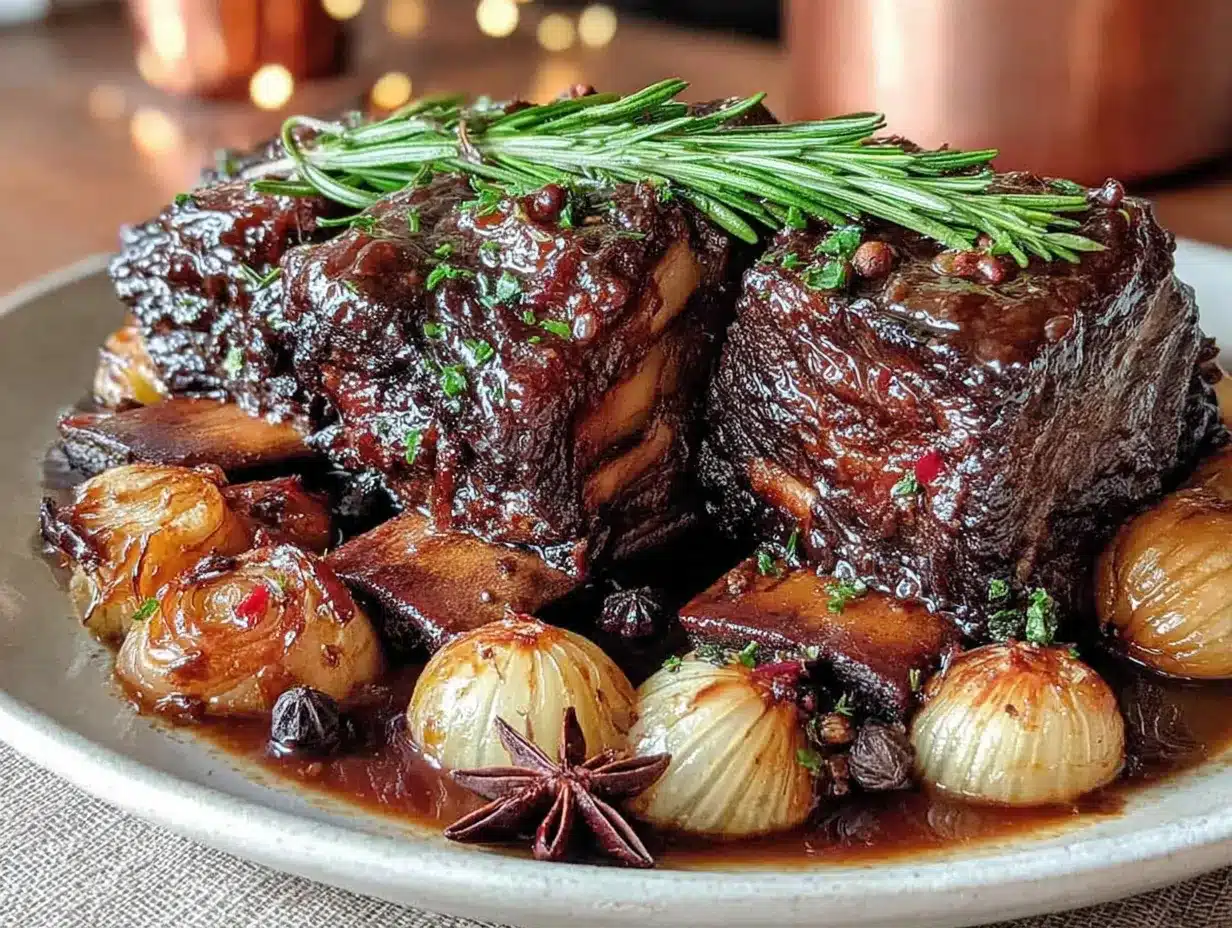
- Finish and Serve (10 minutes): Once the ribs are tender, carefully remove the pot from the oven. Use your tongs to transfer the short ribs to a serving platter and tent them loosely with foil to keep warm. Set the pot on the stovetop over medium heat. Remove the herb stems and bay leaves. Let the sauce simmer for 5-10 minutes to thicken slightly. You can use a fine-mesh strainer to strain the sauce for a silky texture, or leave the vegetables in for a more rustic feel. Taste the sauce and adjust the seasoning with salt and pepper. Spoon the sauce over the short ribs, garnish with fresh parsley and a pinch of flaky sea salt, and serve immediately.
Cooking Tips & Techniques
I’ve made this recipe more times than I can count, and I’ve learned a few things along the way. Here are my best tips to make sure your short ribs turn out perfect every time.
- Don’t Skip the Searing: I know it’s an extra step, and it creates a bit of a mess, but it’s non-negotiable. That brown crust is pure flavor. It’s the result of the Maillard reaction, and it’s what gives the final dish its deep, savory character. Think of it as the most important 15 minutes you’ll spend.
- Patience is a Virtue: The biggest mistake people make is not cooking the ribs long enough. They need that low, slow heat to break down the tough connective tissue. If the meat isn’t fork-tender after 2.5 hours, give it another 30 minutes. Your patience will be rewarded with meat so tender it melts in your mouth.
- Make It Ahead (The Best Tip): This is my favorite trick. Cook the short ribs a day or two before Thanksgiving. Let the pot cool completely, then refrigerate it. The fat will solidify on the surface, making it incredibly easy to skim off. Then, when you’re ready to serve, just reheat the whole pot gently on the stovetop or in a 300°F oven. The flavor will be even better because the ingredients have had time to meld.
- Don’t Be Afraid of the Wine: The alcohol cooks off, leaving behind a rich, complex flavor. If you don’t cook with wine, you can substitute an equal amount of additional beef broth mixed with 2 tablespoons of balsamic vinegar for acidity. But honestly, the wine is what makes this dish special.
- My Biggest Failure: The first time I made these, I forgot to skim the fat. The sauce was an oily mess. It was still delicious, but it wasn’t pretty. Now, I always make it ahead so I can easily remove that congealed fat layer. It’s a game-changer for a clean, glossy sauce.
Variations & Adaptations
This recipe is wonderfully flexible. Here are a few ways you can tweak it to suit your taste or dietary needs.
- Red Wine Swap: If you don’t have red wine, try using a dark beer like a stout or porter. It adds a different but equally delicious depth of flavor. You can also use a non-alcoholic red wine or pomegranate juice for a non-alcoholic version.
- Herb Variations: Not a fan of rosemary? Try using a few sprigs of sage or oregano instead. Smoked paprika or a pinch of chipotle powder can add a smoky, spicy kick to the sauce.
- Dietary Adaptations: This recipe is naturally gluten-free as long as your beef broth is certified gluten-free. For a dairy-free version, just skip any butter you might use for finishing and use olive oil instead. It’s already dairy-free as written.
- Different Cooking Method: No oven? No problem. You can cook these in a slow cooker. Sear the ribs and cook the aromatics on the stovetop first, then transfer everything to the slow cooker. Cook on low for 8 hours or on high for 5-6 hours. You can also use an Instant Pot—sear on the sauté setting, then pressure cook on high for 45 minutes with a natural release.
- My Personal Favorite Variation: I love adding a couple of dried ancho chiles to the braising liquid. They rehydrate and add a subtle, smoky warmth that’s incredible with the beef. It’s not spicy, just deeply flavorful. I discovered this by accident when I was out of bay leaves and grabbed a chile instead. Best mistake I ever made.
Serving & Storage Suggestions
These short ribs are a meal in themselves, but they pair beautifully with classic holiday sides. Here’s how to serve and store them.
- Serving Suggestions: Serve the short ribs hot, spooned over a bed of creamy mashed potatoes or soft polenta to soak up all that delicious sauce. They’re also fantastic with buttery egg noodles or a simple side of roasted vegetables. For a Thanksgiving twist, serve them alongside my creamy mashed potatoes and some roasted Brussels sprouts. A glass of the same red wine you used in the braise is the perfect pairing.
- Storage Instructions: Store any leftover short ribs in an airtight container in the refrigerator for up to 4 days. The flavors will continue to meld, making the leftovers even better. In fact, I often think they’re best on day two or three.
- Freezing Instructions: These short ribs freeze beautifully. Place the cooled short ribs and sauce in a freezer-safe container or zip-top bag. They’ll keep for up to 3 months. Thaw overnight in the refrigerator before reheating.
- Reheating Tips: The best way to reheat is gently on the stovetop over low heat. You can also reheat them in a 300°F oven, covered, for about 20-30 minutes. If the sauce has thickened too much, add a splash of beef broth or water to loosen it up. Avoid the microwave if you can—it can make the meat tough.
Nutritional Information & Benefits
While this is a rich, indulgent dish, it does offer some nutritional benefits. Here’s a quick look.
- Estimated Per Serving (1 rib with sauce): Calories: 650, Fat: 45g, Protein: 40g, Carbohydrates: 10g, Fiber: 2g, Sugar: 5g, Sodium: 800mg. (This is an estimate and will vary based on specific ingredients and portion sizes.)
- Health Benefits: Beef is an excellent source of high-quality protein, iron, and B vitamins, which are essential for energy and red blood cell production. The carrots and celery provide fiber and vitamins A and K. The red wine contains antioxidants like resveratrol, which may have heart-health benefits in moderation.
- Dietary Considerations: This recipe is naturally gluten-free and dairy-free. It is a higher-fat dish, so it’s best enjoyed as part of a balanced diet. If you’re watching your sodium, use low-sodium beef broth and go easy on the added salt.
- My Perspective: I believe in enjoying real food. This is a special-occasion dish, meant to be savored and shared. The nutritional stats are secondary to the joy of a meal made with love and shared with family. A little bit of richness on a holiday is part of what makes it a celebration.
Conclusion
These easy braised short ribs are more than just a recipe—they’re a stress-relief strategy for your Thanksgiving table. They deliver incredible, restaurant-quality flavor with a fraction of the work of a traditional turkey dinner. The meat is impossibly tender, the sauce is rich and savory, and the whole thing can be made days ahead of time. Honestly, what’s not to love?
I hope you give them a try and make them your own. Maybe you’ll add a different herb, or serve them over a bed of creamy grits. The beauty of a good braise is that it’s forgiving and adaptable. Don’t be afraid to experiment. And when you do, I’d love to hear about it. Leave a comment below and let me know how it turned out, or share a photo of your creation on social media. Tag me so I can see your beautiful, stress-free Thanksgiving dinner!
Until next time, happy cooking. You’ve got this.
Frequently Asked Questions
Can I make these braised short ribs in a slow cooker?
Absolutely! This recipe adapts wonderfully to a slow cooker. After searing the meat and cooking the aromatics on the stovetop, transfer everything to your slow cooker. Cook on low for 8 hours or on high for 5-6 hours, until the meat is fork-tender.
Do I have to use bone-in short ribs?
Bone-in short ribs are preferred because the bone adds flavor and helps keep the meat moist during the long cooking time. However, you can use boneless short ribs if that’s what you have. Just reduce the cooking time slightly, as they will cook faster.
Can I substitute the red wine?
Yes, you can. For a non-alcoholic version, use an equal amount of additional beef broth mixed with 2 tablespoons of balsamic vinegar or pomegranate juice. A dark beer like a stout is also a fantastic substitute.
How do I prevent the meat from being tough?
Tough short ribs are almost always the result of undercooking. The meat needs to be cooked low and slow until the connective tissue breaks down. Be patient and cook until the meat is fork-tender—this usually takes 2.5 to 3 hours in the oven.
Can I freeze leftover braised short ribs?
Yes, they freeze beautifully! Let the ribs cool completely, then store them in an airtight container or freezer-safe bag with the sauce. They will keep for up to 3 months. Thaw overnight in the refrigerator before reheating gently on the stovetop.
Pin This Recipe!
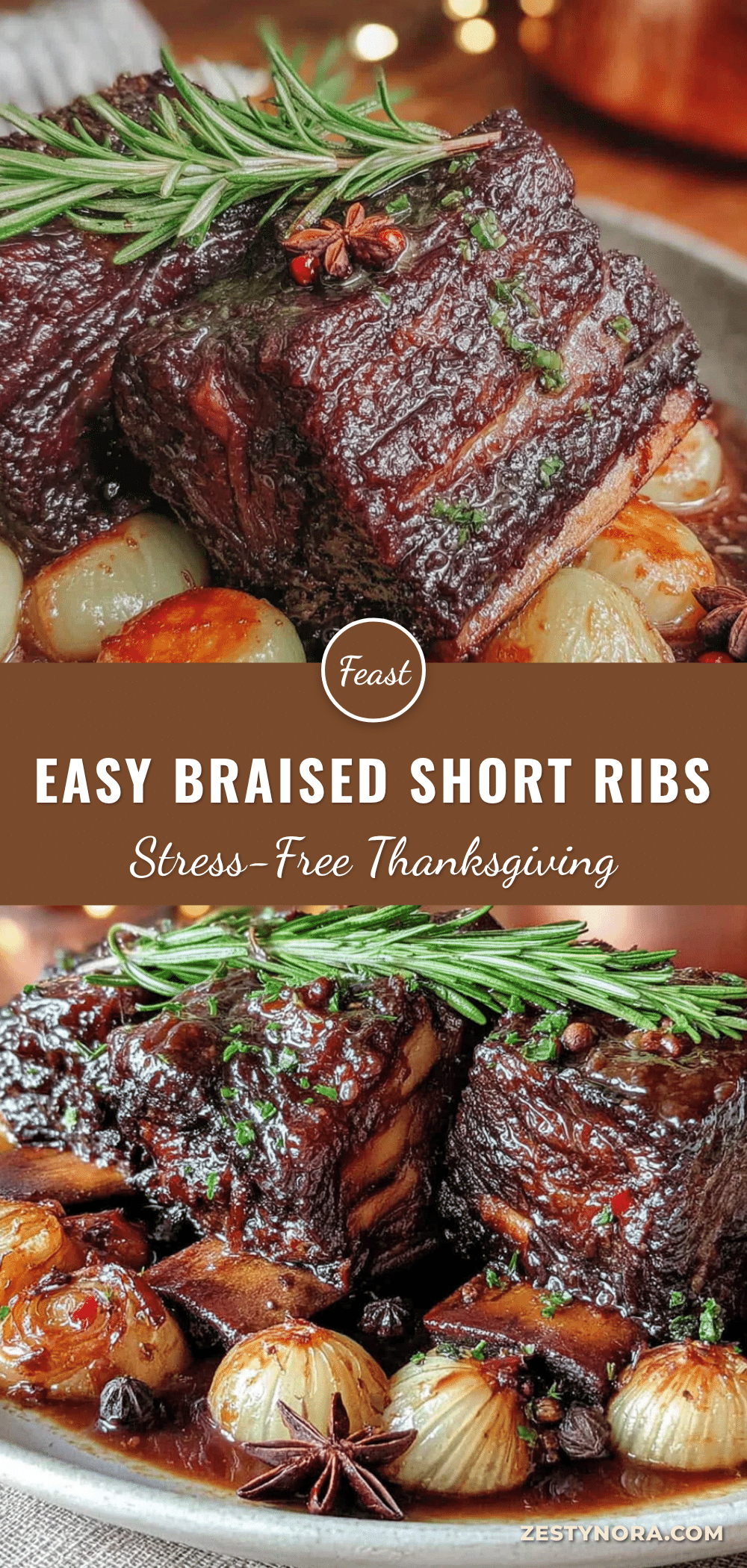
Easy Braised Short Ribs: The Best Stress-Free Thanksgiving Dinner
These easy braised short ribs are the ultimate stress-free Thanksgiving dinner. They cook low and slow in the oven until fork-tender, can be made days ahead, and are a guaranteed crowd-pleaser that will convert even the most loyal turkey fans.
- Prep Time: 15 minutes
- Cook Time: 3 hours
- Total Time: 3 hours 15 minutes
- Yield: 4-6 servings 1x
- Category: Main Course
- Cuisine: American
Ingredients
- 4–5 pounds bone-in beef short ribs
- 2 tablespoons olive oil
- 1 large yellow onion, diced
- 3 carrots, peeled and diced
- 3 celery stalks, diced
- 4 cloves garlic, minced
- 2 tablespoons tomato paste
- 2 cups dry red wine (e.g., Cabernet Sauvignon or Merlot)
- 2 cups low-sodium beef broth
- 2 sprigs fresh rosemary (or 1 teaspoon dried)
- 3 sprigs fresh thyme (or 1 teaspoon dried)
- 2 bay leaves
- Salt and freshly ground black pepper, to taste
- Fresh parsley, chopped (for garnish, optional)
- Flaky sea salt (for garnish, optional)
Instructions
- Prep the Short Ribs: Take the short ribs out of the fridge about 30 minutes before cooking. Pat them very dry with paper towels. Season generously on all sides with salt and freshly ground black pepper.
- Sear the Meat: Preheat oven to 325°F (165°C). Place a large Dutch oven over medium-high heat and add olive oil. Once shimmering, carefully place the short ribs in a single layer (work in batches if needed). Sear undisturbed for 3-4 minutes per side until a deep golden-brown crust forms. Transfer seared ribs to a plate and set aside.
- Cook the Aromatics: Reduce heat to medium. Add diced onion, carrots, and celery to the pot. Cook, stirring occasionally, for 5-7 minutes until softened and starting to brown. Add minced garlic and cook for 1 minute until fragrant.
- Build the Sauce Base: Add tomato paste and cook, stirring constantly, for 2 minutes. Pour in the red wine and use a wooden spoon to scrape up any browned bits from the bottom of the pot (deglazing). Let the wine simmer for 2-3 minutes, reducing slightly.
- Combine and Braise: Pour in the beef broth, then add rosemary, thyme, and bay leaves. Return the seared short ribs to the pot, nestling them into the liquid (liquid should come about halfway up the ribs). Bring to a gentle simmer on the stovetop. Cover the pot with the lid and transfer to the preheated oven.
- Braise: Cook in the oven for 2.5 to 3 hours, until the meat is fork-tender and practically falling off the bone. Check liquid level halfway through if needed.
- Finish and Serve: Carefully remove the pot from the oven. Transfer short ribs to a serving platter and tent loosely with foil. Set the pot on the stovetop over medium heat. Remove herb stems and bay leaves. Let the sauce simmer for 5-10 minutes to thicken slightly. Strain for a silky texture if desired, or leave vegetables in for a rustic feel. Taste and adjust seasoning with salt and pepper. Spoon sauce over the short ribs, garnish with fresh parsley and flaky sea salt, and serve immediately.
Notes
For best results, make the short ribs a day or two ahead. Refrigerate the pot overnight; the fat will solidify on the surface, making it easy to skim off. Reheat gently on the stovetop or in a 300°F oven. The flavor improves as it sits. Don’t skip the searing step—it’s crucial for deep flavor. If the meat isn’t fork-tender after 2.5 hours, continue cooking in 30-minute increments. For a non-alcoholic version, substitute the wine with additional beef broth mixed with 2 tablespoons balsamic vinegar or pomegranate juice.
Nutrition
- Serving Size: 1 rib with sauce
- Calories: 650
- Sugar: 5
- Sodium: 800
- Fat: 45
- Carbohydrates: 10
- Fiber: 2
- Protein: 40
Keywords: braised short ribs, easy short ribs, Thanksgiving dinner, stress-free holiday, make-ahead short ribs, beef short ribs, comfort food