I was at my local farmer’s market last fall, juggling a too-heavy canvas bag and a leaky carton of cherry tomatoes, when the plumber who fixed my kitchen sink last spring waved me over to his stall. Not a stall, really—just a folding table he’d set up next to his truck, covered in the most perfect butternut squash I’d ever seen. “You gotta try it with maple syrup and those fancy nuts,” he said, pointing at a bag of pecans I was holding. “And crumble some salty cheese on top. Trust me.” I almost laughed. This was the same guy who’d spent forty-five minutes under my sink muttering about pipe wrenches and bad angles. But there was something about the way he said it—like he’d been making this dish for Sunday dinners his whole life. So I bought two squashes, grabbed a bottle of local maple syrup from another vendor, and went home to try it. Honestly? I was skeptical. But that first bite—the sweet, caramelized edges of the squash, the toasted crunch of pecans, the salty tang of feta—made me a believer. I’ve been making it ever since, and it’s become my go-to for busy weeknights when I want something that tastes like I spent hours in the kitchen but actually takes about thirty minutes. Let me tell you, if a plumber can teach you a recipe this good, it’s worth keeping around.
Why You’ll Love This Quick Maple Roasted Butternut Squash with Pecans and Feta
This recipe is the kind of thing that makes you feel like a kitchen genius without actually trying very hard. I’ve tested it about a dozen times—sometimes with different squashes, once when I was out of pecans and used walnuts (it worked, but pecans are better), and even a version where I forgot the feta entirely. That was a sad night. But the core of this dish is foolproof, and here’s why it works so well for real life.
- Quick & Easy : From start to finish, this comes together in about 30 minutes. No marinating, no complicated steps—just chop, toss, roast, and eat. Perfect for those nights when you walk in the door at 6:15 and need dinner on the table by 6:45.
- Simple Ingredients : You probably already have maple syrup and pecans in your pantry. The feta and butternut squash are easy to find at any grocery store, and you don’t need any weird specialty items. I’ve made this with pre-cut squash from the produce section when I was really short on time, and it still turned out great.
- Perfect for Weeknight Dinners : This isn’t a fancy holiday side dish—it’s a regular Tuesday kind of recipe. It goes with roasted chicken, pork chops, or even a simple salad for a light dinner. The leftovers are amazing cold, straight from the fridge, which I may or may not have discovered at 11 PM last Tuesday.
- Crowd-Pleaser : I’ve served this to picky kids, vegetarian friends, and my dad who swears he doesn’t like squash. Everyone goes back for seconds. The sweet-salty-crunchy combo is basically irresistible.
- Unbelievably Delicious : The maple syrup caramelizes on the squash edges, creating these golden, almost candy-like bits. The pecans get toasty and the feta softens just slightly. It’s comfort food that feels a little fancy but takes almost no effort.
What makes this different from every other roasted squash recipe? It’s the balance. The maple isn’t overpowering, the pecans add texture without being too hard, and the feta brings a saltiness that cuts through the sweetness. I’ve tried versions with honey (too floral), brown sugar (too grainy), and even agave (just no). Maple syrup is the winner. And the plumber was right—trust him.
What Ingredients You Will Need
This recipe uses simple, wholesome ingredients that come together to create something genuinely special. Most of these are pantry staples or easy to find at any grocery store. Here’s what you need and why each one matters.
- 1 medium butternut squash (about 2 pounds) — Look for one that feels heavy for its size and has a firm, unblemished skin. I prefer the long-neck variety because it’s easier to peel and has fewer seeds. If you’re really short on time, grab a bag of pre-cut squash from the produce section—just know it might cook a few minutes faster since the pieces are smaller.
- 2 tablespoons olive oil — Use a good-quality extra virgin olive oil for the best flavor. It helps the squash roast evenly and gives the edges that beautiful golden color. I’ve used avocado oil in a pinch, and it works fine, but olive oil adds a subtle richness that I love.
- 3 tablespoons pure maple syrup — Real maple syrup, not pancake syrup. The difference is huge. Grade A dark amber is my favorite for roasting because it has a deeper, more complex flavor that stands up to the squash. I buy mine from a local farm, but any pure maple syrup will work.
- 1/2 cup pecan halves — You can use whole pecans and break them up, or buy pre-chopped. I like to leave them in fairly large pieces so they stay crunchy and don’t get lost in the squash. Toast them lightly before adding to the dish for extra flavor—I’ll explain how in the method section.
- 1/3 cup crumbled feta cheese — Buy a block of feta and crumble it yourself if you can. The pre-crumbled stuff tends to be drier and less flavorful. I recommend sheep’s milk feta for its creamy texture and tangy taste. If you’re dairy-free, there are good plant-based feta options now that work surprisingly well.
- 1/2 teaspoon salt — I use fine sea salt for even seasoning. Kosher salt works too, but you might need a bit more since the crystals are larger.
- 1/4 teaspoon black pepper — Freshly ground is best. It adds a subtle warmth that complements the sweetness of the maple.
- Optional: 1 tablespoon fresh thyme leaves — This adds an earthy, slightly floral note that pairs beautifully with the squash and maple. If you don’t have fresh thyme, you can use 1 teaspoon dried, or just skip it—the dish is still delicious without.
That’s it. Seven ingredients (eight if you count the thyme) and you’re on your way to something that tastes way more complicated than it is. The beauty of this recipe is that every ingredient pulls its weight—nothing is there just for show.
Equipment Needed
You don’t need a fancy kitchen to make this recipe. Here’s what you’ll need, along with a few tips I’ve learned from my own trial and error.
- Sharp chef’s knife — Butternut squash is tough. A dull knife is a recipe for frustration (and possibly a trip to the ER). I use a 8-inch chef’s knife and it makes quick work of the squash. If your knife isn’t sharp, consider buying pre-cut squash to save time and stress.
- Vegetable peeler — A Y-shaped peeler works best for butternut squash because it glides over the curves more easily. I’ve used a standard straight peeler and it works, but it takes a bit longer.
- Large baking sheet — A rimmed baking sheet is ideal because it catches any maple syrup that might drip off. I use a half-sheet pan (about 18×13 inches). If your baking sheet is smaller, use two pans or work in batches—crowding the pan leads to steamed, not roasted, squash.
- Parchment paper or aluminum foil — This makes cleanup so much easier. The maple syrup can caramelize and stick to the pan, and scrubbing that off is no one’s idea of a good time. Parchment paper is my preference because it’s non-stick and doesn’t affect the cooking.
- Mixing bowl — Any medium bowl will work for tossing the squash with the oil and maple syrup. I use a glass bowl because it doesn’t absorb odors.
- Small skillet (optional) — For toasting the pecans. You can also toast them on the baking sheet with the squash, but toasting them separately gives you more control and prevents them from burning.
That’s really all you need. No food processor, no stand mixer, no special gadgets. This is the kind of recipe that proves you don’t need a lot of equipment to make something amazing.
Preparation Method
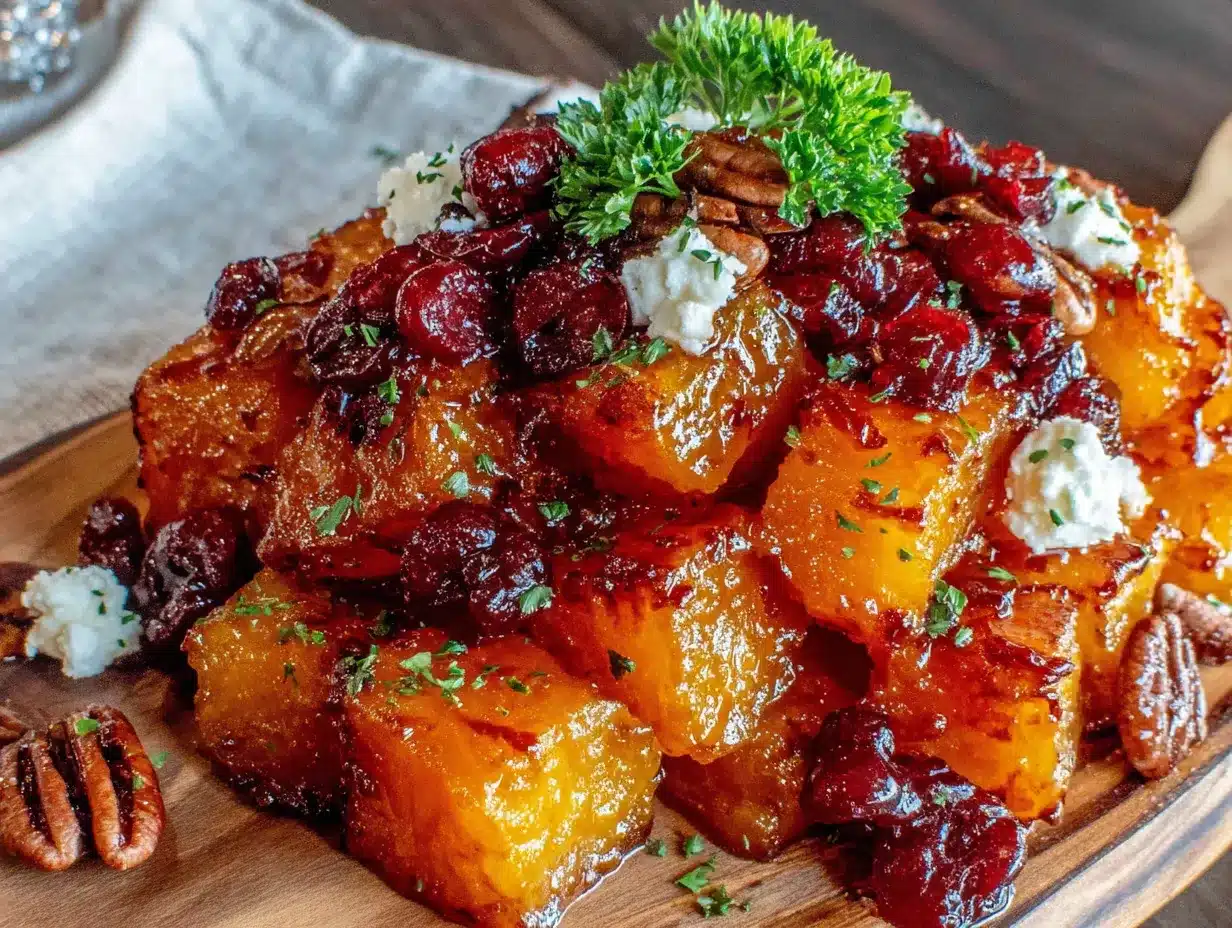
Let’s get cooking. This method is straightforward, but I’ve included some tips and sensory cues to help you get perfect results every time.
- Preheat your oven to 400°F (200°C). While it’s heating, line a large baking sheet with parchment paper. This is a small step that saves you from scrubbing later. Trust me on this.
- Prepare the butternut squash. Using your sharp chef’s knife, cut off the top and bottom of the squash. This gives you a stable base. Stand the squash upright on one flat end and carefully slice down the middle from top to bottom. Scoop out the seeds and stringy bits with a spoon—I use a metal spoon because it’s sturdier. Then, use your vegetable peeler to remove the skin. The skin is tough, so take your time and go over any spots you missed. Cut the squash into 1-inch cubes. They don’t have to be perfect, but try to keep them similar in size so they cook evenly. You should have about 4 to 5 cups of cubed squash.
- Toss the squash with oil and maple syrup. In your mixing bowl, combine the cubed squash, olive oil, and maple syrup. Add the salt and pepper. Use your hands or a spatula to toss everything together until every piece is coated. The squash should look glossy and slightly sticky. This is where the magic starts.
- Spread the squash on the baking sheet. Arrange the cubes in a single layer, making sure they’re not touching each other too much. If they’re crowded, they’ll steam instead of roast, and you won’t get those beautiful caramelized edges. Leave a little space between each cube. If you have a lot of extra liquid in the bowl, don’t pour it over the squash—it can make the squash soggy. Just leave it behind.
- Roast for 20 minutes. Place the baking sheet on the middle rack of your oven. After 20 minutes, remove the pan and give the squash a stir with a spatula. The edges should be starting to brown and the maple syrup should be bubbling. If the squash isn’t browning, your oven might run cool—give it another 5 minutes before stirring.
- While the squash roasts, toast the pecans. Heat a small skillet over medium heat. Add the pecan halves and cook, stirring frequently, for 3 to 4 minutes. You’ll know they’re done when they smell nutty and look slightly darker. Be careful—they burn quickly. Once they’re toasted, remove them from the pan immediately and set aside. I’ve burned a batch or two while distracted by my phone, so set a timer if you need to.
- Finish roasting the squash. After stirring, return the pan to the oven and roast for another 10 to 15 minutes. The total roasting time should be 30 to 35 minutes. The squash is done when it’s fork-tender and the edges are deep golden brown with some darker caramelized spots. The maple syrup should be thick and sticky on the surface.
- Assemble the dish. Transfer the roasted squash to a serving platter or large bowl. Sprinkle the toasted pecans over the top, then crumble the feta cheese evenly over everything. If you’re using fresh thyme, scatter the leaves over the top now. The heat from the squash will soften the feta slightly and release the thyme’s aroma.
- Serve immediately. This dish is best warm, right out of the oven. The contrast between the hot, caramelized squash and the cool, salty feta is what makes it so good. But honestly, leftovers are pretty amazing too—more on that later.
One thing I’ve learned the hard way: don’t skip the step of spreading the squash in a single layer. The first time I made this, I piled everything on one pan because I was in a hurry, and the squash came out soft and pale instead of golden and caramelized. It was still edible, but it wasn’t the same. Take the extra minute to arrange the cubes—it makes all the difference.
Cooking Tips & Techniques
I’ve made this recipe enough times to know where things can go wrong. Here are my best tips for getting it right every time.
The biggest mistake I see people make is cutting the squash into uneven pieces. Some cubes end up tiny and burn, while others are huge and stay raw in the middle. Take a few extra seconds to make sure your cubes are roughly the same size. I aim for about 1 inch, but anywhere between 3/4 inch and 1 1/2 inches works as long as they’re consistent. If you’re using pre-cut squash from the store, the pieces are usually smaller, so check them at the 20-minute mark—they might be done sooner.
Don’t overcrowd the pan. I know I’ve said this already, but it’s worth repeating. If the squash is piled up, the moisture from the maple syrup creates steam, and steam is the enemy of caramelization. If you’re doubling the recipe, use two baking sheets and rotate them halfway through cooking. Your patience will be rewarded with perfectly roasted squash.
Toast the pecans separately. I tried adding the pecans directly to the baking sheet with the squash once, thinking I’d save time. Big mistake. The pecans burned while the squash was still cooking, and I had to pick out the blackened bits. Toasting them in a skillet takes just a few minutes and gives you total control. Plus, it fills your kitchen with that amazing nutty smell—it’s worth it for that alone.
Use room temperature feta. If you have time, let the feta sit out for 10 minutes before crumbling it. Cold feta doesn’t soften as nicely on the hot squash. It’s a small detail, but it makes the dish feel more cohesive.
Multitasking is your friend. While the squash is roasting, you can prep the pecans, crumble the feta, and clean up your cutting board. The active time for this recipe is only about 15 minutes, so the rest is just waiting. I usually start this dish first when I’m making dinner, then work on the main course while it roasts. By the time the squash is done, everything else is ready too.
Variations & Adaptations
This recipe is flexible, and I’ve tried several variations over the years. Here are some of my favorites.
Make it vegan. Skip the feta or use a plant-based feta alternative. I’ve tried a few brands, and the one from Violife is my favorite—it crumbles nicely and has that tangy flavor. You can also add a sprinkle of nutritional yeast for a cheesy, savory note. The dish is still delicious without any cheese at all, honestly.
Add some heat. If you like a little kick, toss the squash with a pinch of cayenne pepper or red pepper flakes before roasting. The heat contrasts beautifully with the sweet maple syrup. I add about 1/4 teaspoon of cayenne when I’m making this for myself, but I leave it out when serving guests who might not love spicy food.
Swap the nuts. No pecans? No problem. Walnuts, almonds, or even pumpkin seeds work great. I’ve made this with toasted walnuts and it was fantastic—just a slightly different flavor profile. If you’re nut-free, use sunflower seeds or pepitas. Toast them the same way you would the pecans.
Try different squash. Butternut is my favorite for this recipe, but acorn squash, delicata squash, or even pumpkin work well. Delicata squash doesn’t need to be peeled, which saves a step. Just slice it into rings, remove the seeds, and cut into wedges. The cooking time might vary slightly, so keep an eye on it.
Add dried fruit. A handful of dried cranberries or chopped dried apricots adds a chewy texture and extra sweetness. I toss them in during the last 5 minutes of roasting so they soften slightly without burning. This is a great option for holiday dinners or when you want to dress the dish up a bit.
Make it a meal. Add some cooked quinoa or farro to make this a hearty vegetarian main dish. I’ve also added roasted chickpeas for extra protein—just toss them with a little oil and salt and roast alongside the squash. The combination is surprisingly filling and satisfying.
Serving & Storage Suggestions
This dish is versatile when it comes to serving. Here’s how I like to enjoy it.
Serve it warm, straight from the oven. The squash is at its best when it’s hot and the feta is still slightly soft. I like to serve it as a side dish with roasted chicken, grilled pork chops, or a simple pan-seared salmon. It also works beautifully alongside a holiday roast or as part of a Thanksgiving spread. The sweet and savory flavors complement almost any main course.
At room temperature, it’s great for salads. Leftover squash makes an amazing addition to a bed of arugula or mixed greens. Add some extra feta, a handful of toasted pecans, and a simple vinaigrette, and you’ve got a lunch that feels gourmet. I’ve done this more times than I can count, and it never gets old.
For storage, let the squash cool completely. Transfer it to an airtight container and refrigerate for up to 4 days. The feta will soften and the pecans will lose some of their crunch, but the flavor is still fantastic. I actually think the leftovers taste even better the next day because the flavors have time to meld together.
To reheat, use the oven or a skillet. The microwave works in a pinch, but it can make the squash mushy. I prefer to reheat leftovers in a 350°F oven for about 10 minutes, or in a non-stick skillet over medium heat for 5 to 7 minutes. The skillet method is faster and helps restore some of the caramelization. Just add a tiny splash of water or maple syrup to keep things from sticking.
Can you freeze this? Technically yes, but I don’t recommend it. The squash gets watery when thawed, and the feta changes texture. If you have a huge batch, freeze the roasted squash on its own (without the pecans and feta) and add those fresh when you reheat. It’s a decent option for meal prep, but fresh is always better.
Nutritional Information & Benefits
This dish is as good for you as it is delicious. Here’s a quick look at the nutritional profile (based on 4 servings).
| Nutrient | Amount per Serving |
|---|---|
| Calories | ~280 |
| Total Fat | 16g |
| Saturated Fat | 4g |
| Carbohydrates | 32g |
| Fiber | 5g |
| Sugar | 18g |
| Protein | 6g |
| Vitamin A | 350% DV |
| Vitamin C | 35% DV |
| Calcium | 15% DV |
| Iron | 8% DV |
Butternut squash is packed with vitamin A (hello, healthy eyes and immune system) and fiber, which keeps you full and helps digestion. Pecans are rich in healthy fats and antioxidants, while feta provides calcium and protein. This dish is naturally gluten-free and can be made vegetarian or vegan with a few swaps. It’s the kind of food that feels indulgent but is actually pretty good for you—my favorite kind of recipe.
Conclusion
This quick maple roasted butternut squash with pecans and feta has become a staple in my kitchen for good reason. It’s fast enough for a busy weeknight, impressive enough for company, and flexible enough to adapt to whatever you have on hand. The recipe came from an unexpected source—a plumber at a farmer’s market—but it’s proof that great cooking wisdom can come from anywhere. Sometimes the best recipes aren’t in fancy cookbooks or on celebrity chef shows. Sometimes they’re just a conversation with someone who loves good food and isn’t afraid to share it.
I’d love to hear how this turns out for you. Did you try any variations? Did your picky eater go back for seconds? Drop a comment below and let me know. And if you’re looking for another quick weeknight side dish, you might enjoy my roasted balsamic Brussels sprouts or this honey garlic glazed carrots—both are just as easy and just as good. Happy cooking, and remember: trust the plumber.
Frequently Asked Questions
Can I use frozen butternut squash for this recipe?
You can, but I don’t recommend it. Frozen squash releases a lot of water as it thaws, which makes it steam instead of roast. You’ll end up with mushy squash instead of those beautiful caramelized edges. If you’re in a pinch, thaw the squash completely and pat it dry with paper towels before tossing with the oil and maple syrup. It won’t be quite as good as fresh, but it’ll still taste nice.
How do I prevent the maple syrup from burning?
Maple syrup has a lower smoke point than oil, so it can burn if the heat is too high or if it pools on the pan. The key is to toss the squash thoroughly so the syrup is evenly distributed, and to spread the cubes in a single layer so the syrup doesn’t pool. If you notice the syrup starting to darken too quickly, reduce the oven temperature to 375°F and extend the cooking time by a few minutes.
Can I make this recipe ahead of time?
Yes, but with a caveat. You can roast the squash up to a day in advance and store it in the fridge. When you’re ready to serve, reheat it in a 350°F oven for about 10 minutes, then add the toasted pecans and feta fresh. The pecans will lose their crunch if you add them too early, and the feta will get too soft. So prep the squash ahead, but finish the dish just before serving.
What can I use instead of maple syrup?
Honey is the best substitute, but it has a stronger, more floral flavor that will change the dish slightly. Brown sugar mixed with a tablespoon of water can work in a pinch, but it won’t caramelize quite the same way. Agave nectar is too thin and can make the squash soggy. Honestly, real maple syrup is worth seeking out for this recipe—it’s the star of the show.
Is this dish spicy?
Not unless you make it that way. The base recipe is sweet and savory with no heat at all. If you want a little kick, add a pinch of cayenne or red pepper flakes when you toss the squash with the oil and maple syrup. Start with 1/4 teaspoon and adjust from there. I’ve also sprinkled smoked paprika on top for a subtle warmth that doesn’t overwhelm the other flavors.
Pin This Recipe!
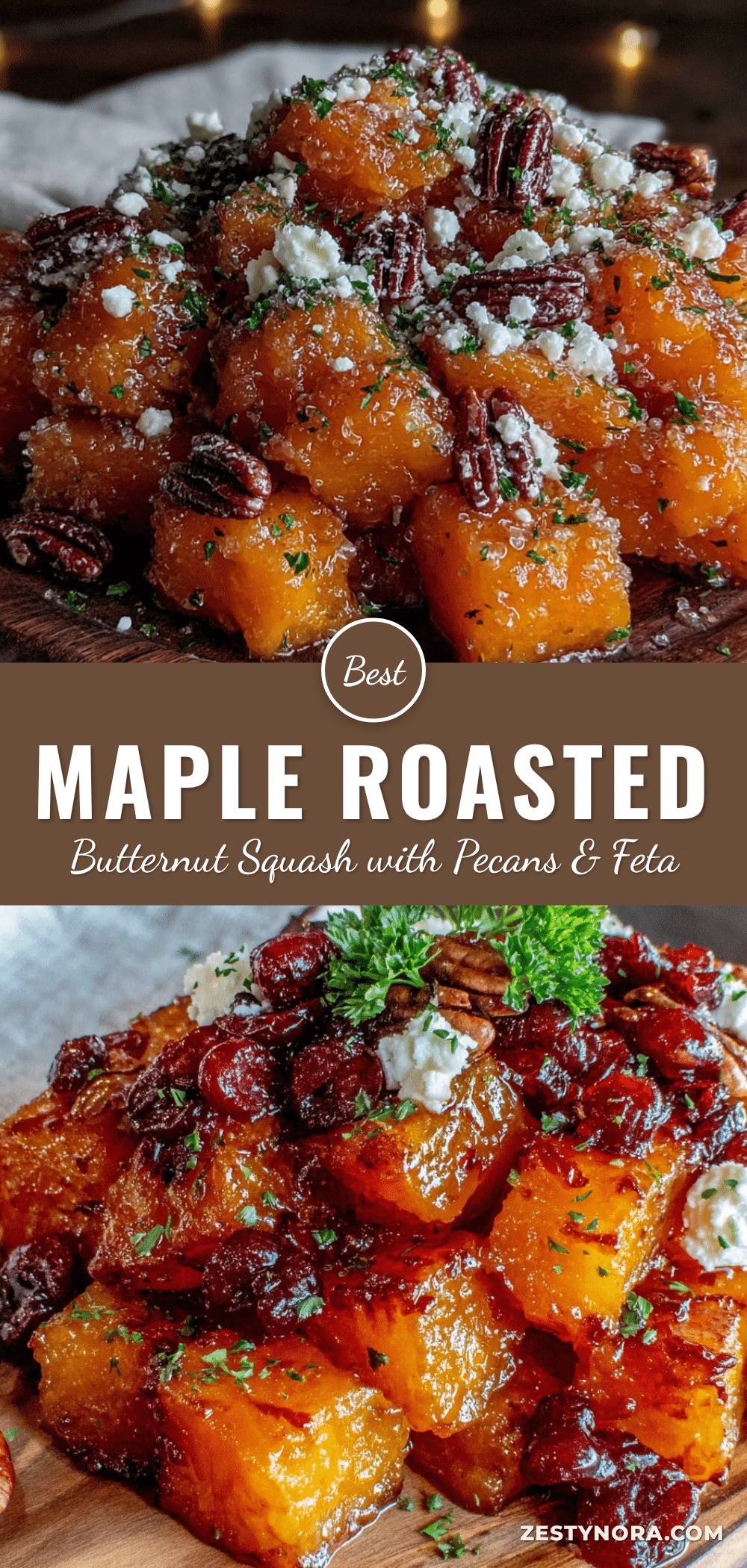
Quick Maple Roasted Butternut Squash with Pecans & Feta
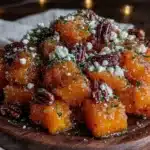
This quick and easy roasted butternut squash is tossed with maple syrup, then topped with toasted pecans and salty feta. It’s a perfect weeknight side dish that comes together in about 30 minutes and is sure to be a crowd-pleaser.
- Prep Time: 15 minutes
- Cook Time: 30 minutes
- Total Time: 45 minutes
- Yield: 4 servings 1x
- Category: Side Dish
- Cuisine: American
Ingredients
- 1 medium butternut squash (about 2 pounds), peeled and cut into 1-inch cubes
- 2 tablespoons olive oil
- 3 tablespoons pure maple syrup
- 1/2 cup pecan halves
- 1/3 cup crumbled feta cheese
- 1/2 teaspoon fine sea salt
- 1/4 teaspoon freshly ground black pepper
- 1 tablespoon fresh thyme leaves (optional)
Instructions
- Preheat your oven to 400°F (200°C). Line a large baking sheet with parchment paper.
- Prepare the butternut squash: Cut off the top and bottom, stand upright, and slice down the middle. Scoop out seeds and stringy bits, then peel the skin. Cut into 1-inch cubes (about 4-5 cups).
- In a mixing bowl, combine the cubed squash, olive oil, maple syrup, salt, and pepper. Toss until every piece is coated.
- Spread the squash in a single layer on the prepared baking sheet, leaving space between cubes. Do not pour excess liquid from the bowl over the squash.
- Roast for 20 minutes. Remove the pan, stir the squash, and return to the oven.
- While the squash roasts, toast the pecans: Heat a small skillet over medium heat. Add pecan halves and cook, stirring frequently, for 3-4 minutes until fragrant and slightly darker. Remove from pan immediately.
- Roast the squash for another 10-15 minutes, until fork-tender and edges are deep golden brown with caramelized spots (total roasting time: 30-35 minutes).
- Transfer roasted squash to a serving platter. Sprinkle toasted pecans and crumbled feta over the top. If using, scatter fresh thyme leaves over everything.
- Serve immediately while warm.
Notes
For best results, cut squash into uniform 1-inch cubes to ensure even cooking. Do not overcrowd the pan; use two baking sheets if doubling the recipe. Toast pecans separately to prevent burning. Let feta sit at room temperature for 10 minutes before crumbling for better texture. Leftovers can be stored in an airtight container in the refrigerator for up to 4 days; reheat in a 350°F oven or skillet.
Nutrition
- Serving Size: 1 serving (about 1 c
- Calories: 280
- Sugar: 18
- Sodium: 480
- Fat: 16
- Saturated Fat: 4
- Carbohydrates: 32
- Fiber: 5
- Protein: 6
Keywords: roasted butternut squash, maple roasted squash, butternut squash with pecans and feta, easy side dish, quick weeknight side, vegetarian, gluten-free