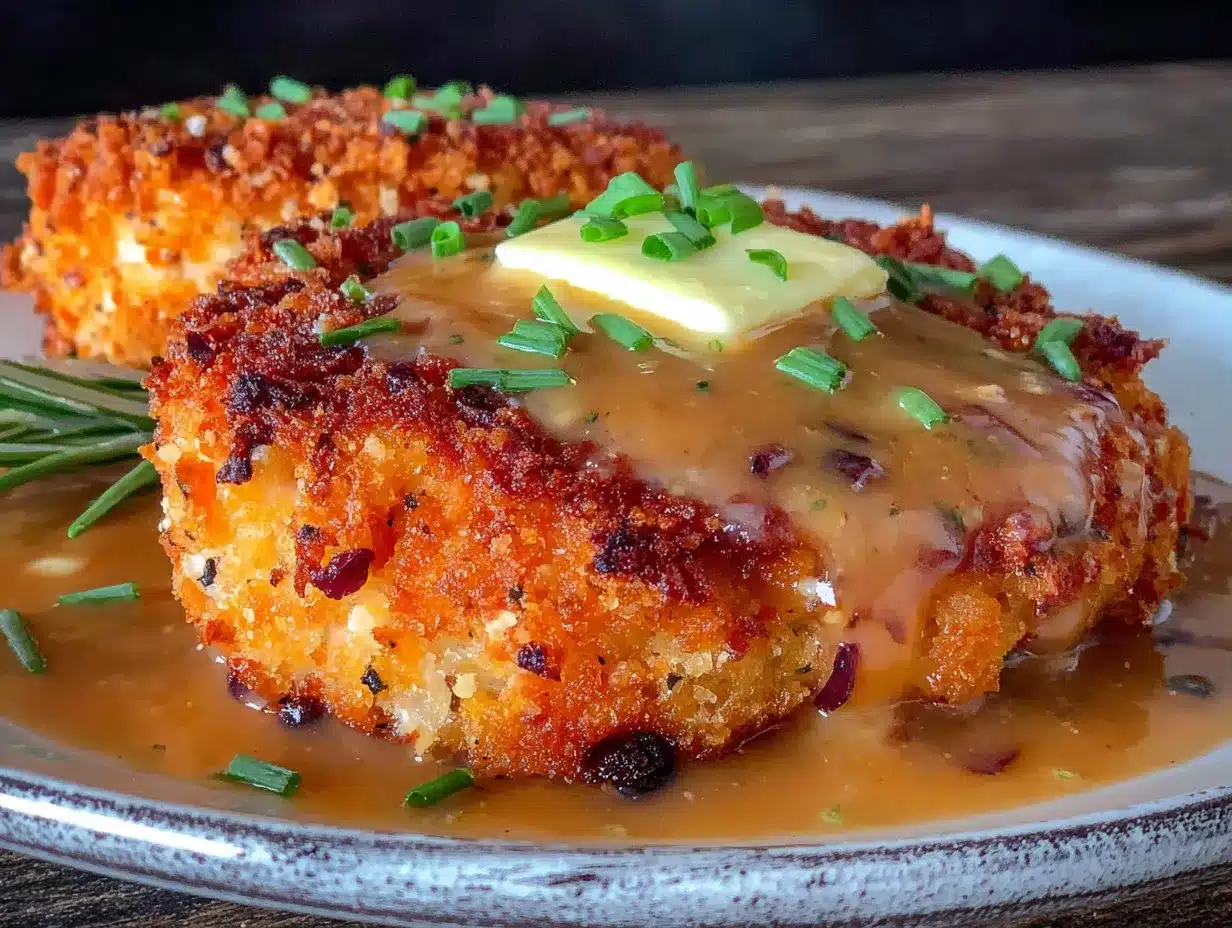
My husband asked for chicken fried steak three days in a row without being prompted, and I honestly didn’t even try to hide my surprise. I was just wiping down the counter, watching him scrape the last bit of brown gravy off his plate with a piece of crusty bread. He didn’t say anything fancy, just looked at me and said, “That was the good one.” That’s it. No dramatic sighs, no “best meal ever” speeches, just a quiet, serious nod of approval.
We usually have a rule about not making the same thing twice in a week. It’s a good rule. It keeps things interesting and stops us from getting bored. But this time, the rule went out the window. The smell of the breading hitting the hot oil was just too good to ignore. You know that smell? It’s savory, salty, and smells like comfort food done right. It filled the whole house and made the kids stop arguing about who got the bigger slice of apple pie.
I’ve made chicken fried steak before, but it was usually an afterthought. I’d just dredge the meat in flour and call it a day. But this version? This is the diner-style version. The kind that comes on a big plate with mashed potatoes and green beans. The crust is shatteringly crisp, and the gravy is rich without being too heavy. It’s the kind of meal that makes you want to stay in your pajamas for the rest of the evening.
Watching him go back for seconds, eyes closed, chewing slowly, told me everything I needed to know. It wasn’t just dinner; it was a win. And if you’re looking for a recipe that feels like a hug from the inside, this is it. It’s heavy, it’s hearty, and it’s exactly what we needed on a Tuesday night.
Why You’ll Love This Recipe
There is a specific kind of magic that happens when you combine a cheap cut of meat with a serious amount of effort. Chicken fried steak isn’t just about the meat; it’s about the technique. I’ve spent years testing different breading methods, from using just flour to trying out panko breadcrumbs, and I’ve finally landed on the perfect balance. This isn’t just another fried steak recipe; it’s the one that actually stays crispy even after the gravy hits it.
- Quick & Easy: While it requires some prep, the actual cooking time is fast. Once the oil is hot, you’re looking at just a few minutes per side. It’s perfect for those busy weeknights when you want something substantial but don’t have hours to spend.
- Simple Ingredients: You likely already have everything you need in your kitchen. Flour, eggs, milk, and a decent cut of round steak are staples. No fancy grocery trips or hard-to-find spices are required.
- Perfect for Comfort: This is the ultimate cozy dinner. It pairs beautifully with sides like creamy crockpot german potato salad with bacon or simple mashed potatoes. It’s a meal that screams “home.”
- Crowd-Pleaser: Kids and adults alike love the crispy texture. It feels like a treat, like you’re at a classic American diner, but it’s made right at your table.
- Unbelievably Delicious: The secret is in the buttermilk brine. It tenderizes the meat while adding a tangy depth that cuts through the richness of the fried crust. The texture is next-level comfort food.
What makes this recipe different is the double-dredge technique. By dipping the steak in the wet mixture and then pressing it firmly into the seasoned flour twice, you create a thick, armor-like crust. This crust holds up against the gravy. Most recipes result in soggy meat within minutes. This one stays crisp for a good ten minutes, which is plenty of time to enjoy the first bite before it softens slightly. It’s a game-changer for texture lovers.
Emotionally, this recipe taps into that desire for nostalgia. It’s not just food; it’s a memory of family dinners and weekend brunches. It’s the kind of meal that makes you slow down. You close your eyes after the first bite and just taste the seasoning. It’s comfort food reimagined for the modern kitchen—faster, but with the same soul-soothing satisfaction.
What Ingredients You Will Need
This recipe relies on simple, wholesome ingredients to deliver bold flavor and satisfying texture without the fuss. The magic isn’t in exotic spices; it’s in the quality of the basics and how you handle them. I like to keep the pantry stocked with these essentials so I can throw this together on a whim.
For the Meat
- Round Steak: Look for boneless round steak, about 1/2 inch thick. It’s a tough cut that becomes tender when pounded and fried. I prefer the ones from a local butcher, but grocery store brands work fine if you pound them well.
- Buttermilk: This is non-negotiable. The acidity breaks down the muscle fibers. If you’re out, mix 1 tablespoon of lemon juice with 1 cup of milk and let it sit for 10 minutes.
- Eggs: Large eggs are best for the wash. They provide the glue for the breading.
For the Breading
- All-Purpose Flour: Use a good quality AP flour. I recommend King Arthur for its consistent protein content, which helps with that perfect crunch.
- Seasonings: You’ll need salt, black pepper, garlic powder, onion powder, and paprika. The paprika adds a nice color and subtle sweetness. Don’t skip the cayenne if you like a little kick.
- Vegetable Oil: For frying, you need an oil with a high smoke point. Vegetable oil, canola oil, or peanut oil are all great choices. Avoid olive oil; it burns too easily.
For the Gravy
- Drippings: The brown bits left in the pan after frying the steaks are pure gold. They form the base of the flavor.
- Butter: Unsalted butter helps create a roux that thickens the gravy and adds richness.
- Flour: A little flour cooked with the butter creates the thickener.
- Milk or Broth: Whole milk makes it creamy, while chicken broth makes it savory. I usually do half and half for the best of both worlds.
If you’re looking for a gluten-free option, you can use a 1-to-1 gluten-free flour blend for the breading. For the gravy, just ensure your broth is gluten-free. The substitution is seamless in terms of taste, though the texture might be slightly different.
Equipment Needed
You don’t need a fancy kitchen to make this, but having the right tools makes a huge difference. The most important piece of equipment is a large cast-iron skillet. Cast iron holds heat incredibly well, which is crucial for getting a consistent, golden-brown crust. If you don’t have one, a heavy-bottomed stainless steel skillet works too, but you’ll need to be more careful with temperature control.
A meat mallet is essential. You can use the flat side to pound the steak to an even thickness. This ensures it cooks evenly and becomes tender. If you don’t have a mallet, a heavy rolling pin or the bottom of a heavy glass can work in a pinch.
For the breading station, you’ll need three shallow bowls or pie dishes. One for the flour mixture, one for the egg wash, and one for the final dredge. Having three separate stations allows you to work efficiently and prevents clumping.
A wire cooling rack is helpful for placing the fried steaks after they come out of the pan. This keeps the bottom from getting soggy from steam. If you don’t have one, you can use a clean wire rack or even a plate lined with paper towels, though the rack is better for airflow.
Budget-friendly tip: You don’t need to buy expensive specialty equipment. A simple meat thermometer ensures the steak reaches a safe internal temperature, but if you don’t have one, just press the steak; it should feel firm but yielding, like the tip of your nose.
Preparation Method
Getting this right is all about preparation. Let’s walk through the steps so you can get that perfect diner-style result.
- Prepare the Meat (10 minutes): Take your round steaks and place them between two sheets of plastic wrap. Use a meat mallet to pound them to about 1/4 to 1/2 inch thickness. You want them even so they cook uniformly. Don’t worry if they tear a bit; that’s where the breading sticks best. Place the pounded steaks in a large zip-top bag or a shallow dish.
- Make the Buttermilk Brine (5 minutes): In a bowl, whisk together the buttermilk, one egg, and a pinch of salt and pepper. Pour this mixture over the steaks. Cover and let them marinate in the fridge for at least 30 minutes, or up to 4 hours. This step tenderizes the meat and adds flavor. If you’re short on time, 15 minutes is the absolute minimum, but the longer, the better.
- Set Up the Breading Station (5 minutes): While the meat marinates, set up three shallow dishes. In the first, mix 1 cup of flour with 1 teaspoon salt, 1/2 teaspoon black pepper, 1/2 teaspoon garlic powder, 1/2 teaspoon onion powder, 1/2 teaspoon paprika, and 1/4 teaspoon cayenne pepper. Whisk this thoroughly so the spices are evenly distributed. In the second dish, beat two more eggs with 1/4 cup of milk. Leave the third dish empty for now.
- The First Dredge (5 minutes): Remove a steak from the buttermilk, letting the excess drip off. Press it firmly into the flour mixture. Flip it over and press again. Make sure the entire surface is coated. Shake off any loose flour. This first layer is crucial for adhesion.
- The Second Dredge (5 minutes): Dip the floured steak into the egg wash. Let the excess drip off. Then, press it firmly back into the flour mixture. This double-dredge creates that thick, crispy crust. Place the breaded steak on a clean plate or wire rack. Repeat with the remaining steaks.
- Heat the Oil (10 minutes): Pour about 1/2 inch of vegetable oil into your cast-iron skillet. Heat it over medium-high heat. You want the oil to reach 350°F (175°C). If you don’t have a thermometer, drop a pinch of flour into the oil; if it sizzles immediately, it’s ready. If it burns, it’s too hot. If it sinks, it’s too low.
- Fry the Steaks (10-12 minutes): Carefully place the steaks into the hot oil. Do not overcrowd the pan; fry in batches if necessary. Fry for 3-4 minutes per side, or until the crust is deep golden brown and crispy. Flip only once to ensure a good crust forms. Remove the steaks and place them on the wire rack to drain. Keep them warm in a 200°F oven if you’re frying in batches.
- Make the Gravy (10 minutes): Pour off all but about 2 tablespoons of the oil from the skillet. Add 2 tablespoons of butter and let it melt. Sprinkle in 1/4 cup of flour and whisk constantly for 1-2 minutes to create a roux. Slowly whisk in 1 1/2 cups of milk or chicken broth. Bring to a simmer, stirring frequently, until the gravy thickens. Season with salt and pepper to taste.
Pro tip: If the gravy gets too thick, add a splash more milk. If it’s too thin, let it simmer a bit longer or add a tiny slurry of cornstarch and water.
Cooking Tips & Techniques
I’ve made my fair share of mistakes with fried steak over the years. The biggest one was using a non-stick pan. Non-stick coatings can’t handle the high heat needed for a good crust, and they often scratch when you use metal tongs. Stick to cast iron or stainless steel.
Another common mistake is overcrowding the pan. When you put too many steaks in at once, the oil temperature drops drastically. This leads to greasy, soggy steak instead of crispy, golden perfection. Give each piece of meat room to breathe. It’s better to fry in two batches than to ruin the texture.
Timing is everything. You want the oil to stay around 350°F. If it drops below 325°F, the steak will absorb oil. If it goes above 375°F, the outside will burn before the inside is cooked. Adjust your heat as needed. Medium-high is usually the sweet spot.
Multitasking is key here. While the steaks are frying, start prepping your sides. Mashed potatoes or steamed green beans can be made while you manage the frying pan. This way, everything is ready to serve at the same time.
For consistency, use a meat thermometer. Chicken fried steak should reach an internal temperature of 145°F (63°C) for medium-rare to medium. Since it’s pounded thin, it cooks quickly, so keep an eye on it. Don’t overcook it, or it will become tough.
Finally, let the meat rest for a few minutes after frying. This allows the juices to redistribute. If you cut into it immediately, the juices run out, and the meat dries up. A short rest keeps it juicy and tender.
Variations & Adaptations
One of the best things about this recipe is how adaptable it is. You can tweak it to fit your dietary needs or taste preferences.
- Dairy-Free Option: Substitute the buttermilk with a dairy-free milk alternative like almond or oat milk, mixed with 1 tablespoon of vinegar or lemon juice. Use olive oil or avocado oil for frying. For the gravy, use dairy-free milk and a dairy-free butter substitute.
- Gluten-Free Option: Use a gluten-free flour blend for the breading. Ensure your broth is gluten-free. The texture might be slightly less crispy, but the flavor remains excellent.
- Spicy Kick: Add more cayenne pepper to the flour mixture, or mix in some crushed red pepper flakes. You can also add a dash of hot sauce to the egg wash for extra heat.
- Herb-Infused Crust: Add dried thyme, rosemary, or sage to the flour mixture. These herbs pair beautifully with the savory gravy and add a nice aromatic depth.
- Baked Version: For a lighter option, you can bake the steaks. Place them on a wire rack over a baking sheet. Brush generously with oil and bake at 400°F (200°C) for 15-20 minutes, flipping halfway through. It won’t be as crispy as fried, but it’s still delicious.
I personally love adding a teaspoon of smoked paprika to the flour mix. It gives the crust a subtle smokiness that mimics the flavor of a campfire. It’s a small change that makes a big difference.
Serving & Storage Suggestions
Chicken fried steak is best served immediately while the crust is still crisp. Plate it with a generous ladle of gravy poured over the top. Classic sides include creamy mashed potatoes, buttered green beans, or creamy crockpot german potato salad with bacon for a tangy contrast. A simple side salad with a vinaigrette can also cut through the richness.
If you have leftovers, store them in an airtight container in the refrigerator for up to 3 days. The gravy can be stored separately or poured over the steak; just note that the crust will soften in the fridge.
To reheat, avoid the microwave if you can. It will make the crust soggy. Instead, reheat in a skillet over medium heat with a little butter, or in an oven at 350°F (175°C) for 10-15 minutes. This helps restore some of the crispiness. The flavors actually develop over time, so day-old chicken fried steak is still very good.
For freezing, freeze the cooked steaks without gravy. Place them on a baking sheet to freeze individually, then transfer to a freezer bag. They will keep for up to 2 months. Thaw in the fridge overnight and reheat in the oven.
Nutritional Information & Benefits
While chicken fried steak is indulgent, it does provide some nutritional benefits. Beef is a great source of high-quality protein, which is essential for muscle repair and growth. It’s also rich in iron, zinc, and vitamin B12, which support energy levels and immune function.
The breading adds carbohydrates, which provide energy. If you’re watching your carb intake, you can reduce the amount of flour used or opt for the almond flour variation. The gravy adds fat and sodium, so enjoy it in moderation.
For those with dietary restrictions, the dairy-free and gluten-free adaptations make this recipe accessible to more people. Just be mindful of cross-contamination if you have severe allergies.
From a wellness perspective, this recipe is best enjoyed as an occasional treat rather than a daily staple. Balance it with plenty of vegetables and lean proteins throughout the week. It’s a comforting meal that satisfies the soul, and that’s a benefit in itself.
Conclusion
Chicken fried steak is more than just a meal; it’s an experience. The crunch, the savory gravy, the tender meat—it all comes together to create something truly special. I hope you try this recipe and enjoy it as much as my family does. It’s a dish that brings people together around the table.
Feel free to customize it to your liking. Add more spices, try different sides, or experiment with the breading. Cooking is about making it your own. I’d love to hear how it turns out for you. Leave a comment below with your tips or questions. If you make this recipe, please share a photo on social media and tag me. I love seeing your creations!
Thanks for reading, and happy cooking! Here’s to many more delicious meals shared with loved ones.
Frequently Asked Questions
Can I use a different cut of meat?
Yes, you can use cube steak, which is already tenderized, or top round steak. However, round steak pounded thin is the traditional choice for the best texture.
Why is my crust falling off?
This usually happens if the meat isn’t dry before dredging or if you don’t press the flour firmly enough. Make sure to pat the steak dry after removing it from the buttermilk, and press the breading on tightly.
How do I keep the oil from splattering?
Pat the steaks dry before dredging, and lower them gently into the oil away from you. You can also use a splatter screen, which is a great tool for frying.
Can I make the gravy ahead of time?
Yes, you can make the gravy ahead of time. Store it in the fridge and reheat it gently on the stove, adding a little milk or broth if it thickens too much.
What is the best oil for frying?
Vegetable oil, canola oil, and peanut oil are all excellent choices due to their high smoke points. Avoid olive oil or butter, as they burn easily.
Pin This Recipe!
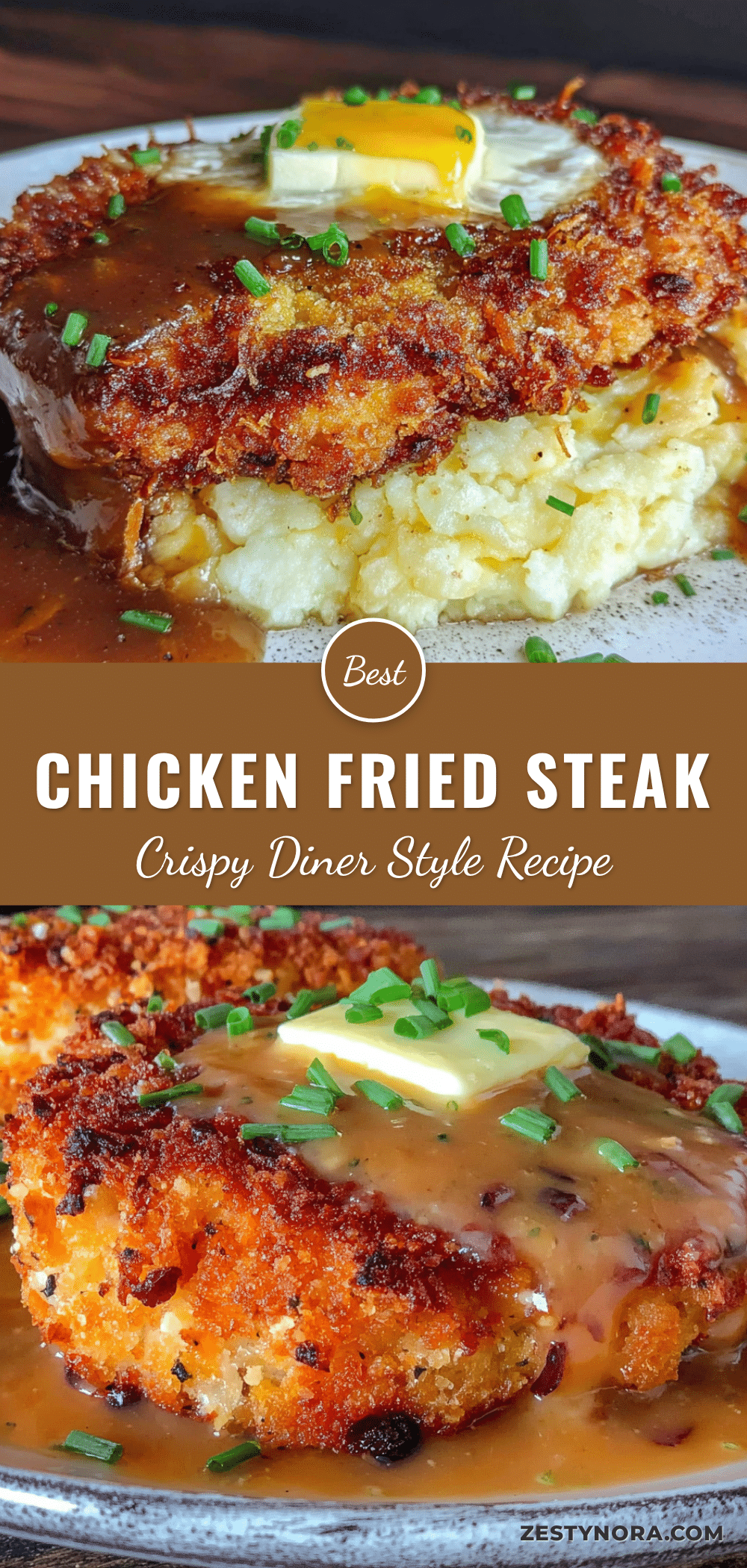
Crispy Diner-Style Chicken Fried Steak with Gravy
A diner-style chicken fried steak recipe featuring a shatteringly crisp double-dredged crust and rich, savory gravy. This hearty comfort food is tenderized with a buttermilk brine and fried to golden perfection.
- Prep Time: 30 minutes
- Cook Time: 20 minutes
- Total Time: 50 minutes
- Yield: 4 servings 1x
- Category: Main Course
- Cuisine: American
Ingredients
- 1 lb boneless round steak (about 1/2 inch thick)
- 1 cup buttermilk
- 3 large eggs (divided)
- 1 cup all-purpose flour (divided)
- 1 tsp salt
- 1/2 tsp black pepper
- 1/2 tsp garlic powder
- 1/2 tsp onion powder
- 1/2 tsp paprika
- 1/4 tsp cayenne pepper
- 1/4 cup milk
- 1/2 inch vegetable oil (for frying)
- 2 tbsp unsalted butter (for gravy)
- 1/4 cup flour (for gravy)
- 1 1/2 cups milk or chicken broth (for gravy)
Instructions
- Pound the round steaks between plastic wrap to 1/4 to 1/2 inch thickness using a meat mallet.
- Whisk together buttermilk, one egg, salt, and pepper. Pour over steaks, cover, and marinate in the fridge for at least 30 minutes (up to 4 hours).
- In a shallow dish, mix 1 cup flour with salt, pepper, garlic powder, onion powder, paprika, and cayenne.
- In a second dish, beat two eggs with 1/4 cup milk.
- Remove a steak from buttermilk, letting excess drip off. Press firmly into the flour mixture, flip, and press again. Shake off loose flour.
- Dip the floured steak into the egg wash, let excess drip off, then press firmly back into the flour mixture for a second coating.
- Heat 1/2 inch of vegetable oil in a cast-iron skillet over medium-high heat to 350°F (175°C).
- Fry steaks in batches for 3-4 minutes per side until deep golden brown and crispy. Do not overcrowd the pan.
- Remove steaks to a wire rack. Keep warm in a 200°F oven if frying in batches.
- Pour off all but 2 tablespoons of oil from the skillet. Add butter and melt.
- Whisk in 1/4 cup flour to create a roux, cooking for 1-2 minutes.
- Slowly whisk in milk or broth. Simmer, stirring frequently, until thickened. Season with salt and pepper to taste.
- Serve steaks immediately with gravy poured over the top.
Notes
For a gluten-free option, use a 1-to-1 gluten-free flour blend. For dairy-free, substitute buttermilk with almond/oat milk plus vinegar and use dairy-free butter/milk for gravy. Ensure oil temperature stays around 350°F to prevent greasy results. Let meat rest for a few minutes after frying to redistribute juices.
Nutrition
- Serving Size: 1 steak with gravy
- Calories: 650
- Sugar: 4
- Sodium: 800
- Fat: 35
- Saturated Fat: 12
- Carbohydrates: 30
- Fiber: 1
- Protein: 45
Keywords: chicken fried steak, diner style, comfort food, gravy, fried steak, buttermilk steak, cast iron recipes, easy dinner