Introduction
Flour dusting the counter in a thick white cloud when I realized I’d bought the wrong yeast. It wasn’t even active dry yeast; it was instant, and I had already started mixing the dough by hand, my knuckles raw and stiff from twenty minutes of kneading warm dough that felt more like playdough than bread. The clock on the oven read 4:00 PM, and the market closed in ten minutes, but my abuela’s recipe demanded time I didn’t have. I had to make a choice: send everyone home hungry or trust my instincts on this soft sweet Mexican pan de Muerto recipe that has been in my family for generations. Honestly, panic is a great motivator, but so is the smell of orange blossom water hitting warm milk. I added the instant yeast directly to the flour, adjusted the liquid, and prayed the gluten would develop fast enough. It did, miraculously. The dough rose faster than I expected, puffing up like a happy balloon in the bowl.
That day, I learned that tradition isn’t about perfection; it’s about presence. Even when you’re rushing, the rhythm of kneading slows your heart down. The scent of cumin and orange peel filled the kitchen, turning a stressful afternoon into a moment of pure connection. I pulled the first loaf out, golden and topped with bone-shaped strips of dough, and handed a warm piece to my nephew. He didn’t say anything, he just closed his eyes and sighed. That sigh was worth the panic. It reminded me why we bake these breads, not just for the taste, but for the memory they hold. Now, when I make this soft sweet Mexican pan de Muerto recipe, I don’t rush. I savor the quiet moments before the oven timer goes off, knowing that the result is always worth the effort. It’s a bread that tastes like home, no matter how chaotic the morning was.
Why You’ll Love This Recipe
There is a specific kind of magic that happens when yeast, sugar, and citrus meet in a bowl. This soft sweet Mexican pan de Muerto recipe isn’t just another bread; it’s a ritual. I’ve tested dozens of versions over the years, from dense, dry attempts to overly sweet doughs that tasted like cake, but this one hits the sweet spot—literally and figuratively. It’s the kind of bread that makes you stop mid-chew and just appreciate the texture. It’s pillowy soft, slightly sweet, and fragrant with the distinct aroma of orange blossom water and cumin. You know how some recipes feel like work? This one feels like a hug.
- Quick & Easy: Yes, it requires rising time, but the active prep is minimal. You mix, you knead, you wait. Perfect for a weekend afternoon when you want to fill your home with a wonderful smell without spending hours at the stove.
- Simple Ingredients: You likely have most of these in your pantry right now. Flour, sugar, butter, eggs, and milk. The special touches like cumin and orange blossom water are easy to find or substitute, making this accessible for any home baker.
- Perfect for Day of the Dead: While traditionally made for Día de los Muertos, this bread is delicious any time. It’s a great addition to a family gathering, a quiet breakfast with coffee, or a special treat for a friend going through a hard time.
- Crowd-Pleaser: Kids love the fun shapes, and adults love the subtle spice. It’s never been a hit-or-miss dish in my house; it’s always a clean plate.
- Unbelievably Delicious: The combination of the soft crumb and the sugary, crunchy topping is next-level comfort food. It’s not cloying; it’s balanced.
What makes this recipe different? It’s the ratio of fat to flour. I use a generous amount of butter, which gives it that rich, brioche-like texture without being heavy. Many recipes skip this, resulting in a dry loaf. This one is moist, tender, and stays fresh for days. It’s comfort food reimagined—simpler than a croissant but with the same soul-soothing satisfaction. Whether you’re making it for a holiday or just because, it turns a simple meal into something memorable. It’s the kind of bread you tear apart with your hands, sharing pieces with everyone at the table.
What Ingredients You Will Need
This recipe uses simple, wholesome ingredients to deliver bold flavor and satisfying texture without the fuss. The beauty of pan de muerto lies in the balance of sweet and savory notes, so choosing quality ingredients matters more than you might think. You don’t need fancy imports, but you do need fresh yeast and good butter. Here is what you’ll need to make this soft sweet Mexican pan de Muerto recipe successfully.
- All-Purpose Flour (4 cups / 500g): The base of the bread. I recommend a brand with a moderate protein content, like Gold Medal, for the best balance of chew and tenderness. If you only have cake flour, you can substitute, but the texture will be softer, almost cake-like.
- Active Dry Yeast (2 packets / 4.5g): Make sure your yeast is fresh. If it doesn’t foam up in warm water, toss it and start over. I prefer Fleischmann’s for consistency. Instant yeast works too, but you’ll need to adjust the hydration slightly.
- Granulated Sugar (1/2 cup / 100g): This feeds the yeast and adds sweetness. Don’t reduce this too much, or the bread won’t rise properly. The sugar also helps with the browning of the crust.
- Unsalted Butter (1/2 cup / 115g, softened): Room temperature butter blends easier into the dough. I use Kerrygold because of its rich yellow color and creamy flavor. If you’re dairy-free, use a high-quality coconut oil, but the flavor will change.
- Large Eggs (2 large, room temperature): Eggs add richness and structure. Let them sit out for 30 minutes before using. Cold eggs can shock the yeast and slow down the rising process.
- Milk (1 cup / 240ml, warm): Warm milk, not hot. Think bathwater temperature. Whole milk gives the best flavor, but 2% works fine. If you want a lighter bread, skim milk is an option, but it won’t be as tender.
- Orange Blossom Water (2 tablespoons): This is the signature scent. Don’t skip it. It’s not the same as orange juice or zest. You can find it in the international aisle of most grocery stores or online. If you can’t find it, a teaspoon of orange zest works, but the aroma won’t be as authentic.
- Ground Cumin (1 teaspoon): Yes, cumin. It sounds weird, but it adds an earthy depth that balances the sweetness. It’s a traditional ingredient in many Mexican breads. Use fresh ground cumin if you can; pre-ground loses its potency quickly.
- Salt (1 teaspoon): Essential for flavor. It enhances the sweetness and strengthens the gluten structure.
- For the Topping: You’ll need extra butter for brushing, granulated sugar for rolling, and dough scraps for shaping. The topping is what gives it that classic look and crunchy texture.
Substitution tip: If you want to make this gluten-free, use a 1:1 gluten-free flour blend that includes xanthan gum. The texture will be slightly different, more crumbly, but still delicious. For a vegan version, use flax eggs and coconut oil, but be aware the rise may be less dramatic.
Equipment Needed
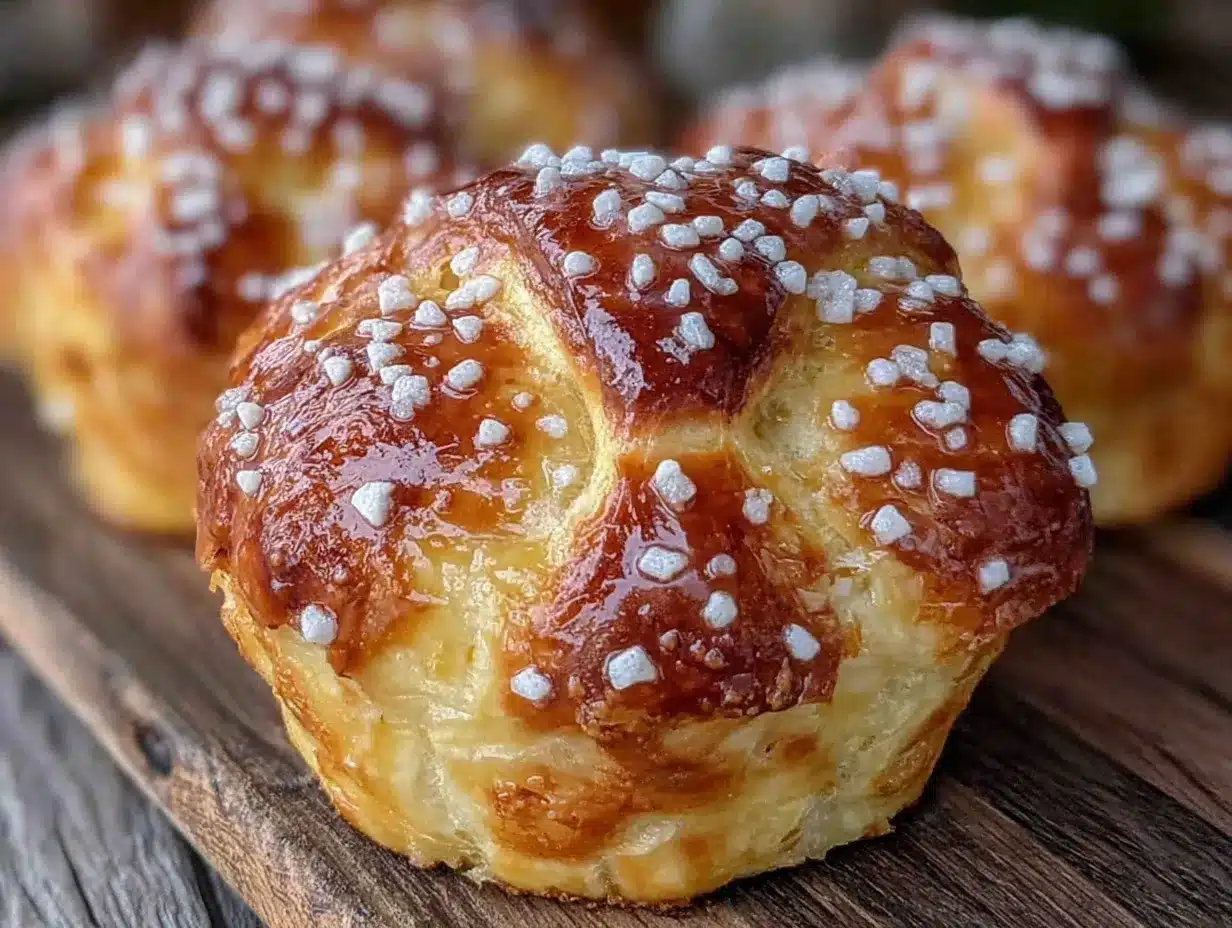
You don’t need a fancy kitchen to make this bread. A few basic tools will get you the best results. I’ve tried making this with just a spoon and my hands, but having the right equipment makes the difference between a sticky mess and a smooth dough.
- Mixing Bowl (Large): A bowl at least 6 quarts in size gives the dough room to expand. Glass or stainless steel works best. I use a large ceramic bowl because it keeps the dough cool.
- Dough Whisk or Wooden Spoon: For the initial mixing. A dough whisk is faster and less likely to stick, but a sturdy wooden spoon works fine if that’s what you have.
- Measuring Cups and Spoons: For baking, accuracy is key. I recommend using a digital scale for the flour, as cup measurements can vary wildly. 1 cup of flour can be anywhere from 120g to 150g depending on how you pack it.
- Pastry Brush: Essential for brushing the melted butter on the baked bread and then rolling it in sugar. A silicone brush is easier to clean than bristle brushes.
- Baking Sheet: A standard half-sheet pan. Line it with parchment paper for easy cleanup. I have a non-stick pan that I’ve used for years; it works perfectly.
- Rolling Pin: You’ll need this to shape the main loaf and the bone pieces. A French-style rolling pin (straight) gives you more control than a French-style one with handles.
- Cooling Rack: Crucial for letting the bread breathe. If you leave it on the hot pan, the bottom will get soggy. A wire rack allows air circulation on all sides.
Budget-friendly alternative: If you don’t have a pastry brush, you can use a clean makeup sponge (dedicated to food use only!) or just dip your fingers in the melted butter. It’s messy, but it works in a pinch.
Preparation Method
Making this soft sweet Mexican pan de Muerto recipe is a process, but it’s straightforward if you follow the steps carefully. Take your time with the yeast activation; it’s the most important part. If the yeast doesn’t activate, the bread won’t rise, and you’ll be left with a dense brick. Here is how to do it right.
- Activate the Yeast (5 minutes): In a small bowl, combine the warm milk (1 cup) and a tablespoon of the sugar from the recipe. Sprinkle the yeast over the top and stir gently. Let it sit for 5-10 minutes until it becomes foamy and bubbly. If it doesn’t foam, your yeast is dead, and you need to start over with fresh yeast. This step ensures your bread will be light and airy.
- Mix the Dry Ingredients (2 minutes): In a large mixing bowl, whisk together the flour, remaining sugar, salt, and ground cumin. Make a well in the center of the flour mixture. This helps distribute the yeast evenly throughout the dough. If you skip the well, you might get pockets of undissolved yeast or salt.
- Combine Wet and Dry (3 minutes): Crack the eggs into the well, then pour in the activated yeast mixture and the orange blossom water. Mix with a dough whisk or wooden spoon until a shaggy dough forms. It will look messy and sticky at this stage. Don’t worry; that’s normal. The gluten needs to develop to make it smooth.
- Knead the Dough (10 minutes): Turn the dough out onto a lightly floured surface. Knead by hand for about 10 minutes, adding flour sparingly if it’s too sticky. The dough should become smooth, elastic, and slightly tacky but not sticky to the touch. If you’re using a stand mixer, use the dough hook on low speed for 8 minutes. Over-kneading can make the bread tough, so stop when it passes the windowpane test (you can stretch a small piece thin enough to see light through it without it tearing).
- First Rise (1-2 hours): Place the dough in a greased bowl, turning it once to coat the top. Cover with plastic wrap or a damp towel. Let it rise in a warm, draft-free place for 1-2 hours, or until it has doubled in size. I usually turn on my oven light to create a warm environment. The dough should look puffy and feel airy when you poke it.
- Shape the Bread (15 minutes): Gently punch down the dough to release air bubbles. Divide the dough into three equal parts. Roll one part into a large ball for the main loaf. Roll the other two parts into long, thin cylinders for the bones. Cut the cylinders in half to make four bone pieces. Place the main loaf on a parchment-lined baking sheet. Arrange the bone pieces across the top in a cross shape, and add two smaller pieces on top for the “skull” effect. Pinch the ends securely so they don’t fall off during baking.
- Second Rise (45-60 minutes): Cover the shaped bread loosely with plastic wrap or a towel. Let it rise again for 45-60 minutes until it looks puffy and jiggles slightly when you shake the pan. Do not skip this step; it ensures the bread is light and not dense.
- Bake (25-30 minutes): Preheat your oven to 350°F (175°C). Bake the bread for 25-30 minutes until the top is golden brown. If the top browns too quickly, tent it with aluminum foil. The bread is done when it sounds hollow when tapped on the bottom. Use an instant-read thermometer if you have one; the internal temperature should reach 190°F (88°C).
- Glaze and Cool (10 minutes): While the bread is still hot, brush the top generously with melted butter. Immediately roll it in granulated sugar, coating all sides. Place on a wire rack to cool completely. The sugar will melt slightly into the butter, creating a crunchy, sweet crust. If you cut it while hot, it will be gummy. Let it cool for at least 30 minutes before slicing.
Cooking Tips & Techniques
I’ve made this bread more times than I can count, and I’ve learned a few hard lessons along the way. Here are some pro tips to ensure your soft sweet Mexican pan de Muerto recipe turns out perfect every time.
Temperature Matters: The temperature of your milk is critical. If it’s too hot, it will kill the yeast. If it’s too cold, the yeast won’t activate. Aim for 110°F (43°C). If you don’t have a thermometer, add the milk to the bowl and stick your clean finger in it. It should feel warm, like a baby’s bath, not hot. This small detail can save your bread from being a dense brick.
Don’t Over-Flour: When kneading, it’s tempting to add more flour to stop the dough from sticking. Resist this urge. Too much flour will make the bread dry and heavy. The dough should be slightly tacky. If it sticks to your hands, wet them instead of adding flour. This keeps the hydration level high, resulting in a softer crumb.
Shape Gently: When shaping the bones and skull, handle the dough gently. You don’t want to deflate the air bubbles you worked so hard to create. Just press the pieces together firmly enough that they stay in place during the second rise. If they fall off in the oven, it’s not the end of the world, but it won’t look as traditional.
The Sugar Glaze: The key to the crunchy topping is applying the butter and sugar while the bread is still hot. The heat melts the sugar slightly, creating a crust that sticks to the bread. If you wait until the bread is cool, the sugar will just fall off. Brush the butter on immediately after taking the bread out of the oven, then roll it in sugar.
Storage for Freshness: Pan de muerto is best eaten on the day it is baked. However, it stays fresh for up to three days if stored in an airtight container at room temperature. For longer storage, freeze the whole loaf or individual pieces. Reheat in the oven at 300°F for 10 minutes to restore the soft texture. Avoid microwaving, as it makes the bread chewy and tough.
Variations & Adaptations
While the traditional recipe is simple, there are many ways to adapt this soft sweet Mexican pan de Muerto recipe to suit your taste or dietary needs. I’ve experimented with a few variations, and here are my favorites.
- Chocolate Chip Version: Add 1/2 cup of semi-sweet chocolate chips to the dough after the first rise. Gently fold them in before shaping. The chocolate adds a rich, decadent flavor that pairs well with the orange and cumin. This is a favorite among kids.
- Cinnamon Sugar Roll: Instead of shaping the bread into a loaf and bones, roll the dough out into a rectangle. Spread a mixture of softened butter, cinnamon, and sugar over the dough. Roll it up tightly like a cinnamon roll and place it seam-side down on the baking sheet. Bake as directed. This version is sweeter and more like a dessert.
- Gluten-Free Adaptation: Use a high-quality 1:1 gluten-free flour blend. Add 1/2 teaspoon of xanthan gum if your blend doesn’t include it. The dough will be stickier, so handle it with wet hands. The texture will be slightly more crumbly, but the flavor will still be authentic.
- Vegan Version: Substitute the butter with coconut oil or vegan butter. Use flax eggs (1 tablespoon ground flaxseed mixed with 3 tablespoons water per egg) instead of regular eggs. Use agave nectar instead of sugar if you prefer a lower glycemic index. The rise may be less dramatic, but the flavor will still be delicious.
- Seasonal Fruit Twist: In the summer, add fresh chopped strawberries or blueberries to the dough. In the fall, add diced apples and extra cinnamon. These additions make the bread feel seasonal and fresh. Just be sure to pat the fruit dry before adding it to prevent excess moisture.
My personal favorite variation is the chocolate chip version. The contrast of the sweet chocolate and the subtle cumin is unexpected but works surprisingly well. It’s a fun twist to make for a special occasion or just to treat yourself.
Serving & Storage Suggestions
Pan de muerto is best served warm, fresh out of the oven. The aroma of orange blossom and cinnamon is irresistible, and the soft texture is at its peak. Serve it with a hot cup of coffee or chocolate, which is traditional in Mexico. The bitterness of the chocolate balances the sweetness of the bread perfectly.
If you have leftovers, store them in an airtight container at room temperature for up to three days. Do not refrigerate, as the cold will dry out the bread. If you need to store it longer, freeze the whole loaf or individual pieces in a freezer-safe bag. Thaw at room temperature or reheat in the oven at 300°F for 10 minutes to restore freshness.
For serving, tear the bread into pieces and share it with family and friends. It’s a communal bread, meant to be enjoyed together. You can also slice it thinly and toast it for breakfast with butter and jam. The toasted pieces are crunchy and delicious, offering a different texture experience.
Flavors develop over time, especially if you make the dough the night before and let it rise slowly in the refrigerator. This cold fermentation enhances the flavor, giving the bread a deeper, more complex taste. If you plan to do this, remember to let the dough come to room temperature before shaping and baking.
Nutritional Information & Benefits
While pan de muerto is a treat, it’s made with relatively simple ingredients. Each slice contains approximately 250 calories, with 6g of protein, 45g of carbohydrates, and 8g of fat. The fat comes primarily from the butter, so if you’re watching your saturated fat intake, you can reduce the amount slightly, though it will affect the texture.
The eggs provide high-quality protein and essential vitamins like B12 and D. The flour offers carbohydrates for energy, and the sugar provides a quick energy boost. The cumin adds trace minerals like iron and manganese, though the amount is small. Orange blossom water contains antioxidants, adding a subtle health benefit.
This recipe is not gluten-free or vegan by default, but adaptations are easy. For those with dietary restrictions, the gluten-free or vegan versions are great alternatives. It’s a balanced treat when enjoyed in moderation. I always try to pair it with a protein-rich drink like milk or a smoothie to balance the meal.
Conclusion
Making this soft sweet Mexican pan de Muerto recipe is more than just baking; it’s a way to connect with tradition and family. The process is meditative, and the result is always rewarding. I love how this bread brings people together, whether it’s for a holiday or a quiet Sunday morning. It’s a testament to the power of simple ingredients and patience.
I encourage you to try this recipe and make it your own. Add chocolate, swap the cumin for anise, or shape it differently. The beauty of baking is in the customization. Share your creations with friends and family, and don’t be afraid to experiment. I’d love to hear how your bread turns out. Leave a comment below with your tips or photos of your finished loaf.
This recipe has been a staple in my kitchen for years, and I hope it becomes one in yours too. It’s a bread that tastes like love, warmth, and home. So, preheat your oven, gather your ingredients, and start baking. Your kitchen will smell amazing, and your heart will feel full. Happy baking!
Frequently Asked Questions
Can I make this bread ahead of time?
Yes, you can make the dough the night before and let it rise slowly in the refrigerator. This cold fermentation enhances the flavor. Just remember to let the dough come to room temperature before shaping and baking the next day.
What if I don’t have orange blossom water?
You can substitute it with orange zest or a few drops of orange extract. While the aroma won’t be exactly the same, the flavor will still be delicious. Alternatively, you can omit it, but the bread will lack that traditional scent.
How do I know when the bread is done baking?
The bread is done when the top is golden brown and it sounds hollow when tapped on the bottom. If you have an instant-read thermometer, the internal temperature should reach 190°F (88°C).
Can I freeze the baked bread?
Yes, you can freeze the baked bread for up to three months. Wrap it tightly in plastic wrap and then in aluminum foil or place it in a freezer-safe bag. Thaw at room temperature or reheat in the oven at 300°F for 10 minutes.
Why did my bread turn out dense?
Dense bread is usually caused by dead yeast, over-proofing, or too much flour. Make sure your yeast is fresh and active. Also, avoid adding too much flour during kneading; the dough should be slightly tacky. If you over-knead, the gluten can become too tight, resulting in a dense crumb.
Pin This Recipe!
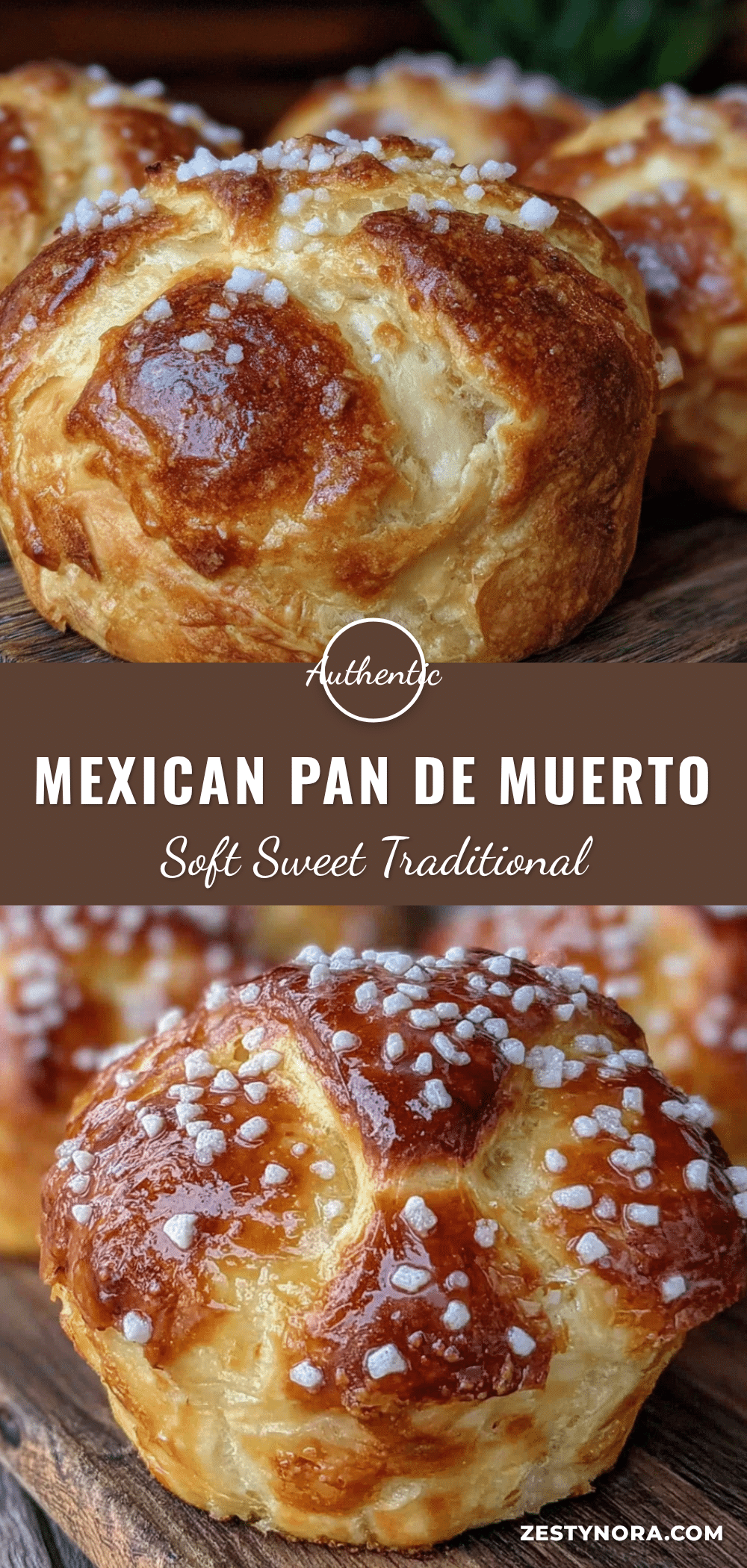
Soft Sweet Mexican Pan de Muerto: Easy 5-Ingredient Best Recipe

A traditional, pillowy soft Mexican bread infused with orange blossom water and cumin, featuring a classic bone-shaped design and a crunchy sugar topping. Perfect for Día de los Muertos or any special occasion.
- Prep Time: 45 minutes
- Cook Time: 30 minutes
- Total Time: 3 hours 15 minutes
- Yield: 1 loaf 1x
- Category: Bread
- Cuisine: Mexican
Ingredients
- 4 cups (500g) All-Purpose Flour
- 2 packets (4.5g) Active Dry Yeast
- 1/2 cup (100g) Granulated Sugar
- 1/2 cup (115g) Unsalted Butter, softened
- 2 Large Eggs, room temperature
- 1 cup (240ml) Warm Milk
- 2 tablespoons Orange Blossom Water
- 1 teaspoon Ground Cumin
- 1 teaspoon Salt
- Extra butter for brushing
- Granulated sugar for rolling
Instructions
- Activate the yeast: In a small bowl, combine warm milk and 1 tablespoon of sugar. Sprinkle yeast over the top and let sit for 5-10 minutes until foamy.
- Mix dry ingredients: In a large bowl, whisk together flour, remaining sugar, salt, and ground cumin. Make a well in the center.
- Combine wet and dry: Crack eggs into the well, pour in the activated yeast mixture and orange blossom water. Mix until a shaggy dough forms.
- Knead the dough: Turn dough onto a floured surface and knead by hand for 10 minutes until smooth and elastic. Alternatively, use a stand mixer with a dough hook on low speed for 8 minutes.
- First rise: Place dough in a greased bowl, cover, and let rise in a warm place for 1-2 hours until doubled in size.
- Shape the bread: Punch down dough and divide into three parts. Roll one into a large ball for the loaf. Roll the other two into thin cylinders, cut in half to make four ‘bones’. Place loaf on a parchment-lined baking sheet, arrange bones in a cross shape, and add two small pieces on top for a ‘skull’ effect. Pinch ends securely.
- Second rise: Cover shaped bread and let rise for 45-60 minutes until puffy.
- Bake: Preheat oven to 350°F (175°C). Bake for 25-30 minutes until golden brown and internal temperature reaches 190°F (88°C).
- Glaze and cool: While hot, brush top generously with melted butter and roll in granulated sugar. Cool on a wire rack for at least 30 minutes before slicing.
Notes
Ensure milk is warm (like a baby’s bath) but not hot to avoid killing the yeast. Do not over-flour the dough; it should be slightly tacky. The bread is best eaten fresh but can be stored in an airtight container for up to three days or frozen for longer storage.
Nutrition
- Serving Size: 1 slice
- Calories: 250
- Sugar: 12
- Sodium: 350
- Fat: 8
- Saturated Fat: 4
- Carbohydrates: 45
- Fiber: 2
- Protein: 6
Keywords: pan de muerto, mexican bread, day of the dead, orange blossom water, cumin bread, traditional mexican recipe, easy bread recipe