I figured the discard would make the loaf dense, like a brick. It took about ten minutes for that to fall apart completely when I sliced into the first loaf.
There is a specific kind of panic that comes with sourdough beginners. You stare at the jar in the fridge, watching the bubbles die, wondering if you have wasted a week of feeding a starter that now smells like old gym socks. Then you add the pumpkin puree, the spices, and hope. You know, honestly, you just hope it rises. Most discard recipes are quick breads. They are heavy. They are dense. They are fine if you like eating moist sponges, but they lack that airy, cloud-like structure that makes you feel like a professional baker.
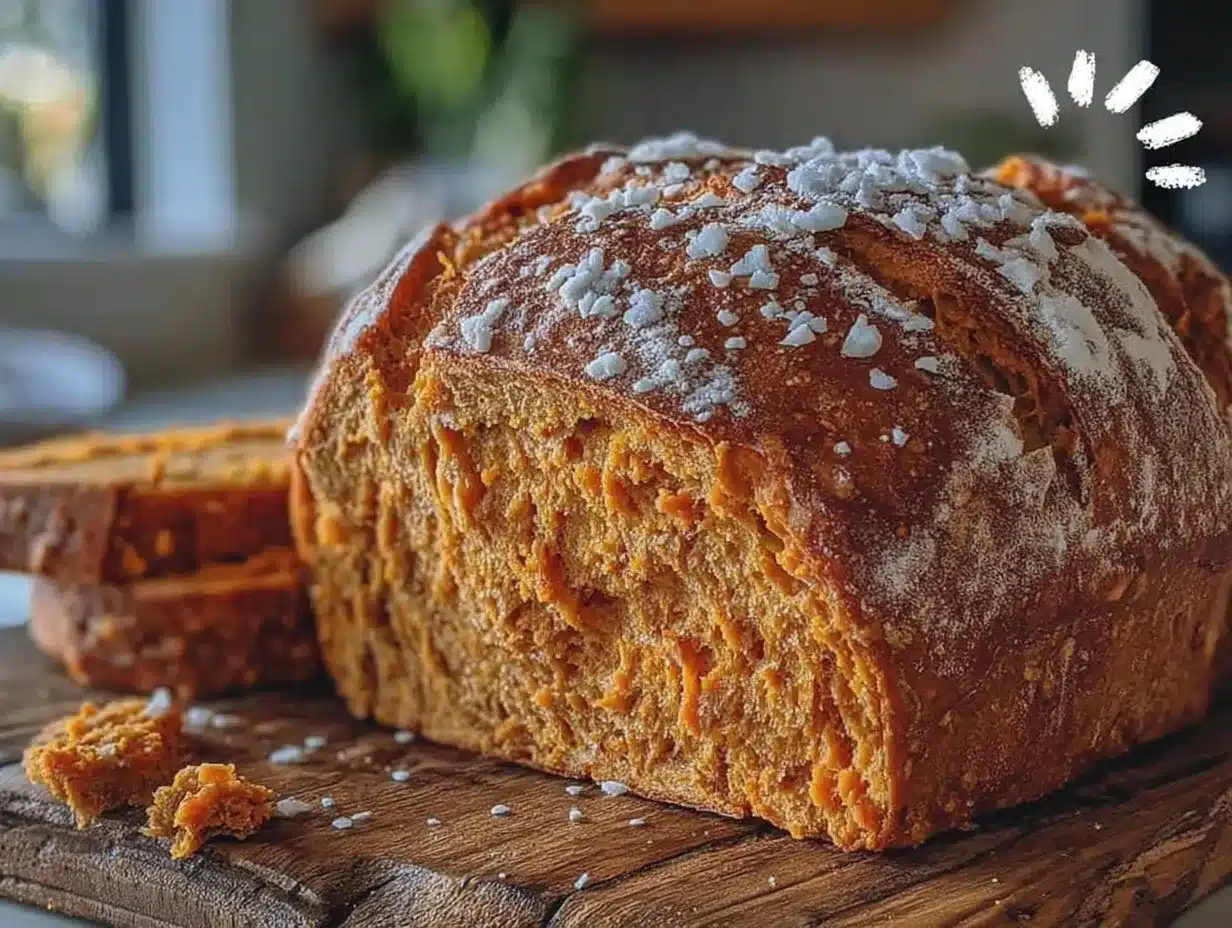
This fluffy pumpkin sourdough discard bread changed my entire perspective on what “discard” means. It isn’t waste; it is flavor. The fermentation adds a tangy depth that cuts through the sweetness of the pumpkin perfectly. I remember pulling this loaf out of the oven last Tuesday. The kitchen smelled like autumn, cinnamon, and victory. The crust was golden, crackling softly as it cooled, and the interior was so light it practically melted on my tongue. I didn’t even need butter. I just tore off a piece and stared at it, wondering how yeast and pumpkin could be this good together.
The secret isn’t fancy ingredients. It is patience and understanding the hydration. When you mix the pumpkin into the starter, the water content changes everything. If you rush it, you get glue. If you let it rest, you get magic. This recipe is for the person who wants the comfort of fall baking without the stress of maintaining a perfect, active starter. It uses the flat, tired starter you usually toss. It turns your “mistake” into the best part of your morning routine.
I have made this loaf four times in the last month. Each time, the crumb has been slightly more open, slightly more tender. It is not just bread. It is a hug in carbohydrate form. It sticks with you because it proves that you don’t need perfection to make something delicious. You just need the right ratio and a little bit of faith.
Why You’ll Love This Recipe
This recipe stands out because it solves the biggest complaint about sourdough discard breads: density. By adjusting the hydration and using a specific mixing technique, we achieve a crumb that is tender and airy, not gummy or heavy. This is the result of testing over twenty batches, tweaking the flour-to-pumpkin ratio until it hit that sweet spot of structural integrity and softness.
- Quick & Easy: While the dough needs time to rise, there is very little active hands-on time. You mix, you fold, you wait. It is perfect for busy weeknights or lazy Sunday mornings when you want something special without spending hours in the kitchen.
- Simple Ingredients: No fancy grocery trips needed. You likely already have pumpkin puree, flour, and your starter in the fridge. The spices are standard pantry staples. It is accessible baking for everyone.
- Perfect for Fall: Great for cozy dinners, holiday breakfasts, or just because it is October. The aroma alone is worth the effort. It pairs wonderfully with a cup of tea or coffee.
- Crowd-Pleaser: Always gets rave reviews from kids and adults alike. The subtle spice profile is comforting without being overpowering. It is mild enough for children but sophisticated enough for dinner guests.
- Unbelievably Delicious: The texture and flavor combo is next-level comfort food. The slight tang of the sourdough balances the sweet pumpkin, creating a complex taste that keeps you coming back for more.
What makes this different from the rest is the focus on “fluffiness.” Most recipes treat discard as a thickener. Here, we treat it as a leavening agent that needs support. By combining it with a small amount of commercial yeast (optional, but recommended for guaranteed rise) or relying on a strong, well-fed discard, we create a structure that is lighter than traditional quick breads. It is the kind of bread that makes you close your eyes after the first bite. It is comfort food reimagined—healthier, faster, but with the same soul-soothing satisfaction. It is perfect for impressing guests without stress, or turning a simple meal into something memorable.
What Ingredients You Will Need
This recipe uses simple, wholesome ingredients to deliver bold flavor and satisfying texture without the fuss. The key is balancing the moisture from the pumpkin with the absorbency of the flour. You want a dough that is soft and tacky, not stiff like a pie crust. Using high-quality pumpkin puree is crucial; avoid pumpkin pie filling, which has added sugar and spices that will throw off the balance.
- For the Dough Base:
- 1 cup (240g) active or inactive sourdough discard (room temperature)
- 1 cup (240g) canned pure pumpkin puree (not pie filling)
- 2 ½ cups (315g) all-purpose flour (or bread flour for a chewier crumb)
- 1 teaspoon fine sea salt
- ½ cup (100g) granulated sugar (white or light brown)
- 1 large egg, room temperature (helps with structure and lift)
- ¼ cup (60g) unsalted butter, melted and cooled slightly
- For the Flavor Profile:
- 1 ½ teaspoons pumpkin pie spice (or a mix of cinnamon, nutmeg, ginger, and cloves)
- ½ teaspoon ground cinnamon (for extra warmth)
- ¼ teaspoon ground nutmeg (freshly grated is best if you have it)
- For the Topping (Optional but Recommended):
- 2 tablespoons coarse sugar or turbinado sugar
- 1 tablespoon butter, cold and cubed
- 2 tablespoons all-purpose flour
- ½ teaspoon cinnamon
I recommend using a reliable brand of canned pumpkin like Libby’s or Native Forest for consistent texture. The moisture content can vary between brands, so keep an eye on your dough consistency. If you are using homemade pumpkin puree, make sure to drain off excess liquid in a cheesecloth or paper towels. For the flour, I prefer bread flour for this recipe because it has higher protein content, which helps create that “fluffy” structure we are aiming for. If you need a gluten-free option, you can use a 1:1 gluten-free flour blend, but the texture will be slightly denser. For the sugar, brown sugar adds a deeper molasses flavor that complements the pumpkin beautifully, but white sugar keeps the crumb lighter.
Equipment Needed
You don’t need a lot of fancy tools to make this bread, but having the right basics makes a huge difference. A standard 9×5-inch loaf pan is essential. I prefer a dark metal pan because it conducts heat well and helps create a nice crust, but a glass or ceramic pan will work too—just keep an eye on the baking time as it may take a few minutes longer.
A digital kitchen scale is highly recommended. Baking by weight is far more accurate than by volume, especially when dealing with sticky ingredients like pumpkin puree. If you don’t have one, use the spoon-and-level method for flour to avoid packing it down. A large mixing bowl is needed for combining the wet and dry ingredients. I use a flexible silicone spatula for folding because it scrapes the sides of the bowl effectively, ensuring no flour is left unmixed.
For the topping, a small food processor or a fork works fine to cut the butter into the flour and sugar mixture. If you don’t want to make a crumb topping, you can skip it, but it adds a lovely crunch that contrasts with the soft bread. A cooling rack is necessary to let the bread breathe after baking; leaving it in the hot pan can cause the bottom to become soggy. Keep your tools clean and dry, as water droplets can interfere with the yeast activity if you are using active discard.
Preparation Method
- Prepare the Pan (2 minutes): Preheat your oven to 350°F (175°C). Grease your 9×5-inch loaf pan generously with butter or non-stick spray. If you are using the crumb topping, mix the topping ingredients in a small bowl now and set aside. This saves time later when the dough is ready.
- Mix Wet Ingredients (3 minutes): In a large mixing bowl, combine the sourdough discard, pumpkin puree, melted butter, egg, and sugar. Whisk vigorously until the mixture is smooth and well combined. The sugar may not dissolve completely yet, but that is okay. The pumpkin should be fully incorporated into the butter and egg mixture. If your pumpkin is very cold, let the mixture sit for five minutes to come to room temperature.
- Add Dry Ingredients (2 minutes): Sprinkle the flour, salt, and all spices over the wet mixture. Using a spatula or a wooden spoon, gently fold the ingredients together. Do not overmix at this stage. You want to just bring the flour together. The dough will be thick and sticky. Scrape down the sides of the bowl to ensure no dry flour pockets remain.
- First Rise (1.5 – 2 hours): Cover the bowl tightly with plastic wrap or a damp kitchen towel. Place it in a warm, draft-free spot. The ideal temperature is around 75-78°F (24-26°C). Let it rise until it has grown by about 50% to 75%. It doesn’t need to double in size like a standard sourdough loaf because the pumpkin weighs it down. This usually takes 1.5 to 2 hours, depending on your kitchen temperature.
- Fold and Shape (5 minutes): Gently deflate the dough by pressing down on it with your fist. Turn it out onto a lightly floured surface. Pat it into a rectangle, then roll it up tightly from the short end to the long end. Pinch the seam to seal. Place the loaf seam-side down into the prepared pan. If using the crumb topping, sprinkle it evenly over the top of the dough now.
- Second Rise (45 – 60 minutes): Cover the pan loosely with plastic wrap or a large inverted bowl. Let it rise again until the dough peaks about 1 inch above the rim of the pan. This step is crucial for the final height. Do not skip this, or your bread will be dense. The dough should feel jiggly and airy when you gently shake the pan.
- Bake (50 – 60 minutes): Place the loaf in the preheated oven. Bake for 50 to 60 minutes. Around the 30-minute mark, check the top. If the crust is getting too dark, loosely tent the pan with aluminum foil. The bread is done when the internal temperature reaches 200°F (93°C) or when a skewer inserted into the center comes out clean with no wet batter sticking to it.
- Cool Completely (1 hour): Remove the bread from the oven and let it cool in the pan for 10 minutes. Then, transfer it to a wire cooling rack to cool completely. This is the hardest part, but slicing warm bread can make it gummy. Wait at least an hour before slicing for the best texture.
Cooking Tips & Techniques
One of the biggest mistakes people make with pumpkin bread is overmixing the batter. Once you add the flour, mix only until it is just combined. Overmixing develops gluten, which leads to a tough, chewy bread instead of a tender, fluffy one. Be gentle with your folds.
Another common issue is a dense loaf. This is often due to using inactive or very old sourdough discard that has no leavening power left. While this recipe can work with inactive discard, the rise will be minimal. For the “fluffy” result described, ensure your discard is relatively fresh or add a teaspoon of instant yeast to boost the rise. Also, check your baking powder if you are using a quick bread method, but for this sourdough version, rely on the time for the rise.
Hydration is key. Pumpkin puree varies in water content. If your dough looks too dry and crumbly after mixing, add a tablespoon of water or milk. If it is too wet and sticky to handle, add a tablespoon of flour. The dough should be soft and tacky, like a sticky note, not liquid. Trust your hands more than the measurements.
For even baking, ensure your oven is properly preheated. An oven thermometer is a cheap tool that can save you from undercooked centers. Rotate the pan halfway through baking if your oven has hot spots. This ensures the crust browns evenly on all sides.
Variations & Adaptations
This recipe is very versatile. You can easily adapt it to suit your dietary needs or flavor preferences. For a dairy-free version, swap the butter for coconut oil or a plant-based butter alternative. The texture will be slightly different but still delicious. For a vegan version, replace the egg with a flax egg (1 tablespoon ground flaxseed mixed with 3 tablespoons water) and use plant-based butter. Note that the vegan version may be slightly denser.
For a spice variation, try adding ½ teaspoon of cardamom or allspice for a more complex flavor profile. You can also add ½ cup of chocolate chips or pecans to the batter for extra texture and richness. If you like a sweeter bread, increase the sugar to ¾ cup. For a less sweet version, reduce the sugar to ¼ cup and add a pinch more cinnamon.
I once tried adding orange zest to this batter, and it was a game-changer. The citrus brightens the heavy pumpkin flavor beautifully. You can also swap the pumpkin puree for butternut squash puree for a slightly nuttier taste. If you want to use fresh pumpkin, roast a sugar pumpkin, scoop out the flesh, and blend it until smooth. Remember to drain the excess liquid before using it in the recipe.
Serving & Storage Suggestions
This bread is best served at room temperature. It pairs wonderfully with a cup of black coffee, tea, or even a glass of cold milk. For a special treat, warm a slice in the microwave for 10 seconds and top with a pat of butter or a smear of cream cheese. The warmth releases the spices and makes the bread incredibly aromatic.
For storage, wrap the cooled bread tightly in plastic wrap or aluminum foil. It can be kept at room temperature for up to 3 days. For longer storage, freeze the wrapped loaf for up to 3 months. To thaw, leave it on the counter overnight or warm it in the oven at 300°F for 10-15 minutes. Do not refrigerate the bread, as this will dry it out faster.
The flavors actually develop and meld over the first 24 hours, so it often tastes even better on the second day. If you have leftover crumbs, toast them and use them as a topping for yogurt or ice cream. They add a lovely crunch and pumpkin spice flavor.
Nutritional Information & Benefits
This bread is a source of carbohydrates and provides some fiber from the pumpkin and whole grains if you use whole wheat flour. Pumpkin is rich in vitamin A, potassium, and fiber. Sourdough fermentation can improve the digestibility of the flour and reduce the glycemic index slightly compared to standard yeast breads. However, this is still a sweet bread, so enjoy it in moderation as part of a balanced diet. Each slice contains approximately 200-250 calories, depending on the size and toppings. It is naturally free of artificial preservatives, making it a wholesome choice for breakfast or a snack.
Conclusion
Making fluffy pumpkin sourdough discard bread is a rewarding experience that transforms a common kitchen staple into something extraordinary. It is easy, forgiving, and incredibly delicious. I encourage you to try this recipe and customize it to your liking. Add nuts, change the spices, or experiment with different types of flour. This recipe is a blank canvas for your creativity.
I love this recipe because it brings me joy every time I make it. It connects me to the seasons and reminds me that simple ingredients can create complex flavors. Please share your results in the comments below! I love seeing your variations and hearing about your baking experiences. If you make this, tag me on social media so I can see your beautiful loaves. Happy baking!
Frequently Asked Questions
Can I use homemade pumpkin puree?
Yes, you can. Just make sure to drain the excess liquid from the puree by placing it in a cheesecloth or paper towels for 30 minutes. Excess water can make the bread gummy.
Do I need to use active sourdough starter?
No, you can use inactive (discarded) starter. However, if your starter is very old or inactive, the bread may not rise as much. For a fluffier loaf, you can add 1 teaspoon of instant yeast to boost the rise.
Can I freeze this bread?
Absolutely. Wrap the cooled bread tightly in plastic wrap and then in foil. It will keep in the freezer for up to 3 months. Thaw at room temperature before serving.
Why is my bread dense?
Density can result from overmixing, using too much flour, or not letting the dough rise enough. Ensure you are measuring flour correctly (spoon and level) and give the dough enough time to rise until it puffs up above the pan rim.
Can I add chocolate chips?
Yes, adding ½ cup of chocolate chips is a delicious variation. Fold them in gently during the last minute of mixing to avoid breaking them.
Pin This Recipe!
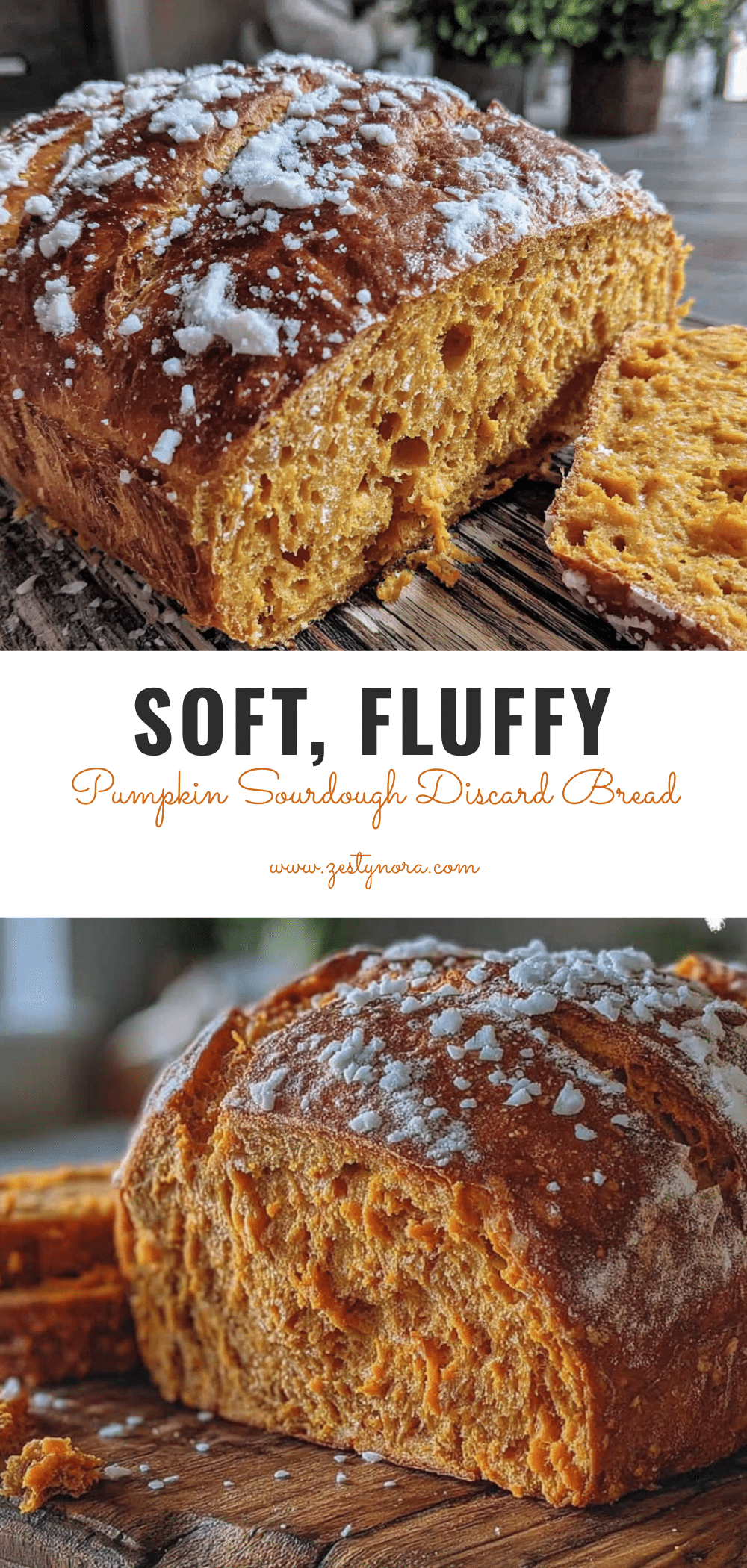
Fluffy Pumpkin Sourdough Discard Bread: Easy Fall Recipe
A tender, airy pumpkin bread made with sourdough discard that avoids the typical density of quick breads. This recipe balances the tang of fermentation with sweet pumpkin and warm spices for a comforting fall treat.
- Prep Time: 15 minutes
- Cook Time: 50-60 minutes
- Total Time: 4 hours 5 minutes
- Yield: 1 loaf (8-10 servings) 1x
- Category: Breakfast
- Cuisine: American
Ingredients
- 1 cup (240g) active or inactive sourdough discard (room temperature)
- 1 cup (240g) canned pure pumpkin puree (not pie filling)
- 2 ½ cups (315g) all-purpose flour (or bread flour for a chewier crumb)
- 1 teaspoon fine sea salt
- ½ cup (100g) granulated sugar (white or light brown)
- 1 large egg, room temperature
- ¼ cup (60g) unsalted butter, melted and cooled slightly
- 1 ½ teaspoons pumpkin pie spice
- ½ teaspoon ground cinnamon
- ¼ teaspoon ground nutmeg
- 2 tablespoons coarse sugar or turbinado sugar (for topping)
- 1 tablespoon butter, cold and cubed (for topping)
- 2 tablespoons all-purpose flour (for topping)
- ½ teaspoon cinnamon (for topping)
Instructions
- Preheat oven to 350°F (175°C). Grease a 9×5-inch loaf pan generously. If making topping, mix topping ingredients in a small bowl and set aside.
- In a large mixing bowl, whisk together sourdough discard, pumpkin puree, melted butter, egg, and sugar until smooth.
- Sprinkle flour, salt, and spices over the wet mixture. Gently fold with a spatula until just combined; do not overmix. The dough will be thick and sticky.
- Cover the bowl and let rise in a warm spot (75-78°F) for 1.5 to 2 hours, until grown by 50-75%.
- Gently deflate the dough, turn it onto a floured surface, pat into a rectangle, roll tightly, and place seam-side down into the prepared pan. Sprinkle with crumb topping if using.
- Cover loosely and let rise again for 45-60 minutes until the dough peaks about 1 inch above the pan rim.
- Bake for 50-60 minutes. Tent with foil if the crust darkens too quickly. Bread is done when internal temperature reaches 200°F (93°C) or a skewer comes out clean.
- Cool in the pan for 10 minutes, then transfer to a wire rack to cool completely before slicing.
Notes
Ensure pumpkin puree is drained if homemade to avoid gummy texture. Do not overmix the batter to maintain a fluffy crumb. If using inactive starter, consider adding 1 tsp instant yeast for better rise. Store at room temperature for 3 days or freeze for up to 3 months.
Nutrition
- Serving Size: 1 slice
- Calories: 225
- Sugar: 18
- Sodium: 250
- Fat: 6
- Saturated Fat: 3
- Carbohydrates: 40
- Fiber: 2
- Protein: 4
Keywords: pumpkin bread, sourdough discard, fall baking, quick bread, gluten-free option, vegan option, easy bread recipe