Standing at the stove, the last of the daylight fading through the kitchen window, and I had exactly twenty-seven minutes before everyone expected dinner on the table. The pork chops were thawed—barely—and sitting there on the cutting board looking a little sad and sorry for themselves. I’d planned something more elaborate, something with a marinade that needed hours and a side dish that required actual thought. But the afternoon had gotten away from me, the way afternoons do when you’ve got a million small fires to put out. So there I was, staring at these four pork chops and a half-empty bottle of apple cider in the fridge door, trying to convince myself that simple could still be special.
Honestly, that’s how most of my best recipes are born—not from careful planning, but from the kind of panic that forces you to get creative with what you’ve got. I grabbed the cider, some butter, a few sprigs of thyme that were hanging on for dear life, and decided to just go for it. No fancy brine, no complicated rub. Just a hot pan, a good sear, and a glaze that I was pretty sure would either be amazing or a total disaster. And you know what? It was the kind of happy accident that makes you wonder why you ever overcomplicate dinner in the first place.
That first bite was a revelation. The pork was juicy and tender on the inside, with a crust so crispy it practically shattered when I cut into it. And that glaze—sweet and tangy, with just a hint of warmth from the cider and a little kick from some mustard—it coated every bite like it was meant to be there all along. This is one of those recipes that feels fancy but comes together in under thirty minutes. It’s the kind of meal that makes you look like you tried really hard when, really, you were just trying to get dinner on the table without losing your mind. And honestly, isn’t that the best kind of recipe?
Why You’ll Love This Recipe
Let me tell you why these easy pan-seared pork chops with apple cider glaze have become a regular in my dinner rotation. I’ve tested this recipe more times than I care to count—tweaking the heat, adjusting the glaze ratio, even trying different cuts of pork to see what works best. And what I’ve landed on is a version that delivers every single time, no fancy equipment or hard-to-find ingredients required.
- Quick and Easy: From start to finish, this recipe takes about 25 minutes. That’s less time than it takes to decide what to order for takeout, and the result is way more satisfying.
- Simple Ingredients: You probably already have most of what you need in your kitchen right now. Pork chops, apple cider, butter, a little mustard, some thyme. No weird specialty items that you’ll use once and then forget about.
- Perfect for Fall Dinners: There’s something about apple cider that just screams autumn, but honestly, this recipe works beautifully year-round. It’s cozy enough for a chilly weeknight and impressive enough for company.
- Crowd-Pleaser: I’ve served these to picky kids, skeptical in-laws, and friends who “don’t really like pork,” and every single plate came back clean. The crispy crust wins people over before they even taste the glaze.
- Unbelievably Delicious: The contrast between that shatteringly crisp sear and the sticky-sweet glaze is pure magic. It’s the kind of dinner that makes you slow down and actually taste every bite.
What really sets this recipe apart is the technique. Most pan-seared pork chops end up dry or bland because people either overcook them or skip the crucial step of getting that pan screaming hot. I’ve learned through trial and error—and more than a few dry chops—that the secret is a combination of high heat, a good amount of fat, and not touching the meat until it tells you it’s ready. This isn’t just another pork chop recipe; it’s the one that finally works. The kind that makes you close your eyes after the first bite because it’s exactly what you needed after a long day.
What Ingredients You Will Need
This recipe uses simple, wholesome ingredients to deliver big flavor without any fuss. Most of these are pantry staples, and the few that aren’t are easy to find at any grocery store. Here’s what you’ll need and why each one matters.
- Pork chops (4, about 1-inch thick, bone-in or boneless): I prefer bone-in chops for this recipe because they stay juicier and have more flavor. Look for chops that are at least an inch thick—thin chops cook too quickly and won’t develop that beautiful crust before they dry out. If you can find heritage breed pork like Berkshire or Duroc, the extra marbling makes a noticeable difference.
- Apple cider (1 cup, not apple juice): This is the star of the glaze, so don’t skimp here. Apple cider has a deeper, more complex flavor than apple juice, with a slight tartness that balances the sweetness. I like using fresh-pressed cider from a local orchard when it’s in season, but any good-quality store-bought cider works fine. Avoid anything labeled “apple cider drink” or “cocktail” since those have added sugars and preservatives.
- Unsalted butter (3 tablespoons, divided): We use butter for two purposes here. The first tablespoon goes into the pan for searing the pork, and the remaining two get whisked into the glaze at the end for richness and shine. Using unsalted butter lets you control the salt level, which is important since the glaze reduces and concentrates flavors.
- Dijon mustard (1 tablespoon): This adds a subtle tang and helps emulsify the glaze, giving it a silky texture that clings to the pork. I recommend a good-quality Dijon like Grey Poupon or Maille. Don’t use yellow mustard here—the flavor is too sharp and one-dimensional.
- Fresh thyme (4-5 sprigs): Thyme and apple cider are a classic pairing. The earthy, slightly floral notes of fresh thyme complement the sweetness of the cider without overpowering it. If you only have dried thyme, use about 1 teaspoon and add it to the glaze while it simmers.
- Chicken broth (¼ cup): This helps deglaze the pan and adds savory depth to the glaze. You can use vegetable broth if that’s what you have, or even water in a pinch—but broth adds an extra layer of flavor that makes the glaze taste more complex.
- Brown sugar (2 tablespoons, packed): Just a touch of brown sugar enhances the natural sweetness of the apple cider and helps the glaze caramelize beautifully. Light or dark brown sugar both work; dark brown sugar will give a slightly deeper, molasses-like flavor.
- Salt and black pepper (to taste): Don’t be shy with the salt. Pork chops need a generous amount of seasoning to bring out their flavor. I use kosher salt because it’s easier to control and distributes more evenly than table salt.
- Neutral oil (1 tablespoon, like avocado or canola): You need an oil with a high smoke point for searing the pork. Olive oil burns too easily at the high heat we’re using, so stick with something neutral. Avocado oil is my go-to because it has a high smoke point and a clean flavor.
Ingredient Substitution Notes: If you’re out of apple cider, you can use apple juice mixed with a teaspoon of apple cider vinegar to mimic the tartness. For a dairy-free version, substitute the butter with a high-quality plant-based butter or ghee. And if you don’t have Dijon mustard, whole-grain mustard works beautifully and adds a nice texture to the glaze.
Equipment Needed
You don’t need a lot of fancy equipment for this recipe, which is part of what makes it so great. Here’s what you’ll need:
- Large cast-iron skillet (12-inch): This is my absolute favorite pan for searing pork chops. Cast iron holds heat incredibly well and gives you that beautiful, even crust. If you don’t have cast iron, a heavy-bottomed stainless steel skillet works too—just make sure it’s oven-safe if you’re finishing the chops in the oven.
- Tongs: You need a good pair of tongs for flipping the pork chops and handling them without piercing the meat. Piercing releases juices, and we want to keep every drop inside.
- Meat thermometer: This is non-negotiable if you want perfectly cooked pork chops every time. The USDA recommends cooking pork to 145°F, followed by a 3-minute rest. An instant-read thermometer takes the guesswork out of the equation.
- Cutting board: A sturdy cutting board for resting the pork after cooking. I like to use a wooden board because it’s gentler on my knives and looks nice for serving.
- Small whisk or fork: For whisking the glaze ingredients together while they simmer. A fork works in a pinch, but a small whisk gives you a smoother result.
- Measuring cups and spoons: For measuring the cider, broth, and other ingredients. I keep a set of liquid measuring cups and dry measuring cups separate for accuracy.
Budget-Friendly Options: If you don’t have a cast-iron skillet, a non-stick pan will work—just know you won’t get quite as deep of a crust. And if you don’t have a meat thermometer, you can test for doneness by making a small cut into the thickest part of the chop and checking that the meat is no longer pink in the center. But honestly, a good thermometer is worth the investment. I’ve had my Thermapen for years and it’s saved countless dinners from the trash.
Preparation Method
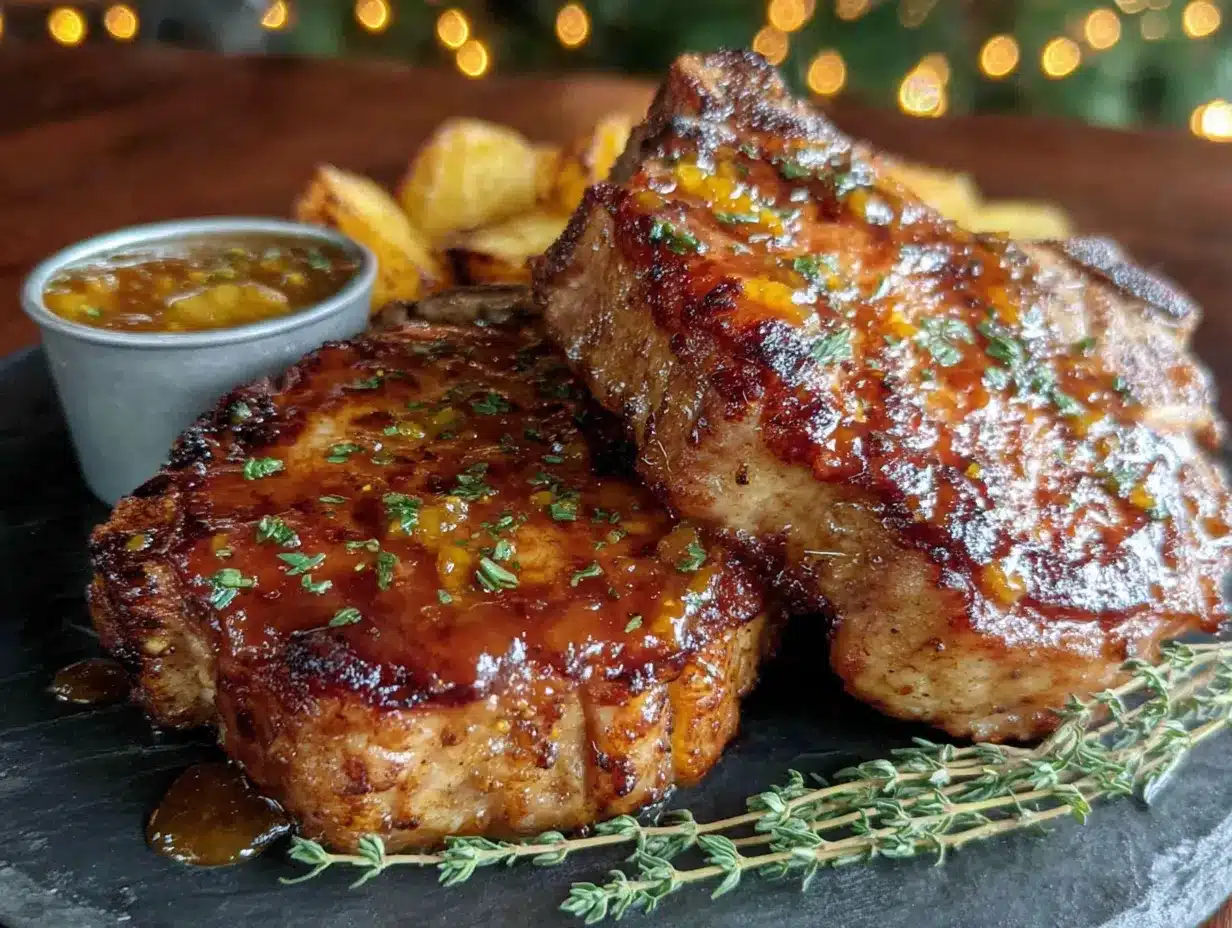
Ready to make the best pan-seared pork chops of your life? Let’s walk through this step by step. I’ll share the timing, the sensory cues, and the little tricks I’ve learned along the way.
- Pat the pork chops dry and season generously. About 10 minutes before you start cooking, take the pork chops out of the fridge and pat them completely dry with paper towels. This is crucial—any moisture on the surface will steam instead of sear, and you won’t get that crispy crust. Season both sides generously with salt and pepper. Don’t be shy; you want about ¾ teaspoon of salt per chop. Let them sit at room temperature while you prep the other ingredients.
- Heat the skillet over medium-high heat. Place your cast-iron skillet on the stove and add the neutral oil. Let it heat for a good 2-3 minutes until the oil is shimmering and just starting to smoke. You want the pan hot enough that when you lay the pork in, it sizzles immediately. If it doesn’t sizzle, the pan isn’t hot enough.
- Sear the pork chops. Carefully lay the pork chops in the hot skillet, making sure they’re not touching each other. If your pan is too small, work in batches. Let them cook undisturbed for 4-5 minutes. I know it’s tempting to peek, but resist! The pork will release from the pan naturally when it’s ready to flip. You’ll know it’s time when the edges start to look brown and the bottom has a deep golden crust.
- Flip and add butter and thyme. Using your tongs, flip the pork chops. Add 1 tablespoon of butter and the fresh thyme sprigs to the pan. Tilt the pan slightly and use a spoon to baste the melting butter over the pork chops. This adds flavor and helps the crust develop on the second side. Cook for another 3-4 minutes, basting occasionally.
- Check the temperature and rest. Insert your meat thermometer into the thickest part of a chop. You’re looking for 140°F—the pork will continue cooking as it rests, reaching the safe 145°F. Transfer the pork chops to a cutting board and tent loosely with foil. Let them rest for at least 5 minutes. Don’t skip this step! Resting allows the juices to redistribute throughout the meat.
- Make the apple cider glaze. While the pork rests, pour off all but about 1 tablespoon of fat from the skillet (leave the browned bits and thyme in the pan). Place the skillet back over medium heat. Add the apple cider, chicken broth, Dijon mustard, and brown sugar. Whisk everything together, scraping up those delicious browned bits from the bottom of the pan. Let the glaze simmer for 5-7 minutes, stirring occasionally, until it has reduced by about half and thickened slightly. It should coat the back of a spoon.
- Finish the glaze with butter. Remove the skillet from the heat and whisk in the remaining 2 tablespoons of butter, one tablespoon at a time. This gives the glaze a silky, glossy finish. Taste and adjust seasoning with salt and pepper. If the glaze is too tart, add a tiny pinch more brown sugar. If it’s too sweet, a splash of apple cider vinegar will balance it out.
- Glaze and serve. Place the rested pork chops back in the skillet (or on a serving platter) and spoon the glaze generously over the top. Let them sit for a minute so the glaze soaks into the crust. Serve immediately with extra glaze on the side.
Visual Cue: When the glaze is ready, it should look like warm maple syrup—thick enough to coat the back of a spoon but still pourable. If it gets too thick, just add a splash of broth or water to thin it out.
Cooking Tips & Techniques
After making this recipe more times than I can count, I’ve picked up a few tricks that make a real difference. Let me share what I’ve learned, including the mistakes I’ve made so you don’t have to.
The biggest mistake people make is overcrowding the pan. I did this the first time I made these pork chops, and instead of a beautiful golden crust, I got gray, steamed meat. The pan needs space for the heat to circulate. If you’re cooking more than four chops, do it in two batches. It takes an extra 10 minutes, but the result is worth it.
Don’t move the pork around. Once you lay the chops in the hot pan, leave them alone. I know it’s tempting to poke, prod, or check for doneness, but every time you move the meat, you’re interrupting the searing process. Let the crust form naturally. When it’s ready, the chops will release from the pan without any resistance.
Temperature matters more than time. Pork chops can go from perfectly cooked to dry and tough in about 30 seconds. That’s why a meat thermometer is your best friend. I pull my chops off the heat at 140°F because carryover cooking will bring them to 145°F during the rest. If you wait until they hit 145°F in the pan, they’ll end up at 150°F or higher—and that’s when they start to dry out.
Let the glaze reduce properly. I’ve been impatient before and pulled the glaze off the heat too early. The result was a thin, watery sauce that didn’t stick to the pork. Give it the full 5-7 minutes of simmering time. You want it to reduce by about half and get that syrupy consistency. And don’t forget to scrape up those browned bits from the pan—that’s where all the flavor is.
Timing is everything. Here’s how I multitask: While the pork is searing on the first side, I measure out the cider, broth, and mustard. While the pork rests, I make the glaze. This way, everything comes together at the same time, and dinner is on the table in under 30 minutes. If you’re making a side dish like roasted vegetables or mashed potatoes, start that before you begin the pork so everything finishes together.
One last tip: If you want an even crispier crust, try dry-brining the pork chops the night before. Sprinkle them with salt and leave them uncovered in the fridge overnight. The salt draws out moisture, then reabsorbs it, seasoning the meat all the way through. The dry surface also means a better sear. It’s an extra step, but it makes a noticeable difference.
Variations & Adaptations
One of the things I love about this recipe is how flexible it is. Here are some variations I’ve tried and loved, along with adjustments for different dietary needs and preferences.
Apple Cider Rosemary Variation: Swap the fresh thyme for fresh rosemary. Rosemary and apple cider are a match made in heaven, and the piney, aromatic flavor pairs beautifully with pork. Use two 4-inch sprigs of rosemary and add them to the pan when you add the butter for basting. The glaze will have a more savory, herbaceous profile that’s perfect for a cozy fall dinner.
Spicy Maple Glaze: Replace the brown sugar with maple syrup and add ½ teaspoon of red pepper flakes to the glaze while it simmers. The heat from the pepper flakes cuts through the sweetness of the maple and creates a sweet-spicy combination that’s absolutely addictive. This version is great if you’re serving the pork with something creamy, like mashed potatoes or polenta.
Garlic and Herb Crust: Before searing, press a mixture of minced garlic (2 cloves), fresh chopped parsley, and a pinch of dried oregano into both sides of the pork chops. The garlic will toast in the hot oil, creating an aromatic crust that infuses the meat with flavor. Just be careful not to burn the garlic—if it starts to turn dark too quickly, lower the heat slightly.
Dietary Adaptations:
- Dairy-Free: Substitute the butter with a high-quality plant-based butter or ghee (which is lactose-free). The glaze will still be rich and glossy, though the flavor will be slightly different. I’ve used Miyoko’s European Style Cultured Vegan Butter with great results.
- Low-Carb/Keto: Omit the brown sugar and use a sugar-free maple syrup substitute or a monk fruit sweetener instead. The glaze will still reduce and thicken, though it won’t be quite as sticky. You can also add a pinch of xanthan gum to help with thickening.
- Gluten-Free: This recipe is naturally gluten-free as written. Just make sure your chicken broth and Dijon mustard are certified gluten-free, as some brands may contain traces of gluten.
Personal Variation: My absolute favorite way to make this is with a splash of bourbon added to the glaze along with the apple cider. The bourbon adds a warm, smoky depth that complements the sweetness of the cider and the richness of the pork. Just be careful when adding alcohol to a hot pan—remove it from the heat first, then return it to the stove. And if you’re serving this to kids or non-drinkers, the alcohol cooks off completely during the simmering process.
Serving & Storage Suggestions
These pan-seared pork chops are best served fresh, but with a little know-how, you can enjoy them for days to come.
Serving Temperature and Presentation: Serve the pork chops hot, right after glazing. I like to arrange them on a warm platter and spoon the remaining glaze over the top. Garnish with fresh thyme sprigs or a sprinkle of flaky sea salt for a restaurant-quality presentation. The contrast of the dark, glossy glaze against the golden crust is gorgeous.
What to Serve Alongside: These pork chops pair beautifully with a variety of sides. For a fall-inspired meal, try them with creamy roasted butternut squash soup as a starter, or serve them alongside apple cider donut loaf cake for dessert to carry the apple theme through the whole meal. For a lighter option, a simple arugula salad with shaved Parmesan and a lemon vinaigrette cuts through the richness of the pork beautifully. And if you’re feeding a crowd, creamy slow cooker chicken and wild rice soup makes a wonderful accompaniment for a cozy dinner spread.
Storage Instructions: Store leftover pork chops in an airtight container in the refrigerator for up to 3 days. Keep the glaze separate if possible, as it can make the crust soggy over time. If you’ve already glazed the chops, they’ll still be good—just expect the crust to soften slightly.
Freezing: You can freeze the cooked pork chops for up to 2 months. Wrap each chop individually in plastic wrap, then place them in a freezer-safe bag. To reheat, thaw overnight in the refrigerator, then reheat in a skillet over medium heat with a splash of broth or apple cider to keep them moist. The glaze can be frozen separately in a small container.
Reheating Tips: The best way to reheat these pork chops is in a skillet over medium-low heat. Add a tablespoon of butter or broth to the pan, cover, and heat for 3-4 minutes per side. This helps the pork stay moist and re-crisps the crust slightly. Avoid the microwave if possible—it will make the pork tough and the crust rubbery.
Flavor Development: Interestingly, the flavors of the glaze deepen overnight. If you have leftovers, try slicing the cold pork thin and using it in a sandwich the next day with some arugula and a smear of Dijon. The glaze-soaked meat is absolutely delicious cold.
Nutritional Information & Benefits
Here’s the estimated nutritional breakdown for one serving (one pork chop with glaze, based on a 6-ounce bone-in chop):
| Nutrient | Amount |
|---|---|
| Calories | 385 |
| Protein | 38g |
| Fat | 22g |
| Saturated Fat | 9g |
| Carbohydrates | 12g |
| Fiber | 0g |
| Sugar | 10g |
| Sodium | 520mg |
Health Benefits of Key Ingredients:
- Pork chops are an excellent source of high-quality protein, which is essential for muscle repair and growth. They’re also rich in B vitamins, particularly B12 and niacin, which support energy metabolism and brain function.
- Apple cider contains antioxidants called polyphenols, which help fight inflammation and oxidative stress. While the amount in this recipe is small, every little bit helps. Plus, using real cider instead of processed juice means you’re getting more of those natural compounds.
- Thyme is packed with vitamin C and vitamin A, as well as compounds that have antimicrobial properties. It’s a small addition, but it contributes to the overall nutritional profile of the dish.
Dietary Considerations: This recipe is naturally gluten-free and can be made dairy-free with a simple butter substitution. It’s also relatively low in carbohydrates, making it suitable for low-carb and keto diets with the sugar substitution mentioned above. The main allergens to be aware of are dairy (from the butter) and potentially mustard, which some people are sensitive to.
Personal Wellness Perspective: I love that this recipe feels indulgent but is actually quite balanced. It’s a good source of protein and healthy fats, with just enough sweetness to satisfy a craving without going overboard. When I serve this for dinner, I feel good knowing my family is getting a meal that’s both delicious and nourishing.
Conclusion
These crispy pan-seared pork chops with apple cider glaze are the kind of recipe that becomes a staple—the one you turn to when you want something that feels special but doesn’t require hours in the kitchen. The contrast between that shatteringly crisp crust and the sweet-tangy glaze is pure comfort food magic, and it all comes together in about 25 minutes with ingredients you probably already have on hand.
What I love most about this recipe is how adaptable it is. You can swap the herbs, adjust the sweetness, or change up the glaze to suit whatever you’re craving. It’s forgiving enough for a beginner but impressive enough for a dinner party. And honestly, that’s the best kind of recipe to have in your back pocket.
I’d love to hear how these turn out for you! Did you try a variation? Did you serve them with something amazing? Drop a comment below and let me know—your feedback helps other readers, and I genuinely love hearing about your kitchen adventures. And if you loved this recipe, please share it with a friend who needs a quick, delicious dinner idea. Happy cooking!
Frequently Asked Questions
Can I use boneless pork chops for this recipe?
Absolutely! Boneless pork chops work great, just keep in mind they tend to cook a little faster than bone-in chops. Start checking the temperature at the 3-minute mark on the second side. Boneless chops also have less fat, so be careful not to overcook them. I prefer bone-in for the extra flavor and moisture, but either will work beautifully.
What if I don’t have apple cider?
No problem at all! You can substitute apple juice mixed with a teaspoon of apple cider vinegar to mimic the tartness of real cider. Or try using pear cider or even a good-quality apple butter thinned with a little broth. The flavor will be slightly different, but still delicious.
How do I know when the pork chops are done without a thermometer?
If you don’t have a meat thermometer, make a small cut into the thickest part of the chop. The meat should be just barely pink in the center, with clear juices running out. If it’s still very pink and the juices are reddish, it needs more time. If it’s white all the way through and the juices are clear, it’s done—but be careful not to overcook it at this point. A thermometer really is the best way to get perfect results every time.
Can I make the glaze ahead of time?
Yes! The glaze can be made up to 3 days in advance and stored in an airtight container in the refrigerator. When you’re ready to serve, simply reheat it in a small saucepan over low heat, whisking occasionally. If it’s too thick after refrigeration, add a splash of broth or water to thin it out. This is a great time-saver if you’re planning a dinner party or a busy weeknight.
What sides go best with these pork chops?
These pork chops are incredibly versatile and pair well with so many sides. For a cozy fall meal, try them with roasted Brussels sprouts or mashed sweet potatoes. For something lighter, a crisp green salad with a tangy vinaigrette cuts through the richness beautifully. And if you’re looking for a complete meal, creamy lemon garlic shrimp pasta makes a wonderful side for a surf-and-turf inspired dinner. The apple cider glaze also pairs wonderfully with the flavors in creamy hatch green chili chicken enchilada casserole for a fusion-style meal that’s sure to impress.
Pin This Recipe!
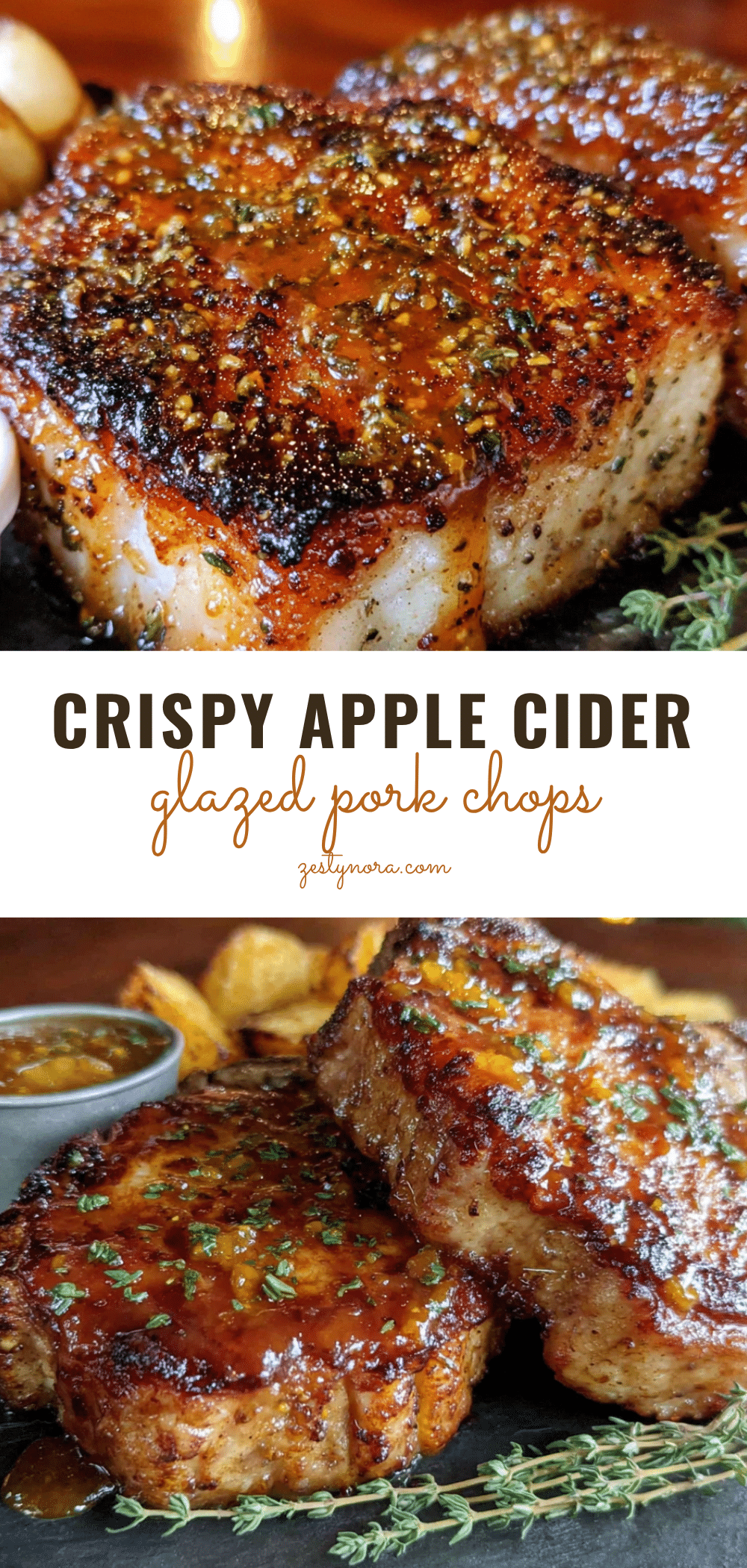
Easy Pan-Seared Pork Chops with Apple Cider Glaze
Juicy, tender pork chops with a crispy crust and a sweet-tangy apple cider glaze, ready in under 30 minutes. Perfect for a quick weeknight dinner that feels special.
- Prep Time: 10 minutes
- Cook Time: 15 minutes
- Total Time: 25 minutes
- Yield: 4 servings 1x
- Category: Main Course
- Cuisine: American
Ingredients
- 4 pork chops, about 1-inch thick, bone-in or boneless
- 1 cup apple cider (not apple juice)
- 3 tablespoons unsalted butter, divided
- 1 tablespoon Dijon mustard
- 4–5 sprigs fresh thyme
- 1/4 cup chicken broth
- 2 tablespoons packed brown sugar
- Salt and black pepper to taste
- 1 tablespoon neutral oil (avocado or canola)
Instructions
- Pat the pork chops dry and season generously with salt and pepper. Let sit at room temperature for 10 minutes.
- Heat a large cast-iron skillet over medium-high heat and add the neutral oil. Heat until shimmering, about 2-3 minutes.
- Sear the pork chops in the hot skillet, without crowding, for 4-5 minutes per side until deep golden brown. Flip and add 1 tablespoon butter and thyme sprigs; baste the butter over the chops.
- Cook for another 3-4 minutes, basting occasionally. Check internal temperature; remove at 140°F (the pork will continue cooking to 145°F while resting). Transfer to a cutting board and tent with foil; rest for at least 5 minutes.
- Pour off all but 1 tablespoon of fat from the skillet. Place back over medium heat and add apple cider, chicken broth, Dijon mustard, and brown sugar. Whisk, scraping up browned bits. Simmer for 5-7 minutes until reduced by half and thickened.
- Remove from heat and whisk in remaining 2 tablespoons butter, one at a time. Season with salt and pepper to taste.
- Place rested pork chops back in the skillet or on a platter and spoon glaze over the top. Serve immediately.
Notes
For best results, use bone-in pork chops at least 1-inch thick. Don’t overcrowd the pan; cook in batches if needed. Let the pork rest after cooking to retain juices. The glaze can be made up to 3 days ahead and reheated.
Nutrition
- Serving Size: 1 pork chop with gla
- Calories: 385
- Sugar: 10
- Sodium: 520
- Fat: 22
- Saturated Fat: 9
- Carbohydrates: 12
- Protein: 38
Keywords: pork chops, apple cider glaze, pan-seared, quick dinner, fall recipe, easy weeknight meal